Plexus Gut Health: What You Need to Know
What “Plexus gut health” means
Most people searching for Plexus gut health mean the gut health line from Plexus Worldwide, a supplement company based in Scottsdale, Arizona (ProBio 5 label, NIH DSLD). Its 2024 labels group three products as a “gut health series”: Slim Microbiome Activating, a prebiotic drink mix; ProBio 5, a probiotic and enzyme capsule; and VitalBiome, a multi-strain probiotic. Bio Cleanse, a Plexus magnesium capsule marketed for cleansing, also appears in the NIH label database.
The short answer: the products contain some ingredients with published research, but we found no published human trials of the Plexus products themselves, several key amounts are not disclosed, and some doses are far below what studies used. The word “plexus” also has a real meaning in your gut, covered further down.
Ultimate Gut is published by Ultimate Health Solutions, which sells a yogurt maker, probiotic capsules and an inulin fiber supplement. None of the products reviewed here are ours, and these brands don’t pay us.
We could not load the Plexus product pages, so details below come from each label as filed in the NIH Dietary Supplement Label Database (DSLD), labels checked October 2026. Prices are left out because we could not confirm them.
What is in the Plexus gut health products
| Product | Key contents per serving (label) | What research exists |
|---|---|---|
| Slim Microbiome Activating (drink packet) | 1,000 mg xylo-oligosaccharides (XOS); 200 mcg chromium; 531 mg blend of green coffee bean extract, garcinia cambogia, alpha lipoic acid and white mulberry (DSLD) | XOS raised bifidobacteria at 8 g a day (Childs et al., 2014); garcinia shows little to no weight effect (NIH ODS) |
| ProBio 5 (capsule) | 2 billion CFU blend of Bacillus coagulans, Lactobacillus acidophilus, Bifidobacterium longum and Saccharomyces boulardii, no strain codes; 200 mg enzyme blend with protease, cellulase and serrapeptase; vitamin C 150 mg; vitamin B6 2.5 mg; grape seed extract 25 mg (DSLD) | No published trials of this formula found; strains are not named, so studies cannot be matched |
| VitalBiome (capsule) | 7 billion CFU blend of 8 microbes, including L. helveticus Rosell-52, B. longum Rosell-175, B. coagulans MTCC 5856, B. lactis BL-04 and Bi-07, L. acidophilus NCFM, plus L. plantarum and S. boulardii; per-strain amounts not listed (DSLD) | The Rosell-52 and Rosell-175 pair was studied for stress in a 30-day trial (Messaoudi et al., 2011) |
| Bio Cleanse (capsule) | 380 mg magnesium as magnesium hydroxide, 50 mg sodium as sodium bicarbonate, 150 mg vitamin C and 50 mg citrus bioflavonoids per 2 capsules (DSLD, label entered 2020) | Magnesium is used in some laxatives (NIH ODS) |
What the labels claim and what the evidence shows
Slim Microbiome Activating
The label says the drink feeds beneficial microbes with XOS, “a clinically studied prebiotic,” and also says it helps you manage your weight and supports normal glucose metabolism and heart health. Directions are one packet in water up to twice a day (DSLD).
XOS does have research behind it. In a 21-day randomized crossover trial in healthy adults, 8 grams of XOS a day increased bifidobacteria in stool and increased bowel movements, without more bloating or gas than placebo (Childs et al., British Journal of Nutrition, 2014). One packet supplies 1 gram, an eighth of that dose, and two packets supply a quarter. For the weight ingredients, NIH’s Office of Dietary Supplements says garcinia cambogia has little to no effect on weight loss, green coffee bean extract might help you lose a small amount of weight, and chromium might help with a very small amount (NIH ODS).
One published case report described a patient who developed a serious drop in blood platelets that her doctors attributed to Plexus Slim, and it named garcinia and chromium as possible causes. A single case cannot prove cause (Graf et al., Cureus, 2020).
ProBio 5
The label says ProBio 5 helps “balance and weed out unwanted intestinal yeast” and seeds the gut with probiotics. Directions are 1 capsule at bedtime, or up to 4 at first (DSLD). We found no published human trial of this formula. The four microbes are listed by species only, without strain codes, and probiotic research is strain-specific. The claim about clearing yeast from the gut is not supported by human trials of this product. Our guides to Saccharomyces boulardii and choosing a probiotic explain why strain codes matter.
VitalBiome
VitalBiome’s label promises reduced feelings of stress, immune support and better well-being (DSLD). Unlike ProBio 5, most of its strains are named. The pairing of L. helveticus Rosell-52 and B. longum Rosell-175, also coded R0052 and R0175 in research (‘ + A(GAW,’Gawlik-Kotelnicka et al., 2025’) + ‘), was tested in a double-blind, placebo-controlled trial in healthy volunteers, who reported less psychological distress after 30 days (Messaoudi et al., British Journal of Nutrition, 2011). That was a small, short trial in healthy people, and because the label lists only a 7 billion CFU total, there is no way to tell whether VitalBiome supplies the amounts studied. The label also notes it contains milk and soy.
Bio Cleanse
The most recent Bio Cleanse label in the NIH database, entered in 2020, says it helps remove harmful microbes and substances, relieves occasional constipation, and reduces gas and bloating. Directions are 2 capsules twice a day between meals, which adds up to 760 mg of magnesium a day (DSLD). The upper limit for magnesium from supplements and medicines is 350 mg a day for adults, and high intakes can cause diarrhea, nausea and cramping (NIH ODS). Loose stools at that dose would be a known effect of too much magnesium, not proof that anything harmful is being removed.
Safety points before you buy
- No FDA approval: the FDA does not have the authority to approve dietary supplements before they are sold, and companies generally do not have to show the FDA their safety evidence (FDA).
- Adults only: the labels say the products are not recommended for anyone under 18 and advise checking with a doctor if you are pregnant, nursing, have a medical condition or take medicine (DSLD).
- Probiotics and weak immunity: NCCIH says the risk of harm from probiotics is greater in people with severe illness or a weakened immune system (NCCIH).
- Magnesium dose: the magnesium in Bio Cleanse is above the supplement upper limit at label directions, so ask your doctor first, and stop if you get diarrhea (NIH ODS).
The other plexus: your gut’s own nerve network
In anatomy, a plexus is a network of nerves, and the gut has two big ones. Together they make up the enteric nervous system, which holds roughly 400 to 600 million neurons. The myenteric plexus, also called Auerbach’s plexus, sits between the muscle layers along the whole digestive tract and helps drive movement. The submucosal plexus, or Meissner’s plexus, lies just under the lining, mainly in the small and large intestines (Fleming et al., Gastroenterology Research and Practice, 2020).
NIDDK explains that when food stretches the gut wall, these nerves release substances that speed up or slow down the movement of food and the release of digestive juices (NIDDK). Our guide to gut motility covers how this system keeps things moving.
Who it may suit, and food-first alternatives
If you want to try the line, VitalBiome is the product in the line with the most label transparency about strains. Skip Bio Cleanse unless a doctor agrees, and do not count on the drink mix for weight loss.
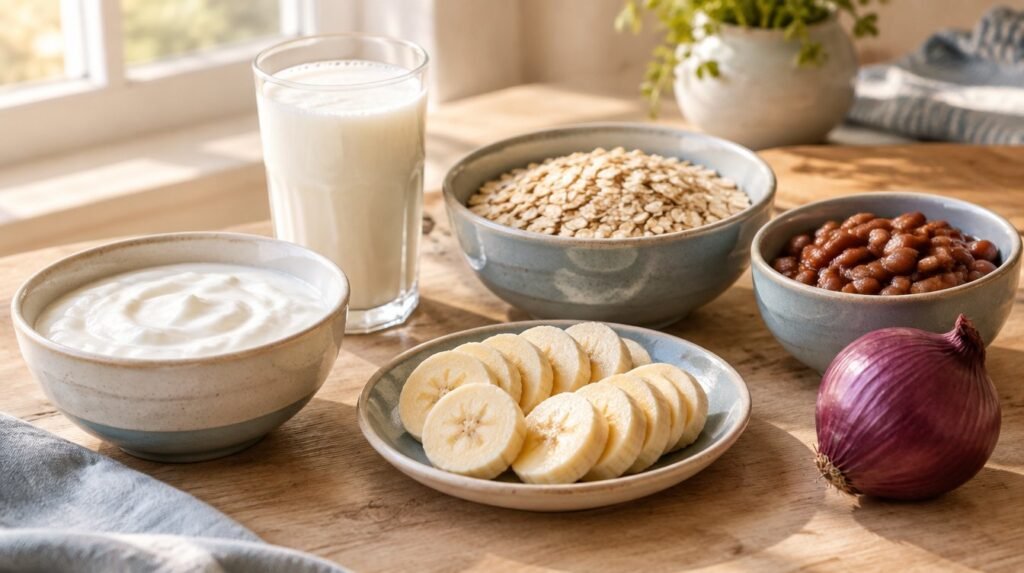
Food is a simpler place to start. Yogurt and kefir with live cultures add microbes, and fiber-rich foods such as beans, oats and bananas give gut bacteria something to ferment. See our comparison of probiotics and yogurt, the evidence on kefir benefits, and our guide to fiber supplements if you want a plain prebiotic.
Related topics
- Gut Health Supplements: how other supplement lines compare.
- Best Probiotic: picks by strain and evidence.
- Best Probiotic for Weight Loss: what weight claims rest on.
- Gut Cleanse: What You Need to Know: what cleanse products actually do.
- Motility: What You Need to Know: the nerve and muscle side of digestion.
Sources
- Plexus Slim Microbiome Activating label (NIH Dietary Supplement Label Database, entered 2024)
- Plexus ProBio 5 label (NIH Dietary Supplement Label Database, entered 2024)
- Plexus VitalBiome label (NIH Dietary Supplement Label Database, entered 2024)
- Plexus Bio Cleanse label (NIH Dietary Supplement Label Database, entered 2020)
- Questions and Answers on Dietary Supplements (FDA)
- Probiotics: Usefulness and Safety (NCCIH)
- Magnesium: Fact Sheet for Consumers (NIH Office of Dietary Supplements)
- Dietary Supplements for Weight Loss: Fact Sheet for Consumers (NIH Office of Dietary Supplements)
- Your Digestive System & How It Works (NIDDK)
- Childs CE, et al. Xylo-oligosaccharides alone or in synbiotic combination with Bifidobacterium animalis subsp. lactis induce bifidogenesis and modulate markers of immune function in healthy adults (British Journal of Nutrition, 2014)
- Messaoudi M, et al. Assessment of psychotropic-like properties of a probiotic formulation (Lactobacillus helveticus R0052 and Bifidobacterium longum R0175) in rats and human subjects (British Journal of Nutrition, 2011)
- Graf C, et al. Plexus Slim-Induced Immune Thrombocytopenic Purpura (Cureus, 2020)
- Gawlik-Kotelnicka O, et al. Does isovaleric acid play a key role in the interaction between probiotics and antidepressants? A secondary analysis of a randomized clinical trial (Computational and Structural Biotechnology Journal, 2025)
- Fleming MA 2nd, et al. The Enteric Nervous System and Its Emerging Role as a Therapeutic Target (Gastroenterology Research and Practice, 2020)
This article is for general information and is not medical advice. Talk to your doctor or a registered dietitian before changing your diet, supplements or medication, especially if you have a health condition.