Gut Cleanse: What You Need to Know
What a gut cleanse is
A gut cleanse is a short program that promises to flush out “toxins,” reset digestion or help you drop weight fast. “Gut cleanse” is a marketing term, not a medical one. The National Center for Complementary and Integrative Health (NCCIH) says detoxes and cleanses cover a wide range of approaches: fasting, juices, limited food choices, supplements, herbs and colon cleansing.
Most products sold as a gut cleanse never say which toxins they remove or how anyone measured them. That makes the main promise hard to check, and it is the first thing worth noticing before you spend money on one.
If you want a calmer, more regular gut, the habits covered further down have better support and fewer risks. For a gentler, food-based approach, see our guide to a gut reset.
Why it matters for gut health
Your body already has its own cleanup system. Mayo Clinic says you don’t need a colon cleanse to detox, because the digestive system already removes waste and bacteria. Your kidneys filter about 150 quarts of blood a day, and bacteria in your large intestine help break down leftover nutrients and make vitamin K, according to the National Institute of Diabetes and Digestive and Kidney Diseases (NIDDK).
The research on cleanses is thin. A 2015 critical review in the Journal of Human Nutrition and Dietetics found very little clinical evidence for detox diets. The few human studies had flawed methods and small samples, and the authors knew of no randomized controlled trials of commercial detox diets in people.
Colon cleansing has the same gap. A 2009 systematic review in the American Journal of Gastroenterology found no rigorous controlled trials supporting colon cleansing for general health. It did find multiple case reports and case series describing side effects.
What about the weight that comes off during a cleanse? NCCIH points to a 2017 review that found juicing and detox diets can cause early weight loss because you eat fewer calories. The weight often returns once normal eating resumes, and no studies have looked at long-term effects.
Possible risks of a cleanse
“Natural” does not mean harmless. Mayo Clinic lists cramping, bloating, diarrhea and vomiting as the milder effects of colon cleansing. More serious ones include dehydration, electrolyte imbalance, infection and a tear in the rectum, and Mayo notes that coffee enemas have been linked to many deaths.
Other cleanse styles carry their own risks, according to NCCIH:
- Laxative cleanses: laxatives can cause diarrhea, which may lead to dehydration and poor nutrient absorption.
- Water or tea fasts: drinking large amounts of water or herbal tea while eating no food for days can cause dangerous electrolyte imbalances.
- Juice cleanses: juice that hasn’t been pasteurized can make people sick. Juices made from high-oxalate foods such as leafy greens and beets may be a problem for people prone to kidney stones.
- Fasting programs: fasting can cause headaches, fainting, weakness and dehydration.
- Hidden ingredients: the FDA and FTC have acted against companies selling detox products that contained hidden ingredients or made false claims about treating serious diseases.
Some people face higher risk. NCCIH and Mayo Clinic both name people with digestive disease, past colon surgery, severe hemorrhoids, kidney disease or heart disease. People with diabetes should talk with their care team before any big change in how they eat.
What to do instead of a gut cleanse
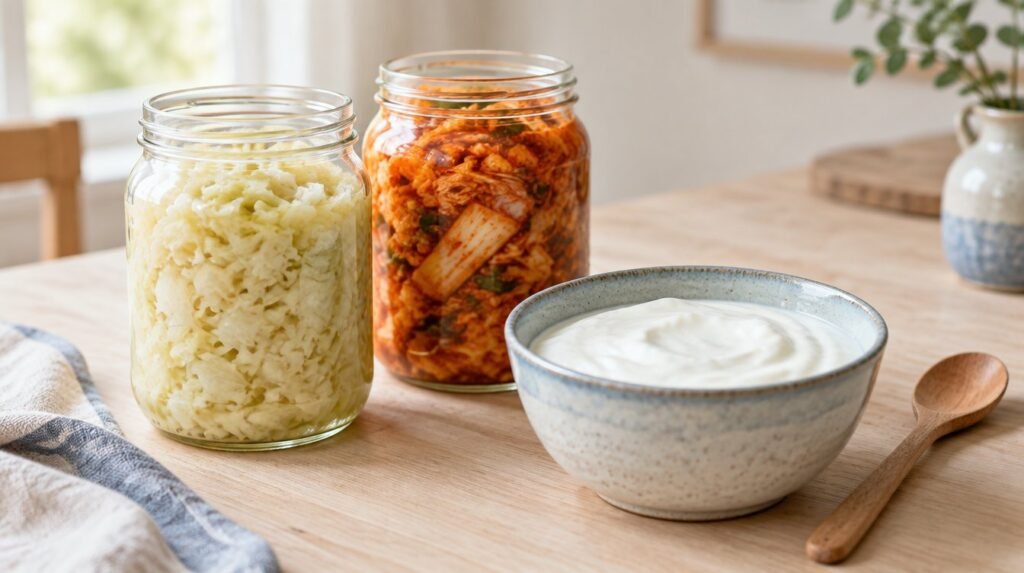
Most people who try a cleanse want to feel lighter, more regular and less bloated. Everyday habits have better evidence for that, though none of them work overnight.
| Habit | Why it may help | Source |
|---|---|---|
| Eat more fiber, slowly | Fiber adds bulk and softens stool. Daily targets run from 21 grams (women over 50) to 38 grams (men 50 and under). | Mayo Clinic |
| Drink enough fluids | Fiber works best when it absorbs water. | Mayo Clinic |
| Add fermented foods | In a 17-week Stanford trial of 36 healthy adults, a diet high in fermented foods raised gut microbe diversity and lowered inflammatory markers. It was a small study. | Wastyk et al., Cell, 2021 |
| Eat a wide range of plants | In survey data from the American Gut Project, people who ate more than 30 types of plants a week had more diverse gut bacteria than people who ate fewer than 10. This shows a link, not cause and effect. | McDonald et al., mSystems, 2018 |
Go slowly with fiber. Mayo Clinic suggests adding it over a few weeks so your gut bacteria can adjust, which helps you avoid gas, bloating and cramping.
A simple week of gut-friendly changes
- Add one serving of beans, lentils, oats or whole grains each day, and work up from there.
- Have one fermented food a day, such as plain yogurt with live cultures, kefir, sauerkraut or kimchi. Our guide to fermented foods for gut health covers the options.
- Count the different plants you eat across the week: fruits, vegetables, nuts, seeds, herbs, beans and grains all count.
- Drink water through the day, and a little more as your fiber goes up.
- If you need structure, follow a gut health diet plan for a few weeks rather than a few days.
If constipation is the reason you were looking at a cleanse, start with our guide to constipation relief instead.
How to judge a cleanse product
If you still want to try a product, read the label with these questions in mind:
- Does it name the toxins? A product that can’t say what it removes, or show how that was measured, is making a claim nobody can check.
- Is the main ingredient a laxative? Senna, for example, speeds up how fast food moves through the gut, which is why researchers have used it to change transit time in studies of stool form. Repeated use brings the laxative risks above.
- Does it promise weight loss or disease treatment? Those are the claims regulators have acted against.
- Who checked it? The FDA does not approve dietary supplements for safety and effectiveness before they are sold.
- How long does it ask you to go without food? Multi-day fasts raise the risk of electrolyte problems.
When to see a doctor
Talk to a doctor before any cleanse if you take daily medicine, are pregnant, or have diabetes, kidney, heart or bowel disease. Stop a cleanse and get medical care right away if you have any of these, which NIDDK lists for diarrhea and constipation:
- Diarrhea that lasts more than two days, or six or more loose stools in a day
- Blood in your stool, or black, tarry stools
- Severe or constant pain in your belly or rectum
- High fever or frequent vomiting
- Signs of dehydration, such as extreme thirst, dark urine or dizziness
- Losing weight without trying
This article is general information, not medical advice. A doctor who knows your history can tell you what is safe for you.
More on resetting your gut
- Colon Cleanse: a closer look at colon cleansing methods and their risks.
- Gut Reset: a food-first plan without fasting or laxatives.
- How to Improve Gut Health: the habits with the most support.
- Best Foods for Gut Health: what to put on your plate.
- Fiber Supplement: options if food alone falls short.
Sources
- Detoxes and Cleanses: What You Need To Know (National Center for Complementary and Integrative Health)
- Colon cleansing: Is it helpful or harmful? (Mayo Clinic)
- Your Kidneys & How They Work (NIDDK)
- Your Digestive System & How It Works (NIDDK)
- Klein AV, Kiat H. Detox diets for toxin elimination and weight management: a critical review of the evidence (Journal of Human Nutrition and Dietetics, 2015)
- Acosta RD, Cash BD. Clinical effects of colonic cleansing for general health promotion: a systematic review (American Journal of Gastroenterology, 2009)
- Dietary fiber: Essential for a healthy diet (Mayo Clinic)
- Wastyk HC, et al. Gut-microbiota-targeted diets modulate human immune status (Cell, 2021)
- McDonald D, et al. American Gut: an Open Platform for Citizen Science Microbiome Research (mSystems, 2018)
- Lewis SJ, Heaton KW. Stool form scale as a useful guide to intestinal transit time (Scandinavian Journal of Gastroenterology, 1997)
- FDA 101: Dietary Supplements (U.S. Food and Drug Administration)
- Symptoms & Causes of Diarrhea (NIDDK)
- Symptoms & Causes of Constipation (NIDDK)
This article is for general information and is not medical advice. Talk to your doctor or a registered dietitian before changing your diet, supplements or medication, especially if you have a health condition.