How to Restore Gut Health After Antibiotics: A Step-by-Step Guide
What you will end up with
To restore gut health after antibiotics, finish the course as prescribed, watch for diarrhea that needs a doctor, ask your prescriber whether a probiotic makes sense for you, and then rebuild with fiber, a variety of plant foods and fermented foods. Small studies suggest most gut bacteria return within weeks to a couple of months, though some changes can last longer.
The plan below starts on day one of the prescription and runs about two months past the last dose. No product is required.
Ultimate Gut is published by Ultimate Health Solutions, which sells a yogurt maker, probiotic capsules and an inulin fiber supplement. None of the products discussed here are ours, and no brand pays us.
What antibiotics do to gut bacteria
In a 2011 study in PNAS, researchers followed 3 adults for 10 months through two 5-day courses of ciprofloxacin. Gut bacteria lost diversity within 3 to 4 days. About a week after each course, the communities began to return, but often incompletely, and by the end each person had settled into a stable state that differed from where they started.
In a 2018 study in Nature Microbiology, 12 healthy young men took a 4-day mix of three powerful antibiotics given in hospitals. Their gut bacteria recovered to near-baseline makeup within about 1.5 months. Even so, 9 common species that everyone had before treatment were still undetectable in most of the men after 180 days.
Both studies were small, and most people take a single, narrower antibiotic. The takeaway: the gut largely bounces back on its own over weeks, recovery varies, and a few changes may persist.
What you will need
- Your prescription instructions: the dose, timing and number of days your prescriber gave you.
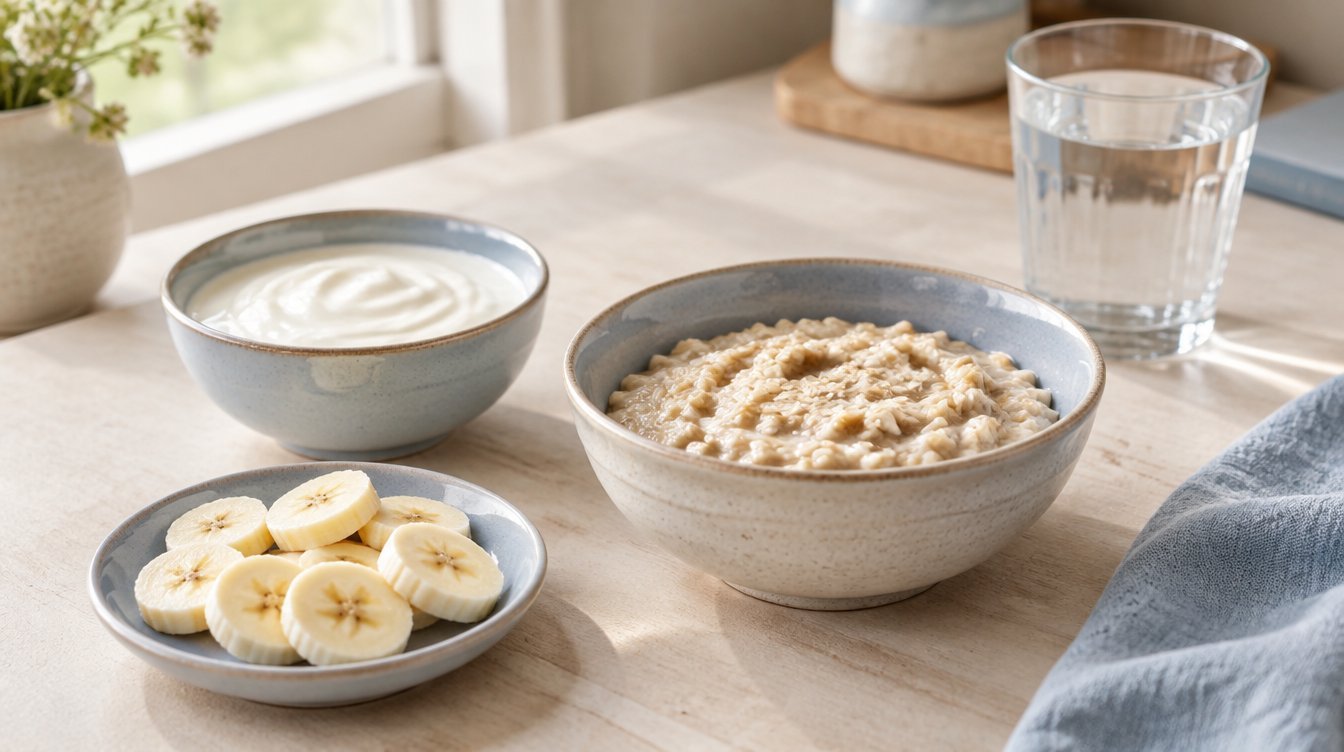
- Gentle foods for the first days: bananas, rice, toast, oatmeal, broth, in case your stomach is upset.
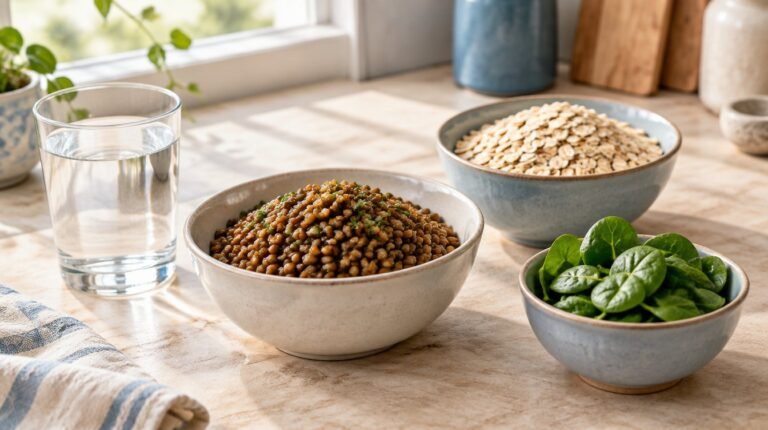
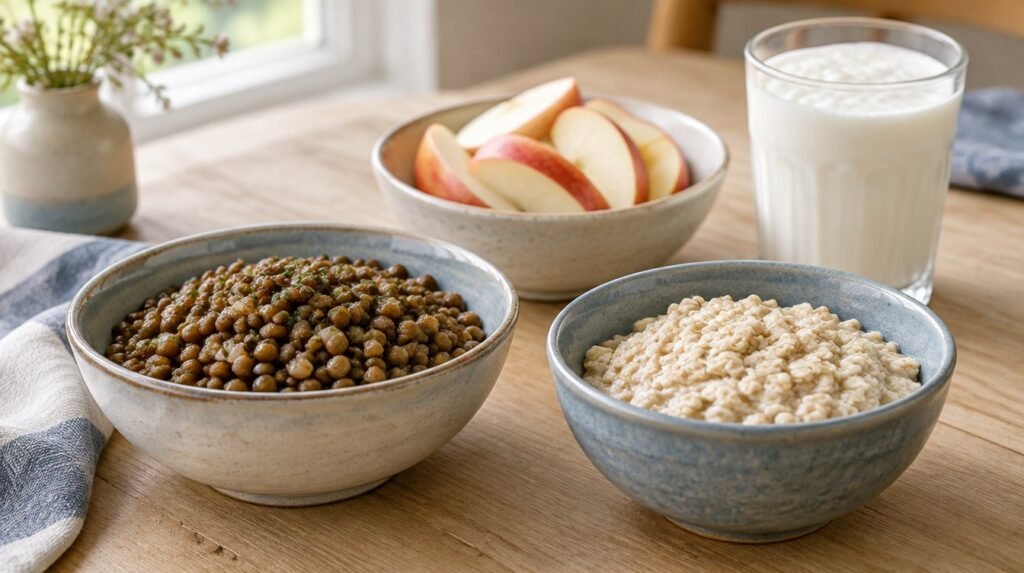
- Fiber-rich foods for later: beans, lentils, oats, whole grains, fruit and vegetables.
- Fermented foods: plain yogurt or kefir with live and active cultures, refrigerated sauerkraut or kimchi.
- Fluids: water and other drinks to replace what you lose if you have diarrhea.
- A simple symptom log: stool frequency, fever or pain, so you can describe changes to a doctor.
How to restore gut health after antibiotics, step by step
Step 1: Take the antibiotic exactly as prescribed
The CDC advises taking antibiotics exactly as prescribed, not saving them for later and not sharing them. Do not stop early or skip doses to protect your gut; talk to your prescriber first if you have concerns. Call a healthcare professional if you develop side effects such as rash or diarrhea.
Step 2: Watch for diarrhea during the course and for a month after
Diarrhea is common while taking antibiotics or after, and most cases are not serious. The CDC notes that people are up to 10 times more likely to get C. difficile (C. diff) infection while taking an antibiotic and during the month after finishing it. C. diff symptoms include diarrhea, fever, stomach tenderness or pain, loss of appetite and nausea. If you develop diarrhea on or after an antibiotic, the CDC advises contacting a healthcare professional.
While your stomach is unsettled, eat small portions of bland foods and keep up fluids. Our guide on what to eat when you have diarrhea covers this in detail.
Step 3: Ask your prescriber whether a probiotic makes sense
Probiotics have the most research for one goal: lowering the chance of diarrhea linked to antibiotics. The evidence is real but modest, and it depends on the strain, the person and the setting.
- Children: a 2019 Cochrane review of 33 trials with 6,352 children found antibiotic-associated diarrhea in 8 percent of those given probiotics versus 19 percent of controls, rated moderate-certainty evidence. Higher-dose products appeared more effective, and the authors said a large trial is still needed to confirm the benefit.
- Adults and children: a 2025 Cochrane update on C. diff included 47 trials with 15,260 people. C. diff diarrhea occurred in 1.6 percent of those given probiotics versus 3.2 percent of controls, about one case prevented for every 65 people treated, rated low-certainty evidence. Antibiotic-associated diarrhea in general occurred in 23 percent versus 27.4 percent, also low certainty. Many trials had ties to probiotic companies.
- Older adults: the NIH Office of Dietary Supplements reports that pooled trials of LGG and Saccharomyces boulardii showed lower risk in people 18 to 64 but not in adults 65 and older, and NCCIH notes a benefit has not been shown in elderly people.
ODS says the available evidence suggests that starting LGG or Saccharomyces boulardii within 2 days of the first antibiotic dose helps reduce the risk. Probiotic supplements are not approved by the FDA for safety or effectiveness before they are sold, and NCCIH says the risk of harmful effects is greater in people with severe illnesses or weakened immune systems. If you are immunocompromised, critically ill, pregnant or have a central line, talk with your doctor before taking any probiotic. For product questions, see our guides to taking too many probiotics and probiotic supplements versus yogurt.
Step 4: Know what the 2018 “probiotics delay recovery” study found
A 2018 study in Cell is often cited as a reason to skip probiotics after antibiotics. According to the Weizmann Institute, which led it, 21 volunteers took broad-spectrum antibiotics and were then split into three groups: no treatment, an 11-strain probiotic for four weeks, or a transplant of their own stool saved before the antibiotics.
Compared with the no-treatment group, the probiotic group had a markedly delayed and incomplete return of their own gut bacteria and gut gene activity, lasting months. The stool transplant group recovered within days. This was one small study of one probiotic mix, with invasive sampling of the gut lining. It does not show that all probiotics delay recovery, and it did not test fermented foods, but it is a reason not to assume a supplement speeds things up.
Step 5: Rebuild fiber over 2 to 4 weeks once your stomach settles
Fiber feeds many of the gut bacteria antibiotics disrupt. The Dietary Guidelines for Americans, 2020-2025 fiber goals work out to about 22 to 28 grams a day for adult women and 28 to 34 grams for adult men, depending on age. Mayo Clinic advises adding fiber slowly over a few weeks and drinking plenty of water to avoid gas, bloating and cramping.
Add one extra serving, such as a half cup of beans, every few days, and vary your plant foods across the week. If food alone falls short, our fiber supplement guide compares the main options.
Step 6: Add fermented foods, one serving a day at first
In a 10-week Stanford trial of 36 healthy adults, those assigned to a high-fermented-food diet, building up to about 6 servings a day of foods like yogurt, kefir and kimchi, saw gut microbiome diversity rise steadily. The trial did not involve antibiotics, so it does not show faster recovery, but fermented foods are a reasonable part of a varied diet. Start with one serving a day and add a second after a week if it sits well. Our guide to fermented foods for gut health lists options.
Step 7: Give it 1 to 2 months and keep the habits
Based on the small studies above, expect most change within the first month or two. There is no test that tells you your gut is “restored,” so judge by regular, comfortable bowel movements. For a longer plan, see our guide on how to improve gut health.
A sample timeline
| When | Focus | Example |
|---|---|---|
| During the course | Take every dose as prescribed; ask about probiotics | Set phone reminders; note any diarrhea, fever or pain |
| Days 1 to 7 after | Gentle foods and fluids if needed | Oatmeal, bananas, rice, broth, water |
| Weeks 2 to 4 | Build fiber and add fermented foods | A half cup of beans daily; one cup of plain yogurt or kefir |
| Weeks 5 to 8 | Widen plant variety and keep going | Count different plants each week and raise the number |
What can go wrong
- Bloating when adding fiber: you added too much too fast. Drop back to the last amount that felt fine and drink more water.
- Diarrhea that will not settle: do not assume it is normal. Contact your doctor, because it may be C. diff.
- Stopping the antibiotic early: this can leave an infection undertreated. Ask your prescriber before changing anything.
- Assuming a probiotic will fix everything: evidence is modest, varies by strain and age, and one small study found a probiotic mix delayed recovery.
When to see a doctor
Contact a healthcare professional if you have diarrhea while taking an antibiotic or after it, especially with fever, stomach pain or tenderness, loss of appetite or nausea (CDC). Get help right away for:
- Diarrhea lasting more than 2 days or six or more loose stools a day (NIDDK).
- High fever, frequent vomiting, severe pain in the abdomen or rectum, or signs of dehydration (NIDDK).
- Stools that are black and tarry or contain blood or pus (NIDDK).
- A rash or other side effect from the antibiotic (CDC).
This article is general information, not medical advice. It does not replace your prescriber’s instructions.
Frequently asked questions
How long does it take for gut bacteria to recover after antibiotics?
In one small study, gut bacteria were near baseline about 1.5 months after a short course, but some species were still missing six months later (Palleja 2018). Recovery varies by person and drug.
Should I take probiotics with antibiotics?
Reviews suggest some probiotics may lower the risk of antibiotic-associated diarrhea, with moderate- to low-certainty evidence. Ask your prescriber, especially if you are older or have a weakened immune system.
Can I eat yogurt while taking antibiotics?
Usually, but check your prescription instructions. For example, ciprofloxacin should not be taken with dairy products alone, though it can be taken with a meal that includes them (MedlinePlus).
Is diarrhea after antibiotics normal?
It is common and often mild, but it can be a sign of C. diff. Contact a healthcare professional if you develop diarrhea on or after an antibiotic (CDC).
Related topics
- How to Improve Gut Health: the full step-by-step habits guide.
- Gut Reset: a 2 to 4 week food-first plan.
- Probiotic vs Yogurt: Which Is Better?: how supplements and food compare.
- Can you Take Too Many Probiotics?: dose and safety questions.
- What to Eat when Stomach is Upset Diarrhea?: gentle foods for the first days.
Sources
- Dethlefsen L, Relman DA. Incomplete recovery and individualized responses of the human distal gut microbiota to repeated antibiotic perturbation (PNAS, 2011)
- Palleja A, et al. Recovery of gut microbiota of healthy adults following antibiotic exposure (Nature Microbiology, 2018)
- Suez J, et al. Post-antibiotic gut mucosal microbiome reconstitution is impaired by probiotics and improved by autologous FMT (Cell, 2018)
- An Inside Look at Probiotics (Weizmann Institute of Science, 2018)
- Guo Q, et al. Probiotics for the prevention of pediatric antibiotic-associated diarrhea (Cochrane Database of Systematic Reviews, 2019)
- Esmaeilinezhad Z, et al. Probiotics for the prevention of Clostridioides difficile-associated diarrhea in adults and children (Cochrane Database of Systematic Reviews, 2025)
- Wastyk HC, et al. Gut-microbiota-targeted diets modulate human immune status (Cell, 2021)
- Healthy Habits: Antibiotic Do’s and Don’ts (Centers for Disease Control and Prevention)
- About C. diff (Centers for Disease Control and Prevention)
- Probiotics: Fact Sheet for Health Professionals (NIH Office of Dietary Supplements)
- Probiotics: Usefulness and Safety (National Center for Complementary and Integrative Health)
- FDA 101: Dietary Supplements (U.S. Food and Drug Administration)
- Dietary Guidelines for Americans, 2020-2025 (U.S. Department of Agriculture and U.S. Department of Health and Human Services)
- Dietary fiber: Essential for a healthy diet (Mayo Clinic)
- Symptoms & Causes of Diarrhea (National Institute of Diabetes and Digestive and Kidney Diseases)
- Ciprofloxacin: MedlinePlus Drug Information (U.S. National Library of Medicine)
This article is for general information and is not medical advice. Talk to your doctor or a registered dietitian before changing your diet, supplements or medication, especially if you have a health condition.