Fermented Cheese: What You Need to Know
What fermented cheese means
Fermented cheese is cheese made by letting bacteria sour the milk, and that describes most cheese. Starter cultures turn milk sugar (lactose) into lactic acid, which the Dairy Science and Technology eBook calls their primary job. What differs from one cheese to the next is how many of those microbes are still alive when you eat it.
There are exceptions. The ISAPP consensus statement on fermented foods, which defines them as foods made through desired microbial growth and enzymatic conversions, notes that some soft cheeses can be made by chemical acidification instead of fermentation. Whether cheese counts as a probiotic is a separate question, covered in Is Cheese a Probiotic?; this article explains the fermentation itself and what happens to the microbes afterward.
How cheese fermentation works
Cheddar is a good example because its steps are written into federal rules and well studied. The U.S. standard for cheddar cheese requires the milk to be subjected to a lactic acid-producing bacterial culture. A 2022 study of long-ripened Cheddar describes the rest of the process:
- Culture and set: starter bacteria, mainly strains of Lactococcus lactis, ferment lactose into lactic acid, and rennet sets the milk into curd.
- Drain and cheddar: the curd is cut and stacked so whey drains out while acid keeps developing.
- Mill and salt: the curd is milled and dry-salted, which halts the starter’s acid production.
- Press and ripen: blocks are pressed and ripened at about 39°F to 46°F (4°C to 8°C) for 4 months to more than 2 years.
During ripening, enzymes from both starter and non-starter bacteria break down protein and fat, which builds the texture and flavor of aged cheese. Cheddar turns from smooth to slightly crumbly and sharp as it ages, so the microbes keep working long after the cheese is made.
What happens to the microbes as cheese ages
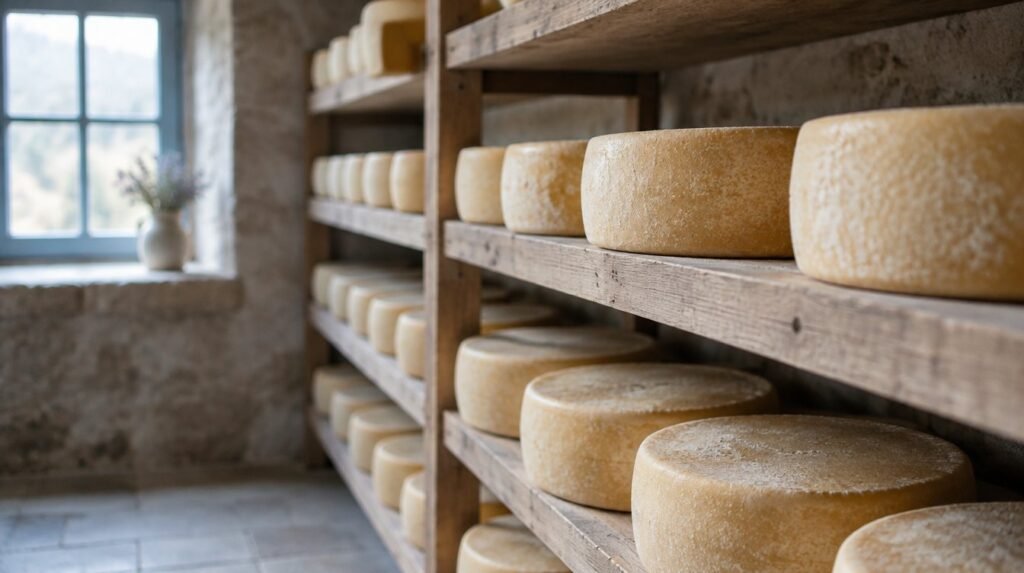
In the Cheddar study, researchers at the University of Guelph followed industrially made Canadian Cheddar from fresh curd to 30 to 32 months. They note that starter bacteria lose viability over time as lactose runs out (around 30 days into Cheddar ripening), along with low moisture, acidity and salt. Other lactic acid bacteria, called non-starter bacteria and mostly lactobacilli, gradually take over.
Even so, the cheese did not end up free of bacteria. Plate counts of starter-type bacteria fell from roughly 10 million to 1 billion per gram in fresh curd to about 1 million to 5 million per gram at 30 to 32 months. This was one study of one cheese style, but it shows that long aging does not necessarily leave a cheese without live bacteria.
Which cheeses tend to keep live cultures
A 2022 study in the Journal of Nutrition had experts estimate live microbes in foods eaten in the U.S. The ratings were estimates from expert review and published research, not lab counts of individual products. In the full paper, the authors placed most cheeses in their highest group, above 10 million live microbes per gram, with three exceptions:
| Type of cheese | Examples | Expected live microbes | Why |
|---|---|---|---|
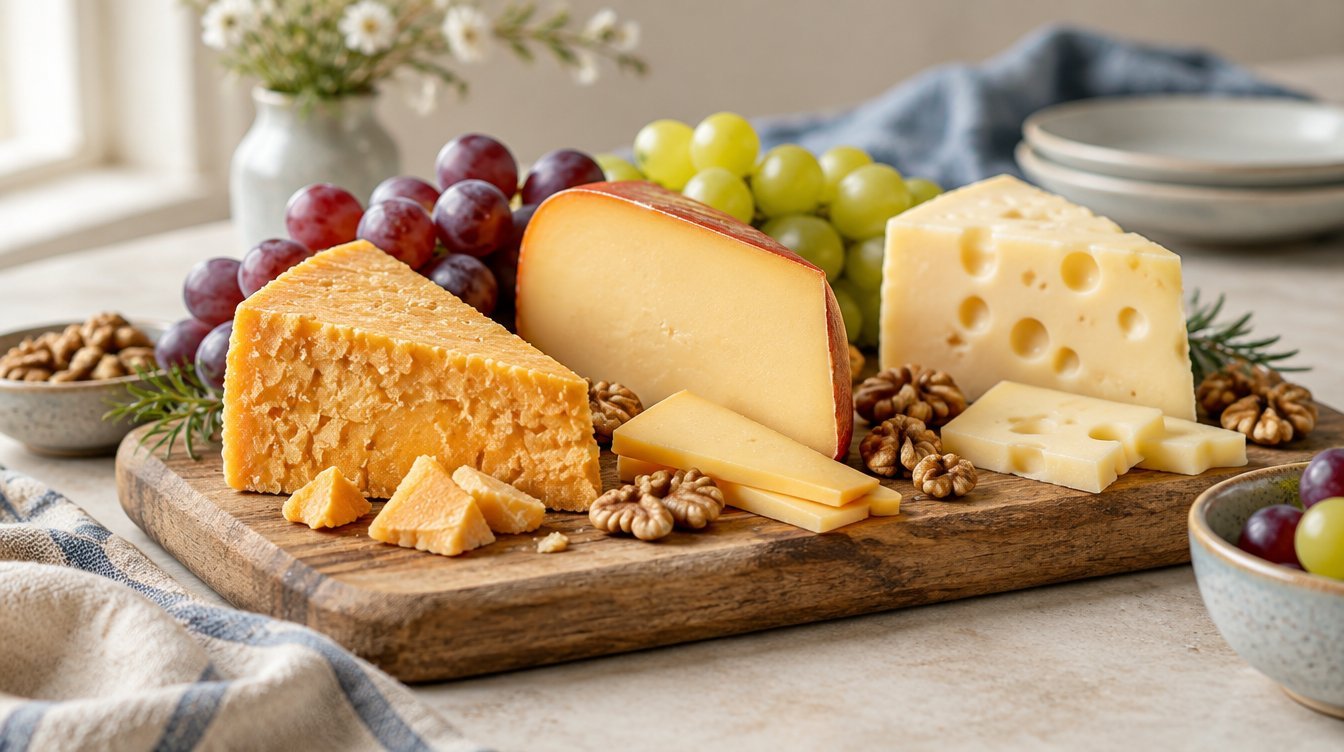
| Natural, aged, eaten unheated | Cheddar, gouda, Swiss | High | Fermented and not heat-treated afterward |
| Long-aged | Parmesan | Rated lower | Long aging |
| Pizza-type cheese | Mozzarella on pizza | Rated lower | Usually heated before eating |
| Pasteurized process cheese | American slices | Rated lower | A pasteurized product, heated to at least 150°F for 30 seconds during manufacture (21 CFR 133.169) |
Cooking cheese at home follows the same logic: the experts rated pizza-type cheese lower because it is usually heated before eating, even though it was made by fermentation. ISAPP suggests that foods pasteurized after fermentation be described as “made by fermentation” rather than as containing live cultures. Fresh cheeses vary by maker; our guide to whether cottage cheese has probiotics explains how to read those labels.
Fermented cheese and gut health
Fermented foods as a group have some human research behind them. In a 17-week Stanford trial with 18 healthy adults per group, a diet high in fermented foods steadily increased microbiome diversity and lowered inflammatory markers. The fermented foods participants ate included yogurt, kefir, kimchi and fermented cottage cheese; the study did not test aged cheese on its own.
So aged cheese is best seen as one fermented food among several rather than a gut treatment. Our guide to fermented foods for gut health compares the options, and probiotic foods covers foods with named, studied strains.
Lactose, sodium and saturated fat
Fermentation and ripening leave most hard cheeses with very little lactose. NIDDK notes that hard cheeses like cheddar or Swiss are lower in lactose than other milk products, and some people with lactose intolerance tolerate them more easily. The tradeoff is sodium and saturated fat, so portion size matters. Values below are calculated from USDA FoodData Central; percentages use the FDA Daily Values of 2,300 mg sodium and 20 g saturated fat.
| Food (USDA FoodData Central) | Serving | Lactose | Sodium | Saturated fat |
|---|---|---|---|---|
| Cheddar | 1 oz | 0.03 g | 185 mg (8% DV) | 5.4 g (27% DV) |
| Swiss | 1 oz | 0 g | 53 mg (2% DV) | 5.2 g (26% DV) |
| Parmesan, hard | 1 oz | not listed | 335 mg (15% DV) | 4.2 g (21% DV) |
| Feta | 1 oz | not listed | 323 mg (14% DV) | 3.8 g (19% DV) |
| Blue cheese | 1 oz | not listed | 326 mg (14% DV) | 5.3 g (27% DV) |
| American, pasteurized process | 1 oz | 0.6 g | 473 mg (21% DV) | 5.1 g (26% DV) |
| Cottage cheese, creamed | 4 oz | 3.0 g | 356 mg (15% DV) | 1.9 g (10% DV) |
| Whole milk, for comparison | 1 cup | 12.3 g | 105 mg (5% DV) | 4.5 g (23% DV) |
Swiss stands out for low sodium, while feta, blue and processed cheese carry several times as much per ounce.
Raw-milk cheese, listeria and pregnancy
Some fermented cheeses are made from raw (unpasteurized) milk. U.S. rules allow raw-milk cheddar if it is aged for at least 60 days at no less than 35°F (21 CFR 133.113). CDC advice for higher-risk groups to avoid raw-milk cheese still applies to aged raw-milk cheeses.
The CDC says pregnant women are 10 times more likely to get a Listeria infection. For pregnant people, adults 65 and older and people with weakened immune systems, it advises avoiding any cheese made with raw milk and unheated queso fresco-type cheeses, even when pasteurized. It lists hard cheeses made with pasteurized milk, such as cheddar, Parmesan and Swiss, as safer choices, and says soft or raw-milk cheeses can be eaten if heated to 165°F or until steaming hot.
According to the CDC, Listeria in pregnancy usually causes fever and flu-like symptoms, and can lead to miscarriage, stillbirth or a life-threatening infection in the newborn. Contact a healthcare provider if you ate a recalled or outbreak-linked cheese and develop a fever or other symptoms. This article is general information, not medical advice.
How to choose fermented cheese
- For live cultures: pick natural aged cheese such as cheddar, gouda or Swiss over processed slices, and eat some of it unheated.
- For low lactose: hard, aged cheeses are the usual first choice.
- For sodium: Swiss is among the lowest; feta, blue and processed cheese are among the highest.
- For pregnancy or a weakened immune system: look for “made with pasteurized milk” on the label.
- For portion control: keep servings near 1 ounce because of the saturated fat.
Related topics
- Is Cheese a Probiotic?: when live cultures count as probiotics.
- Does Cottage Cheese Have Probiotics?: reading fresh-cheese labels.
- Fermented Foods for Gut Health: how cheese compares with yogurt, kefir and kimchi.
- How is Yogurt Made?: the same lactic acid fermentation in a softer food.
- Best Foods for Gut Health: building a gut-friendly diet.
Sources
- Goff HD, Hill A, Ferrer MA. Starter Cultures. In: Dairy Science and Technology eBook (University of Guelph)
- 21 CFR 133.113 Cheddar cheese (Electronic Code of Federal Regulations)
- 21 CFR 133.169 Pasteurized process cheese (Electronic Code of Federal Regulations)
- Marco ML, et al. The International Scientific Association for Probiotics and Prebiotics (ISAPP) consensus statement on fermented foods (Nature Reviews Gastroenterology & Hepatology, 2021)
- Barzideh Z, et al. Dynamics of starter and non-starter lactic acid bacteria populations in long-ripened Cheddar cheese using propidium monoazide (PMA) treatment (Microorganisms, 2022)
- Marco ML, et al. A classification system for defining and estimating dietary intake of live microbes in US adults and children (Journal of Nutrition, 2022)
- Wastyk HC, et al. Gut-microbiota-targeted diets modulate human immune status (Cell, 2021)
- Eating, Diet, & Nutrition for Lactose Intolerance (National Institute of Diabetes and Digestive and Kidney Diseases)
- Daily Value on the Nutrition and Supplement Facts Labels (U.S. Food and Drug Administration)
- Safer Food Choices for Pregnant Women (Centers for Disease Control and Prevention)
- Preventing Listeria Infection (Centers for Disease Control and Prevention)
- Symptoms of Listeria Infection (Centers for Disease Control and Prevention)
- Cheese, cheddar (FDC ID 173414) (USDA FoodData Central)
- Cheese, swiss (FDC ID 171251) (USDA FoodData Central)
- Cheese, parmesan, hard (FDC ID 170848) (USDA FoodData Central)
- Cheese, feta (FDC ID 173420) (USDA FoodData Central)
- Cheese, blue (FDC ID 172175) (USDA FoodData Central)
- Cheese, pasteurized process, American, fortified with vitamin D (FDC ID 170853) (USDA FoodData Central)
- Cheese, cottage, creamed, large or small curd (FDC ID 172179) (USDA FoodData Central)
- Milk, whole, 3.25% milkfat, with added vitamin D (FDC ID 171265) (USDA FoodData Central)