Carnivore Diet and Gut Health: A Practical Guide
What the carnivore diet is
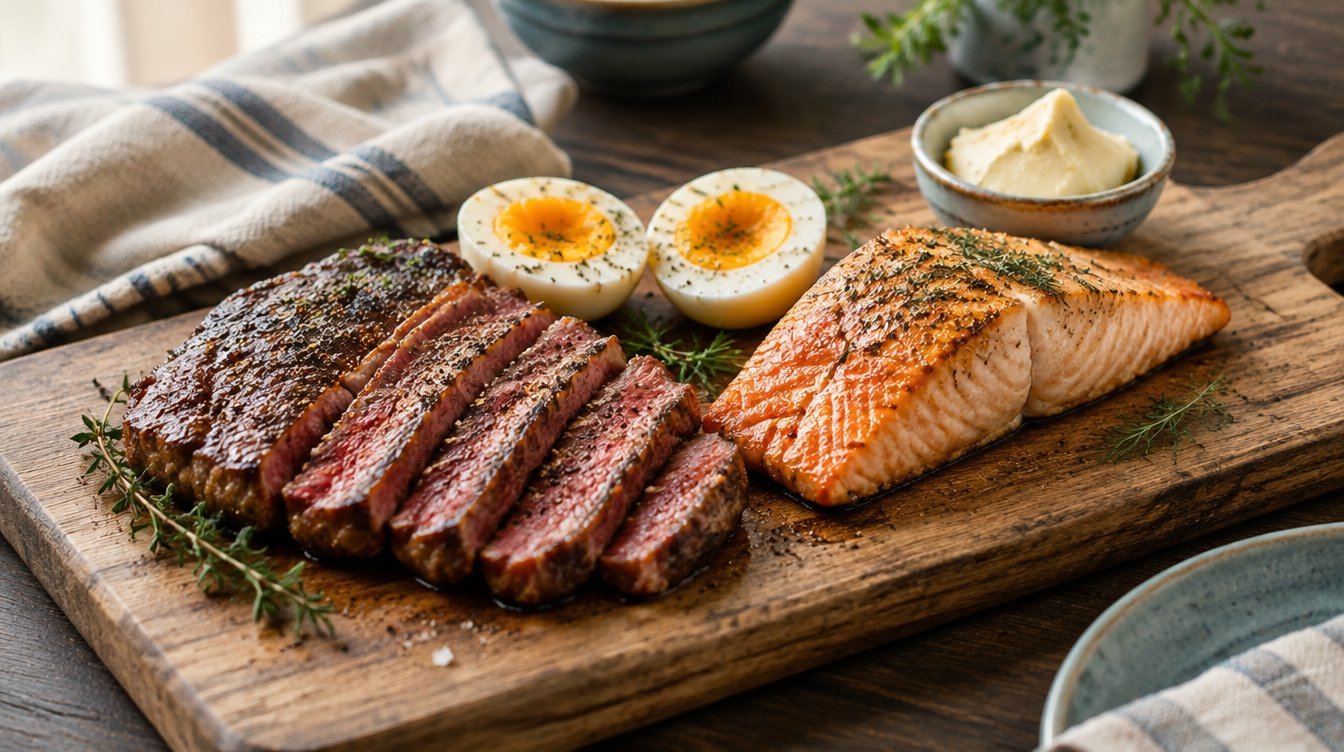
The carnivore diet is an eating pattern built almost entirely on animal foods: beef and other meats, fish, eggs and, for some people, butter, cheese and other dairy. Fruit, vegetables, grains, beans, nuts and seeds are left out. There is no single official version, and a 2026 scoping review in Nutrients noted that a standard definition is still lacking.
For gut health, the key fact is simple. Dietary fiber comes only from plants, so a strict carnivore diet supplies almost none. Fiber is the main food for many of the bacteria in the large intestine, so removing it changes what those bacteria do.
This guide is general information, not medical advice. Talk to your doctor before making a large diet change, especially if you have a health condition or take medication.
Why it matters for gut health
What a short controlled study showed
The most cited experiment is a 2014 study in Nature from Harvard and Duke researchers. Ten American volunteers, aged 21 to 33, ate an animal-based diet of meats, eggs and cheeses for five days and, separately, a plant-based diet for five days. Fiber intake on the animal-based diet was close to zero.
Within days, the gut bacteria changed. Bile-tolerant microbes such as Alistipes, Bilophila and Bacteroides rose, while bacteria that break down plant fibers, including Roseburia and Ruminococcus bromii, fell. Stool samples showed fewer products of carbohydrate fermentation and more products of protein fermentation, and levels of deoxycholic acid, a secondary bile acid, went up.
The study was small and lasted only five days, so it shows how fast the microbiome responds, not what happens over months or years. The animal-based diet also included cheese, so it was not identical to a meat-only plan.
What carnivore eaters report
A 2021 social media survey by Boston-based researchers gathered answers from 2,029 adults who had eaten a carnivore diet for at least six months. Most reported high satisfaction and better overall health, and only 3.1% to 5.5% reported gastrointestinal symptoms. Among those who shared lab results, LDL cholesterol was markedly elevated, with a median of 172 mg/dL.
This was a self-selected survey with self-reported results and no comparison group. People who felt worse may have quit the diet before they could answer, so the findings cannot show what the diet does for most people.
The fiber and constipation question
NIDDK lists not eating enough fiber as one cause of constipation, and Mayo Clinic notes that insoluble fiber adds bulk to stool. Some carnivore advocates point to a 2012 study in which 63 people with long-term constipation were asked to stop or cut fiber; those who did reported more frequent bowel movements and less bloating at six months.
That study was not randomized or blinded, it included only people with a specific type of constipation, and patients chose their own fiber level. It does not show that removing fiber helps people in general. The 2026 scoping review described below found no controlled trials of the carnivore diet, so long-term changes in bowel habits are not well studied.
Longer-term concerns
The 2026 scoping review found only nine human studies, most small, short and without control groups. It flagged risks of low intakes of fiber, vitamin C, vitamin D, calcium, magnesium and iodine, along with raised LDL and total cholesterol. The authors concluded that long-term adherence cannot be recommended at this time.
Two other findings tie red meat to gut-bacteria pathways. In a randomized feeding study of 113 adults, four weeks of red meat more than doubled blood and urine levels of TMAO, a compound made with help from gut bacteria that researchers study in heart disease. Levels fell within four weeks of stopping red meat. Separately, the World Health Organization’s cancer agency classifies processed meat as carcinogenic to humans and red meat as probably carcinogenic, mainly based on colorectal cancer.
How the main versions compare
| Version | What it includes | Gut-relevant features |
|---|---|---|
| Strict carnivore | Meat, fish, eggs, water, salt | Near-zero fiber; no fermented foods |
| Carnivore with dairy | Adds butter, cheese and sometimes yogurt or kefir | Still near-zero fiber; fermented dairy can add live microbes |
| Animal-based with some plants | Mostly animal foods plus fruit, honey or a few vegetables | Some fiber; closer to standard advice |
If you decide to try it: a practical approach

The research does not support a strict carnivore diet as a long-term plan for gut health. If you still want to try it, these steps keep the experiment safer and easier to judge.
- Check with your doctor first. This matters most if you take medicine for diabetes or blood pressure, are pregnant, or have kidney disease, heart disease or a history of disordered eating. Ask about baseline blood work, including cholesterol.
- Set a time limit. Decide in advance how long the trial will run, such as four weeks, and what you are watching for.
- Keep a simple log. Note bowel movements, stool consistency, bloating, energy and sleep. That gives you real data instead of a general impression.
- Favor fish, eggs and unprocessed meats over processed meats. The WHO classification is strongest for processed meat.
- Consider fermented dairy if you tolerate it. In a 17-week Stanford trial of 36 healthy adults, a diet high in fermented foods such as yogurt and kefir steadily increased gut microbiota diversity and lowered several inflammatory markers. Plain yogurt and kefir are animal foods, so they fit many versions of the diet. See our guides to yogurt for gut health and kefir benefits.
- Bring plants back slowly. After weeks with almost no fiber, a big salad or a bowl of beans can cause gas and cramping. Mayo Clinic advises adding fiber gradually over a few weeks and drinking plenty of water. Cooked vegetables and fruit are a gentle place to start.
If your goal is a calmer gut rather than a meat-only diet, a gut health diet plan with lean proteins, cooked vegetables and fermented foods keeps fiber in the picture.
When to see a doctor
Diet changes often shift bowel habits for a while. NIDDK says to see a doctor right away if constipation comes with any of the following (NIDDK):
- Bleeding from the rectum or blood in your stool
- Constant pain in your abdomen
- Being unable to pass gas, or vomiting
- Fever or lower back pain
- Losing weight without trying
Ongoing diarrhea, fewer than three bowel movements a week that does not improve, or symptoms that worry you are also reasons to call your doctor. Our guide to constipation relief covers everyday steps.
Related topics
- Best Foods for Gut Health: the foods with the most research behind them.
- Worst Foods for Gut Health: including processed meats.
- Bone Broth Benefits: an animal food often used on carnivore plans, and what the evidence shows.
- Probiotic Foods: fermented options, many of them dairy.
- Gut Health Diet Plan: a balanced alternative with fiber.
Sources
- Lietz A, et al. Carnivore Diet: A Scoping Review of the Current Evidence, Potential Benefits and Risks (Nutrients, 2026)
- David LA, et al. Diet rapidly and reproducibly alters the human gut microbiome (Nature, 2014)
- Lennerz BS, et al. Behavioral Characteristics and Self-Reported Health Status among 2029 Adults Consuming a “Carnivore Diet” (Current Developments in Nutrition, 2021)
- Ho KS, et al. Stopping or reducing dietary fiber intake reduces constipation and its associated symptoms (World Journal of Gastroenterology, 2012)
- Wang Z, et al. Impact of chronic dietary red meat, white meat, or non-meat protein on trimethylamine N-oxide metabolism and renal excretion in healthy men and women (European Heart Journal, 2019)
- Wastyk HC, et al. Gut-microbiota-targeted diets modulate human immune status (Cell, 2021)
- Cancer: Carcinogenicity of the consumption of red meat and processed meat (World Health Organization)
- Symptoms & Causes of Constipation (NIDDK)
- Dietary fiber: Essential for a healthy diet (Mayo Clinic)