Constipation Relief: What You Need to Know
What counts as constipation
The NIDDK defines constipation as having fewer than three bowel movements a week, or stools that are hard, dry or lumpy, difficult or painful to pass, or that leave a feeling that not everything has come out. About 16 in 100 adults have symptoms, and about 33 in 100 adults age 60 and older.
On the Bristol Stool Form Scale, types 1 and 2 (separate hard lumps, or lumpy sausage shapes) suggest constipation, according to the Cleveland Clinic. This article is general information, not medical advice.
Why it happens
Most constipation has everyday causes. The NIDDK lists not eating enough fiber, not drinking enough fluids, not getting enough exercise, travel, pregnancy, aging and ignoring the urge to go. Many medicines can cause it too, including iron supplements, narcotic pain medicines, some antacids and some blood pressure and depression medicines.
It can also be a symptom of other conditions, such as IBS, celiac disease, diabetes, an underactive thyroid or a blockage in the bowel. Don’t stop or change a prescribed medicine on your own; the NIDDK advises talking with a health care professional first. Constipation is one of the common symptoms covered in 10 signs of an unhealthy gut.
First-line steps with evidence
| Step | What the evidence shows |
|---|---|
| More fiber, added slowly | Recommended by the NIDDK; a conditional recommendation for fiber supplements in the 2023 AGA-ACG guideline |
| Fluids with that fiber | One older trial found more water boosted the effect of a high-fiber diet |
| Kiwifruit or prunes | Small trials show more frequent, softer stools |
| Regular movement | Meta-analysis suggests benefit, but studies had a high risk of bias |
| Feet on a footstool | Small study in healthy volunteers found less straining |
| A regular toilet routine | Advised by the NIDDK; going when you feel the urge |
Fiber, added a little at a time
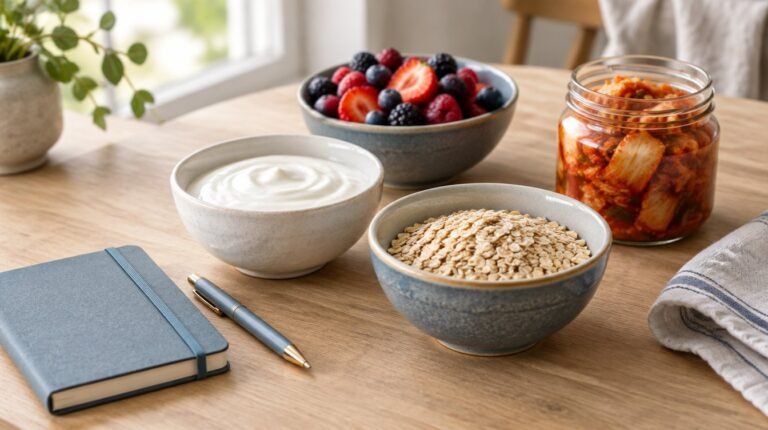
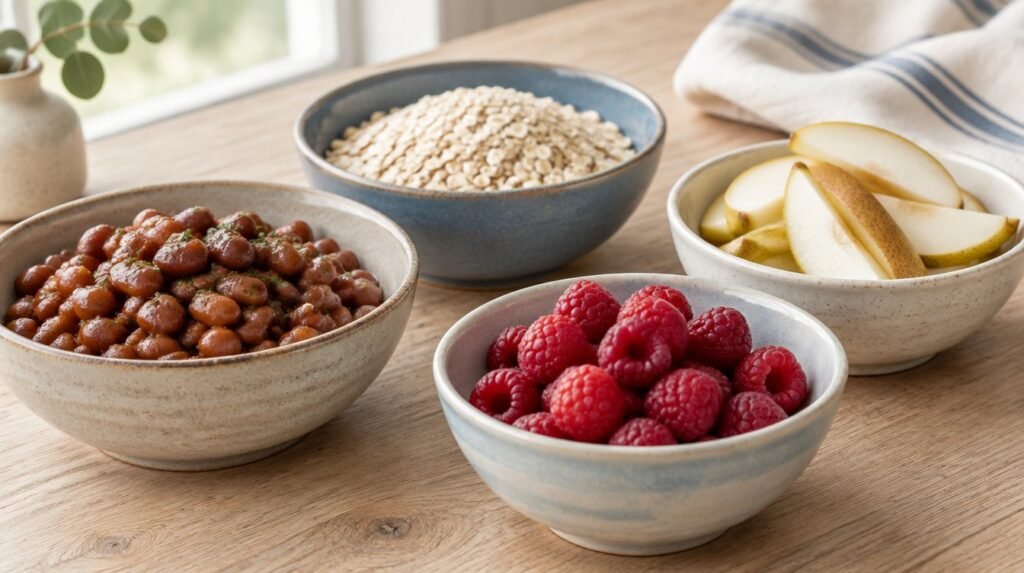
Adults should get 22 to 34 grams of fiber a day depending on age and sex, according to the NIDDK. Good sources include whole grains, oatmeal, bran cereal, beans, lentils, chickpeas, berries, apples with the skin on, pears, broccoli, peas and nuts. Add fiber gradually so your body gets used to the change. Our list of the best foods for gut health has more ideas.
If food alone isn’t enough, fiber supplements are one option. The 2023 AGA-ACG guideline on chronic constipation gave fiber a conditional recommendation, a weaker grade than it gave some laxatives. Our guide to choosing a fiber supplement compares the main types.
Fluids alongside the fiber
The NIDDK says to drink water and other liquids so fiber works better. In a 1998 trial of 117 adults with chronic constipation, everyone ate about 25 grams of fiber a day for two months. Those told to drink 2 liters of mineral water a day had a bigger increase in stool frequency than those who drank as they liked. It is one older study, and the extra fluid was mineral water. The NIDDK suggests asking a health care professional how much liquid you need each day.
Kiwifruit and prunes
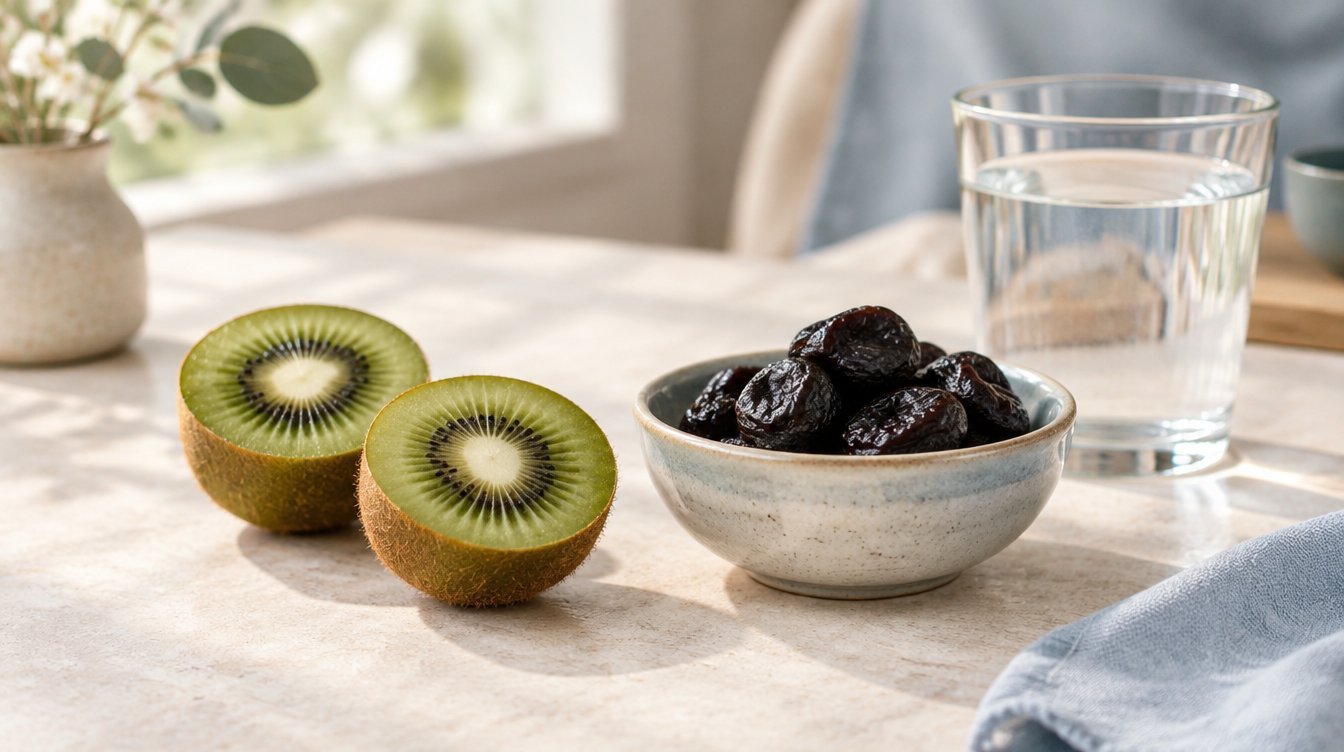
In a 2021 US trial of 79 adults with chronic constipation, two green kiwifruit a day, prunes and psyllium all increased complete bowel movements over four weeks. Kiwifruit and prunes improved stool consistency, and kiwifruit caused the fewest side effects and the least dissatisfaction.
Two other trials point the same way. In a 2011 crossover trial of 40 adults, prunes improved bowel movement frequency and stool consistency more than psyllium over three weeks. In a 2023 multicenter trial of 184 people in New Zealand, Japan and Italy, two green kiwifruit a day for four weeks increased complete bowel movements by about 1.5 a week in people with constipation. That trial was largely funded by Zespri, a kiwifruit company.
The 2025 British Dietetic Association guidelines, based on 75 randomized trials, include recommendations on kiwifruit, prunes, rye bread, high-mineral water and fiber supplements, though most statements rest on low or very low certainty evidence.
Move more
Regular physical activity may help relieve symptoms, according to the NIDDK. A 2019 meta-analysis of nine randomized trials with 680 participants found exercise, mostly walking, qigong and other aerobic activity, improved constipation symptoms. The authors noted a high risk of bias, so the size of the benefit is uncertain.
Try a footstool
Raising your feet may make it easier to go. The NIDDK suggests trying to relax your muscles or resting your feet on a footstool. In a 2019 study of 52 healthy volunteers, using a toilet footstool for two weeks was linked with shorter bowel movements, less straining and a better feeling of emptying. The participants weren’t constipated, so treat this as a low-risk thing to try rather than a proven fix.
Build a bathroom routine
Eating prompts the colon to move stool. The NIDDK says a doctor may suggest going at the same time each day, such as 15 to 45 minutes after breakfast, and going as soon as you feel the need. Holding it in is one of the listed causes of constipation.
Over-the-counter options the guideline covers
If diet and habits aren’t enough, the AGA-ACG guideline reviewed several kinds of over-the-counter and prescription treatments for chronic constipation in adults:
- Fiber supplements: a conditional recommendation.
- Osmotic laxatives: a strong recommendation for polyethylene glycol, and conditional recommendations for magnesium oxide and lactulose.
- Stimulant laxatives: strong recommendations for bisacodyl and sodium picosulfate, and a conditional one for senna.
- Prescription medicines: secretagogues and prucalopride, which need a doctor’s prescription.
The NIDDK says stimulant laxatives should only be used if constipation is severe or other treatments haven’t worked, and that people who have used laxatives for a long time should ask a doctor how to slowly stop. Talk with a doctor or pharmacist before using any laxative regularly, especially if you are pregnant or take other medicines. Colon cleanses are a different thing; see our article on the colon cleanse.
When to see a doctor
See a doctor if constipation doesn’t improve with self-care or if you have a family history of colon or rectal cancer. Get care right away if you have any of these, according to the NIDDK:
- Bleeding from the rectum or blood in your stool.
- Constant pain in your abdomen.
- Being unable to pass gas.
- Vomiting or fever.
- Lower back pain.
- Losing weight without trying.
The American Cancer Society recommends people at average risk start regular colorectal cancer screening at age 45. A lasting change in your bowel habits is worth raising with a doctor at any age. This article is general information, not medical advice.
Frequently asked questions
What is the fastest natural constipation relief?
No single option works fastest for everyone. Kiwifruit, prunes and fiber taken with enough fluid have trial evidence behind them, and those trials measured results over three to four weeks.
How often should you have a bowel movement?
Most adults with normal bowel habits go between three times a day and three times a week, according to a US national survey. Fewer than three a week meets the NIDDK definition of constipation.
Is it OK to take a laxative every day?
Ask a doctor first. The NIDDK says stimulant laxatives are for severe constipation or when other treatments have failed, and long-term users should get help to stop slowly.
When is constipation an emergency?
Get care right away for rectal bleeding, blood in your stool, constant belly pain, being unable to pass gas, vomiting or fever (NIDDK).
Related topics
- Fiber Supplement: how the main fiber types compare.
- Best Foods for Gut Health: high-fiber foods to add to meals.
- 10 Signs of an Unhealthy Gut: which digestive symptoms are red flags.
- Signs your Gut is Healing: how to track whether changes are working.
Sources
- Definition & Facts for Constipation (National Institute of Diabetes and Digestive and Kidney Diseases)
- Bristol Stool Chart: Types & What They Mean (Cleveland Clinic)
- Mitsuhashi S, et al. Characterizing normal bowel frequency and consistency in a representative sample of adults in the United States (NHANES) (American Journal of Gastroenterology, 2018)
- Symptoms & Causes of Constipation (National Institute of Diabetes and Digestive and Kidney Diseases)
- Treatment for Constipation (National Institute of Diabetes and Digestive and Kidney Diseases)
- Eating, Diet, & Nutrition for Constipation (National Institute of Diabetes and Digestive and Kidney Diseases)
- Chang L, et al. American Gastroenterological Association-American College of Gastroenterology Clinical Practice Guideline: Pharmacological Management of Chronic Idiopathic Constipation (Gastroenterology, 2023)
- Anti M, et al. Water supplementation enhances the effect of high-fiber diet on stool frequency and laxative consumption in adult patients with functional constipation (Hepato-Gastroenterology, 1998)
- Chey SW, et al. Exploratory comparative effectiveness trial of green kiwifruit, psyllium, or prunes in US patients with chronic constipation (American Journal of Gastroenterology, 2021)
- Attaluri A, et al. Randomised clinical trial: dried plums (prunes) vs. psyllium for constipation (Alimentary Pharmacology & Therapeutics, 2011)
- Gearry R, et al. Consumption of 2 green kiwifruits daily improves constipation and abdominal comfort: results of an international multicenter randomized controlled trial (American Journal of Gastroenterology, 2023)
- Dimidi E, et al. British Dietetic Association guidelines for the dietary management of chronic constipation in adults (Journal of Human Nutrition and Dietetics, 2025)
- Gao R, et al. Exercise therapy in patients with constipation: a systematic review and meta-analysis of randomized controlled trials (Scandinavian Journal of Gastroenterology, 2019)
- Modi RM, et al. Implementation of a defecation posture modification device: impact on bowel movement patterns in healthy subjects (Journal of Clinical Gastroenterology, 2019)
- Colorectal Cancer Guideline: How Often to Have Screening Tests (American Cancer Society, revised 2026)
This article is for general information and is not medical advice. Talk to your doctor or a registered dietitian before changing your diet, supplements or medication, especially if you have a health condition.