GERD Diet: A Practical Guide
What a GERD diet is
A GERD diet is a way of eating that tries to cut down on heartburn and regurgitation by changing what, how much and when you eat. There is no single official menu. The National Institute of Diabetes and Digestive and Kidney Diseases (NIDDK) suggests talking with your doctor about foods that seem to make symptoms worse, and trying to reduce or avoid them to see if things improve (NIDDK).
Some changes have decent evidence behind them, such as losing extra weight and not eating right before bed. Others, like cutting coffee or chocolate, help some people and do nothing for others. This guide sorts the two.
This article is general information, not medical advice. GERD can need medical treatment, and a doctor should check symptoms that are frequent, severe or changing.
Why food and habits matter
GERD (gastroesophageal reflux disease) happens when stomach contents keep flowing back up into the esophagus. A ring of muscle at the bottom of the esophagus, the lower esophageal sphincter, normally keeps them down. GERD may develop when that muscle is weak or relaxes at the wrong times. Extra body weight, pregnancy, smoking, a hiatal hernia and some medicines can all play a part (NIDDK).
Food affects this in a few ways. In lab studies, alcohol, smoking, chocolate, peppermint and high-fat foods lower the pressure of that muscle. Coffee, caffeine, citrus and spicy food had little effect on it, but they may still irritate the esophagus and trigger symptoms in some people, according to the American College of Gastroenterology (ACG) guideline (Katz et al., American Journal of Gastroenterology, 2022).
What the evidence supports
The ACG guideline grades each lifestyle step. Only one gets a strong recommendation. The rest are “conditional” suggestions based on low-quality evidence, which means they are reasonable to try but not proven for everyone.
| Change | How strong the evidence is | Source |
|---|---|---|
| Lose weight if you are overweight | Strong recommendation, moderate evidence | ACG 2022 |
| Avoid meals within 2 to 3 hours of bedtime | Conditional, low evidence | ACG 2022 |
| Raise the head of the bed for night symptoms | Conditional, low evidence; several small trials show less night-time acid | ACG 2022 |
| Avoid your own “trigger foods” | Conditional, low evidence | ACG 2022 |
| Stop smoking | Conditional, low evidence | ACG 2022 |
| Cut out coffee | Mixed; a meta-analysis of 15 case-control studies found no overall link | Kim et al., 2014 |
Weight has the most support. In a Nurses’ Health Study survey of 10,545 women, the risk of frequent reflux symptoms rose step by step with body mass index, and even women of normal weight who gained more than 3.5 BMI units had higher odds of symptoms (Jacobson et al., NEJM, 2006). In Norway’s HUNT study, which followed 29,610 adults for about a decade, people who lost weight were more likely to report that their reflux symptoms had eased (Ness-Jensen et al., 2013). Both are observational studies, so they show a link rather than proof.
An older review that looked for trials of food changes found physiological reasons to suspect fat, chocolate and alcohol, but no published trials showing that cutting them improved GERD. Weight loss and raising the head of the bed were the measures with support (Kaltenbach et al., Archives of Internal Medicine, 2006). That is why a GERD diet works best when it is built around your own triggers rather than a long ban list.
Foods commonly linked to symptoms
NIDDK lists these foods and drinks as commonly linked to GERD symptoms (NIDDK):
- Acidic foods: citrus fruits and tomatoes, including sauces and juices.
- Alcoholic drinks.
- Chocolate.
- Coffee and other caffeine sources, such as tea, energy drinks and many sodas.
- High-fat foods, including fried foods and rich sauces.
- Mint, such as peppermint tea or mints.
- Spicy foods.
Mayo Clinic adds that large meals, late-night eating, fatty or fried foods, alcohol and coffee can aggravate reflux (Mayo Clinic). Carbonated drinks also appear on the ACG’s list of foods often blamed (ACG 2022). If you are curious about heat specifically, our look at whether spicy food is good for you covers that research.
How to find your own triggers
- Keep a simple log for two weeks: what you ate, how much, the time, and any symptoms over the next few hours.
- Look for patterns, not single bad nights. One heavy restaurant meal tells you less than five similar evenings.
- Remove one suspect at a time for a week or two, then add it back. If symptoms return, you have a likely trigger.
- Bring the log to your doctor. NIDDK specifically suggests discussing foods and drinks that seem to increase symptoms.
How to build meals around it
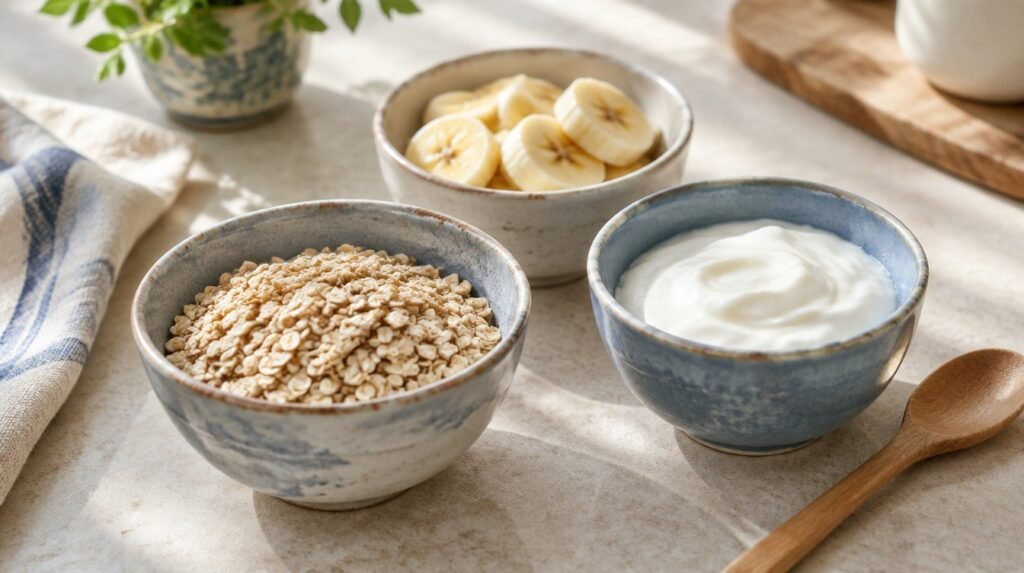
The goal is meals that are moderate in size, not too fatty, and free of whatever your log flags. That still leaves plenty of room. A few practical swaps:
- Go smaller and more often. The NHS suggests smaller, more frequent meals rather than three large ones (NHS).
- Bake, grill or steam instead of frying. This cuts the fat that Mayo Clinic and NIDDK both flag, without cutting protein.
- Build sauces without tomato or citrus if those bother you. Herbs or a little olive oil can stand in.
- Swap some coffee, tea or soda for water. In Nurses’ Health Study data summarized in the ACG guideline, replacing two daily servings of coffee, tea or soda with water was linked with fewer reflux symptoms (ACG 2022).
- Choose desserts without chocolate or mint on the days you have symptoms.
If certain foods are hard for you in general, our guides to easy-to-digest foods, eating for a sensitive stomach and foods that slow digestion can help you plan meals that feel lighter.
Timing, portions and sleep
When you eat may matter as much as what you eat. NIDDK says eating meals at least 3 hours before you lie down or go to bed may improve symptoms (NIDDK). The NHS suggests not eating within 3 or 4 hours of bedtime (NHS). In a Japanese case-control study of 147 people with GERD and 294 matched controls, finishing dinner less than 3 hours before bed was linked with about seven times the odds of GERD compared with leaving 4 hours or more (Fujiwara et al., 2005). It was a small, observational study, but it fits the general advice.
For night-time symptoms, NIDDK suggests raising the head of your bed by 6 to 8 inches (NIDDK). The NHS recommends doing this with blocks under the bed legs and warns that piling up extra pillows can increase pressure on your belly (NHS). The ACG guideline also notes that lying on your right side increases reflux compared with lying on your left.
A few non-food habits round this out: avoid clothes that are tight around the waist, do not smoke, and do not stop any prescribed medicine without talking to a doctor first (NHS).
When to see a doctor
Seek medical help right away for chest pain, especially with shortness of breath or jaw or arm pain, because these can be signs of a heart attack (Mayo Clinic). Also see a doctor if you have any of these (NIDDK; NHS):
- Trouble swallowing, pain when swallowing, or food that feels stuck.
- Persistent vomiting, or vomit with blood or that looks like coffee grounds.
- Black, tarry stools.
- Loss of appetite or unexplained weight loss.
- Heartburn most days, or symptoms that do not improve with lifestyle changes or over-the-counter medicines.
- Needing nonprescription heartburn medicine more than twice a week (Mayo Clinic).
Diet changes work alongside medical care, not in place of it. If you have been diagnosed with GERD, ask your doctor which changes make sense for you.
Related topics
- Stomach Problems: The Complete Guide: how reflux fits among other common stomach complaints.
- Coffee and Gut Inflammation: what the research says about coffee and the gut.
- Best Tea for Digestion: caffeine-free options if coffee and black tea bother you.
- What to Drink After a Meal to Help Digestion: drinks that fit a lighter evening routine.
- Gut Health Diet Plan: a broader eating pattern you can adapt around your triggers.
Sources
- Eating, Diet, & Nutrition for GER & GERD (National Institute of Diabetes and Digestive and Kidney Diseases)
- Symptoms & Causes of GER & GERD (National Institute of Diabetes and Digestive and Kidney Diseases)
- Treatment for GER & GERD (National Institute of Diabetes and Digestive and Kidney Diseases)
- GERD: Symptoms and causes (Mayo Clinic)
- Heartburn and acid reflux (NHS)
- Katz PO, et al. ACG Clinical Guideline for the Diagnosis and Management of Gastroesophageal Reflux Disease (American Journal of Gastroenterology, 2022)
- Kaltenbach T, et al. Are lifestyle measures effective in patients with gastroesophageal reflux disease? An evidence-based approach (Archives of Internal Medicine, 2006)
- Jacobson BC, et al. Body-mass index and symptoms of gastroesophageal reflux in women (New England Journal of Medicine, 2006)
- Ness-Jensen E, et al. Weight loss and reduction in gastroesophageal reflux. A prospective population-based cohort study: the HUNT study (American Journal of Gastroenterology, 2013)
- Fujiwara Y, et al. Association between dinner-to-bed time and gastro-esophageal reflux disease (American Journal of Gastroenterology, 2005)
- Kim J, et al. Association between coffee intake and gastroesophageal reflux disease: a meta-analysis (Diseases of the Esophagus, 2014)
This article is for general information and is not medical advice. Talk to your doctor or a registered dietitian before changing your diet, supplements or medication, especially if you have a health condition.