Signs of Poor Gut Health in Toddlers: What to Look For
What “poor gut health” means in a toddler
There is no medical diagnosis called “poor gut health.” When parents use the phrase, they usually mean a toddler whose digestion seems off: hard or painful poops, loose stools that keep coming back, a sore or swollen belly, or trouble with certain foods. Most of these problems are common, short-lived and manageable at home, but a few need a doctor.
A toddler’s gut is also still changing. In the TEDDY study, researchers analyzed more than 12,000 stool samples from 903 children aged 3 to 46 months and found the gut microbiome moves through three phases: developing (3 to 14 months), transitional (15 to 30 months) and stable (31 to 46 months). Breast milk, birth mode, siblings and even furry pets were linked with differences. An earlier study of 531 people in three countries also found the gut microbiome matures over the first three years of life.
That research describes how gut bacteria develop. It does not give parents a checklist of “good” or “bad” microbes, and no home test can tell you whether a toddler’s microbiome is healthy. What you can watch are the everyday signs below. This article is general information, not medical advice, and it can’t replace your pediatrician.
Signs of poor gut health in toddlers
These are the signs that most often point to a digestive problem in children aged roughly 1 to 3. One off day rarely means much. Patterns that last, or signs that come with the red flags further down, matter more.
Hard, infrequent or painful poops
Constipation is one of the most common gut complaints in young children. The National Institute of Diabetes and Digestive and Kidney Diseases (NIDDK) lists fewer than two bowel movements a week; hard, dry or lumpy stools; stools that are hard or painful to pass; and a swollen belly. The NHS adds large, hard poos or small pellets, straining, bleeding from a small tear when the poo is hard, and a poor appetite or tummy ache that eases after pooing.
Holding it in
Toddlers who have had one painful poo often try to avoid the next one. According to Mayo Clinic, that can look like crossing the legs, clenching the buttocks, twisting the body or making faces while holding stool. NIDDK also mentions rising onto tiptoes or “dancelike” movements. Holding in stool makes it harder and drier, which keeps the cycle going.
Soiled underwear that looks like diarrhea
This one surprises many parents. Liquid or pasty stool in the underwear can be a sign of constipation, not diarrhea, because looser stool leaks around a hard mass in the rectum. Both Mayo Clinic and the NHS describe this “overflow” soiling in children.
Loose stools that keep coming back
NIDDK defines chronic diarrhea in children as loose, watery stools three or more times a day for at least four weeks. In toddlers, a common cause is functional diarrhea, also called toddler’s diarrhea. It usually shows up between ages 1 and 5, the child passes four or more loose stools a day, has no other symptoms and keeps growing normally, and it usually clears by grade school. NIDDK notes that lots of sugar-sweetened drinks, especially those with high-fructose corn syrup or sorbitol, may play a part.
Belly pain, bloating and gas
A swollen or bloated belly shows up on NIDDK’s list of constipation symptoms. When a child has trouble absorbing food, NIDDK lists bloating, gas, changes in appetite, and greasy, foul-smelling stools as possible signs, along with weight loss or poor weight gain.
Reactions to particular foods
Food allergies often begin in infancy and toddlerhood. Mayo Clinic lists belly pain, upset stomach, diarrhea or vomiting among the symptoms, usually within a few minutes to two hours of eating, often alongside hives, itching or swelling of the lips and face. NIDDK notes that milk and soy are the most common food allergies behind diarrhea in young children, and that many children outgrow them by age 3.
Slow growth or weight loss
Growth is one of the best overall signals of how well a child digests and absorbs food. Celiac disease, an immune reaction to gluten, can cause slowed growth, short height and failure to thrive, and NIDDK says digestive symptoms of celiac disease are more common in children than adults. Your pediatrician tracks growth at well-child visits, so bring up any digestive symptoms there.
| Sign | What it can look like | Often linked with |
|---|---|---|
| Hard or infrequent poops | Pellets, straining, fewer than 2 a week | Low fiber or fluids, holding it in |
| Withholding | Crossed legs, tiptoes, hiding to poop | Fear of painful poos, toilet training stress |
| Soiling | Pasty or runny stool in underwear | Constipation with overflow |
| Frequent loose stools | 4 or more a day, child otherwise well | Toddler’s diarrhea, lots of juice |
| Diarrhea with fever or vomiting | Sudden onset, often other sick contacts | Infection (stomach bug) |
| Symptoms after certain foods | Hives, swelling, vomiting | Food allergy |
| Poor weight gain | Dropping on growth chart | Celiac disease, malabsorption |
Common causes of gut trouble in toddlers
Most digestive problems in toddlers come from everyday things: what they eat and drink, toilet training, and the usual round of stomach bugs. Less often, there’s an underlying condition.
- Too little fiber or fluid: Mayo Clinic names low fiber and fluid as a cause of constipation, especially during the switch from a liquid diet to solid foods.
- Holding in stool: NIDDK calls this the most common cause of constipation in children. Stress about potty training, not wanting to stop playing and fear of pain are typical triggers.
- Changes in routine: travel, hot weather, a new sibling, a house move or starting nursery can all set off constipation, according to the NHS and Mayo Clinic.
- Too much juice or sugary drinks: linked with toddler’s diarrhea by NIDDK. The American Academy of Pediatrics advises no more than 4 ounces of juice a day for children ages 1 to 3.
- A lot of dairy, or cow’s milk allergy: Mayo Clinic lists both as possible causes of constipation in children.
- Infections: viral, bacterial and parasitic infections can cause diarrhea. NIDDK notes that after an infection some children have trouble digesting lactose or proteins for a while, which can keep diarrhea going for up to 6 weeks.
- Antibiotics: about 1 in 5 people who take antibiotics get antibiotic-associated diarrhea, according to Mayo Clinic. Mild cases usually settle within a few days of finishing the medicine. Don’t stop a prescribed antibiotic without asking the doctor.
- Less common conditions: celiac disease, inflammatory bowel disease and, rarely, Hirschsprung disease or other structural problems, all listed by NIDDK.
When to see a doctor
Call your child’s doctor or seek urgent care if your toddler has any of the following. These come from NIDDK, NIDDK’s chronic diarrhea guidance, Mayo Clinic and the NHS.
- Blood in the stool, bloody diarrhea, or black, tarry stools
- Constant or severe belly pain, or a swollen belly
- Vomiting, especially green or yellow-green vomit, or being unable to keep fluids down
- Signs of dehydration: fewer wet diapers (none for 3 hours or more), dry mouth, no tears when crying, sunken eyes, or unusual sleepiness
- A fever of 102°F or higher with diarrhea
- Weight loss, poor eating, or dropping off the growth curve
- Constipation that lasts more than 2 weeks or doesn’t improve with home care
- Diarrhea that lasts more than 7 days, or loose stools three or more times a day for 4 weeks
- Hives, swelling of the lips or face, or trouble breathing after eating (call 911 for breathing trouble)
The NHS also advises taking a child to a doctor whenever you think they may be constipated, because the longer constipation goes on, the harder it can be to sort out. Trust your instincts. If your toddler seems unwell in a way that worries you, call.
What may help at home
For everyday constipation and loose stools, small changes to food, drinks and routine are where pediatric guidance starts. They are not a substitute for a doctor’s care when red flags are present.
Offer fiber in small, regular amounts
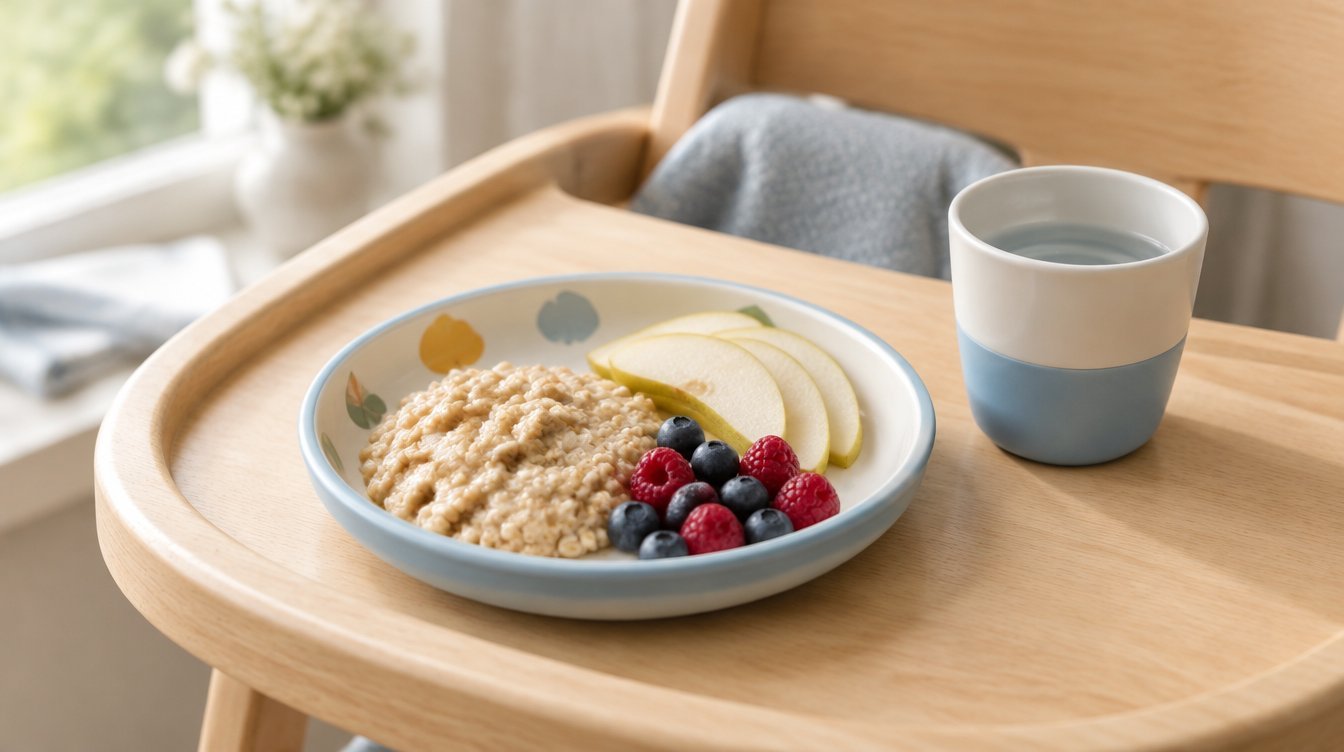
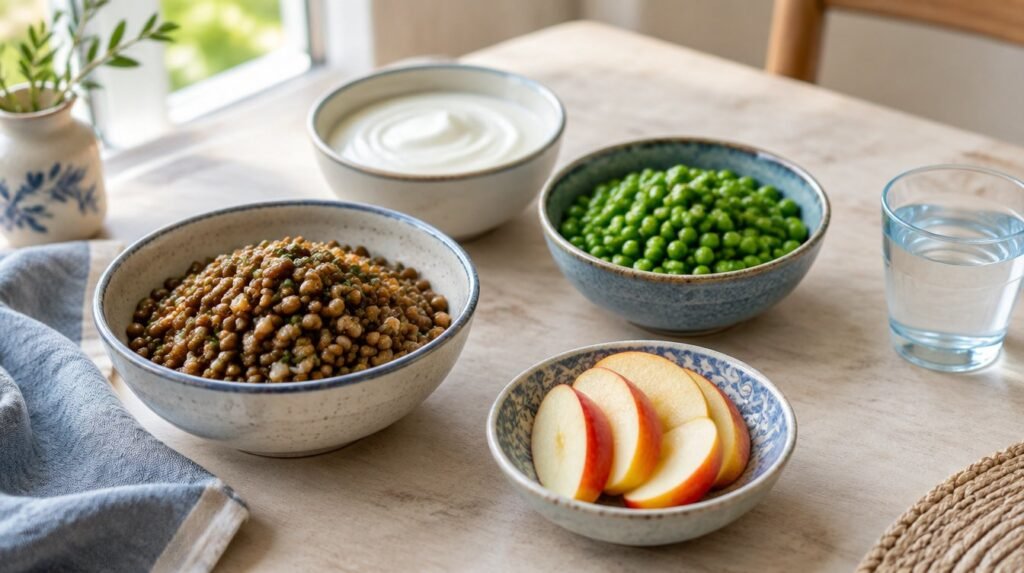
NIDDK says children need roughly 14 to 31 grams of fiber a day, depending on age and sex, and Mayo Clinic suggests about 20 grams a day for younger children, added gradually to avoid gas and bloating. Good sources include oatmeal and other whole grains, beans and lentils, berries, pears and apples with the skin on, peas and broccoli. Cut foods into safe, toddler-sized pieces. Our guide to constipation relief and our look at natural stool softeners cover the food side in more detail.
Keep drinks simple
Water helps fiber do its job, and Mayo Clinic says water is usually best. Keep juice to 4 ounces a day or less, as the AAP recommends. The AAP also says juice isn’t appropriate for treating dehydration or diarrhea. If your toddler drinks a lot of milk and is constipated, ask your pediatrician whether to cut back.
Build a calm toilet routine
The NHS suggests sitting your child on the potty or toilet at regular times, such as after meals, with their feet flat on the floor or a step, and praising them whether or not anything happens. Mayo Clinic advises never punishing a child for soiling. Plenty of active play also supports regular bowel movements.
What about yogurt and probiotics?
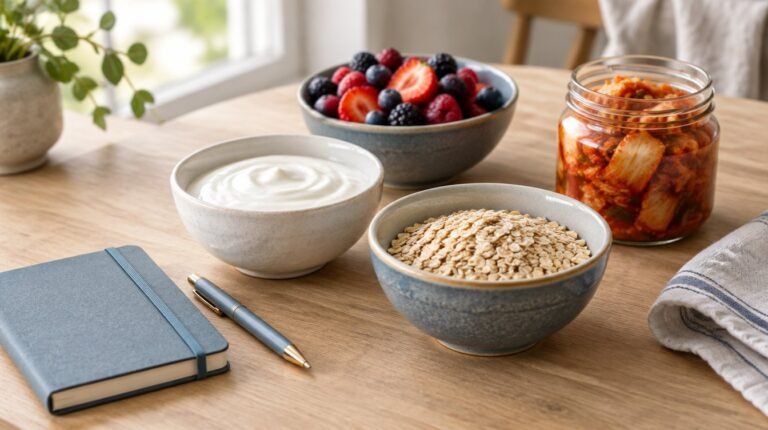
Plain yogurt with live cultures can be part of a toddler’s varied diet, and it’s one of the probiotic foods many families already eat. The evidence for probiotic supplements in young children is weaker than marketing suggests. Two large trials in 2018 tested probiotics in children aged 3 months to 4 years with stomach bugs. One gave Lactobacillus rhamnosus GG to 971 children and the other gave a two-strain combination to 886 children for five days. Neither group did better than placebo on illness severity or how long the diarrhea lasted.
The National Center for Complementary and Integrative Health notes that different probiotics may have different effects and that the risk of harm is greater in people with serious illness or weak immune systems. Talk with your pediatrician before giving a toddler any supplement.
If your toddler is unwell, start with fluids and the foods they can manage. Our guide on what to eat with diarrhea and the BRAT diet explain gentle options. For older children, see our overview of kids’ gut health.
Frequently asked questions
How many times a day should a toddler poop?
There is a wide normal range. NIDDK lists fewer than two bowel movements a week, or hard, dry or painful stools, as signs of constipation in children (NIDDK).
Is toddler’s diarrhea harmful?
Toddler’s diarrhea usually causes no other symptoms, children keep growing normally, and it tends to clear by grade school (NIDDK). Get a check if there is weight loss, blood, fever or dehydration.
Can juice cause loose stools in toddlers?
Lots of sugar-sweetened drinks, especially those with high-fructose corn syrup or sorbitol, may contribute to toddler’s diarrhea. The AAP advises no more than 4 ounces of juice a day for ages 1 to 3 (AAP).
Should I give my toddler a probiotic?
Ask your pediatrician first. Two large 2018 trials in young children with stomach bugs found probiotics did no better than placebo (Schnadower 2018).
Related topics
- Kids Gut Health: the bigger picture for children of all ages.
- Constipation Relief: food and routine changes that help.
- Natural Stool Softener: which foods soften stool, and what the trials show.
- 10 Signs of an Unhealthy Gut: the adult version of this list.
- Signs of a Healthy Gut: what “normal” tends to look like.
- How to Restore Gut Health After Antibiotics: what the evidence says after a course of antibiotics.
Sources
- Symptoms & Causes of Constipation in Children (NIDDK)
- Eating, Diet, & Nutrition for Constipation in Children (NIDDK)
- Symptoms & Causes of Chronic Diarrhea in Children (NIDDK)
- Symptoms & Causes of Celiac Disease (NIDDK)
- Constipation in children: Symptoms and causes (Mayo Clinic)
- Food allergy: Symptoms and causes (Mayo Clinic)
- Antibiotic-associated diarrhea: Symptoms and causes (Mayo Clinic)
- Constipation in children (NHS)
- Diarrhoea and vomiting (NHS)
- AAP Recommends No Fruit Juice for Children Under 1 Year (American Academy of Pediatrics, HealthyChildren.org, 2017)
- Probiotics: Usefulness and Safety (National Center for Complementary and Integrative Health)
- Stewart CJ, et al. Temporal development of the gut microbiome in early childhood from the TEDDY study (Nature, 2018)
- Yatsunenko T, et al. Human gut microbiome viewed across age and geography (Nature, 2012)
- Schnadower D, et al. Lactobacillus rhamnosus GG versus Placebo for Acute Gastroenteritis in Children (N Engl J Med, 2018)
- Freedman SB, et al. Multicenter Trial of a Combination Probiotic for Children with Gastroenteritis (N Engl J Med, 2018)
This article is for general information and is not medical advice. Talk to your doctor or a registered dietitian before changing your diet, supplements or medication, especially if you have a health condition.