Best Tea for Digestion: Compared (2026)
Best Tea for Digestion: Our Picks
There is no single best tea for digestion. The right cup depends on what is bothering you. Here are our picks, chosen by the strength of the research on each herb rather than by brand popularity:
- Best for nausea: ginger tea. Its best-supported use is nausea in pregnancy.
- Best for cramping and IBS-type discomfort: peppermint tea, with the caveat that the strong evidence is for peppermint oil capsules, not the tea.
- Best for gas and bloating: fennel tea, a traditional choice with early, limited trial support.
- Best for winding down after dinner: chamomile tea. Gentle and well tolerated, but with little proof of a digestive effect on its own.
- Best for occasional constipation: senna tea, a stimulant laxative for short-term use only.
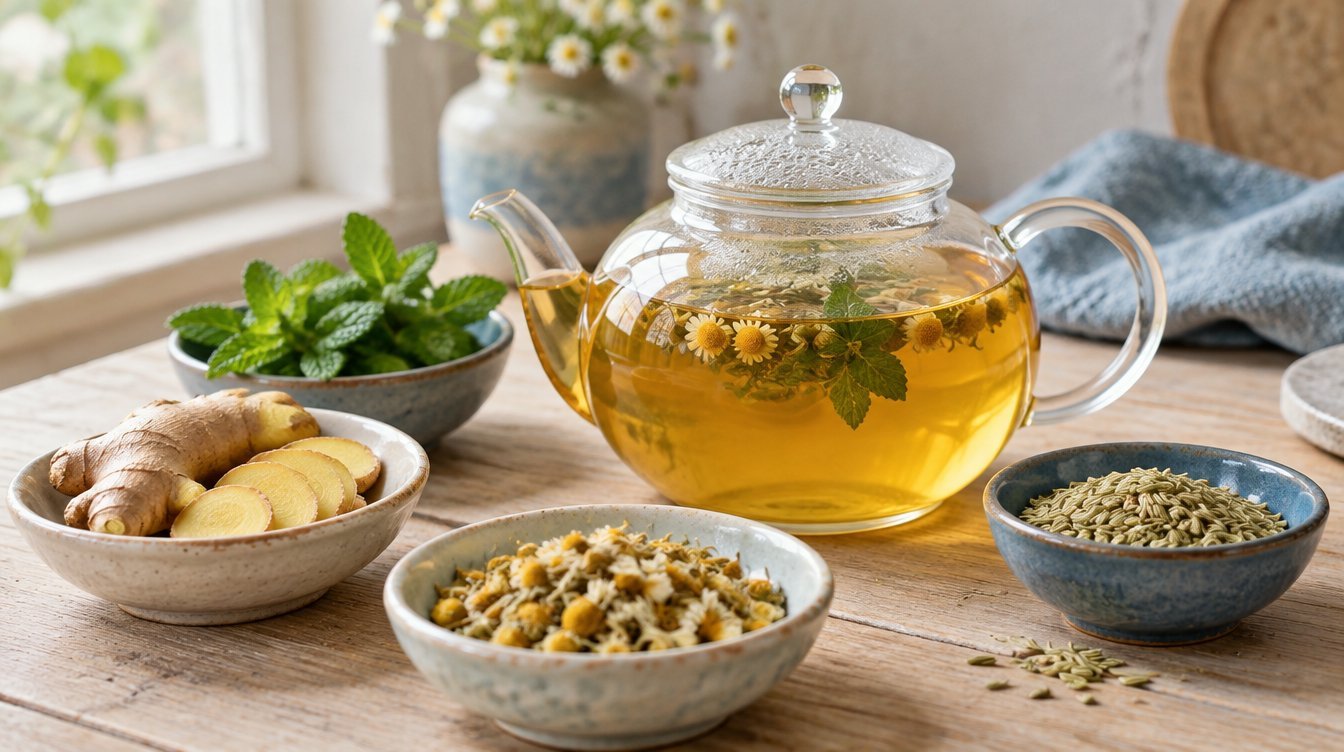
- Food first: fresh ginger slices or crushed fennel seeds steeped in hot water cost less than tea bags and contain the same plant.
Ultimate Gut is published by Ultimate Health Solutions, which sells a yogurt maker, probiotic capsules and an inulin fiber supplement. None of the products reviewed here are ours, and these brands don’t pay us.
Digestive teas compared
Example products were checked on each brand’s own product page in October 2026. Prices are list prices on those pages and change often.
| Tea | Best for | Strength of evidence | Watch out for | Example products (label checked) |
|---|---|---|---|---|
| Ginger | Nausea, slow-feeling stomach | Moderate for nausea in pregnancy; small studies on stomach emptying | Heartburn, loose stools in some people | Traditional Medicinals Organic Ginger; Yogi Ginger |
| Peppermint | Cramping, IBS-type discomfort | Good for enteric-coated oil capsules; very little for the tea | Can worsen acid reflux | Traditional Medicinals Organic Peppermint; Bigelow Peppermint |
| Fennel | Gas, bloating | Early: one hospital trial of fennel tea; oil studied in a combination product | Allergy to carrot-family plants | Traditional Medicinals Organic Fennel |
| Chamomile | Relaxing after meals | Weak for digestion alone | Allergy to ragweed or daisies; some drug interactions | Traditional Medicinals Organic Chamomile |
| Senna blend | Occasional constipation | Senna is an established laxative; one small trial of the tea | Cramps; not for more than a week without a doctor | Traditional Medicinals Smooth Move |
How each tea stacks up

Ginger tea: best for nausea
Of the five teas here, ginger has the clearest human evidence for a digestive symptom. The NCCIH says research shows ginger may help nausea and vomiting in pregnancy, while results for nausea after chemotherapy or surgery are uncertain, and most studies have not found it helps motion sickness. Most of that research tested ginger supplements, not tea.
Ginger may also speed up a slow stomach. In a 2008 crossover trial of 24 healthy adults, 1.2 grams of ginger in capsules cut the time the stomach took to empty half of a 500 mL bowl of soup from about 27 minutes to about 13. A 2011 follow-up in 11 people with functional dyspepsia (ongoing indigestion with no clear cause) found the same faster emptying, but no change in symptoms. Both studies were small and used capsules.
Products: Traditional Medicinals Organic Ginger contains only organic ginger rhizome; the brand suggests steeping one bag in 8 ounces of freshly boiled water, covered, for 10 to 15 minutes, 1 to 2 cups a day. List price was $7.49 for 16 bags, about 47 cents a cup. Yogi Ginger is a blend of ginger root, lemongrass, licorice root, peppermint leaf and black pepper, steeped 7 minutes; it listed at $6.99 for 16 bags. Neither page shows the amount of ginger per bag.
Who should be careful: NCCIH notes ginger can cause belly discomfort, heartburn and diarrhea in some people. If you are pregnant, check with your provider first, as both NCCIH and Traditional Medicinals advise.
Peppermint tea: best for cramping, with a caveat
Peppermint has strong evidence, but mostly for a different form. The NCCIH says enteric-coated peppermint oil capsules may improve IBS symptoms in adults, and a 2020 meta-analysis of herbal IBS trials found peppermint oil effective and well tolerated in the short term. For peppermint leaf, which is what tea is made from, NCCIH says there is too little research to know whether it helps any condition, though the tea appears to be safe.
So a cup of peppermint tea after a heavy meal is a reasonable thing to try, and many people find it soothing. Just do not expect it to match the capsule results.
Products: Traditional Medicinals Organic Peppermint lists organic peppermint leaf only, $7.49 for 16 bags. Bigelow Peppermint is also peppermint leaves only and listed at $21.95 for a case of six 20-bag boxes, about 18 cents a cup, with a 4-minute steep.
Who should be careful: people with acid reflux. The NIDDK lists mint among foods commonly linked to reflux symptoms, and Traditional Medicinals’ own page tells people with reflux or a hiatal hernia to check with a practitioner first. If heartburn is your main problem, see our guide to upset stomach remedies instead.
Fennel tea: best for gas and bloating
Fennel seeds are a traditional after-dinner remedy for gas. The research is thin but interesting. In a 2015 Chinese hospital trial, 159 women recovering from abdominal surgery for gynecologic cancer drank either fennel tea (5 grams of dried fennel fruit in 130 mL of water) or plain water twice a day. The tea group passed gas about 11 hours sooner and went home about a day earlier. That is one trial in a very specific setting.
Fennel oil has also been studied in combination. A 2016 Italian trial of 121 people with mild to moderate IBS found that capsules of curcumin plus fennel essential oil eased symptoms more than placebo over 30 days. The 2020 meta-analysis lists this among positive trials that have not yet been repeated.
Products: Traditional Medicinals Organic Fennel uses organic bitter fennel fruit (seed) only, steeped 10 to 15 minutes, 1 to 3 cups a day, $7.49 for 16 bags. The brand says people allergic to plants in the parsley family should avoid it.
If gas is a regular problem, food choices usually matter more than any tea. Our guide to what to eat when your stomach hurts from gas covers the common triggers.
Chamomile tea: best for winding down
Chamomile is the classic bedtime tea, and it has a long traditional use for indigestion. The evidence is weak. The NCCIH says studies have not produced enough reliable evidence to rate its usefulness for specific conditions, and that combination products with chamomile may help diarrhea in children and colic in infants, but chamomile alone has not been shown to help.
It is likely safe in the amounts found in tea, according to NCCIH. People allergic to ragweed, chrysanthemums, marigolds or daisies may react to it, and interactions with warfarin and some other drugs have been reported.
Product: Traditional Medicinals Organic Chamomile uses German chamomile flowers (Matricaria chamomilla), steeped 5 to 10 minutes, $7.49 for 16 bags.
Senna tea: best for occasional constipation, short-term only
Senna is different from the other teas here. It is a stimulant laxative that makes the bowel contract. MedlinePlus describes it as a short-term treatment and says not to take it for more than a week without talking to your doctor. Side effects include stomach cramps and nausea.
One senna tea has a trial of its own. In a 2006 randomized trial at a Pennsylvania nursing home, 86 residents with chronic constipation drank Smooth Move tea or a placebo tea once a day for 28 days on top of their usual treatment. The Smooth Move group averaged about four more bowel movements over the month. It was a small trial in frail older adults who were also taking standard constipation treatment, so the results may not carry over to healthy adults.
Product: Traditional Medicinals Organic Smooth Move combines senna leaf with licorice root, fennel, orange peel, cinnamon, coriander and ginger. The brand suggests one cup at bedtime and says it usually works in 6 to 12 hours and should be used for less than a week at a time. The page does not list the amount of senna per bag.
The NIDDK says stimulant laxatives are for when constipation is severe or other treatments have not worked. Most people should start with fiber, fluids and movement; see our constipation relief guide.
Teas to skip or use with care
- “Detox” and slimming teas: many contain senna or other laxatives. The FTC took action in 2020 against Teami, a detox tea seller, for weight-loss and other health claims it said lacked reliable scientific evidence.
- Large amounts of licorice: licorice root shows up in many digestive blends, including Yogi Ginger and Smooth Move. The NCCIH warns that glycyrrhizin, a compound in licorice, can cause serious heart effects in large amounts or with long-term use, and that people with high blood pressure, heart or kidney disease are at higher risk.
- Caffeinated tea with reflux: the NIDDK lists caffeine among common reflux triggers. Black and green teas contain caffeine; the herbal teas above do not.
- Any herbal tea marketed to treat a disease: herbal teas sold as supplements are not approved by the FDA before they are sold.
How We Compared
- Evidence for the herb: human trials first, then reviews from NCCIH and other federal sources. We noted when trials used capsules or oils rather than tea.
- Fit to a specific need: each pick answers one problem, such as nausea, cramping, gas, relaxation or constipation.
- Safety: known side effects, allergies, drug interactions and who should avoid each herb.
- Label clarity: whether the brand page lists the ingredients, the plant part used and brewing directions.
- Availability and price: widely sold teas with a list price on the brand’s own page.
What labels can and cannot tell you: product pages list ingredients and brewing times, but none of the pages we checked showed how many milligrams of herb are in each bag. Tea is also a weak extract compared with the capsules used in most studies, and strength changes with steeping time. We compared only what the brands publish; we did not brew, taste or test any of these teas.
When to see a doctor
This article is general information, not medical advice. A cup of tea is fine for occasional mild discomfort, but see a doctor if indigestion keeps coming back. The NIDDK advises seeing a doctor right away for pain in the chest, jaw, neck or arm; trouble or pain swallowing; frequent or bloody vomiting; severe, constant belly pain; long-lasting bloating; shortness of breath; weight loss without trying; yellowing of the eyes or skin; or black, tarry stools.
Common questions
What is the best tea for an upset stomach?
For nausea, ginger has the most research behind it (NCCIH). For cramping without reflux, peppermint tea is a reasonable choice.
Is peppermint tea bad for acid reflux?
It can be. The NIDDK lists mint among foods commonly linked to reflux symptoms (NIDDK).
Can I drink senna tea every day?
No. MedlinePlus says not to take senna for more than a week without talking to your doctor (MedlinePlus).
When is the best time to drink a digestive tea?
Most brands suggest ginger, peppermint or fennel tea before or after meals, chamomile in the evening and senna at bedtime.
Related topics
- What to Drink after a Meal to Help Digestion?: more after-dinner drink options.
- Upset Stomach Remedies: food and home steps for a sour stomach.
- Constipation Relief: fiber, fluids and when laxatives fit.
- Gut Health Drinks: kefir, kombucha and other options.
- How to Digest Food Faster: habits that affect digestion speed.
Sources
- Ginger (NCCIH)
- Peppermint Oil (NCCIH)
- Chamomile (NCCIH)
- Licorice Root (NCCIH)
- Wu KL, et al. Effects of ginger on gastric emptying and motility in healthy humans (Eur J Gastroenterol Hepatol, 2008)
- Hu ML, et al. Effect of ginger on gastric motility and symptoms of functional dyspepsia (World J Gastroenterol, 2011)
- Hawrelak JA, et al. Western herbal medicines in the treatment of irritable bowel syndrome: a systematic review and meta-analysis (Complement Ther Med, 2020)
- Ma HW, et al. The effect of fennel tea drinking on postoperative gut recovery after gynecological malignancies operation (Sichuan Da Xue Xue Bao Yi Xue Ban, 2015)
- Portincasa P, et al. Curcumin and fennel essential oil improve symptoms and quality of life in patients with irritable bowel syndrome (J Gastrointestin Liver Dis, 2016)
- Bub S, et al. Efficacy of an herbal dietary supplement (Smooth Move) in the management of constipation in nursing home residents: a randomized, double-blind, placebo-controlled study (J Am Med Dir Assoc, 2006)
- Senna (MedlinePlus, National Library of Medicine)
- Treatment for Constipation (NIDDK)
- Eating, Diet, & Nutrition for GER & GERD (NIDDK)
- Symptoms & Causes of Indigestion (NIDDK)
- FTC: Detox tea claims are hard to swallow (Federal Trade Commission, 2020)
- Questions and Answers on Dietary Supplements (U.S. Food and Drug Administration)
- Organic Ginger Tea product page (checked October 2026) (Traditional Medicinals)
- Organic Peppermint Tea product page (checked October 2026) (Traditional Medicinals)
- Organic Fennel Tea product page (checked October 2026) (Traditional Medicinals)
- Organic Chamomile Tea product page (checked October 2026) (Traditional Medicinals)
- Smooth Move Tea product page (checked October 2026) (Traditional Medicinals)
- Ginger tea product page (checked October 2026) (Yogi)
- Peppermint Herbal Tea product page (checked October 2026) (Bigelow Tea)
This article is for general information and is not medical advice. Talk to your doctor or a registered dietitian before changing your diet, supplements or medication, especially if you have a health condition.