Vegan Gut Health Foods: A Practical Guide
What makes a vegan food good for your gut
Vegan gut health foods are plant foods that feed your gut bacteria or bring live microbes with them. In practice that means fiber-rich staples such as beans, lentils, whole grains, fruit, vegetables, nuts and seeds, plus fermented plant foods such as sauerkraut, tempeh, miso and plant yogurts with live cultures.
Being vegan does not make a diet gut-friendly by itself. Chips, white bread and sweets are all vegan. In the American Gut Project, which analyzed stool samples from more than 10,000 volunteers, the label “vegan” explained little about gut bacteria. What stood out was how many different plants people ate: those eating more than 30 types of plants a week had different gut bacteria from those eating 10 or fewer, including more of some fiber-fermenting species.
Why plant foods matter for gut health
Your body cannot digest fiber on its own, so much of it reaches the colon, where gut bacteria ferment it. Mayo Clinic explains that soluble fiber forms a gel that slows digestion, while insoluble fiber adds bulk and helps material move through. Mayo puts daily fiber needs at 25 grams for women and 38 grams for men aged 50 or younger.
Human trials point in a helpful but modest direction. In a 2020 trial, 168 adults with overweight were assigned to a low-fat vegan diet or to keep eating as usual for 16 weeks. The vegan group lost about 5.9 kg more than the control group and saw a rise in Faecalibacterium prausnitzii, a bacterium that ferments fiber. Only 115 people returned all their stool samples, and the diet changed many things at once, so it is hard to credit any single food.
Other findings are more sobering. A 2016 study in Gut found that vegans and omnivores living in the same US city had surprisingly similar gut bacteria, even though their blood chemistry differed a lot. And in a 2021 Stanford trial of 36 adults, a high-fiber diet left gut bacterial diversity roughly stable over 10 weeks, while a diet rich in fermented foods raised it and lowered 19 inflammatory proteins in the blood (Stanford Medicine). That fermented menu included dairy, so it does not test a vegan version directly. Together, these results suggest that plant variety and fermented foods both deserve a place.
The core vegan gut health foods
Beans, lentils and peas
Legumes are the fiber workhorses of a vegan diet. Half a cup of cooked lentils has about 7.8 grams of fiber (USDA) and half a cup of cooked black beans about 7.5 grams (USDA). They also supply protein. Mayo Clinic lists beans and peas among good sources of soluble fiber.
Oats and other whole grains
Oats and barley both carry soluble fiber, according to Mayo Clinic. Half a cup of dry rolled oats has about 4 grams of fiber (USDA). Brown rice, whole-wheat bread, bulgur and quinoa help you reach the daily total and add to the count of different plants in your week.
Fruit and vegetables
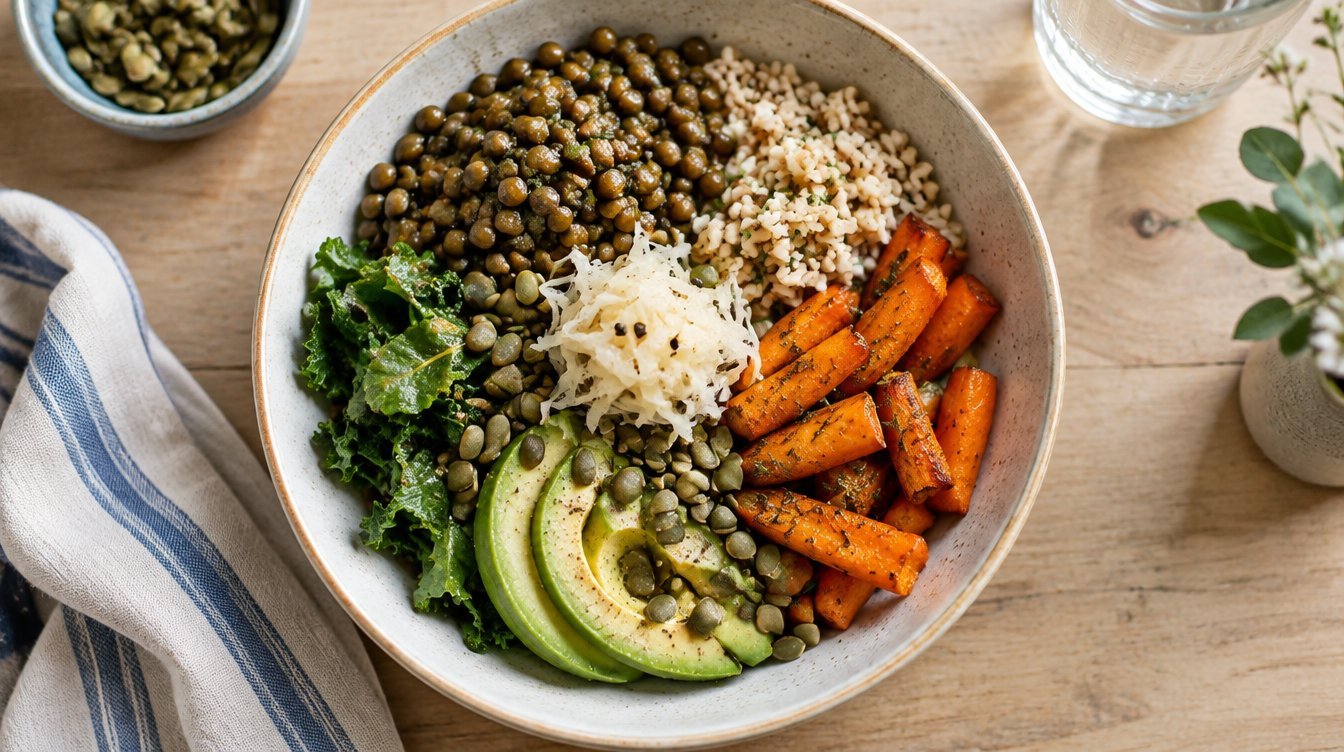
Variety matters more than any one superfood. Berries are a strong pick: one cup of raw raspberries has about 8 grams of fiber (USDA). Apples, bananas, citrus, carrots and avocados all supply soluble fiber, and leafy greens, onions, garlic, broccoli and cabbage add more plant types.
Nuts and seeds
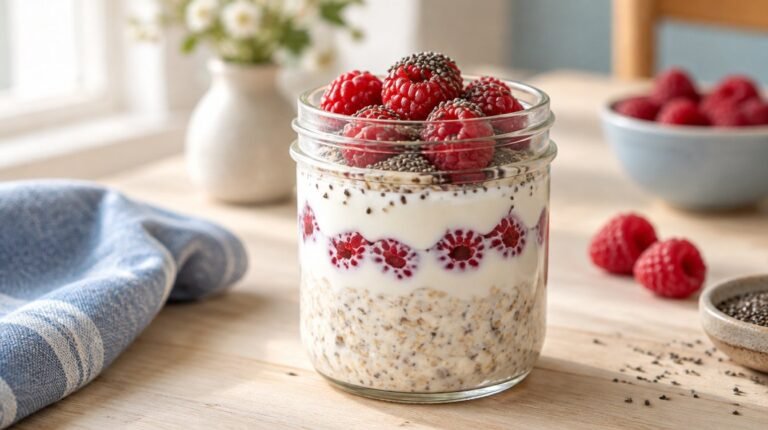
A small handful adds fiber, healthy fats and more plant variety. Chia seeds stand out, with about 9.8 grams of fiber per ounce (USDA). Ground flaxseed, almonds, walnuts, pumpkin seeds and sesame are easy additions to oatmeal, salads and grain bowls.
Fermented plant foods
An expert panel from the International Scientific Association for Probiotics and Prebiotics (ISAPP) lists miso, natto, tempeh, non-heated fermented vegetables and most kombuchas among fermented foods that contain live microbes. Heat-treated or pasteurized fermented vegetables, sourdough bread and soy sauce do not. The panel also notes that human evidence for kombucha is still mostly limited to chemical analyses, while sauerkraut and kimchi have been tested in at least one randomized trial.
Tempeh is also a protein food, with about 20 grams of protein per 100 grams (USDA). For more on cabbage ferments, see is kimchi good for gut health and how to eat sauerkraut for gut health.
Fiber in common vegan foods
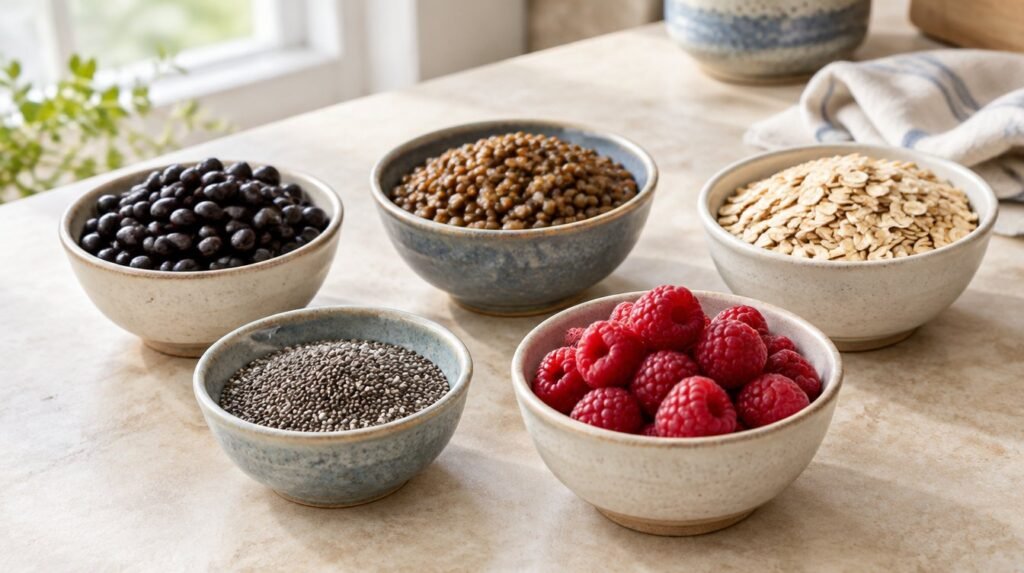
| Food | Serving | Fiber (approx.) |
|---|---|---|
| Chia seeds, dried | 1 oz (28 g) | 9.8 g |
| Raspberries, raw | 1 cup (123 g) | 8.0 g |
| Lentils, cooked | 1/2 cup (99 g) | 7.8 g |
| Black beans, cooked | 1/2 cup (86 g) | 7.5 g |
| Rolled oats, dry | 1/2 cup (40 g) | 4.1 g |
Values are calculated from USDA FoodData Central SR Legacy entries (linked above) using USDA portion weights. Brands and cooking methods vary.
How to choose and use them
- Count plants, not just servings. Aim for many different plants across the week. Mixed bean chili, a grain bowl with several vegetables, or trail mix with three kinds of nuts and seeds adds up fast.
- Go slowly with fiber. Mayo Clinic suggests adding fiber over a few weeks and drinking plenty of water. NIDDK lists beans, lentils, cruciferous vegetables, some fruits, whole grains and too much fiber among common causes of gas. Our guide to eating when gas hurts has more.
- Check kimchi labels. Kimchi can contain fish sauce; the NC State Extension home recipe lists it as optional. Read the ingredients or look for a vegan label.
- Buy live ferments from the refrigerated case. Shelf-stable, pasteurized sauerkraut and pickles generally no longer carry live microbes. Because heat-treated ferments lose their live microbes, stir miso into soup after it is off the boil.
- Pick plant yogurts with live cultures. Look for “live and active cultures” or named cultures on the label, and compare protein, sugar and calcium. Our pages on non-dairy probiotics and coconut yogurt go further.
- Cover vitamin B12. The NIH Office of Dietary Supplements notes that only animal foods contain B12 naturally and that vegans may not get enough from diet alone. Fortified foods such as some cereals and nutritional yeasts, or a supplement, fill the gap; ask your doctor which suits you.
If you are considering capsules as well as food, our review of vegan gut health supplements looks at what the labels and research show.
Related topics
- Best Foods for Gut Health: the wider list, vegan and not.
- Fermented Foods for Gut Health: how fermented foods fit a gut-friendly diet.
- Non Dairy Probiotics: plant-based sources of live cultures.
- What Is Kimchi?: ingredients and styles, including vegan versions.
- Fiber Supplement: when a supplement makes sense.
Sources
- McDonald D, et al. American Gut: an open platform for citizen science microbiome research (mSystems, 2018)
- Kahleova H, et al. Effects of a low-fat vegan diet on gut microbiota in overweight individuals and relationships with body weight, body composition, and insulin sensitivity (Nutrients, 2020)
- Wu GD, et al. Comparative metabolomics in vegans and omnivores reveal constraints on diet-dependent gut microbiota metabolite production (Gut, 2016)
- Wastyk HC, et al. Gut-microbiota-targeted diets modulate human immune status (Cell, 2021)
- Fermented-food diet increases microbiome diversity, decreases inflammatory proteins, study finds (Stanford Medicine, 2021)
- Marco ML, et al. The International Scientific Association for Probiotics and Prebiotics (ISAPP) consensus statement on fermented foods (Nat Rev Gastroenterol Hepatol, 2021)
- Dietary fiber: Essential for a healthy diet (Mayo Clinic)
- Eating, Diet, & Nutrition for Gas in the Digestive Tract (National Institute of Diabetes and Digestive and Kidney Diseases)
- Vitamin B12: Fact Sheet for Consumers (NIH Office of Dietary Supplements)
- How to Make Kimchi (NC State Extension)
- Lentils, mature seeds, cooked, boiled, without salt (USDA FoodData Central, SR Legacy)
- Beans, black, mature seeds, cooked, boiled, without salt (USDA FoodData Central, SR Legacy)
- Cereals, oats, regular and quick, not fortified, dry (USDA FoodData Central, SR Legacy)
- Raspberries, raw (USDA FoodData Central, SR Legacy)
- Seeds, chia seeds, dried (USDA FoodData Central, SR Legacy)
- Tempeh (USDA FoodData Central, SR Legacy)