Is Kimchi Good for Gut Health? What the Evidence Says
The verdict: kimchi is a good gut food, with a salt catch
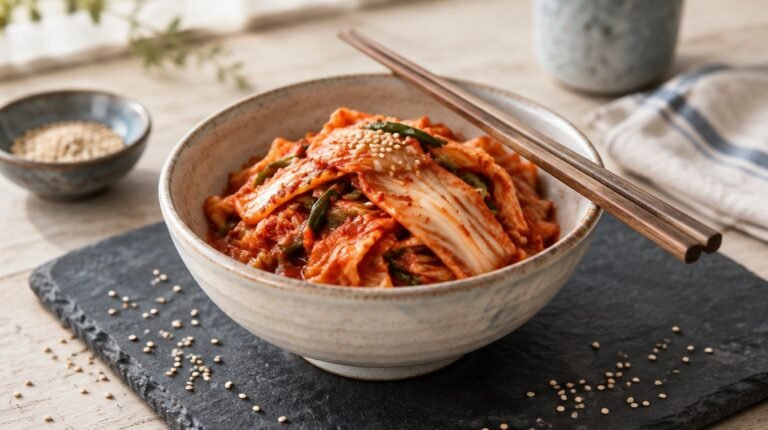
Kimchi is a reasonable, evidence-backed choice for gut health. Raw, refrigerated kimchi carries live lactic acid bacteria and some fiber, and small human trials link eating it with better digestive symptoms and shifts in gut bacteria. The studies are short, mostly Korean, and often small. The main downside is salt: one cup has about 750 mg of sodium, according to USDA FoodData Central.
If you are new to it, our explainer on what kimchi is covers the basics. Below is what the research shows and where it falls short.
What the research shows
Kimchi is full of lactic acid bacteria
Kimchi is made by salting napa cabbage and other vegetables, then letting lactic acid bacteria ferment them. A 2016 review in Frontiers in Microbiology describes lactic acid bacteria as the dominant microbes, including Leuconostoc, Weissella and Lactobacillus species. An expert panel convened by the International Scientific Association for Probiotics and Prebiotics (ISAPP) notes that cabbage ferments such as kimchi and sauerkraut usually start with Leuconostoc mesenteroides, followed by Lactiplantibacillus and Levilactobacillus brevis.
That same panel draws a useful line: fermented foods are not automatically probiotics. A probiotic is a defined strain shown to have a health benefit at a set dose. Kimchi contains a mix of live microbes that varies batch to batch, so it counts as a fermented food with live cultures, not a probiotic product.
Digestive symptoms: one 12-week trial
The most direct study is a 2022 trial in Food & Nutrition Research. Ninety adults with irritable bowel syndrome ate 210 grams of kimchi a day (about 1.4 cups) for 12 weeks, split into three groups that each got a different kimchi recipe. All three groups reported less abdominal pain, bloating and straining, and their fiber intake went up.
The limit is important. Every group ate kimchi, so there was no kimchi-free comparison group. That makes it hard to separate the effect of kimchi from eating more vegetables or symptoms easing on their own.
Gut bacteria and metabolic markers
In a 2015 study of 24 women with obesity, eight weeks of fresh or fermented kimchi produced different changes in gut bacteria and in blood gene activity, with stronger links in the fermented group. A 2011 crossover trial in 22 adults with overweight or obesity compared four weeks of fresh kimchi with four weeks of fermented kimchi. Weight and body fat dropped on both, and fermented kimchi did better on waist-to-hip ratio and fasting blood sugar.
These are small, short studies. They hint that fermentation time may matter, but do not show that kimchi causes weight loss. We cover that question in more detail in kimchi and weight loss.
Fermented foods as a group
A 2021 Stanford study in Cell put 36 healthy adults on either a high-fiber diet or a diet rich in fermented foods. The fermented menu included yogurt, kefir, kimchi and other fermented vegetables, vegetable brine drinks and kombucha, according to Stanford Medicine. After 10 weeks, the fermented-food group had more diverse gut bacteria and lower levels of 19 inflammatory proteins in the blood. Kimchi was one food among many, so this supports fermented foods in general, not kimchi alone.
What large population data adds
A 2024 analysis in BMJ Open of 115,726 Korean adults aged 40 to 69 found that men who ate one to three servings of kimchi a day were less likely to have obesity than men who ate less than one. The pattern was J-shaped: benefits faded at higher intakes, and the authors advised against eating too much. This was a cross-sectional study, so it shows an association, not cause and effect. Two of the authors work at the World Institute of Kimchi.
Caveats to keep in mind
- Salt adds up. USDA lists 498 mg of sodium per 100 grams of kimchi, about 750 mg per cup. The FDA sets the Daily Value at less than 2,300 mg and links excess sodium with high blood pressure.
- Not every jar is alive. ISAPP classes heat-treated or pasteurized fermented vegetables as foods with no live microbes. Shelf-stable cans and jars may still taste like kimchi without the live cultures.
- Recipes vary. Garlic, onion, chili and sometimes fish sauce are common, which matters for sensitive stomachs and for vegans. If chili bothers you, see is spicy food good for you.
- The evidence base is narrow. Most trials are small, short and done in Korea, and some involve researchers with ties to the kimchi industry.
How to choose and use kimchi
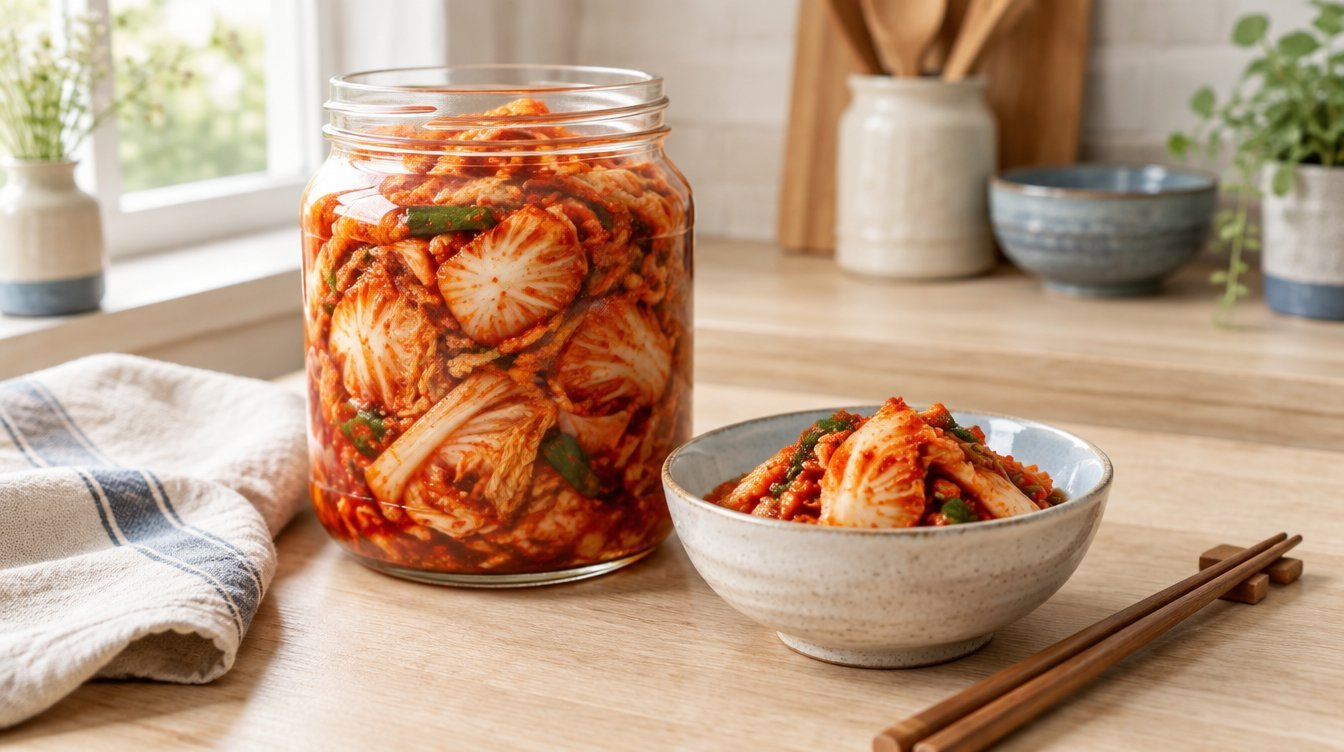
- Buy it from the refrigerated case. Raw, unpasteurized kimchi is the kind most likely to still carry live bacteria. It often tastes fizzy and sour, because active ferments keep releasing gas.
- Read the sodium line. Compare Nutrition Facts panels and pick lower-sodium options if you watch your blood pressure.
- Start small. A few tablespoons with a meal is plenty at first. There is no official serving for gut health, and most people eat far less than the 210 grams a day used in the IBS trial.
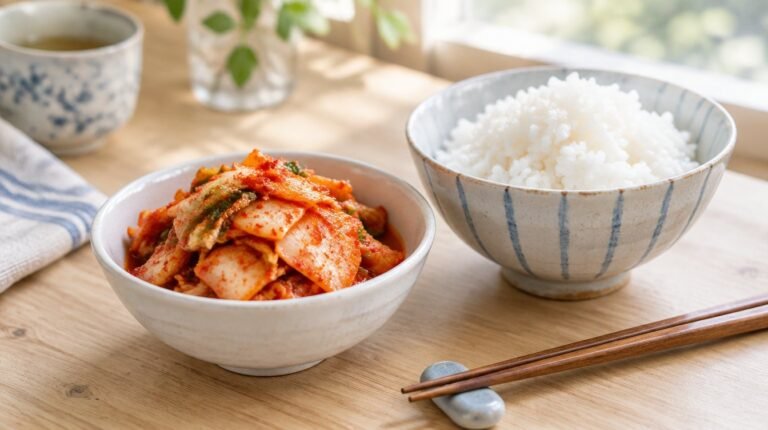
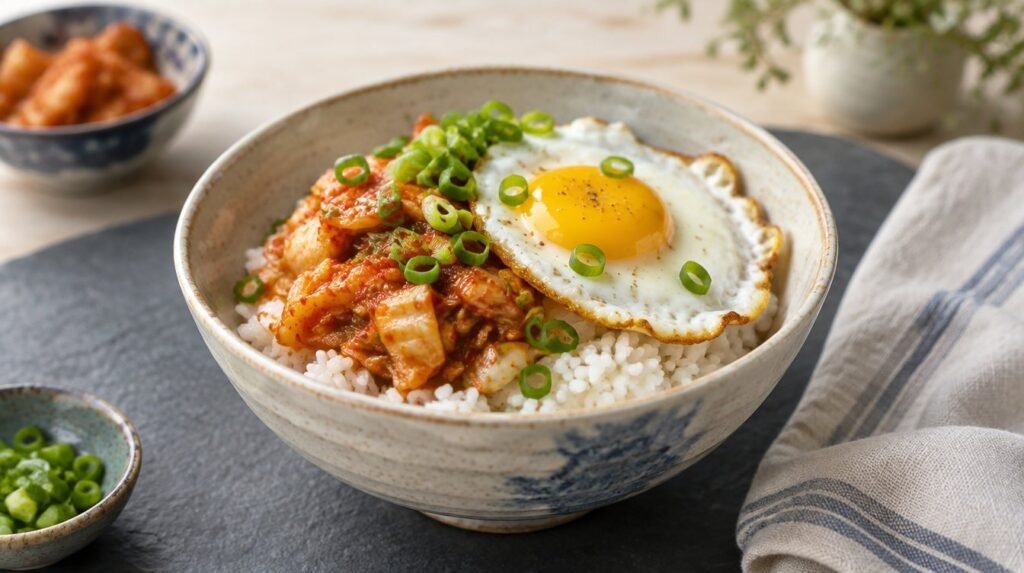
- Eat it cold or add it at the end. ISAPP treats heat-treated ferments as having no live microbes, so stir kimchi into rice, eggs or noodles after cooking if live cultures are your goal.
- Or make it yourself. NC State Extension has a home recipe that ferments one to two days at about 68°F or three to four days in the fridge. It advises clean equipment, refrigerated storage, and throwing out any batch with surface mold.
Kimchi works best alongside other fermented foods and plenty of fiber. For timing, see the best time to eat kimchi for gut health, and for store-bought options, our guide to choosing a kimchi brand.
Frequently asked questions
Is kimchi a probiotic?
Not in the strict sense. Raw kimchi contains live lactic acid bacteria, but probiotics are defined strains with proven benefits at set doses, so experts call kimchi a fermented food with live cultures (ISAPP).
How much kimchi should I eat for gut health?
There is no official amount. Start with a few tablespoons a day; a large Korean study linked one to three servings a day with lower obesity odds in men, with the benefit fading at higher intakes.
Does cooked kimchi still help your gut?
Cooking kills most live bacteria, though the vegetables still supply fiber. Add kimchi at the end of cooking or eat it cold if you want the live cultures.
Is canned or shelf-stable kimchi as good as refrigerated?
Usually not for live cultures, because heat-treated fermented vegetables generally contain no live microbes. Refrigerated, unpasteurized kimchi is the better pick.
Can kimchi upset your stomach?
It can, especially in large amounts, because it is salty, spicy and often contains garlic and onion. Start with a few tablespoons and increase slowly.
Related topics
- What Is Kimchi? A Clear Answer: ingredients, styles and how it is made.
- Kimchi and Weight Loss: a closer look at the weight studies.
- Sauerkraut Benefits: the European cousin of kimchi.
- Probiotic Foods: other foods that carry live cultures.
- Fermented Foods for Gut Health: how fermented foods fit a gut-friendly diet.
Sources
- Patra JK, et al. Kimchi and other widely consumed traditional fermented foods of Korea: a review (Front Microbiol, 2016)
- Marco ML, et al. The International Scientific Association for Probiotics and Prebiotics (ISAPP) consensus statement on fermented foods (Nat Rev Gastroenterol Hepatol, 2021)
- Kim HY, et al. Kimchi improves irritable bowel syndrome: results of a randomized, double-blind placebo-controlled study (Food Nutr Res, 2022)
- Han K, et al. Contrasting effects of fresh and fermented kimchi consumption on gut microbiota composition and gene expression related to metabolic syndrome in obese Korean women (Mol Nutr Food Res, 2015)
- Kim EK, et al. Fermented kimchi reduces body weight and improves metabolic parameters in overweight and obese patients (Nutr Res, 2011)
- Wastyk HC, et al. Gut-microbiota-targeted diets modulate human immune status (Cell, 2021)
- Fermented-food diet increases microbiome diversity, decreases inflammatory proteins, study finds (Stanford Medicine, 2021)
- Jung H, et al. Association between kimchi consumption and obesity based on BMI and abdominal obesity in Korean adults: a cross-sectional analysis of the Health Examinees study (BMJ Open, 2024)
- Cabbage, kimchi (USDA FoodData Central, SR Legacy)
- Sodium in Your Diet (U.S. Food and Drug Administration)
- How to Make Kimchi (NC State Extension)