Choosing the Best Kimchi Brand: What You Need to Know
What makes one kimchi brand better than another
There is no single best kimchi brand. The best one for you is a jar that is actually fermented, kept cold and unpasteurized, made with ingredients you want to eat, and not loaded with more salt than you need. Taste matters too: some kimchi is made the traditional way with fish sauce, some is vegan, and some is closer to a fresh slaw.
Ultimate Gut is published by Ultimate Health Solutions, which sells a yogurt maker, probiotic capsules and an inulin fiber supplement. None of the products reviewed here are ours, and these brands don’t pay us.
Why it matters for gut health
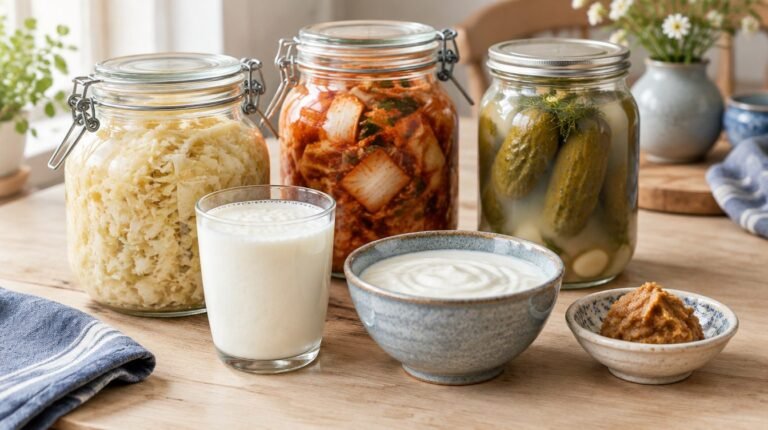
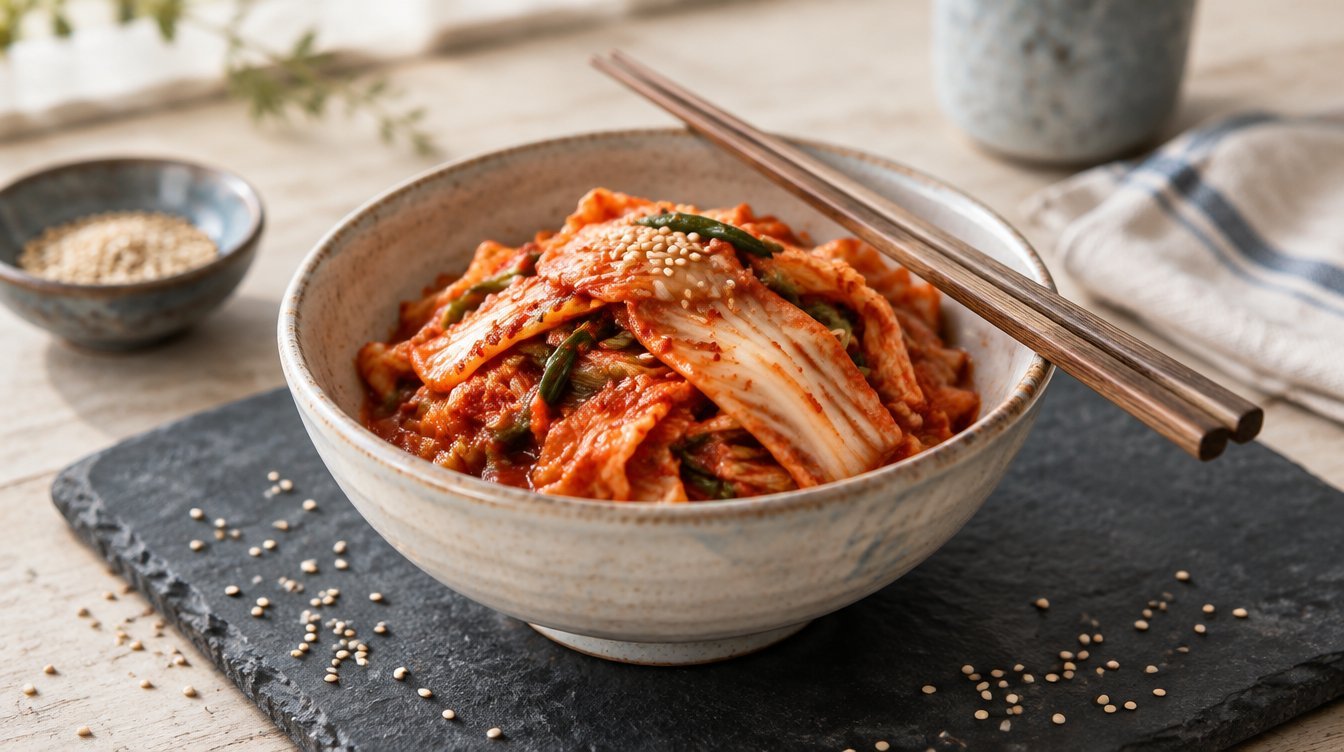
Kimchi is salted napa cabbage or other vegetables seasoned with chili, garlic and ginger, then left to ferment. A 2024 review in Critical Reviews in Food Science and Nutrition describes how lactic acid bacteria from the raw ingredients, mainly Leuconostoc, Weissella and Lactobacillus, drive the ferment and can reach very high numbers in the finished food. Those live bacteria are the main reason people seek out kimchi for gut health, and they only survive if the jar is not heat-treated.
Human research is promising but small. In a 2011 crossover trial, 22 overweight adults ate fresh or fermented kimchi for four weeks each; both phases lowered body weight, and the fermented kimchi phase showed larger changes in blood pressure, body fat, fasting glucose and cholesterol. A 2015 study of 24 women with obesity found that fresh and fermented kimchi had different effects on gut bacteria over eight weeks. A large Korean cohort study of more than 58,000 adults linked moderate kimchi intake with smaller weight gain over time, though that kind of study can’t prove cause.
For gut symptoms specifically, a 2019 review of fermented foods (Dimidi et al., Nutrients) found no randomized trials of kimchi for digestive health. So the fair summary is that fermented kimchi is a good addition to a varied diet, not a treatment. Our article on kimchi and weight loss covers the weight studies in more detail.
How to choose a kimchi brand
- Buy it cold: live-culture kimchi lives in the refrigerated case. Jars or pouches sold at room temperature have usually been heat-treated.
- Look for fermentation words: “fermented,” “raw,” “unpasteurized” or “live” on the jar or brand page. Lack of these words doesn’t prove a jar is pasteurized, but their presence is a good sign.
- Check for vinegar and preservatives: traditional kimchi gets its sourness from fermentation, not vinegar.
- Decide on fish sauce: traditional recipes often use fish sauce or salted seafood. Vegan versions use seaweed or simply leave it out.
- Compare sodium by weight: serving sizes range from 2 tablespoons to 30 grams, so compare like with like.
- Read the sugar and additives: some brands add sugar, fruit or sweeteners such as sorbitol, or thickeners such as xanthan gum.
Six kimchi brands compared by label
All details below come from each brand’s own product page, checked in October 2026. We did not buy, taste or test these products. Where a brand page didn’t show a nutrition panel, we say so rather than guess.
| Brand and product | Style | Fish sauce? | What stands out on the label | Sodium per serving |
|---|---|---|---|---|
| Mother-in-Law’s House Reserve | Traditional whole-leaf napa | Yes, plus beef bone broth | Brand says it is not pasteurized; a vegan Reserve version is also sold | Not shown on brand page |
| Sunja’s Medium Spicy | Green cabbage, vegan | No | Raw, no vinegar or preservatives, no starters | Not shown on brand page |
| Wildbrine Kimchi | Vegan, napa style | No | No added sugar; sea vegetable instead of fish sauce | 220 mg per 2 Tbsp |
| Cleveland Kitchen Classic | Vegan | No | Apple and sugar in ingredients; 0 g added sugars on panel | 270 mg per 28 g |
| Real Pickles Organic Kimchi | Korean-inspired, vegan, organic | No | All organic ingredients, unrefined sea salt | 140 mg per 30 g |
| Bibigo Korean-Style Napa Cabbage | Traditional style | Yes (anchovy) | Sorbitol, xanthan gum, calcium lactate and “kimchi cultures” | Not shown on brand page |
Notes on each brand
Mother-in-Law’s is the most traditional of the group. Its House Reserve kimchi uses long strips of napa cabbage with fish sauce and beef bone broth, is slow-fermented, and the company says it does not pasteurize. Its Everyday Kimchi line is cold-fermented for a fresher taste and lists cane sugar among minor ingredients.
Sunja’s makes a plain, vegan kimchi from green cabbage, daikon or both. The product page lists only vegetables, water, sea salt and spices, and the company’s FAQ says the kimchi is raw and live, uses no starters, vinegar or preservatives, and should stay refrigerated at all times.
Wildbrine describes its kimchi as fermented for days and made without fish sauce, sugar or MSG, which makes it a good fit for vegans and anyone avoiding added sugar.
Cleveland Kitchen‘s Classic Kimchi is a milder, slightly sweet vegan version with apple and carrot. Its ingredient list includes sugar, while its panel shows 0 g of added sugars, so read both if sugar matters to you.
Real Pickles lists the lowest sodium of the brands that publish a nutrition panel. The co-op is candid that its Organic Kimchi is “inspired” by the Korean dish, and its page points shoppers who want a more traditional version to Mother-in-Law’s.
Bibigo‘s Korean-Style Napa Cabbage Kimchi includes fish sauce and lists “kimchi cultures,” but also sorbitol and xanthan gum, and the page doesn’t say whether it is fermented, raw or pasteurized. Check the jar in the store for those details.
How to use and store kimchi

Keep kimchi in the fridge and the vegetables pressed under the brine. Fermentation slows in the cold but doesn’t stop, so the flavor gets more sour over the weeks and a jar may fizz or bulge when opened. Sunja’s FAQ says this is normal for a naturally fermented product. Throw out any jar that smells rotten, grows fuzzy mold or turns slimy.
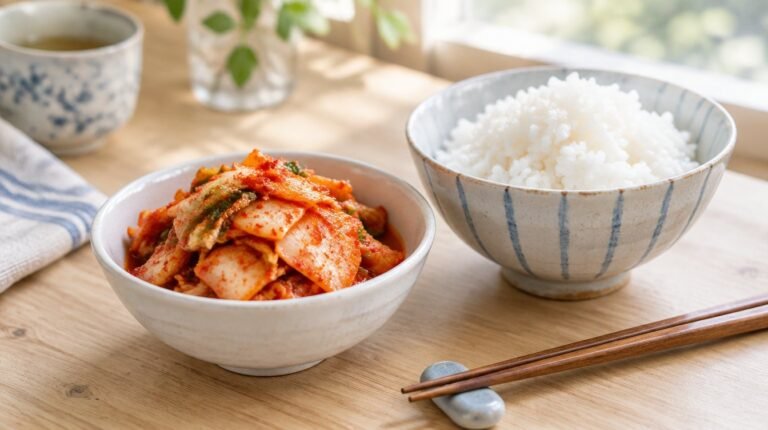
If live cultures are your goal, eat some kimchi cold, as a side dish or on rice, eggs or a sandwich, rather than only in hot stews and fried rice. Watch the salt: the brands above range from 140 to 270 mg of sodium per serving, and the FDA’s Daily Value is less than 2,300 mg a day. A couple of tablespoons with a meal is a sensible portion. For timing ideas, see the best time to eat kimchi for gut health.
Related Topics
- Best Time to Eat Kimchi for Gut Health: when and how to fit it into meals.
- Kimchi Weight Loss: What You Need to Know: what the weight studies found.
- Fermented Foods for Gut Health: kimchi’s place among other ferments.
- Best Fermented Pickles: Compared (2026): the same label checks applied to pickles.
- Non Dairy Probiotics: live-culture foods without milk.
Sources
- Reserve Kimchi (Mother-in-Law’s, checked October 2026)
- Everyday Kimchi (Mother-in-Law’s, checked October 2026)
- Sunja’s Medium Spicy Kimchi 16oz (Sunja’s Kimchi, checked October 2026)
- Frequently Asked Questions (Sunja’s Kimchi, checked October 2026)
- Kimchi (Wildbrine, checked October 2026)
- Classic Kimchi (Cleveland Kitchen, checked October 2026)
- Organic Kimchi (Real Pickles, checked October 2026)
- Korean-Style Napa Cabbage Kimchi (Bibigo USA, checked October 2026)
- Cha J, et al. Does kimchi deserve the status of a probiotic food? (Critical Reviews in Food Science and Nutrition, 2024)
- Kim EK, et al. Fermented kimchi reduces body weight and improves metabolic parameters in overweight and obese patients (Nutrition Research, 2011)
- Han K, et al. Contrasting effects of fresh and fermented kimchi consumption on gut microbiota composition and gene expression related to metabolic syndrome in obese Korean women (Molecular Nutrition and Food Research, 2015)
- Tan LJ, et al. Effect of kimchi intake on body weight of general community dwellers: a prospective cohort study (Food and Function, 2023)
- Dimidi E, et al. Fermented Foods: Definitions and Characteristics, Impact on the Gut Microbiota and Effects on Gastrointestinal Health and Disease (Nutrients, 2019)
- Sodium in Your Diet (U.S. Food and Drug Administration)