Snap Gut Health: What You Need to Know
What Snap Gut Health is
Snap Gut Health is a capsule supplement from Snap Supplements. A bottle holds 50 capsules, the serving is 2 capsules a day, and the brand’s product page lists it at $32.95, or $28.01 a month on subscription. That works out to about $1.32 per serving at the one-time price.
The short answer: it mixes zinc, herbs, digestive enzymes, prebiotic fibers, a heat-killed Lactobacillus reuteri strain sold as Pylopass, and two Bacillus species. Pylopass has a handful of small human studies. Most other ingredients sit in proprietary blends with no individual amounts, so you can’t compare their doses with any research.
Ultimate Gut is published by Ultimate Health Solutions, which sells a yogurt maker, probiotic capsules and an inulin fiber supplement. None of the products reviewed here are ours, and these brands don’t pay us.
Everything about the product below comes from the Snap Supplements product page and its Supplement Facts panel, checked in October 2026. Formulas change, so compare with the bottle you have.
What’s in it
| Ingredient or blend (as labeled) | Amount per 2 capsules | What research exists |
|---|---|---|
| Zinc (OptiZinc, methionine-bound) | 15 mg (136% DV) | An essential mineral. Adults need 8 to 11 mg a day; the upper limit is 40 mg from all sources. |
| Mucosal Lining and Cell Support Blend: turmeric root, barberry root bark extract, OptiZinc, Turkey rhubarb root, aloe vera leaf 200:1 extract, Ceylon cinnamon bark, fulvic acid | 850 mg total; amounts of each not listed | NCCIH says there isn’t enough evidence to conclude turmeric is beneficial for any health purpose. No trials of this blend that we could find. |
| Digestive Blend: protease, amylase, cellulase, lactase, lipase, chicory root inulin, FOS | 200 mg total; enzyme activity units not listed | Inulin and FOS are prebiotic fibers. Without activity units, the enzyme strength can’t be judged. |
| H. pylori Relief Blend: Pylopass Lactobacillus reuteri, peppermint leaf, fennel seed, deglycyrrhizinated licorice root extract, Bacillus clausii, Bacillus subtilis | 325 mg total; no CFU count for the Bacillus strains | Small trials of Pylopass (below). Peppermint research is mostly on the oil, not the leaf. |
What the brand claims vs. what the evidence shows
Pylopass and H. pylori
Snap describes Pylopass as a heat-inactivated L. reuteri DSM 17648 that binds to unwanted stomach bacteria so they can be flushed out. Because the cells are dead, it is not a probiotic in the strict sense. Scientists now call this kind of ingredient a postbiotic: inactivated microbes that are meant to offer a benefit.
The research is real but limited. In a single-blinded pilot study of 22 adults who carried H. pylori without symptoms, breath-test levels of the bacteria fell after 14 days in the Pylopass group but not the placebo group. An earlier pilot reported a similar drop. These studies measured lower bacterial load, not getting rid of the infection.
Trials alongside antibiotics are mixed. In a 200-person randomized trial, adding the strain to standard triple therapy did not improve clearance rates, though it eased bloating and diarrhea. A 2024 trial in people with functional dyspepsia found higher clearance with Pylopass (96.7% vs 86.0%); it used 200 mg twice a day and was funded by ingredient suppliers. Snap doesn’t say how much Pylopass is in its 325 mg blend.
The blend’s name points at H. pylori, but this is a supplement, not a treatment. The infection needs testing, and the NIDDK says doctors treat it with a combination of medicines that most often includes two or more antibiotics.
Peppermint, fennel and licorice
Peppermint has a long history for digestion, but NCCIH notes that very little research has been done on peppermint leaf; most studies used peppermint oil for IBS. The licorice here is deglycyrrhizinated (DGL). Regular licorice contains glycyrrhizin, which can cause an irregular heartbeat, especially in large amounts, while DGL might be safe for up to 4 months.
Turmeric and aloe
The product page says turmeric’s curcumin reduces inflammatory markers in the gut lining and that aloe coats and soothes it. Human trials of this formula don’t back those claims. NCCIH says oral turmeric can cause nausea, acid reflux and diarrhea in some people.
With aloe, the form matters. NCCIH reports that oral aloe leaf extracts have been linked to cases of acute hepatitis, and that non-decolorized whole-leaf extract is classed as a possible human carcinogen. The label says “Aloe Vera Leaf 200:1 Extract” without saying whether it is decolorized.
The “reset” cycle
Snap suggests taking the bottle through, then pausing for 7 days before starting again; another line on the same page mentions a 5-day break. We found no published research on this cycle.
Who should talk to a doctor first
The FDA does not approve dietary supplements for safety or effectiveness before they are sold. Snap’s own label warns people on medication, pregnant or nursing women, anyone under 18 and people with medical conditions to check with a doctor. We’d add:
- Weak immune systems or serious illness: live microbes may cause infections in people who are seriously ill, and NCCIH says the risk of harm from probiotics is greater in people with compromised immune systems.
- Antibiotic users: zinc can reduce absorption of quinolone and tetracycline antibiotics; the NIH suggests spacing them 2 hours before or 4 to 6 hours after zinc.
- Liver concerns: because oral aloe leaf extracts have been linked to acute hepatitis, ask first if you have liver disease.
- Sensitive stomachs: inulin and FOS feed gut bacteria, which can produce extra gas.
Food-first alternatives
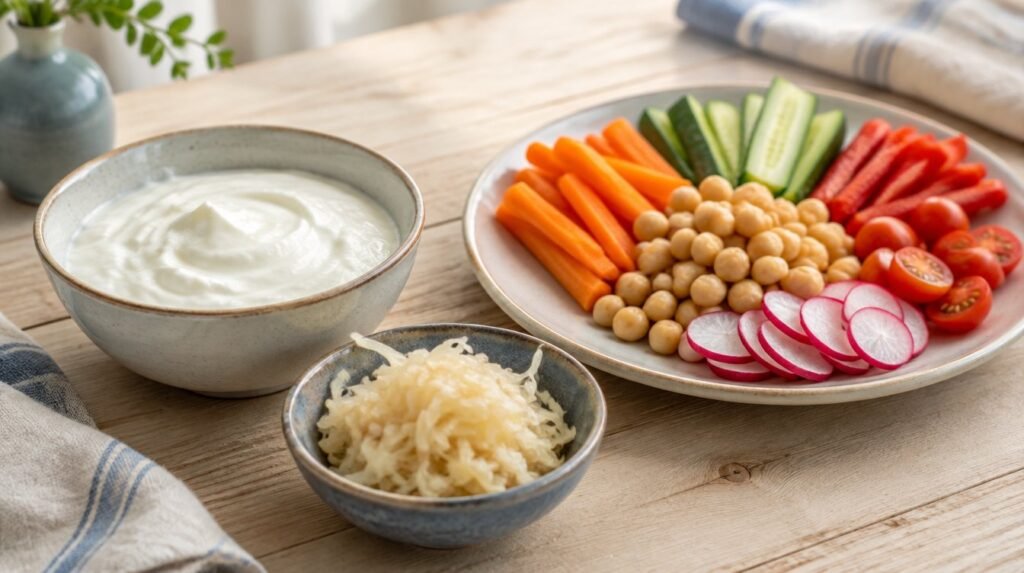
If your goal is general gut health rather than a specific condition, food is a cheaper place to start. Yogurt and kefir with live cultures, sauerkraut and kimchi add microbes, and a range of plants adds fiber. Our guides to probiotic foods and the best foods for gut health are good starting points, and fiber supplements covers prebiotic options.
When to see a doctor
Ongoing bloating, stomach pain or indigestion deserves a proper look rather than a supplement trial. Seek help right away for black, tarry or bloody stools, severe belly pain, frequent vomiting or signs of dehydration (NIDDK). If you think you might have H. pylori or an ulcer, ask about testing. This article is general information, not medical advice.
Related topics
- Gut Health Supplements: how other formulas compare.
- Best Probiotic: strains with the most human research.
- Lactobacillus reuteri: more on this species and its strains.
- Can You Take Too Many Probiotics?: stacking supplements safely.
- Probiotic Foods: food sources of live microbes.
Sources
- Gut Health (Snap Supplements product page, checked October 2026)
- Gut Health Supplement Facts panel (Snap Supplements, checked October 2026)
- Questions and Answers on Dietary Supplements (U.S. Food and Drug Administration)
- Zinc: Fact Sheet for Consumers (NIH Office of Dietary Supplements)
- Turmeric: Usefulness and Safety (NCCIH)
- Aloe Vera: Usefulness and Safety (NCCIH)
- Peppermint Oil: Usefulness and Safety (NCCIH)
- Licorice Root: Usefulness and Safety (NCCIH)
- Salminen S, et al. The International Scientific Association of Probiotics and Prebiotics (ISAPP) consensus statement on the definition and scope of postbiotics (Nature Reviews Gastroenterology & Hepatology, 2021)
- Mehling H, et al. Non-viable Lactobacillus reuteri DSMZ 17648 (Pylopass) as a new approach to Helicobacter pylori control in humans (Nutrients, 2013)
- Holz C, et al. Significant Reduction in Helicobacter pylori Load in Humans with Non-viable Lactobacillus reuteri DSM17648: A Pilot Study (Probiotics and Antimicrobial Proteins, 2015)
- Yang C, et al. Effects of non-viable Lactobacillus reuteri combining with 14-day standard triple therapy on Helicobacter pylori eradication (Helicobacter, 2021)
- Ivashkin V, et al. Efficacy and Safety of Postbiotic Contained Inactivated Lactobacillus reuteri DSM 17648 as Adjuvant Therapy in the Eradication of Helicobacter pylori in Adults With Functional Dyspepsia (Clinical and Translational Gastroenterology, 2024)
- Treatment for Peptic Ulcers (Stomach or Duodenal Ulcers) (NIDDK)
- Probiotics: Fact Sheet for Consumers (NIH Office of Dietary Supplements)
- Probiotics: Usefulness and Safety (NCCIH)
- Symptoms & Causes of Gas in the Digestive Tract (NIDDK)
- Symptoms & Causes of Diarrhea (NIDDK)
This article is for general information and is not medical advice. Talk to your doctor or a registered dietitian before changing your diet, supplements or medication, especially if you have a health condition.