Gut Health Supplements: A Buyer’s Guide
What are gut health supplements?
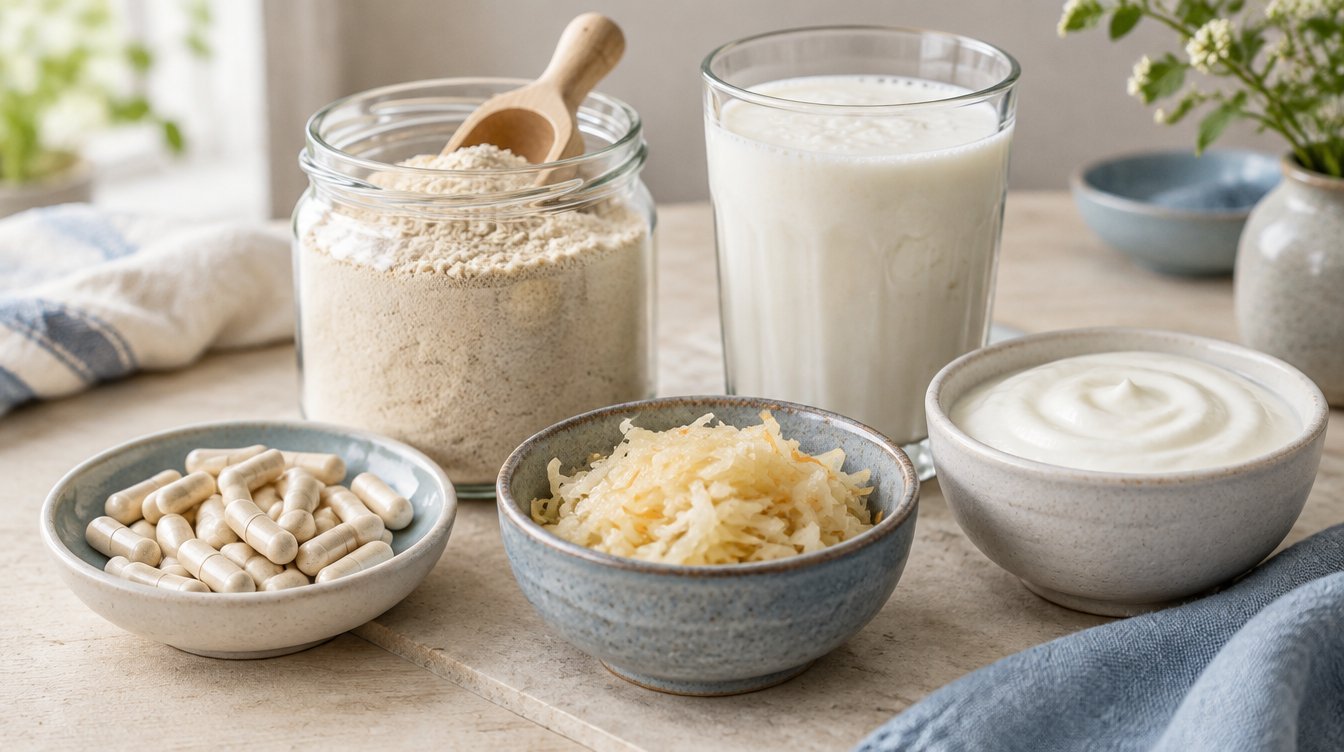
Gut health supplements are products sold to support digestion or the microbes that live in your intestines. The main types are probiotics, prebiotic fibers such as inulin and psyllium, synbiotics, postbiotics and butyrate, digestive enzymes, L-glutamine, collagen or bone broth powders, and greens powders. The evidence is solid for a few specific uses and thin for most marketing claims.
This guide covers what each category is meant to do, what human research shows, how to read a label and when food is the better choice. It doesn’t rank brands. For product comparisons, see our guides to the best probiotic, the best probiotic for women, probiotics for men and gut health gummies.
Ultimate Gut is published by Ultimate Health Solutions, which sells a yogurt maker, probiotic capsules and an inulin fiber supplement. None of the products reviewed here are ours, and these brands don’t pay us.
How gut supplements are supposed to work
Most gut supplements work, or claim to work, in one of five ways. Knowing which one a product relies on tells you what kind of evidence to look for.
- Adding microbes: Probiotics are live microorganisms. The NIH Office of Dietary Supplements (ODS) explains that they are named by genus, species and strain, as in Lactobacillus rhamnosus GG, and that effects depend on the specific microbe.
- Feeding microbes: A prebiotic is a substance that gut microbes selectively use in a way that benefits health, according to a 2017 expert consensus statement from the International Scientific Association for Probiotics and Prebiotics (ISAPP).
- Supplying microbial products: Postbiotics are preparations of inactivated microbes or their parts, as defined in a 2021 ISAPP consensus. Butyrate is a compound gut bacteria make, sold on its own as sodium butyrate or tributyrin.
- Helping break down food: Enzymes such as lactase split specific parts of food, in this case the milk sugar lactose (NIDDK).
- Supporting the gut lining: L-glutamine, collagen and bone broth are often marketed this way. This is the least proven group, as the sections below explain.
The main types of gut health supplements
Probiotics
Probiotics are the most studied gut supplements, and the research is strain-specific. The ODS fact sheet for health professionals says recommendations for their use need to be tied to individual strains. A result for one strain doesn’t carry over to another strain, even within the same species.
The clearest evidence is for antibiotic-associated diarrhea. According to the same ODS fact sheet, a meta-analysis of 21 randomized trials with 4,780 participants found that Saccharomyces boulardii cut the risk in adults from 17.4% to 8.2%. A meta-analysis of 12 trials with 1,499 people found that LGG lowered the risk from 22.4% to 12.3%, though the effect was statistically significant only in children.
The ODS consumer fact sheet adds that the benefit has been seen in people younger than 65 but not in older adults, and that it appears stronger when the probiotic is started within 2 days of the first antibiotic dose.
For most other gut problems, the picture is less settled. In its 2020 guidelines, the American Gastroenterological Association (AGA) said certain probiotics should be considered to help prevent C. difficile infection in adults and children taking antibiotics. It found too little evidence to recommend probiotics for IBS, Crohn’s disease or ulcerative colitis. For IBS, the ODS notes that results vary by strain, length of use and the symptom measured.
Gut flora supplements sold as broad multi-strain blends are not automatically better. The ODS fact sheet reports no evidence that combining multiple strains gives a greater benefit.
Prebiotic fibers: inulin and psyllium
Inulin is a plant fiber your body doesn’t digest. Gut bacteria use it as fuel, and the inulin in most supplements comes from chicory root, according to the Cleveland Clinic. It is also found in onions, garlic, leeks, asparagus, bananas, oats and wheat. Psyllium is a soluble fiber sold under brand names such as Metamucil and Konsyl (Mayo Clinic).
The best human evidence for fiber supplements is in constipation. A 2023 joint guideline from the AGA and the American College of Gastroenterology suggests fiber supplements, including bran, inulin and psyllium, for adults with chronic idiopathic constipation. The panel rated this a conditional recommendation based on low-certainty evidence.
Fiber can cause gas, bloating and cramping, and the Cleveland Clinic notes that added inulin can aggravate IBS in some people. Mayo Clinic advises adding fiber slowly over a few weeks and drinking plenty of water. Our fiber supplement guide compares the main types.
Synbiotics
A synbiotic is a mix of live microorganisms and a substance that gut microbes selectively use, as defined in a 2020 ISAPP consensus statement. The panel described two kinds, as ISAPP explains. In a complementary synbiotic, an established probiotic is paired with an established prebiotic, and each must meet its own standard. In a synergistic synbiotic, the fiber is chosen to feed the microbe given with it, and the combination is what has to show a benefit.
When a capsule pairs a probiotic with a fiber, the label rarely tells you whether the combination itself was tested in people. Judge the strain and the fiber dose on their own evidence.
Postbiotics and butyrate
Under the ISAPP definition, a postbiotic must contain inactivated microbial cells or cell parts, with or without the compounds they make. Heat-killed bacteria are an example. This category is newer, and any benefit applies only to the specific preparation that was studied.
Butyrate is a short-chain fatty acid made when gut bacteria ferment fiber. A 2023 literature review in Nutrients on inflammatory bowel disease reported that oral butyrate reduced inflammation in animal studies and in some patient studies, and concluded that more clinical research is needed. Evidence in healthy people is thin. Our tributyrin supplement guide covers this form in more detail.
Digestive enzymes
Digestive health supplements built on enzymes vary widely. Johns Hopkins Medicine notes that the only FDA-regulated enzyme replacement therapy is prescription pancreatic enzyme replacement therapy (PERT), used by people whose bodies don’t make enough enzymes. It says over-the-counter blends don’t have guaranteed doses or enzyme concentrations, and that a healthy person generally doesn’t need them.
Two single enzymes have clear, narrow uses. Lactase tablets or drops help break down lactose, and the NIDDK lists them as an option for lactose intolerance, with a note to check with a doctor first. Alpha-galactosidase targets carbohydrates found in beans (Johns Hopkins Medicine).
L-glutamine
L-glutamine is an amino acid often sold for leaky gut. The best human study we found is a randomized, placebo-controlled trial in Gut of 106 adults who had diarrhea-predominant IBS after a gut infection, plus increased intestinal permeability. After 8 weeks of 5 grams three times a day, 79.6% of the glutamine group had a meaningful drop in symptom scores, compared with 5.8% on placebo. The authors called for larger trials.
That result applies to one specific group. It doesn’t show that glutamine helps healthy people or other forms of IBS. Harvard Health notes that increased intestinal permeability plays a role in some digestive conditions, but there are no human clinical studies showing that leaky gut causes diseases elsewhere in the body.
Collagen and bone broth powders
Collagen powders are marketed for skin, joints and, more and more, the gut lining. Harvard Health describes some evidence for skin elasticity and joint pain and calls the research still early. It doesn’t point to gut benefits, and we found no strong human trials showing collagen improves gut health.
Bone broth has the same gap. The Cleveland Clinic says there still isn’t much research on it, and its gut claims lean partly on a non-human study. One cup can contain about 450 mg of sodium, so people with kidney disease should check with their care team first.
Greens powders
Greens powders are dried, ground blends of leafy greens, vegetables, grasses, fruits and herbs, and some add probiotics or prebiotics. The Cleveland Clinic says there isn’t a lot of research on them and that they shouldn’t replace whole fruits and vegetables. Many are high in vitamin K, which can interact with blood thinners, and the clinic advises choosing a third-party tested product.
What the evidence supports: a quick table
This table sums up the main claims made for gut health supplements and how strong the human evidence is. Strength ratings are our plain-language summary of the cited sources.
| Claim | Evidence strength | Source |
|---|---|---|
| S. boulardii or LGG lowers the risk of antibiotic-associated diarrhea | Moderate; strain-specific; seen mainly in people under 65 | NIH ODS |
| Certain probiotics help prevent C. difficile infection during antibiotics | Guideline suggestion for specific products | AGA |
| Probiotics ease IBS | Mixed; depends on strain; no guideline recommendation | AGA |
| Fiber supplements (psyllium, inulin, bran) help chronic constipation | Conditional recommendation, low certainty | AGA and ACG |
| Lactase reduces symptoms from lactose | Accepted option for lactose intolerance | NIDDK |
| Broad enzyme blends improve digestion in healthy people | Weak; most healthy people don’t need them | Johns Hopkins |
| Glutamine eases post-infection IBS with diarrhea | Early; one 8-week trial of 106 adults | Gut trial |
| Butyrate calms gut inflammation | Early; mostly animal and small patient studies | Nutrients review |
| Collagen or bone broth repairs the gut lining | Not shown in human trials | Cleveland Clinic |
| Greens powders improve gut health | Little research | Cleveland Clinic |
How to read a Supplement Facts label

The label is the best tool you have, because no agency checks that a product works before it’s sold. These are the details worth checking.
- Full strain names: Look for genus, species and a strain code, such as Lactobacillus rhamnosus GG (ODS). Without the strain, you can’t match the product to research.
- CFU at the end of shelf life: U.S. rules only require the total weight of microbes, which can include dead cells. The ODS fact sheet cites ISAPP advice to avoid products that list CFU only at the time of manufacture.
- A dose that matches the research: Compare the strain and amount with the studies. The ODS notes that a higher CFU count doesn’t by itself mean more benefit.
- Dates and storage: Check the expiration or use-by date and follow storage directions, such as refrigeration (ODS).
- Claims and the disclaimer: Phrases like “supports digestive health” are structure/function claims. The FDA doesn’t pre-approve them, and the label must say the FDA hasn’t evaluated the claim.
- Third-party marks: The USP Verified Mark means the product contains the listed ingredients in the declared amounts, doesn’t have harmful levels of specified contaminants, breaks down in the body on time and was made under good manufacturing practices. NSF Certified for Sport checks label claims and contaminants, screens for 290 banned substances and audits facilities. Neither mark tells you whether a product works.
How the FDA regulates supplements
Gut supplements are sold as dietary supplements, not drugs. The FDA states that it is not authorized to approve dietary supplements for safety and effectiveness before they’re marketed, and in many cases a company can start selling a supplement without notifying the agency. The FDA can act against unsafe products after they reach the market, and the Federal Trade Commission oversees advertising claims.
For probiotics, the National Center for Complementary and Integrative Health (NCCIH) adds two points. Supplement labels can’t make disease claims without FDA consent, and some probiotic products have been found to contain microorganisms other than those listed on the label.
Who should be careful
The ODS says probiotics are unlikely to cause harm in healthy people and that side effects are usually minor, and fiber mainly causes gas and bloating. Some people should still talk with a doctor before starting any gut supplement.
- People with weakened immune systems or serious illness: The NCCIH says the risk of harmful effects from probiotics is greater in these groups. The ODS reports that bloodstream infections linked to probiotics occurred mostly in people who were severely ill or immunocompromised.
- People with a central line or in intensive care: Risk factors for yeast bloodstream infections tied to Saccharomyces probiotics included ICU stays, tube or IV feeding, a central venous catheter and broad-spectrum antibiotics (ODS).
- Premature infants: The FDA has warned that probiotics given to preterm infants may cause serious, potentially fatal infections (ODS).
- Pregnant or breastfeeding people: Ask your obstetric provider before adding any supplement. The FDA advises talking with a doctor, pharmacist or other health professional before using one.
- People taking medicines: Greens powders high in vitamin K can interact with blood thinners (Cleveland Clinic). A pharmacist can check other interactions.
- People with IBS or kidney disease: Added inulin can aggravate IBS in some people (Cleveland Clinic), and bone broth’s sodium matters for kidney disease (Cleveland Clinic).
Food-first options
For many people, food covers what a gut health microbiome support supplement promises. Mayo Clinic says whole foods are generally better than fiber supplements and lists daily targets of 25 grams of fiber for women 50 and younger, 21 grams for older women, 38 grams for men 50 and younger and 30 grams for older men.
Fermented foods are the other half. In a 10-week Stanford trial of 36 healthy adults, a diet high in fermented foods such as yogurt, kefir, kimchi and kombucha increased gut microbial diversity and lowered all 19 inflammatory proteins measured in blood. A high-fiber diet in the same study did not change those proteins. It was small and short, but it supports eating fermented foods. Our guide to fermented foods for gut health covers the options.
- Live-culture dairy: plain yogurt and kefir with live cultures.
- Fermented drinks: see our probiotic drinks buyer guide for kefir, cultured shots and kombucha.
- Fermented vegetables: refrigerated sauerkraut and kimchi.
- Inulin-rich foods: onions, garlic, leeks, asparagus, bananas and oats (Cleveland Clinic).
- Other fiber: beans, whole grains, fruits and vegetables (Mayo Clinic).
How to choose the best gut health supplement for you
The best gut health supplement is the one that matches a specific goal and has human research behind it. Work through these steps before you buy.
- Name the goal. Constipation, antibiotic-associated diarrhea and lactose intolerance each point to a different product. A vague goal such as “better gut health” makes it hard to tell whether anything worked.
- Match the ingredient to the evidence. Use the table above. Fiber has the best case for constipation, specific probiotic strains for antibiotic-associated diarrhea and lactase for lactose.
- Check the strain and dose. Confirm the label lists the same strain and a similar amount as the research.
- Check the CFU basis and storage. Prefer counts stated at the end of shelf life.
- Look for a third-party mark. USP or NSF marks address quality, not effectiveness.
- Try one product at a time. Set a trial period and stop if nothing changes. The AGA suggests people taking probiotics for conditions without good evidence consider stopping, given the cost.
- Tell your clinician. This matters most if you are pregnant, take medicines or have a chronic condition.
When to see a doctor
This article is general information, not medical advice, and supplements shouldn’t delay a diagnosis. Persistent gut symptoms deserve a visit to a doctor.
The NIDDK says to see a doctor right away if constipation comes with bleeding from the rectum, blood in the stool, constant belly pain, inability to pass gas, vomiting, fever, lower back pain or weight loss without trying. For diarrhea, adults should talk with a doctor if it lasts more than 2 days, comes with a high fever or involves six or more loose stools a day, and anyone should get prompt care for signs of dehydration, severe belly or rectal pain, or black, tarry or bloody stools.
Frequently asked questions
What is the best gut health supplement?
There isn’t one best product for everyone. The best-supported choice depends on the goal, such as fiber for constipation or specific strains like S. boulardii or LGG during antibiotics (NIH ODS).
Do gut health supplements work?
Some do for specific uses, including fiber for chronic constipation (AGA and ACG). Many other claims, such as gut repair from collagen or greens powders, lack strong human trials.
Are gut supplements approved by the FDA?
No. The FDA is not authorized to approve dietary supplements for safety and effectiveness before they are sold (FDA).
Should I take a probiotic and a prebiotic together?
Not necessarily. Judge each part on its own evidence, because a combination product isn’t necessarily tested as a combination in people.
Can food replace gut supplements?
For many people, yes. Fiber-rich plants and fermented foods such as yogurt and kefir supply what most gut supplements promise, and in one small Stanford trial a fermented-food diet increased microbial diversity (Stanford Medicine).
Related topics
- Best Probiotic: picks matched to common needs and strains.
- Probiotic Foods: which foods carry live cultures.
- Best Supplements for Gut Health and Inflammation: what research shows for inflammation claims.
- AG1 Gut Health: a closer look at one popular greens powder.
- Best Foods for Gut Health: the food-first approach in detail.
- Gut Health Diet Plan: putting gut-friendly foods into a daily plan.
Sources
- Information for Consumers on Using Dietary Supplements (U.S. Food and Drug Administration)
- Structure/Function Claims (U.S. Food and Drug Administration)
- Probiotics: Fact Sheet for Consumers (NIH Office of Dietary Supplements)
- Probiotics: Fact Sheet for Health Professionals (NIH Office of Dietary Supplements)
- Probiotics: Usefulness and Safety (National Center for Complementary and Integrative Health)
- AGA does not recommend the use of probiotics for most digestive conditions (American Gastroenterological Association, 2020)
- AGA-ACG Clinical Practice Guideline: Pharmacological Management of Chronic Idiopathic Constipation (American Gastroenterological Association, 2023)
- Gibson GR, et al. The International Scientific Association for Probiotics and Prebiotics (ISAPP) consensus statement on the definition and scope of prebiotics (Nature Reviews Gastroenterology & Hepatology, 2017)
- Swanson KS, et al. The International Scientific Association for Probiotics and Prebiotics (ISAPP) consensus statement on the definition and scope of synbiotics (Nature Reviews Gastroenterology & Hepatology, 2020)
- New synbiotic definition lays the groundwork for continued scientific progress (International Scientific Association for Probiotics and Prebiotics)
- Salminen S, et al. The International Scientific Association of Probiotics and Prebiotics (ISAPP) consensus statement on the definition and scope of postbiotics (Nature Reviews Gastroenterology & Hepatology, 2021)
- Recharla N, et al. Gut Microbial Metabolite Butyrate and Its Therapeutic Role in Inflammatory Bowel Disease: A Literature Review (Nutrients, 2023)
- Zhou Q, et al. Randomised placebo-controlled trial of dietary glutamine supplements for postinfectious irritable bowel syndrome (Gut, 2019)
- Leaky gut: What is it, and what does it mean for you? (Harvard Health Publishing)
- Digestive Enzymes and Digestive Enzyme Supplements (Johns Hopkins Medicine)
- Treatment for Lactose Intolerance (National Institute of Diabetes and Digestive and Kidney Diseases)
- Dietary fiber: Essential for a healthy diet (Mayo Clinic)
- Does Inulin Help Improve Gut Health? (Cleveland Clinic)
- Do collagen supplements fulfill their promises? (Harvard Health Publishing, 2025)
- Why Bone Broth Is Good for You (and How To Make It) (Cleveland Clinic)
- Powdered Greens: Do They Really Work? (Cleveland Clinic)
- Understanding the USP Verified Mark on Supplements (U.S. Pharmacopeia)
- NSF Certified for Sport: Get Certified (NSF)
- Fermented-food diet increases microbiome diversity, decreases inflammatory proteins, study finds (Stanford Medicine, 2021)
- Symptoms and Causes of Constipation (National Institute of Diabetes and Digestive and Kidney Diseases)
- Symptoms and Causes of Diarrhea (National Institute of Diabetes and Digestive and Kidney Diseases)
This article is for general information and is not medical advice. Talk to your doctor or a registered dietitian before changing your diet, supplements or medication, especially if you have a health condition.