Fiber Supplement: A Buyer’s Guide
What a fiber supplement can and can’t do
A fiber supplement is a concentrated dose of one type of fiber, sold as a powder, capsule, caplet or chewable. The best-studied type for constipation is psyllium, and it is also the only supplement fiber here with an FDA-authorized heart health claim. Other fibers behave differently in the gut, so the “best fiber supplement” depends on what you want it for and how much gas you can tolerate.
Ultimate Gut is published by Ultimate Health Solutions, which sells a yogurt maker, probiotic capsules and an inulin fiber supplement. None of the products reviewed here are ours, and these brands don’t pay us.
Some fiber products carry Drug Facts labels as over-the-counter laxatives; others are dietary supplements, which the FDA is not authorized to approve for safety and effectiveness before they are marketed. Product details below come from each brand’s own page or label, checked October 2026. This is general information, not medical advice.
Food first: how much fiber you need
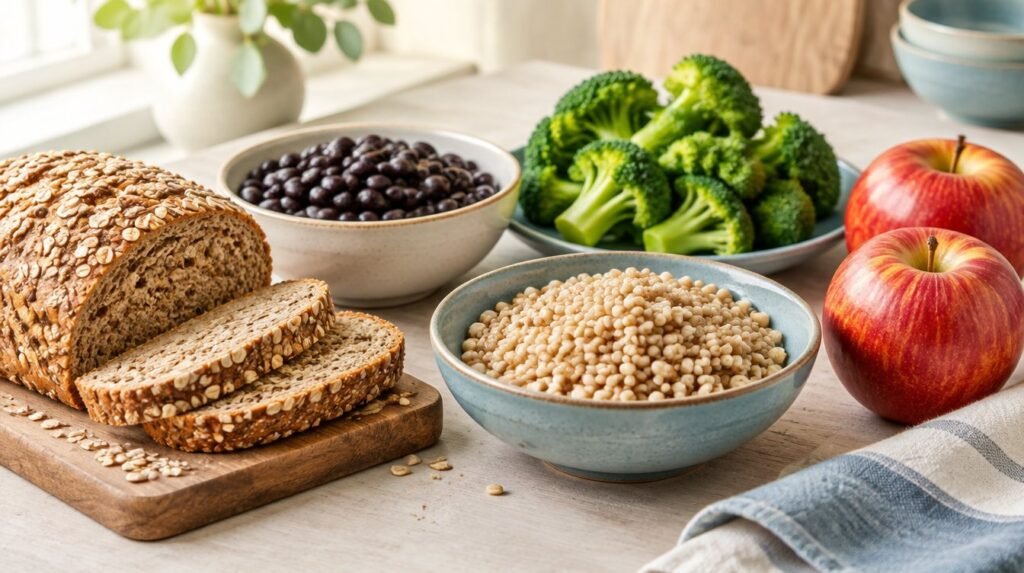
The 2025-2030 Dietary Guidelines for Americans tell people to prioritize fiber-rich whole grains and say high-fiber foods support a diverse gut microbiome, but they do not set a new gram target. The previous 2020-2025 edition used goals of 14 grams per 1,000 calories: about 22 to 28 grams a day for adult women and 28 to 34 grams for adult men, depending on age. It reported that more than 90% of women and 97% of men fall short.
Food brings a mix of fiber types plus nutrients a powder lacks, so it comes first. A supplement can help close a gap, or deliver a specific fiber that has been studied for a specific goal. Our best foods for gut health list is a good place to start.
Fiber types at a glance
Three properties drive how a fiber behaves, and a 2021 review notes they vary a great deal by source and processing:
- Soluble or insoluble: soluble fiber dissolves in water; insoluble fiber does not.
- Viscous or not: some soluble fibers thicken into a gel. Gel-forming fibers are associated with lower cholesterol and smaller blood sugar rises after meals.
- Fermentable or not: gut bacteria break down fermentable fibers, producing short-chain fatty acids and gas. A review in the American Journal of Gastroenterology notes that fiber can worsen bloating and flatulence even when used carefully.
| Type | Example product (brand page) | Fiber per serving (label) | Notes |
|---|---|---|---|
| Psyllium husk | Metamucil Original Coarse Powder | 2.4 g soluble fiber per serving | Soluble, gel-forming and largely not fermented; most evidence for constipation and cholesterol |
| Methylcellulose | Citrucel Sugar Free Orange | 2 g methylcellulose per rounded tablespoon | Brand says it is 100% soluble and “won’t cause excess gas,” based on its own laboratory testing |
| Calcium polycarbophil | FiberCon caplets | 625 mg per caplet; dose is 2 caplets | Each caplet also contains 125 mg calcium |
| Wheat dextrin | Benefiber Original powder | 6 g per 4-teaspoon serving | Stirs into drinks or soft food; brand says it meets FDA gluten-free requirements |
| Inulin (chicory root) | NOW Inulin Prebiotic Pure Powder, Organic | 4 g per level teaspoon | Fermentable prebiotic; label advises starting with 1 teaspoon to limit GI discomfort |
| Acacia gum | NOW Organic Acacia Fiber Powder | 6 g soluble fiber per tablespoon | Label suggests sensitive users start with 1 teaspoon |
| Partially hydrolyzed guar gum | Sunfiber | 6 g per 7 g scoop | Low-viscosity soluble fiber; brand lists Monash University Low FODMAP certification |
Inulin is fermented by gut bacteria. Cleveland Clinic calls it a soluble prebiotic fiber that gut bacteria use as food, and notes that too much may cause gas, bloating, cramping or diarrhea in some people and that added inulin can aggravate IBS.
What the evidence shows
Constipation
A 2022 meta-analysis of 16 randomized trials with 1,251 adults found that 66% of people responded to fiber versus 41% on control. Psyllium and pectin showed significant effects. Responses were seen mainly at doses above 10 grams a day, and gains in stool frequency appeared with at least 4 weeks of use. Flatulence was more common with fiber, and the trials varied a lot, so the authors urge caution.
For inulin, a smaller 2014 meta-analysis of 5 trials with 252 people found better stool frequency and consistency, but no improvement in pain or bloating. The 2023 AGA-ACG constipation guideline gives fiber a conditional recommendation, a weaker grade than it gives several prescription and over-the-counter laxatives. NIDDK lists Citrucel, FiberCon and Metamucil among over-the-counter options.
Cholesterol
FDA allows a heart disease claim for soluble fiber from psyllium husk. Under 21 CFR 101.81, a diet low in saturated fat and cholesterol that includes 7 grams or more of psyllium soluble fiber a day may reduce the risk of heart disease, and a qualifying food must supply at least 1.7 grams per serving. A 2018 meta-analysis of 28 trials (1,924 people) found a median dose of about 10 grams of psyllium lowered LDL cholesterol by 0.33 mmol/L, roughly 13 mg/dL.
Blood sugar
A 2015 meta-analysis of 35 trials found psyllium taken before meals lowered fasting glucose and HbA1c in people being treated for type 2 diabetes, with a modest effect in prediabetes and none in people with normal blood sugar. Several authors worked for Procter & Gamble, which makes Metamucil, and the analysis drew on the company’s trial records. Mayo Clinic notes that fiber supplements can lower blood sugar, so people with diabetes may need to adjust their medicines.
How to start a fiber supplement
- Pick one fiber and start small. Mayo Clinic advises small amounts at first to avoid gas, and says daily use appears safe.
- Take it with plenty of liquid. FiberCon and Citrucel labels call for at least 8 ounces of fluid per dose. Foods with dry psyllium husk must carry a fluid and choking statement, and the Citrucel label warns that too little fluid may cause the product to swell and block the throat. Skip these products if you have trouble swallowing.
- Separate it from medicines. The FiberCon label says to take it 2 or more hours before or after other drugs, and Metamucil says at least 2 hours before or after medicines.
- Ask first if you have a bowel condition or take diabetes medicine. Mayo Clinic flags a history of blocked bowel or Crohn’s disease. Metamucil’s healthcare FAQ also asks people on GLP-1 medicines to consult their provider.
- Give it time. In the 2022 meta-analysis, gains in stool frequency showed up with at least 4 weeks of use. If gas is a problem, our guide to eating when gas hurts may help.
When to see a doctor
NIDDK says to see a doctor right away if constipation comes with bleeding from the rectum, blood in the stool, constant belly pain, being unable to pass gas, vomiting, fever, lower back pain, or losing weight without trying. Also check in if constipation continues despite self-care or close relatives have had colon or rectal cancer. Metamucil and Citrucel labels say to stop and ask a doctor if constipation lasts more than 7 days or rectal bleeding occurs.
Related topics
- Vegan Gut Health Supplements: plant-based fibers, probiotics and what to check.
- Gut Health Supplements: the wider supplement picture.
- Gut Health Diet Plan: raising fiber with food.
- Foods That are Hard to Digest: common triggers for gas and bloating.
- Gut Health Test: medical tests versus home microbiome kits.
Sources
- Information for Consumers on Using Dietary Supplements (U.S. Food and Drug Administration)
- Dietary Guidelines for Americans, 2025-2030 (U.S. Department of Agriculture and U.S. Department of Health and Human Services)
- Dietary Guidelines for Americans, 2020-2025 (U.S. Department of Agriculture and U.S. Department of Health and Human Services)
- Gill SK, et al. Dietary fibre in gastrointestinal health and disease (Nature Reviews Gastroenterology & Hepatology, 2021)
- Eswaran S, et al. Fiber and functional gastrointestinal disorders (American Journal of Gastroenterology, 2013)
- van der Schoot A, et al. The Effect of Fiber Supplementation on Chronic Constipation in Adults: An Updated Systematic Review and Meta-Analysis of Randomized Controlled Trials (American Journal of Clinical Nutrition, 2022)
- Collado Yurrita L, et al. Effectiveness of inulin intake on indicators of chronic constipation; a meta-analysis of controlled randomized clinical trials (Nutricion Hospitalaria, 2014)
- Chang L, et al. American Gastroenterological Association-American College of Gastroenterology Clinical Practice Guideline: Pharmacological Management of Chronic Idiopathic Constipation (Gastroenterology, 2023)
- Jovanovski E, et al. Effect of psyllium (Plantago ovata) fiber on LDL cholesterol and alternative lipid targets, non-HDL cholesterol and apolipoprotein B (American Journal of Clinical Nutrition, 2018)
- Gibb RD, et al. Psyllium fiber improves glycemic control proportional to loss of glycemic control: a meta-analysis (American Journal of Clinical Nutrition, 2015)
- 21 CFR 101.81: Health claims: Soluble fiber from certain foods and risk of coronary heart disease (eCFR)
- 21 CFR 101.17: Food labeling warning, notice, and safe handling statements (eCFR)
- Does Inulin Help Improve Gut Health? (Cleveland Clinic)
- Fiber supplements: Safe to take every day? (Mayo Clinic)
- Treatment for Constipation (National Institute of Diabetes and Digestive and Kidney Diseases)
- Symptoms & Causes of Constipation (National Institute of Diabetes and Digestive and Kidney Diseases)
- Metamucil Original Coarse Powder Fiber Supplement (Procter & Gamble)
- Metamucil FAQ for Healthcare Professionals (Procter & Gamble)
- Citrucel Sugar Free Orange Mix Fiber Powder (Haleon)
- Citrucel Sugar Free Orange product label (Haleon)
- Benefiber Powder, Original (Haleon)
- FiberCon Caplets product label (FiberCon)
- Inulin Prebiotic Pure Powder, Organic (NOW Foods)
- Acacia Fiber Organic Powder (NOW Foods)
- Sunfiber (Tomorrow’s Nutrition)
This article is for general information and is not medical advice. Talk to your doctor or a registered dietitian before changing your diet, supplements or medication, especially if you have a health condition.