Gut Health Test: What You Need to Know
Two very different kinds of gut health test
A “gut health test” can mean two different things. One is a medical test a doctor orders to look for a specific problem, such as an infection, inflammation, celiac disease or colorectal cancer. The other is a direct-to-consumer gut microbiome test: you mail in a stool sample and a company reports which microbes it found. The first kind answers clinical questions. The second is, for now, mostly a snapshot for the curious.
Ultimate Gut is published by Ultimate Health Solutions, which sells a yogurt maker, probiotic capsules and an inulin fiber supplement. None of the products reviewed here are ours, and these brands don’t pay us.
This article is general information, not medical advice. If you have symptoms, start with a clinician rather than a kit.
Medical tests a doctor may order

These tests look for a named condition and have established uses. Which one fits depends on your symptoms, age and history, which is why a clinician chooses them.
| Test | What it checks | When it is typically used |
|---|---|---|
| Stool test for C. diff | Signs of Clostridioides difficile infection in a fresh loose stool sample | Watery diarrhea three or more times a day plus a risk factor, such as antibiotics in the past 6 to 8 weeks |
| Fecal calprotectin | A protein that signals inflammation inside the intestines | Ongoing pain or diarrhea with an unclear cause; helps separate inflammatory bowel disease (IBD) from IBS |
| Celiac blood tests | Antibodies that are often high in untreated celiac disease | Suspected celiac disease; a small-intestine biopsy is the usual next step |
| Hydrogen breath test | Gas made when bacteria ferment a test sugar | Suspected lactose or other sugar intolerance, or small intestinal bacterial overgrowth (SIBO) |
| FIT or stool DNA test | Hidden blood in stool; the DNA test also looks for DNA changes from polyps and cancer | Colorectal cancer screening in people without symptoms |
| Colonoscopy | A direct look at the rectum and entire colon; polyps can be removed | Screening, follow-up of a positive stool test, or investigating symptoms |
A few details matter. Calprotectin can’t give a final diagnosis on its own. According to Cleveland Clinic, very high levels point toward IBD, while moderately high levels have many causes, including infections, celiac disease and diverticulitis. Mayo Clinic also lists it for diarrhea lasting longer than four weeks and for monitoring IBD, and a 2023 American Gastroenterological Association guideline suggests using it alongside symptoms to monitor ulcerative colitis.
For celiac disease, NIDDK says doctors don’t recommend starting a gluten-free diet before testing, because it can affect the results. Breath tests involve drinking a sugar solution and then giving breath samples about every 15 to 30 minutes for a few hours, per Cleveland Clinic.
Colorectal cancer screening is the gut test with the clearest national recommendation. The U.S. Preventive Services Task Force (2021) recommends screening for adults 45 to 75 and calls it an individual decision from 76 to 85. Options include a FIT every year, a stool DNA-FIT test every 1 to 3 years, or a colonoscopy every 10 years. The CDC notes that a positive stool test means a colonoscopy is needed to finish screening. Mayo Clinic adds that stool screening tests are for people without symptoms.
At-home gut microbiome tests
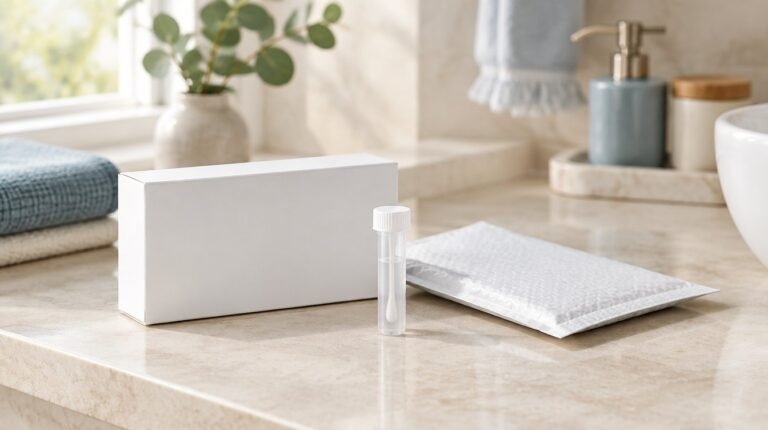
Direct-to-consumer kits ask you to mail a stool sample to the company’s lab. Reports usually list the microbes found, a diversity score, and often food or supplement suggestions. Most use one of three methods.
16S, shotgun and RNA tests
- 16S rRNA sequencing: reads one marker gene that bacteria share, so it gives a rougher picture and is less able to tell closely related species apart than shotgun sequencing.
- Shotgun metagenomics: reads DNA from across all the genes in the sample. In a 2016 comparison run on a single stool sample, shotgun sequencing detected more species, more diversity and more genes than 16S.
- Metatranscriptomics: reads RNA, which shows which microbial genes are switched on. In a small 2014 study of eight healthy adults, RNA profiles were more individual than DNA-based gene profiles, which is why RNA tests are pitched as measuring activity. Our Viome guide covers one company that uses this method.
What they can and can’t tell you
A kit can tell you roughly which microbes were detected in one sample on one day. It can’t tell you whether your microbiome is “healthy,” because there is no agreed definition of one. A 2024 review in the journal Gut says a universally accepted definition of gut health is very difficult to pin down, given differences between people, diet and lifestyle, and the problem of separating cause from correlation.
A 2025 international consensus statement from a panel of microbiome and gastroenterology experts found that evidence supporting the clinical usefulness of microbiome testing is scarce, and that direct-to-consumer tests are sold without agreed regulation or proven value in clinical practice. Accuracy is a further question. When researchers at the National Institute of Standards and Technology sent the same standardized stool material to seven services, results differed so much that the gap between providers was as large as the natural difference between different people.
Regulation and privacy
The NIST team notes that these kits sit between strictly regulated medical devices and lightly regulated wellness products, a line that may not be obvious to buyers. A “CLIA-certified lab” claim speaks to lab quality, but CMS says the CLIA program “does not address the clinical validity of any test.”
Privacy deserves a look too. HIPAA covers health plans, clearinghouses and certain providers; the FTC explains that companies outside HIPAA that collect health information fall under the FTC Act and its Health Breach Notification Rule instead. Before buying, read the privacy policy for how long samples and data are kept, whether they go to research partners, and how to request deletion.
How to choose the right test
- You have symptoms: see a clinician. A microbiome kit is not built to diagnose infection, IBD, celiac disease or cancer.
- You are 45 to 75: ask about colorectal cancer screening, and which option suits you.
- You suspect a food problem: ask about a breath test or celiac testing before cutting foods out, since going gluten-free first can muddy celiac results.
- You are healthy and curious: if you buy a kit, check the method (16S, shotgun or RNA), the price of repeat tests, the privacy terms, and whether the company sells supplements based on your results. Treat the report as a snapshot, not a diagnosis.
- Whatever you choose: the basics don’t need a test. The 2025-2030 Dietary Guidelines say vegetables, fruits, fermented foods and high-fiber foods support a diverse microbiome. Our best foods for gut health guide turns that into a shopping list.
When to see a doctor
Get medical care promptly, rather than ordering a kit, if you notice any of these:
- Black or tarry stool, blood in your stool, or vomit with blood or a “coffee grounds” look (NIDDK). Seek emergency help for signs of shock, such as confusion, a fast heartbeat or cold, pale skin.
- Diarrhea lasting more than 2 days, six or more loose stools a day, a high fever, severe pain in the abdomen or rectum, or signs of dehydration (NIDDK).
- Constipation with constant belly pain, vomiting, fever, or being unable to pass gas (NIDDK).
- Losing weight without trying, or a change in your bowel habits that is unusual for you (NHS).
For milder, short-lived symptoms, our upset stomach remedies page covers simple first steps.
Related topics
- Viome: a closer look at one RNA-based home test.
- Gut Health Supplements: what the evidence shows before you buy.
- Fiber Supplement: the gut habit with the most research behind it.
- Gut Health Diet Plan: a week of food-first changes.
- What to Eat when Stomach is Upset Diarrhea?: gentle foods while you recover.
Sources
- C. diff Testing (MedlinePlus, National Library of Medicine)
- Fecal Calprotectin Test (Cleveland Clinic)
- Calprotectin fecal test (Mayo Clinic)
- Singh S, et al. AGA Clinical Practice Guideline on the Role of Biomarkers for the Management of Ulcerative Colitis (Gastroenterology, 2023)
- Diagnosis of Celiac Disease (National Institute of Diabetes and Digestive and Kidney Diseases)
- Hydrogen Breath Test (Cleveland Clinic)
- Colorectal Cancer: Screening, Final Recommendation Statement (U.S. Preventive Services Task Force, 2021)
- Screening for Colorectal Cancer (Centers for Disease Control and Prevention)
- At-home colon cancer tests (Mayo Clinic)
- Ranjan R, et al. Analysis of the microbiome: Advantages of whole genome shotgun versus 16S amplicon sequencing (Biochemical and Biophysical Research Communications, 2016)
- Franzosa EA, et al. Relating the metatranscriptome and metagenome of the human gut (PNAS, 2014)
- Van Hul M, et al. What defines a healthy gut microbiome? (Gut, 2024)
- Porcari S, et al. International consensus statement on microbiome testing in clinical practice (Lancet Gastroenterology & Hepatology, 2025)
- Servetas SL, et al. Evaluating the analytical performance of direct-to-consumer gut microbiome testing services (Communications Biology, 2026)
- CLIA Overview and Laboratory Developed Tests FAQs (Centers for Medicare & Medicaid Services)
- Collecting, Using, or Sharing Consumer Health Information? Look to HIPAA, the FTC Act, and the Health Breach Notification Rule (Federal Trade Commission)
- Dietary Guidelines for Americans, 2025-2030 (U.S. Department of Agriculture and U.S. Department of Health and Human Services)
- Symptoms & Causes of GI Bleeding (National Institute of Diabetes and Digestive and Kidney Diseases)
- Symptoms & Causes of Diarrhea (National Institute of Diabetes and Digestive and Kidney Diseases)
- Symptoms & Causes of Constipation (National Institute of Diabetes and Digestive and Kidney Diseases)
- Symptoms of bowel cancer (NHS)
This article is for general information and is not medical advice. Talk to your doctor or a registered dietitian before changing your diet, supplements or medication, especially if you have a health condition.