Viome: The Complete Guide
The short answer
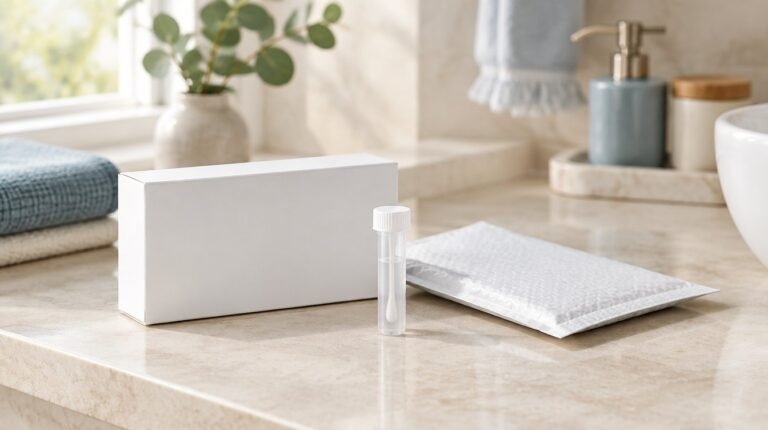
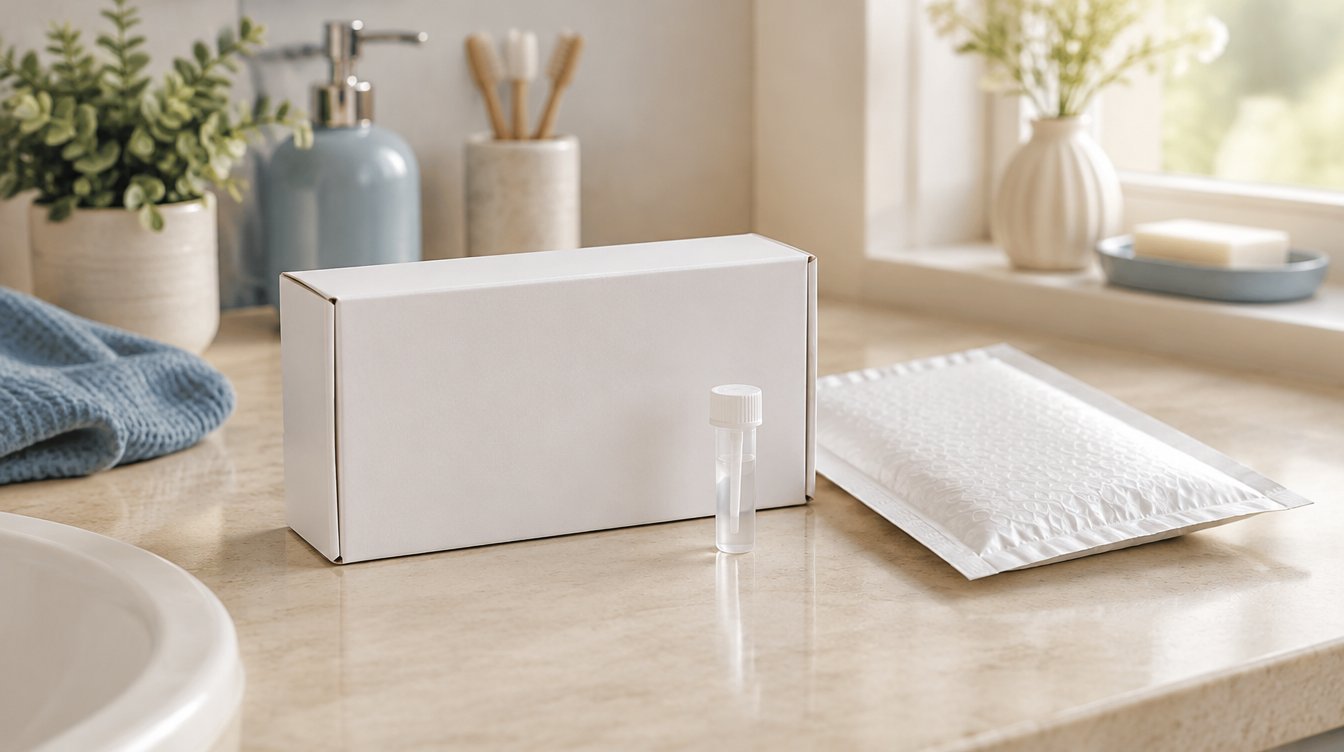
Viome sells at-home tests that sequence the RNA in a stool sample (and, in its top kit, saliva and a finger-prick of blood), then turns the results into health scores, food lists and monthly personalized supplements. The lab method is published and appears consistent in Viome’s own studies. What is missing is independent proof that following Viome’s recommendations leads to better health than ordinary good advice. It is an expensive wellness product, not a medical test.
Ultimate Gut is published by Ultimate Health Solutions, which sells a yogurt maker, probiotic capsules and an inulin fiber supplement. None of the products reviewed here are ours, and these brands don’t pay us.
Product details and prices below come from Viome’s own pages, checked October 2026. We did not buy or take a Viome test. This article is general information, not medical advice.
What Viome sells
Viome’s products page lists two tests, plus personalized products that are sold as a separate subscription once results are in.
| Product | What it involves | Listed price (October 2026) |
|---|---|---|
| Gut Intelligence Test | Stool sample; 25+ gut scores and 370+ food recommendations | $279 single test, or $229 every 180 days on subscription |
| Full Body Intelligence Test | Stool, saliva and finger-prick blood; 70+ scores, including “BioAge” | $399 single test, or $349 every 180 days on subscription |
| Gut Formula | Daily stick pack of probiotics and prebiotics chosen from your results | Listed at $79 a month, with bundle discounts |
| Precision Supplements | Eight daily capsules of vitamins, minerals and herbs chosen from your results | Listed at $119 a month, with bundle discounts |
Viome recommends retesting every 6 months. On the gut test subscription, that is $458 a year before any supplements. The products page says the tests are not covered by insurance but can be paid with HSA or FSA funds.
What the technology can and can’t tell you
Viome contrasts its approach with DNA-based gut tests, which show which microbes are present. It uses metatranscriptomics, which reads RNA, a sign of which microbial genes are active at the time of sampling. That is a richer readout in principle, and it is an established research method.
Viome’s scientists described their lab process in a 2019 methods paper that applied it to 10,000 stool samples, with small studies of sample stability. A 2026 study of 6,157 people reported that gut activity profiles were largely stable over about six months. In a 2022 study of 550 adults wearing glucose monitors, adding gut RNA data helped a model predict blood sugar responses to meals, though the model explained only part of the variation in new data (R² of 0.40). All authors of these papers work for or are paid by Viome.
What the test can’t do is diagnose a disease. Viome’s own pages say its information is “not intended to be used by the customer for any diagnostic purpose.” Its scores, such as “Gut Lining Health” or “Gas Production,” are company-defined measures rather than standard clinical tests.
Published validation and its limits
Viome’s science page points to its study of precision nutrition in IBS, depression and anxiety. The trial registration shows a single-group design: about 10,000 participants with self-reported conditions all received Viome’s diet and supplement advice, with no control group and no blinding. That design can’t show whether the advice caused any improvement, and no results had been posted to the registry when we checked.
Outside experts are cautious. A 2025 international consensus statement by 69 international microbiome and gastroenterology experts found that evidence for the clinical usefulness of gut microbiome testing is scarce. The panel discouraged patients from ordering microbiome tests without a clinical recommendation, and discouraged testing providers from giving treatment advice based on results. Viome’s model, which pairs results with food lists and supplements, is the kind of practice the panel advised against.
Accuracy across the industry is another open question. When government scientists sent the same standardized stool material to seven direct-to-consumer gut testing services, results differed between providers about as much as they differ between different people. That study did not name the companies, so we can’t say whether Viome was included.
FDA status of wellness tests like Viome
Viome says its tests run in a CLIA-certified lab. CLIA certification covers lab quality, but according to CMS, the CLIA program “does not address the clinical validity of any test,” meaning how well a result predicts a health condition. That job falls to FDA review for tests that go through it.
Tests that labs design and run themselves have generally not gone through FDA premarket review. The FDA tried to change that with a 2024 rule, but its laboratory developed tests page notes a federal court vacated the rule on March 31, 2025, and the FDA restored the earlier regulation in September 2025. We found no FDA clearance mentioned on Viome’s test pages. The personalized formulas are supplements, which the FDA does not approve for safety and effectiveness before sale.
Privacy considerations
A stool, saliva and blood RNA profile is sensitive health data. Viome’s privacy policy (effective June 20, 2026) is worth reading before you buy. Key points:
- Viome may use your data in de-identified, pseudonymized or aggregate form for research, data analysis and marketing, even if you decline specific research studies.
- Leftover samples are stored under coded IDs after testing.
- In a merger, acquisition or asset sale, personal information “will likely be among the assets transferred.”
- Data may be disclosed in response to subpoenas, warrants or court orders.
- The products page FAQ says Viome never sells personal health data and that you can request deletion at any time.
Who it may suit and who should skip it
Viome may suit a healthy, curious person who enjoys tracking data, can afford it, and treats the food lists as one more input rather than rules. It is a poor fit if you have ongoing symptoms that need a diagnosis, if you are on a tight budget, or if the privacy terms make you uneasy. Food lists that tell you to “avoid” common healthy foods can also make eating more restrictive than it needs to be.
If you take the Gut Formula, the usual probiotic cautions apply. The risk of harm is greater in people with serious illness or weakened immune systems (NCCIH), so check with your doctor first, especially if you are pregnant or have a central line.
Alternatives
- See a doctor if you have symptoms. Standard medical tests for blood, infection, celiac disease or inflammation answer different questions than a wellness score.
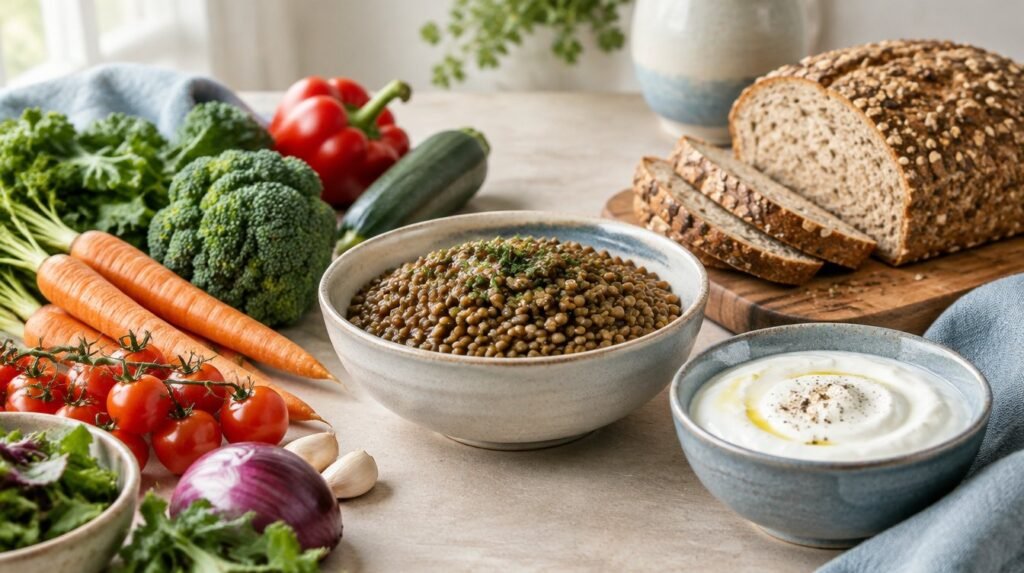
- Change what you eat first. Eating more fiber from a variety of plants and adding fermented foods costs less than a test and does not depend on one. Our gut health diet plan and list of fermented foods for gut health show where to start.
- Keep a food and symptom diary. It costs nothing, and NIDDK notes a doctor may ask for one to help find food triggers.
- Compare other tests. Our gut health test guide explains what different kits measure.
When to see a doctor
Don’t use any home test to rule out a medical problem. NIDDK lists symptoms that may point to something other than IBS and need a doctor’s evaluation:
- Bleeding from the rectum, or bloody stools or stools that are black and tarry
- Unexplained weight loss
- Anemia
- A family history of celiac disease, colon cancer or inflammatory bowel disease, along with new digestive symptoms
The NHS also advises seeing a doctor for bowel changes that are not usual for you, needing to go more or less often than usual, ongoing tummy pain or bloating, a lump in your tummy, or feeling very tired or short of breath.
Related topics
- Gut Health Test: how at-home gut tests differ and what they can show.
- Gut Health Diet Plan: a low-cost, food-first place to start.
- Fermented Foods for Gut Health: food sources of live cultures.
- Best Probiotic: probiotics sorted by strain-level human evidence.
Sources
- At-Home Health Tests (Viome, checked October 2026)
- Gut Intelligence Test (Viome, checked October 2026)
- Full Body Intelligence Test (Viome, checked October 2026)
- Gut Formula (Precision Probiotics and Prebiotics) (Viome, checked October 2026)
- Precision Supplements (Viome, checked October 2026)
- Viome Privacy Policy (Viome, effective June 20, 2026)
- Hatch A, et al. A robust metatranscriptomic technology for population-scale studies of diet, gut microbiome, and human health (International Journal of Genomics, 2019)
- Toma R, et al. The human gut microbiome activity is resilient and stable for up to six months: a large stool metatranscriptomic study (Microorganisms, 2026)
- Tily H, et al. Gut microbiome activity contributes to prediction of individual variation in glycemic response in adults (Diabetes Therapy, 2022)
- NCT04905524: Activity changes in IBS, anxiety, and depression following the use of Viome Precision Nutrition Program (ClinicalTrials.gov)
- Porcari S, et al. International consensus statement on microbiome testing in clinical practice (Lancet Gastroenterology & Hepatology, 2025)
- Servetas SL, et al. Evaluating the analytical performance of direct-to-consumer gut microbiome testing services (Communications Biology, 2026)
- LDT and CLIA FAQs (Centers for Medicare & Medicaid Services)
- Laboratory Developed Tests (U.S. Food and Drug Administration)
- Information for Consumers on Using Dietary Supplements (U.S. Food and Drug Administration)
- Probiotics: Usefulness and Safety (National Center for Complementary and Integrative Health)
- Diagnosis of Irritable Bowel Syndrome (National Institute of Diabetes and Digestive and Kidney Diseases)
- Symptoms of bowel cancer (NHS)
- Eating, Diet, and Nutrition for Gas in the Digestive Tract (National Institute of Diabetes and Digestive and Kidney Diseases)
This article is for general information and is not medical advice. Talk to your doctor or a registered dietitian before changing your diet, supplements or medication, especially if you have a health condition.