Is Honey a Probiotic? What the Evidence Says
The verdict: honey is not a probiotic
No, honey is not a probiotic. Probiotics are live microorganisms that provide a health benefit when taken in sufficient amounts (NIH Office of Dietary Supplements). Honey carries only small numbers of microbes, mostly yeasts and dormant bacterial spores, and bacteria do not multiply in it (Snowdon and Cliver, 1996).
Its small amounts of oligosaccharides show possible prebiotic activity in lab studies, and one trial found honey helped a yogurt probiotic reach the gut. That is a supporting role at most. One firm rule: never give honey to a baby younger than 12 months (CDC).
What the research shows
Honey holds few microbes, and none proven to be probiotics
A review of honey microbiology found low numbers and a limited variety of microbes, mainly yeasts and spore-forming bacteria such as Bacillus (Snowdon and Cliver, 1996). Its lead author worked for the National Honey Board.
Bees do carry lactic acid bacteria. Swedish researchers found these bee symbionts in fresh honey, and compounds they produce remain in mature honey (Olofsson, 2016). That lab work tested activity against wound pathogens, not honey as a source of live bacteria for people. Experts reserve the word probiotic for defined live microbes with a demonstrated health benefit (Hill, 2014), and no honey meets that bar.
Why bacteria cannot grow in honey
By weight, honey is about 82 percent sugar and 17 percent water (USDA FoodData Central). In a lab study of a medical-grade honey, its bacteria-killing power came from that sugar plus hydrogen peroxide, methylglyoxal, a bee protein called defensin-1, and a low pH of 3.3 (Kwakman, 2010). These traits keep honey from spoiling and work against bacteria in general, not only harmful ones.
Raw honey can carry botulism spores
Spores of Clostridium botulinum, the bacterium behind botulism, turn up in a fraction of honey samples, normally at low levels (Snowdon and Cliver, 1996). Infant botulism can happen when these spores get into a baby’s intestines. The CDC says not to feed honey to a child younger than 1 year, including honey pacifiers or foods made with honey (CDC). The advice covers honey in general, not only raw honey.
Signs of infant botulism include constipation, poor feeding, drooping eyelids and a weak cry that sounds different. The CDC calls botulism a medical emergency: see a doctor or go to the emergency room right away (CDC). This article is general information, not medical advice.
Honey oligosaccharides: early prebiotic research
In a lab fermentation study, researchers first stripped out honey’s glucose and fructose, which are absorbed in the upper gut. The remaining oligosaccharide fractions increased bifidobacteria and lactobacilli from human stool samples, with a prebiotic index of 3.38 to 4.24, below the 6.89 scored by fructooligosaccharides (Sanz, 2005).
A 2022 review concluded that in vitro, animal and pilot human studies suggest some kinds of honey have prebiotic activity, and it listed gaps in the evidence (Schell, 2022). Also, oligosaccharides are a small share of honey, and the simple sugars that make up most of it are absorbed before the colon.
Honey with yogurt: one trial in healthy adults
In a simulated digestion study, 1 to 2 tablespoons of clover honey per 170 grams of yogurt improved survival of the yogurt probiotic Bifidobacterium animalis subsp. lactis DN-173 010/CNCM I-2494 in simulated intestinal fluid (Alvarado, 2024).
The same University of Illinois group then ran a randomized crossover trial in 66 healthy adults. Each ate yogurt with honey for two weeks and heat-treated yogurt with sugar for two weeks; 37 also completed a nonrandomized period of yogurt with sugar. The probiotic was enriched in stool after the honey period, but intestinal transit time, digestive symptoms, mood and cognition did not differ (Mysonhimer, 2024). The National Honey Board helped fund both studies. The live bacteria came from the yogurt, not the honey.
Manuka honey: claims vs evidence
Manuka honey is sold on its antibacterial strength. Lab testing found methylglyoxal levels of 38 to 761 mg/kg in manuka samples, up to 100 times higher than in ordinary honeys, and identified it as the main source of manuka’s antibacterial activity (Mavric, 2008). An antibacterial food is not a probiotic.
Digestive claims rest mostly on lab and animal work, such as a 2026 study against Helicobacter pylori in cultures and rats (Abd Elaziz, 2026). A New Zealand feasibility trial in 75 adults with functional dyspepsia notes that clinical evidence is limited; its results were pending at publication, and a manuka company was an industry partner (Ombasa, 2025).
Caveats to keep in mind
- Honey is sugar. One tablespoon (21 g) has about 64 calories and 17 grams of sugars (USDA FoodData Central).
- It counts as added sugar. The Dietary Guidelines for Americans, 2025-2030 list honey as an added sugar, recommend no amount of added sugars, and say one meal should contain no more than 10 grams (Dietary Guidelines). The FDA Daily Value for added sugars is 50 grams (FDA).
- Most findings are early. The prebiotic and manuka results come mainly from lab and animal studies, and the honey-and-yogurt work was industry funded.
- Babies are a hard stop. No honey in any amount before 12 months.
How to use honey if you care about gut health
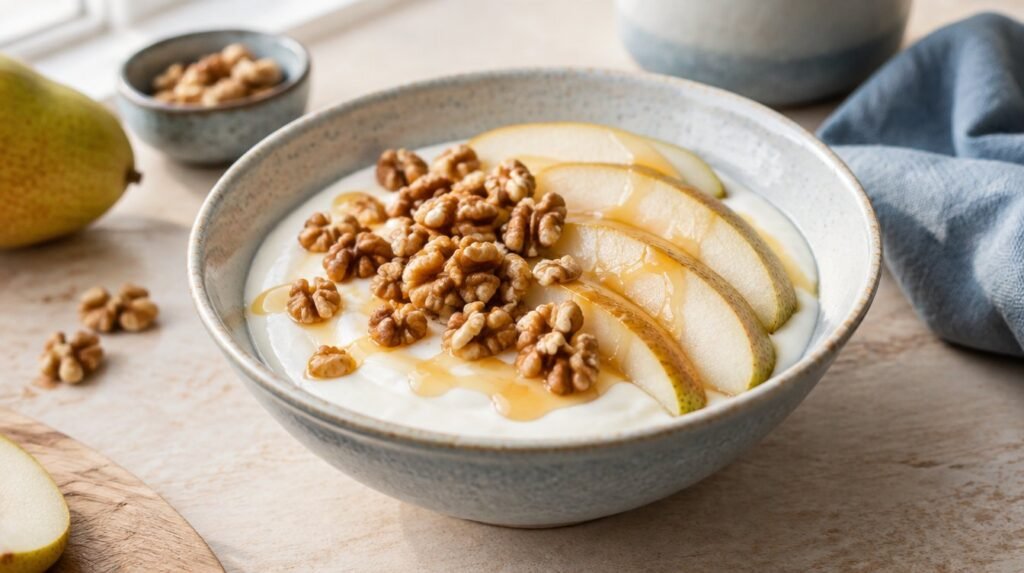
- Get live microbes from foods that carry them. Plain yogurt and kefir with live cultures, refrigerated sauerkraut and kimchi are better bets. See our guides to probiotic foods and yogurt for probiotics.
- If you sweeten yogurt with honey, measure it. A teaspoon has roughly 6 grams of sugars, which keeps a breakfast bowl under the 10-gram meal limit. A Greek yogurt bowl with fruit needs less.
- Lean on fiber for prebiotic effects. The Dietary Guidelines say fermented and high-fiber foods support a diverse microbiome (Dietary Guidelines). Our fermented foods guide covers the options.
Frequently asked questions
Does raw honey have probiotics?
Raw honey can contain small numbers of yeasts and bacterial spores, but bacteria do not multiply in honey and no raw honey has a proven probiotic benefit (Snowdon and Cliver).
Is honey a prebiotic?
Possibly, but the evidence is early. Honey oligosaccharides fed bifidobacteria in lab studies, and human data are limited to small pilot studies (Schell, 2022).
Does honey kill the probiotics in yogurt?
Not in the research so far. In a trial of 66 adults, yogurt with honey enriched the yogurt’s probiotic in stool compared with heat-treated yogurt with sugar (Mysonhimer, 2024).
Can babies have honey?
No. The CDC says not to feed honey to a child younger than 1 year because it can contain the bacteria that cause botulism (CDC).
Related topics
- Probiotic Foods: foods that do carry live cultures.
- Does All Yogurt Have Probiotics?: how to read yogurt labels for live cultures.
- Is Coffee a Probiotic?: another common pantry question.
- Fermented Foods for Gut Health: what the research says about fermented foods.
Sources
- Probiotics: Fact Sheet for Consumers (NIH Office of Dietary Supplements)
- Snowdon JA, Cliver DO. Microorganisms in honey (International Journal of Food Microbiology, 1996)
- Olofsson TC, et al. Lactic acid bacterial symbionts in honeybees: an unknown key to honey’s antimicrobial and therapeutic activities (International Wound Journal, 2016)
- Hill C, et al. Expert consensus document: The International Scientific Association for Probiotics and Prebiotics consensus statement on the scope and appropriate use of the term probiotic (Nature Reviews Gastroenterology & Hepatology, 2014)
- Honey (FDC ID 169640) (USDA FoodData Central)
- Kwakman PH, et al. How honey kills bacteria (FASEB Journal, 2010)
- Preventing Botulism (Centers for Disease Control and Prevention)
- Symptoms of Botulism (Centers for Disease Control and Prevention)
- Sanz ML, et al. In vitro investigation into the potential prebiotic activity of honey oligosaccharides (Journal of Agricultural and Food Chemistry, 2005)
- Schell KR, et al. The Potential of Honey as a Prebiotic Food to Re-engineer the Gut Microbiome Toward a Healthy State (Frontiers in Nutrition, 2022)
- Alvarado DA, et al. Honey Varietals Differentially Impact Bifidobacterium animalis ssp. lactis Survivability in Yogurt through Simulated In Vitro Digestion (Journal of Nutrition, 2024)
- Mysonhimer AR, et al. Honey Added to Yogurt with Bifidobacterium animalis subsp. lactis DN-173 010/CNCM I-2494 Supports Probiotic Enrichment but Does Not Reduce Intestinal Transit Time in Healthy Adults: A Randomized, Controlled, Crossover Trial (Journal of Nutrition, 2024)
- Mavric E, et al. Identification and quantification of methylglyoxal as the dominant antibacterial constituent of Manuka (Leptospermum scoparium) honeys from New Zealand (Molecular Nutrition & Food Research, 2008)
- Abd Elaziz WM, et al. Manuka honey as a multifunctional therapeutic against Helicobacter pylori: from chemical profiling to in vitro potency and in vivo gastroprotective efficacy (BMC Complementary Medicine and Therapies, 2026)
- Ombasa L, et al. Impact of Manuka Honey on Symptoms and Quality of Life in Individuals With Functional Dyspepsia: Protocol for a Feasibility Randomized Controlled Trial (JMIR Research Protocols, 2025)
- Dietary Guidelines for Americans, 2025-2030 (U.S. Departments of Agriculture and Health and Human Services)
- Added Sugars on the Nutrition Facts Label (U.S. Food and Drug Administration)
This article is for general information and is not medical advice. Talk to your doctor or a registered dietitian before changing your diet, supplements or medication, especially if you have a health condition.