Beam Probiotic: A Buyer’s Guide
The short answer
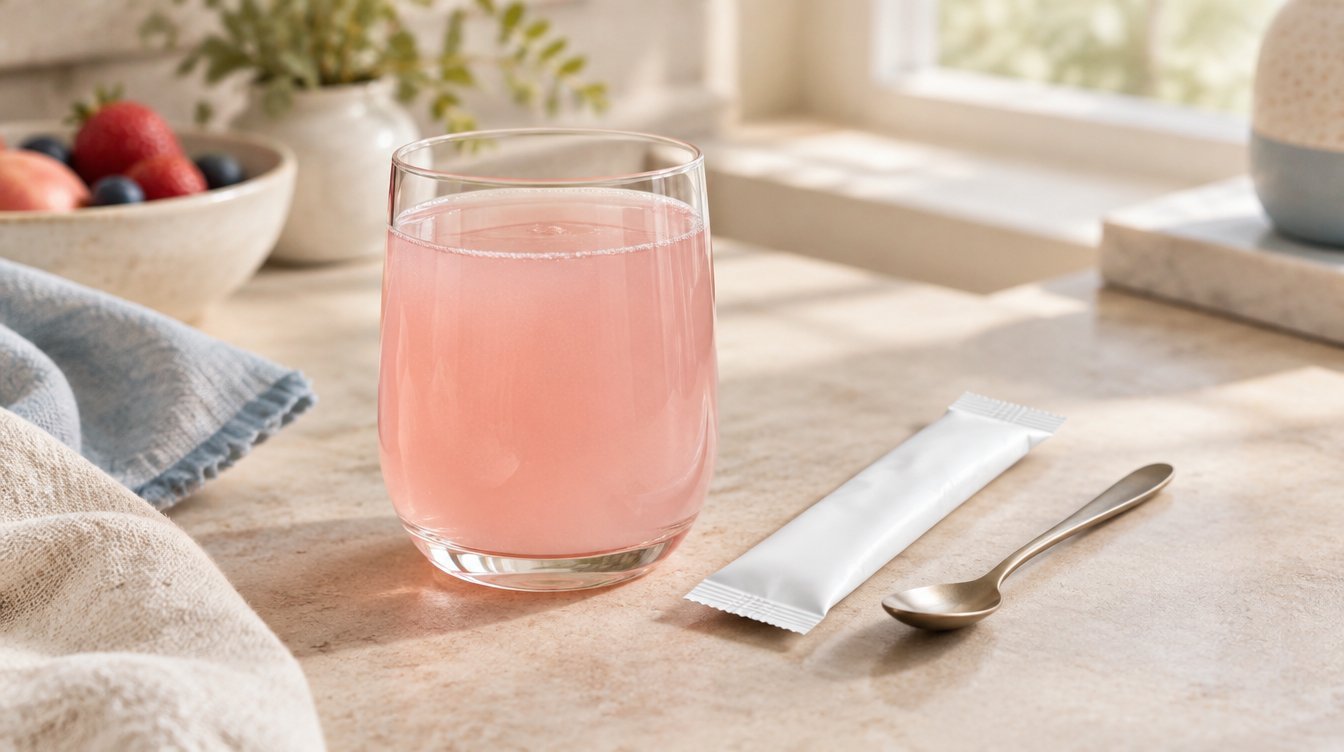
Beam’s probiotic is Biotic, a flavored drink-mix powder sold in single-serve sticks, not a capsule. Each stick lists 10 billion CFU from three probiotic species, 300 mg of chicory inulin, 300 mg of a postbiotic called Keystone and 75 mg of glutathione. The postbiotic has one small published trial at this dose, the live probiotics are listed without strain codes, and the inulin and glutathione amounts are far below what human trials used. It may suit someone who wants a low-calorie daily drink, but the label gives you little to judge the live probiotics by.
Ultimate Gut is published by Ultimate Health Solutions, which sells a yogurt maker, probiotic capsules and an inulin fiber supplement. None of the products reviewed here are ours, and these brands don’t pay us.
Biotic is a dietary supplement, and the FDA is not authorized to approve dietary supplements for safety and effectiveness before they are marketed.
What Beam sells for gut health
Beam’s full product list at shopbeam.com includes sleep, collagen, creatine, greens and kids’ powders. Its gut product is Biotic, which the brand calls a “comprehensive gut health superblend.” It comes in 30-stick tubs plus 5- and 15-stick packs, in flavors such as Blue Raspberry, Mixed Berry, Lemonade, Watermelon and Crisp Apple.
Beam also sells a colostrum powder with 3 g of bovine colostrum per serving that it markets for immune and gut health. It contains no live probiotics, so this guide focuses on Biotic.
What’s in Beam Biotic
The details below come from the Supplement Facts panel shown on Beam’s Biotic product page; labels checked October 2026. One serving is one 2.6 g stick, with 30 servings per tub, 5 calories and 1 g of carbohydrate.
| Ingredient | Amount per stick | What research exists |
|---|---|---|
| Organic inulin (from chicory root) | 300 mg | Chicory inulin trials used grams, not milligrams: 5 to 8 g a day raised bifidobacteria in 30 adults (Kolida 2007); 12 g a day modestly raised stool frequency in 44 constipated adults (Micka 2017) |
| Keystone Postbiotic (heat-inactivated L. plantarum 276 and heat-inactivated L. rhamnosus GG) | 300 mg | One 4-week placebo-controlled trial in 76 healthy adults at 300 mg a day, run by the ingredient’s maker (Delebecque 2026) |
| Setria glutathione (reduced) | 75 mg | A 6-month trial in 54 adults used 250 or 1,000 mg a day (Richie 2015) |
| Lactobacillus plantarum | 5 billion CFU (12.5 mg) | No strain code on the label, so no strain-level research can be matched |
| Lactobacillus rhamnosus | 2.5 billion CFU (10 mg) | No strain code on the label |
| Bifidobacterium lactis | 2.5 billion CFU (5 mg) | No strain code on the label |
The other ingredients vary by flavor and include citric and malic acid, natural flavors, steviol glycosides (stevia) and colors from blue spirulina, beet, grape or beta carotene. Beam’s page describes the product as gluten free, dairy free, vegan and non-GMO, says it is third-party tested, and says to mix one stick with 8 to 12 oz of water once a day on an empty stomach. The label doesn’t say whether the CFU counts hold through the expiration date or apply at manufacture.
What Beam claims vs. what the evidence shows
The live probiotics: species only
Probiotics are identified by genus, species and an alphanumeric strain designation, and the NIH Office of Dietary Supplements says recommendations need to be strain-specific. Beam lists only species names for its three live cultures. That doesn’t mean they are poor quality. It means you can’t connect them to any published trial, because the effects vary depending on the strain, how long it is used and the symptom involved.
The Keystone postbiotic: one small trial at this dose
A postbiotic is made of inactivated microbes or their products, so it does not need to survive as live bacteria. Keystone is oat flour fermented with L. plantarum 276 and L. rhamnosus GG for 24 hours, then pasteurized and freeze-dried (Aditya 2026). That paper tested it on cells and in worms, not people.
In the human trial, 76 generally healthy adults took Keystone or a maltodextrin placebo for 4 weeks; the trial registration lists the dose as 300 mg, the same as one Biotic stick. Overall gut microbe diversity didn’t change, but several species, including Akkermansia, rose compared with placebo. Effects on morning cortisol and the inflammation marker IL-8 were only nominally significant, and no side effects were reported (Delebecque 2026). The study was sponsored by Verb Biotics, which makes Keystone, and its authors called the stress and inflammation findings exploratory. The abstract does not report bloating or gas results.
Inulin and glutathione: small amounts
At 300 mg, Biotic’s inulin is a small fraction of what most people already eat. A U.S. Department of Agriculture analysis of more than 15,000 Americans found typical diets supply about 2.6 g of inulin a day, mostly from wheat and onions (Moshfegh 1999). The trials above that saw changes used 5 to 12 g.
For glutathione, a 6-month randomized trial found blood levels rose at 250 and 1,000 mg a day (Richie 2015). That is three to 13 times the 75 mg in a stick, and the trial did not measure digestion, bloating or skin.
The bloating, regularity and skin claims
Beam’s page says 90% of participants reported less gas and bloating, 88% better digestion after meals and 77% better regularity. Its footnotes point to a 2025 “independent laboratory perception study,” a survey of current customers and an “independent clinical trial conducted with healthy individuals,” but the page gives no study size, design or publication, and we found no published trial of the full Biotic formula. Customer surveys and perception studies have no placebo group, so they can’t show cause and effect. We also found no human trial of Biotic for skin or immune health.
Price per serving
On Beam’s product page in October 2026, a 30-stick tub was $64.99 as a one-time purchase, about $2.17 per stick, or $51.99 with Subscribe + Save, about $1.73 per stick. Prices change often, so check before you buy.
Who it may suit, and who should skip it
- May suit: people who want a flavored, low-calorie daily drink and accept that the postbiotic is the only part with published data at the labeled dose.
- Consider skipping: if you want a probiotic matched to a studied strain for a specific goal. Our best probiotic guide pairs strains with the research behind them.
- Want more fiber? A stick adds little inulin. Our fiber supplement guide covers doses closer to those used in trials.
- Ask a doctor first: Beam’s label says to consult a physician if you are pregnant or nursing, have a medical condition or take medication. The risk of harmful effects from probiotics is greater in people with severe illness or weakened immune systems, and the ODS fact sheet describes serious infections in people who were severely ill or immunocompromised, including some with central venous catheters.
- Expect an adjustment period: Beam’s page says some people notice mild digestive changes in the first few days.
Alternatives, including food
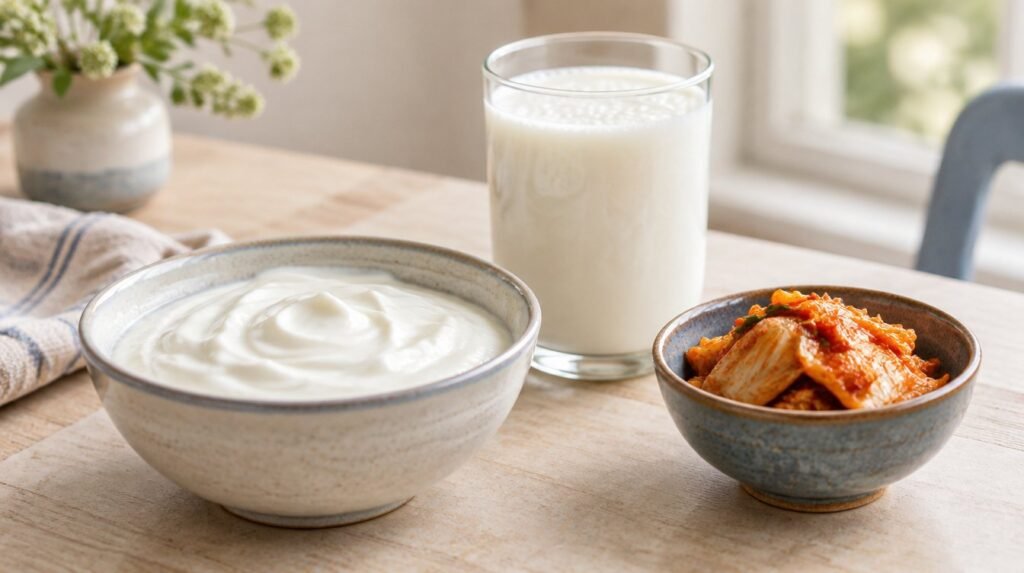
- Yogurt and kefir: in a 17-week Stanford trial with 18 people per group, a diet high in fermented foods steadily raised gut microbiome diversity and lowered inflammatory markers (Wastyk 2021). See best yogurt for probiotics and best kefir brands.
- Other fermented foods: probiotic foods explains which ones still carry live cultures when you eat them.
- Inulin from food: wheat foods and onions are the main sources in American diets (Moshfegh 1999).
- Capsules with named strains: compare full labels in our Seed probiotics and Ritual Synbiotic+ guides.
Related topics
- Best Probiotic: strains matched to common goals by human evidence.
- Gut Health Supplements: the main supplement types and what each can do.
- Probiotic Drinks: other drinkable ways to get live cultures.
- Fiber Supplement: prebiotic fibers and the doses studied.
- Probiotic Foods: food sources of live cultures.
Sources
- Biotic product page and Supplement Facts (Beam, checked October 2026)
- Colostrum product page (Beam, checked October 2026)
- All products (Beam, checked October 2026)
- Delebecque CJ, et al. The effects of a postbiotic supplement on biomarkers of microbiome, gastrointestinal, cardiometabolic, and immunometabolic health (Beneficial Microbes, 2026)
- The Effects of a Postbiotic Supplement on Biomarkers of Gut Health (NCT07527286) (ClinicalTrials.gov, checked October 2026)
- Aditya A, et al. Mechanistic characterisation of a novel oat-based postbiotic: microbiome modulation, barrier protection, and wound healing (Beneficial Microbes, 2026)
- Kolida S, et al. A double-blind placebo-controlled study to establish the bifidogenic dose of inulin in healthy humans (European Journal of Clinical Nutrition, 2007)
- Micka A, et al. Effect of consumption of chicory inulin on bowel function in healthy subjects with constipation: a randomized, double-blind, placebo-controlled trial (International Journal of Food Sciences and Nutrition, 2017)
- Moshfegh AJ, et al. Presence of inulin and oligofructose in the diets of Americans (Journal of Nutrition, 1999)
- Richie JP Jr, et al. Randomized controlled trial of oral glutathione supplementation on body stores of glutathione (European Journal of Nutrition, 2015)
- Wastyk HC, et al. Gut-microbiota-targeted diets modulate human immune status (Cell, 2021)
- Information for Consumers on Using Dietary Supplements (U.S. Food and Drug Administration)
- Probiotics: Fact Sheet for Consumers (NIH Office of Dietary Supplements)
- Probiotics: Fact Sheet for Health Professionals (NIH Office of Dietary Supplements)
- Probiotics: Usefulness and Safety (National Center for Complementary and Integrative Health)
This article is for general information and is not medical advice. Talk to your doctor or a registered dietitian before changing your diet, supplements or medication, especially if you have a health condition.