Probiotic Recipes You Can Make at Home
What you will make
These three recipes give you foods that still carry live microbes when you eat them: plain homemade yogurt, a small jar of sauerkraut, and a no-cook yogurt dip. Once a food has fermented, keep it away from high heat, which kills the bacteria you grew.
- Yield: about 1 quart of yogurt, about 1 quart of sauerkraut, and about 2 cups of dip.
- Hands-on time: about 30 minutes for the yogurt, 20 minutes for the sauerkraut, 10 minutes for the dip.
- Total time: 7 to 9 hours for the yogurt plus chilling, 3 to 6 weeks for the sauerkraut, and 1 hour 30 minutes for the dip once you have yogurt.
A note on the word “probiotic”: the National Center for Complementary and Integrative Health (NCCIH) says different types may have different effects, and in most cases we still don’t know which ones help. No one has counted the microbes in a homemade batch, so treat these as live fermented foods, not a measured probiotic dose.
Recipe 1: Plain homemade yogurt
Ingredients
- 4 cups (1 quart) pasteurized whole or 2% milk.
- 8 to 12 teaspoons (2½ to 4 tablespoons) plain store-bought yogurt labeled with live and active cultures, or a freeze-dried starter used as its package directs.
Method
- Heat the milk in a double boiler or heavy pot to 180°F, stirring often. Hold it there for 10 minutes for thinner yogurt or 20 minutes for thicker yogurt, as the Washington State University Extension guide directs. This kills competing bacteria and thickens the texture.
- Cool the milk to 108°F to 112°F; a cold-water bath in the sink speeds this up.
- Stir 1 cup of the warm milk into the starter, using 2 to 3 teaspoons of starter per cup of milk, then stir the mixture back into the pot.
- Pour into clean, warm jars, cover, and keep warm and undisturbed for 6 to 8 hours. A yogurt maker, a warmed oven, or an insulated cooler with warm water all work; see how to incubate yogurt for each setup.
- When it sets to a soft gel, move the jars straight to the refrigerator. Fast chilling stops the acid from building further.
Save a few spoonfuls as starter for the next batch. Our yogurt temperature guide and how to make yogurt at home cover troubleshooting.
Recipe 2: Small-batch sauerkraut

Ingredients
- 2 pounds green cabbage (about 1 medium head), outer leaves removed, cored and finely shredded.
- 1 tablespoon plus ½ teaspoon canning or pickling salt, close to the ratio of 3 tablespoons per 5 pounds of cabbage in the National Center for Home Food Preservation (NCHFP) recipe.
Method
- Toss the cabbage with the salt in a large bowl. Pack it firmly into a clean 1-quart wide-mouth jar until the salt draws out juice to cover it.
- If the juice does not cover it, top up with brine made from 1½ tablespoons salt per quart of water, boiled and cooled, per NCHFP.
- Weigh the cabbage down under the liquid with a small zip-top bag filled with the same brine. Cover the jar loosely.
- Ferment at 70°F to 75°F for about 3 to 4 weeks. At 60°F to 65°F it may take 5 to 6 weeks. NCHFP notes that below 60°F kraut may not ferment and above 75°F it may turn soft.
- Check two or three times a week and skim off any scum. It is done when the bubbling stops.
Eat it cold, or add it to food after cooking. Shelf-stable canned kraut is heat-treated, which is why canned sauerkraut is a different product from this jar. For serving ideas, see how to eat sauerkraut for gut health.
Recipe 3: No-cook cucumber yogurt dip
Ingredients
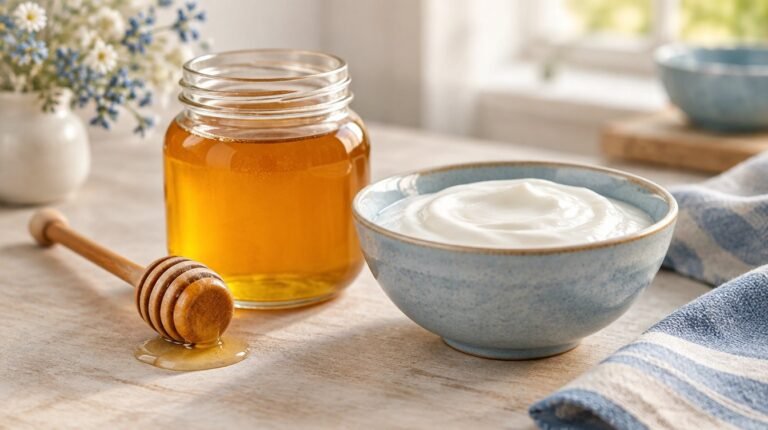
- 1½ cups homemade yogurt.
- 1 small cucumber, grated and squeezed dry.
- 1 small garlic clove, finely grated.
- 1 tablespoon lemon juice and 1 tablespoon olive oil.
- 1 tablespoon chopped fresh dill or mint and ¼ teaspoon salt.
Method
- Strain the yogurt in a cloth-lined sieve in the refrigerator for 1 hour for a thicker dip.
- Stir in the cucumber, garlic, lemon juice, oil, herbs and salt.
- Chill 30 minutes. Serve with raw vegetables, or spoon it over grilled food after it comes off the heat.
More ideas are in our Greek yogurt dip recipes.
Variations
- Firmer yogurt: stir a few tablespoons of nonfat dry milk into the cold milk before heating. WSU Extension notes that adding it to hot milk can make the proteins form strings.
- Tangier yogurt: let it incubate toward the long end of the window. Tartness depends on the culture and on how long it ferments.
- Breakfast: blend the yogurt with frozen fruit for a yogurt smoothie.
Storage
Keep your refrigerator at 40°F or below, the temperature FoodSafety.gov uses for its cold storage chart. WSU Extension says properly made yogurt generally keeps 10 to 21 days below 40°F (more in how long homemade yogurt lasts). NCHFP says fully fermented sauerkraut can be kept tightly covered in the refrigerator for several months.
Use the dip within 3 to 4 days, the window FoodSafety.gov gives for mixed salads such as egg or tuna salad.
Who should check with a doctor first
NCCIH notes that the risk of harmful effects from probiotics is greater in people with severe illnesses or weakened immune systems, so ask your care team before adding live-culture foods if that applies to you. If you have diarrhea lasting more than 2 days, a high fever, bloody or black stools, or severe belly pain, the National Institute of Diabetes and Digestive and Kidney Diseases (NIDDK) advises seeing a doctor right away. This article is general information, not medical advice.
Related topics
- Probiotic Foods: which store-bought foods still contain live cultures.
- Yogurt Starter: choosing between store yogurt, heirloom and freeze-dried starters.
- Fermented Foods for Gut Health: what research says about fermented foods in general.
- How to Make Greek Yogurt: strain your homemade batch into a thicker style.
Sources
- Yogurt Made Simple (FS173E) (Washington State University Extension)
- Sauerkraut (National Center for Home Food Preservation, University of Georgia)
- Probiotics: Usefulness and Safety (National Center for Complementary and Integrative Health)
- Cold Food Storage Chart (FoodSafety.gov)
- Symptoms and Causes of Diarrhea (National Institute of Diabetes and Digestive and Kidney Diseases)
This article is for general information and is not medical advice. Talk to your doctor or a registered dietitian before changing your diet, supplements or medication, especially if you have a health condition.