Vegan Gut Health Supplements: A Buyer’s Guide
What makes a gut health supplement vegan
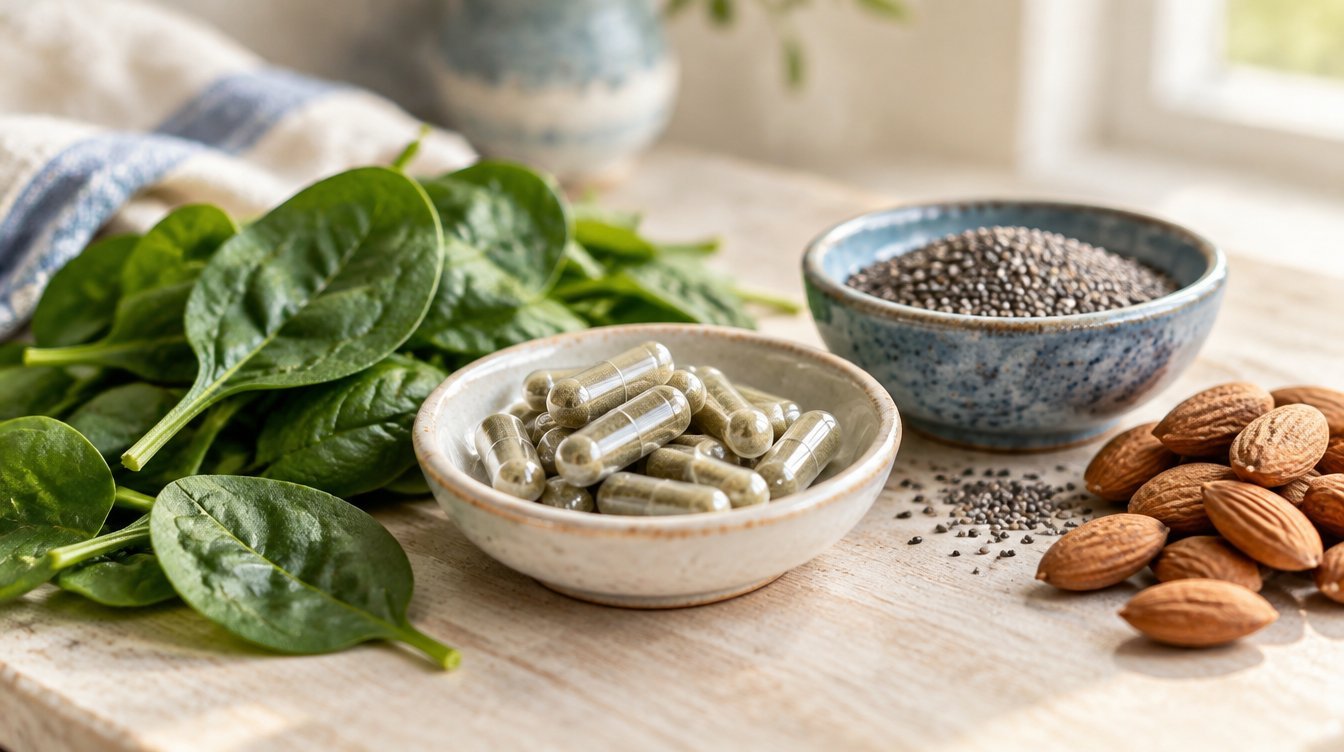
A vegan gut health supplement contains no animal-derived ingredients, in the active ingredients, the capsule or the way it was made. The three main categories are probiotics, fibers (prebiotics) and digestive enzymes. Plant-based versions of all three are easy to find, but “vegan” on a label tells you nothing about whether a product works, so check the ingredients and the evidence separately.
Ultimate Gut is published by Ultimate Health Solutions, which sells a yogurt maker, probiotic capsules and an inulin fiber supplement. None of the products reviewed here are ours, and these brands don’t pay us.
Supplements are not FDA-approved: the FDA is not authorized to approve dietary supplements for safety and effectiveness before they are marketed. Product details below come from each brand’s own page, labels checked October 2026.
Where animal ingredients hide
- The capsule: conventional two-piece capsules are made from gelatin, produced from cow or pig collagen. Hypromellose (HPMC) capsules are made by modifying plant cellulose and are a common vegetarian alternative, according to a review in the Journal of Pharmacy & Pharmaceutical Sciences. Look for “hypromellose” or “vegetable capsule” under Other Ingredients.
- How probiotics are grown: the growth medium usually isn’t listed on the label. Vegan Action’s Certified Vegan standard specifically requires that probiotics and prebiotics be cultured on animal-free media.
- Fillers and add-ons: read the allergen statement for milk, and the full ingredient list for anything animal-derived.
What vegan certifications mean
Two third-party logos are common. Certified Vegan, run by the nonprofit Vegan Awareness Foundation (Vegan Action), bars animal ingredients and by-products, animal testing of ingredients or finished products, and animal-derived GMOs, and requires cleaning between vegan and non-vegan runs on shared equipment. The Vegan Society’s Vegan Trademark bars animal ingredients and animal testing in a product’s development and manufacture, and asks brands to minimize cross-contamination. A “vegan” badge with no named certifier is the brand’s own claim.
The main categories and what the evidence shows
Probiotics
Probiotic effects depend on the exact strain. NCCIH notes that a benefit from one strain does not carry over to another, and that in most cases we still don’t know which probiotics help, at what dose, or for whom. Labels should name the genus, species and strain, and the NIH Office of Dietary Supplements says higher CFU counts alone do not mean greater benefit. Being vegan doesn’t change any of this.
Probiotics may cause harm in people who are severely ill or immunocompromised, and fungal bloodstream infections linked to a yeast probiotic have mostly involved very ill patients, often with central venous catheters, according to the ODS health professional fact sheet. NCCIH adds that severe infections have been reported in premature infants. If any of that applies to you, or you are pregnant, ask a clinician before starting one.
Fiber and prebiotics
Most fiber supplements are plant-based by nature. The strongest evidence is for psyllium in constipation: a 2022 meta-analysis of 16 trials found fiber helped more people than control, with psyllium standing out, and that flatulence was more common with fiber. Our fiber supplement buyer’s guide compares the main types.
Digestive enzymes
The enzyme most relevant to a bean-heavy diet is alpha-galactosidase, which breaks down gas-forming carbohydrates in legumes. Trials are small. In an 8-person placebo-controlled study with a meal of cooked beans, a higher dose reduced breath hydrogen and flatulence. A 19-person study found fewer gas episodes but no change in bloating or pain. In a 12-week trial of 125 people with IBS, researchers found no evidence to support routine use. Beano’s FAQ does not say whether its tablets are vegan, so check the label, and it advises people with galactosemia to speak with a physician first.
Example products with a vegan claim
These are examples of how to read a label, not rankings. All details come from the brand pages listed, checked October 2026.
| Product | Type | What the brand page lists | Vegan claim |
|---|---|---|---|
| Ritual Synbiotic+ | Probiotic capsule | LGG and BB-12, 11 billion CFU at expiration; 15 mg PreforPro; 300 mg tributyrin; 1 capsule a day | Vegan badge; hypromellose capsules; no third-party vegan certifier named |
| MaryRuth’s Organic Liquid Probiotic | Liquid probiotic | 13 strains including Bacillus coagulans Unique IS-2; up to 2 billion CFU per serving | Described as vegan, with a Vegan badge; also USDA Organic |
| NOW Organic Acacia Fiber Powder | Fiber | 6 g soluble fiber per tablespoon from organic acacia gum; no other ingredients | Vegan badge |
| Garden of Life Dr. Formulated Organic Fiber, Unflavored | Fiber | 5 g prebiotic fiber per tablespoon from organic acacia, orange peel, baobab, apple peel and cranberry | Certified Vegan logo |
Ritual Synbiotic+: its two strains are well studied. A meta-analysis of 12 trials linked LGG with fewer cases of antibiotic-associated diarrhea, though the effect was significant in children and not in adults overall, and a 1,248-person trial found BB-12 modestly increased bowel movement frequency in adults who had infrequent bowel movements. More in our Ritual Synbiotic+ guide.
MaryRuth’s liquid: Unique IS-2 on its own increased bowel movement frequency in a 4-week trial of 144 healthy adults at 2 billion CFU a day. The product lists up to 2 billion CFU for the whole 13-strain blend, so it likely supplies less of that strain than the trial used, and the page text gives no per-strain amounts. See our Mary Ruth’s probiotic guide.
The two fibers: both are acacia-based. NOW suggests sensitive users start with 1 teaspoon and work up, and both brands say to mix the powder into water or another drink.
Label-reading checklist
- Look for a named certifier (Certified Vegan or the Vegan Trademark) if a third-party check matters to you.
- Check Other Ingredients for gelatin, and the allergen statement for milk.
- Find the full strain name (genus, species, strain) and a CFU count “at expiration,” as ODS suggests.
- Match the strain and dose to the research, and be wary of claims like “detox” or “flat belly,” which aren’t backed by human trials.
- Start one product at a time so you can tell what is causing any gas or bloating.
Vegan food sources first
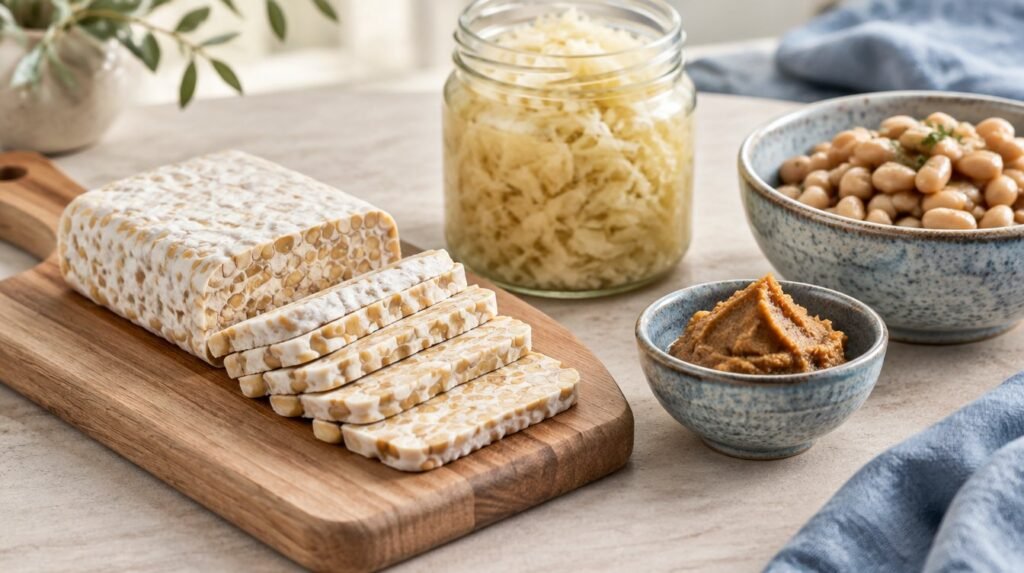
The 2025-2030 Dietary Guidelines say fermented foods such as sauerkraut, kimchi and miso, along with high-fiber foods, support a diverse microbiome. ODS cautions that not every fermented food contains probiotics with proven benefits. Beans, lentils, whole grains, vegetables and fruit cover fiber.
For live cultures without dairy, plant-based yogurt is one option; our coconut yogurt guide covers making it, and Non Dairy Probiotics compares other sources.
A note on vitamin B12
B12 isn’t a gut supplement, but it matters for vegans. The NIH Office of Dietary Supplements says people who eat few or no animal foods might not get enough, that plant foods have none unless fortified, and that adults need 2.4 mcg a day. Fortified cereals, nutritional yeast and supplements are the usual sources.
Related topics
- Non Dairy Probiotics: dairy-free foods and supplements with live cultures.
- Fiber Supplement: psyllium, acacia, inulin and more, compared.
- Fermented Foods for Gut Health: what the research shows.
- Probiotic Foods: which foods carry live cultures.
- Organic Gut Health Supplements: what the organic seal does and doesn’t mean.
Sources
- Information for Consumers on Using Dietary Supplements (U.S. Food and Drug Administration)
- Al-Tabakha MM. HPMC Capsules: Current Status and Future Prospects (Journal of Pharmacy & Pharmaceutical Sciences, 2010)
- Certified Vegan certification standards (Vegan Action / Vegan Awareness Foundation)
- The Vegan Trademark FAQs (The Vegan Society)
- Probiotics: Usefulness and Safety (National Center for Complementary and Integrative Health)
- Probiotics: Fact Sheet for Consumers (NIH Office of Dietary Supplements)
- Probiotics: Fact Sheet for Health Professionals (NIH Office of Dietary Supplements)
- van der Schoot A, et al. The Effect of Fiber Supplementation on Chronic Constipation in Adults: An Updated Systematic Review and Meta-Analysis of Randomized Controlled Trials (American Journal of Clinical Nutrition, 2022)
- Di Stefano M, et al. The effect of oral alpha-galactosidase on intestinal gas production and gas-related symptoms (Digestive Diseases and Sciences, 2007)
- Ganiats TG, et al. Does Beano prevent gas? A double-blind crossover study of oral alpha-galactosidase (Journal of Family Practice, 1994)
- Hillila M, et al. Does oral alpha-galactosidase relieve irritable bowel symptoms? (Scandinavian Journal of Gastroenterology, 2016)
- Beano FAQs (Beano)
- Synbiotic+ product page (Ritual)
- Szajewska H, Kolodziej M. Systematic review with meta-analysis: Lactobacillus rhamnosus GG in the prevention of antibiotic-associated diarrhoea in children and adults (Alimentary Pharmacology & Therapeutics, 2015)
- Eskesen D, et al. Effect of the probiotic strain Bifidobacterium animalis subsp. lactis, BB-12, on defecation frequency in healthy subjects with low defecation frequency and abdominal discomfort (British Journal of Nutrition, 2015)
- Organic Liquid Probiotic product page (MaryRuth’s)
- LeMoire A, et al. Bacillus coagulans Unique IS2 improves stool characteristics in healthy adults with infrequent bowel movements (Beneficial Microbes, 2025)
- Acacia Fiber Organic Powder (NOW Foods)
- Dr. Formulated Organic Fiber, Unflavored (Garden of Life)
- Dietary Guidelines for Americans, 2025-2030 (U.S. Department of Agriculture and U.S. Department of Health and Human Services)
- Vitamin B12: Fact Sheet for Consumers (NIH Office of Dietary Supplements)
This article is for general information and is not medical advice. Talk to your doctor or a registered dietitian before changing your diet, supplements or medication, especially if you have a health condition.