Homemade Yogurt Nutrition: What You Need to Know
What homemade yogurt is, nutritionally
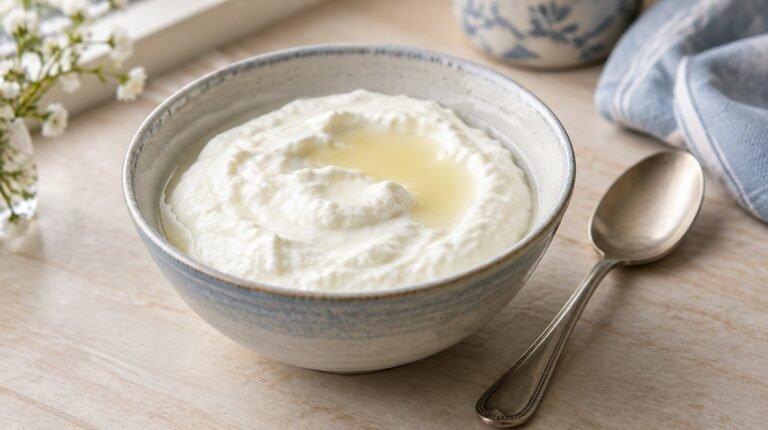
Homemade yogurt is milk plus a spoonful or two of starter, held warm until bacteria turn part of the milk sugar into lactic acid. Nothing else has to go in, so its nutrition tracks the milk you start with very closely. Whole milk makes whole-milk yogurt, skim makes skim, and the protein, calcium and potassium in the jar are roughly what was in the pot.
Store yogurt follows a federal standard, 21 CFR 131.200, which requires the cultures Lactobacillus delbrueckii subsp. bulgaricus and Streptococcus thermophilus. The same rule lets makers add other milk-derived ingredients to raise milk solids, plus sweeteners, flavorings, stabilizers and preservatives. Homemade yogurt skips all of that unless you choose to add it. The basic method is in our guide to making yogurt at home.
Milk, yogurt and Greek yogurt side by side
The table uses USDA FoodData Central values per 100 grams, a little under half a cup. The yogurt rows are plain store-bought yogurts that USDA sampled, not homemade batches, so use them as a close guide rather than an exact match for your jar.
| Per 100 g | Whole milk | Plain whole-milk yogurt | Plain whole-milk Greek yogurt |
|---|---|---|---|
| Calories | 61 | 78 | 94 |
| Protein | 3.3 g | 3.8 g | 8.8 g |
| Fat | 3.2 g | 4.5 g | 4.4 g |
| Lactose | 4.8 g | 3.4 g | 2.6 g |
| Calcium | 123 mg | 127 mg | 111 mg |
| Potassium | 150 mg | 164 mg | 147 mg |
| Vitamin D | 0.96 mcg | 0.78 mcg | 0 mcg |
Three patterns stand out. Lactose drops from about 4.8 grams in milk to about 3.4 grams in yogurt and 2.6 grams in Greek yogurt, because the cultures ferment part of it and straining carries more away in the whey. Protein more than doubles in Greek yogurt because straining concentrates it. Calcium slips a little in the strained version, since some leaves with the liquid.
The store yogurt also shows a bit more protein and fat than the milk. One likely reason is the added milk ingredients the federal standard allows. A homemade batch made from plain milk will usually sit closer to the milk column unless you stir in milk powder. The University of Kentucky extension recipe, for example, adds nonfat dry milk to skim milk and lists 130 calories per cup.
What fermentation changes
Less lactose, and help digesting the rest
Yogurt bacteria make their own lactase, the enzyme that breaks down milk sugar. In a classic 1984 study in the New England Journal of Medicine, people who digest lactose poorly were given 18 grams of lactose in yogurt, milk or water. The yogurt produced about one third as much breath hydrogen, a marker of undigested lactose, and fewer reports of diarrhea or gas.
A 2014 review explains why: the bacterial lactase survives the stomach inside the bacterial cells and keeps working in the small intestine. A 2021 systematic review of 108 studies concluded that a causal link exists between eating yogurt and better lactose digestion and tolerance. The same review reported associations with heart, bone and metabolic health, but associations from observational studies do not prove that yogurt causes those outcomes.
Live cultures, as long as you skip reheating
Homemade yogurt goes straight from the incubator to the fridge, so its cultures are alive when you eat it. Store yogurt may be heat-treated after culturing to extend shelf life, and then the label must say it does not contain live and active cultures.
That difference matters for lactose. In a small 1984 trial of nine lactase-deficient adults, pasteurizing yogurt cut its lactase activity tenfold, cut its bacteria a hundredfold, and erased its lactose-digestion advantage. Live cultures are not automatically probiotics, though. NCCIH defines probiotics as live microorganisms intended to have health benefits and notes that much remains to be learned. Our piece on whether all yogurt has probiotics covers the difference.
Vitamins: mostly what the milk brings
Vitamin D in yogurt depends on the milk. NIH’s Office of Dietary Supplements says almost all U.S. milk is voluntarily fortified with about 3 mcg per cup, while only some yogurt brands add vitamin D. If you start with fortified milk, your yogurt starts with that vitamin D too. For scale, the adult RDA is 15 mcg a day for ages 19 to 70.
How your choices change the jar
Because you control the ingredients, a few decisions move the numbers more than anything the cultures do.
- Milk fat: whole milk gives more calories and fat; reduced-fat and skim give a leaner yogurt that, Kentucky extension notes, may be less smooth and less full in flavor. Our guide to milk for gut health compares the options.
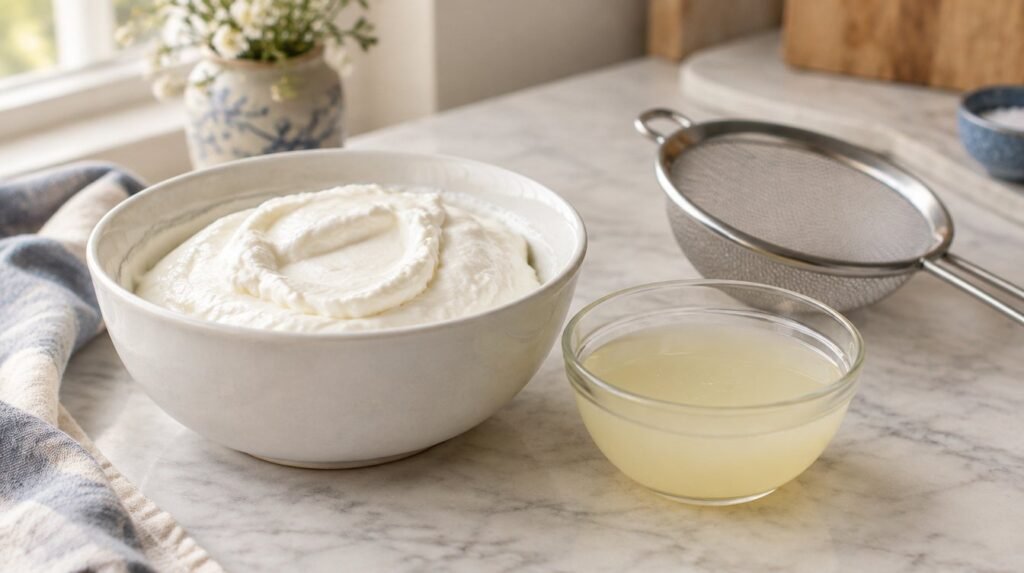
- Straining: more protein per spoonful, less lactose and a little less calcium. See homemade Greek yogurt for the method and what to do with the whey.
- Milk powder: stirring nonfat dry milk into the milk, as the Kentucky recipe does, adds milk solids, which means more protein and calcium per cup without straining.
- Sweeteners: plain homemade yogurt has no added sugar. Natural milk sugar does not count as added sugar, but honey, jam or syrup does. The FDA sets the Daily Value for added sugars at 50 grams, and the Dietary Guidelines advise keeping them under 10% of daily calories.
- When you add fruit: the Kentucky extension suggests stirring in fruit, honey or cereal just before serving, because yeasts and molds can cause off flavors if they sit in the yogurt.
- Plant milks: the nutrition follows the plant milk’s own label, which can be very different from dairy. Our coconut yogurt guide covers one example.
Why it matters for gut health
The firmest gut-related evidence for yogurt is about lactose: live yogurt cultures help many people who struggle with milk digest it more comfortably. Other gut benefits are studied, but the evidence is less settled. Yogurt fits well inside a broader pattern of fermented foods and fiber-rich plants.
Homemade yogurt has two practical advantages here. It is never heat-treated after fermentation, and you decide whether sugar goes in. The University of Guam extension makes the same point, noting that making your own lets you control ingredients such as sugar, fat and sweeteners.
Storing it so it stays good
Nutrition only helps if the yogurt is safe to eat. The University of Illinois Extension says to store homemade yogurt at 40°F or lower and eat it within 14 days, while the Kentucky and Guam guides give a fridge life of 2 to 3 weeks. Our guide to how long homemade yogurt lasts covers the signs that a batch has turned.
Related topics
- Homemade Yogurt: the full overview of making your own.
- Greek Yogurt Protein: how straining changes protein per serving.
- How Long to Incubate Yogurt? The Complete Answer: timing and how it affects tartness.
- Can You Make Yogurt with Pasteurized Milk? What the Evidence Says: why store milk works.
- Best Yogurt for Gut Health: store options if you buy rather than make.
Sources
- Milk, whole, 3.25% milkfat, with added vitamin D (FDC 746782) (USDA FoodData Central)
- Yogurt, plain, whole milk (FDC 2259793) (USDA FoodData Central)
- Yogurt, Greek, plain, whole milk (FDC 2259794) (USDA FoodData Central)
- 21 CFR 131.200 Yogurt (Electronic Code of Federal Regulations)
- Kolars JC, et al. Yogurt: an autodigesting source of lactose (New England Journal of Medicine, 1984)
- Savaiano DA. Lactose digestion from yogurt: mechanism and relevance (American Journal of Clinical Nutrition, 2014)
- Savaiano DA, Hutkins RW. Yogurt, cultured fermented milk, and health: a systematic review (Nutrition Reviews, 2021)
- Savaiano DA, et al. Lactose malabsorption from yogurt, pasteurized yogurt, sweet acidophilus milk, and cultured milk in lactase-deficient individuals (American Journal of Clinical Nutrition, 1984)
- Probiotics: What You Need To Know (National Center for Complementary and Integrative Health)
- Vitamin D: Fact Sheet for Health Professionals (NIH Office of Dietary Supplements)
- Added Sugars on the Nutrition Facts Label (U.S. Food and Drug Administration)
- Making Yogurt at Home (IP-36) (University of Kentucky Cooperative Extension Service)
- Making Yogurt at Home (University of Illinois Extension, 2024)
- Making Yogurt at Home (FP-01) (University of Guam Cooperative Extension, 2016)