Motility: What You Need to Know
What motility means
Motility is the movement of food through your digestive tract, from the moment you swallow until waste leaves your body. Cleveland Clinic defines it simply as the movement of food through your GI tract. The word is also used for sperm and single cells, but in gut health it means how well, and how fast, your digestive muscles push things along.
Most of this happens without any effort from you. Once you swallow, the process becomes automatic, and nerves and hormones take over, sending signals within the gut and back and forth to the brain.
How gut motility works
The walls of your esophagus, stomach and intestines contain layers of muscle. The NIDDK explains that food moves by a process called peristalsis, in which these muscles contract to push food and liquid forward and mix it with digestive juices. Cleveland Clinic describes several patterns that work together:
- Peristalsis: wave-like squeezes of circular and lengthwise muscles that push food forward, starting in the throat and continuing all the way to the rectum (Cleveland Clinic).
- Segmentation: back-and-forth churning, mainly in the intestines, that mixes food with digestive juices and slows its progress so nutrients can be absorbed (Cleveland Clinic).
- The migrating motor complex: a cycle of contractions in the stomach and small intestine that runs while you are fasting, such as between meals and overnight, and stops when you eat. A 2012 review notes its absence has been linked with gastroparesis and small intestinal bacterial overgrowth.
- The response to meals: eating sets off more activity in the colon. In a small study of 12 healthy adults, a 1,000-calorie meal clearly increased colon contractions compared with water.
Timing varies a lot from person to person. In a study of 32 healthy volunteers, colon transit was faster in men than in women on average, and the same person could measure quite differently from one test to the next. So there is no single “normal” speed to aim for.
Why motility matters for gut health
The pace matters in both directions. Cleveland Clinic explains that the slow, steady progress of food gives your body time to break food down and absorb nutrients, while also clearing out bacteria and waste on schedule.
| When motility is | Medical term | What it can lead to |
|---|---|---|
| Too fast | Hypermotility | Diarrhea and poor digestion, since food has less time to be broken down and absorbed |
| Too slow | Hypomotility | Constipation, and bacterial overgrowth when waste and bacteria are not cleared regularly |
| Slow in the stomach | Gastroparesis (delayed gastric emptying) | Feeling full quickly, nausea, vomiting, bloating and upper belly pain |
The first two rows come from Cleveland Clinic; the gastroparesis row comes from the NIDDK, which defines it as a disorder that slows or stops the movement of food from the stomach to the small intestine and lists its common symptoms.
Your gut bacteria are part of the picture too. A 2022 review describes a two-way link: substances bacteria make when they break down fiber and protein can affect gut movement, and the speed of movement in turn shapes which microbes settle in. Much of that research is still in animals and lab models, so it does not yet translate into specific advice.
What can slow motility down or speed it up
Cleveland Clinic lists several medicines that may affect peristalsis, including opioid pain relievers, anticholinergics, calcium channel blockers and tricyclic antidepressants. Conditions such as diabetes, thyroid disease, nerve disorders, infections and surgery can play a role as well. The NIDDK names diabetes as the most common known cause of gastroparesis, although in most cases no cause is found.
Everyday habits have an effect as well. In the same 12-person study, caffeinated coffee stirred colon activity about as much as a meal, and more than water or decaf. Cleveland Clinic also notes that high fat content and refined carbohydrates slow digestion, which our guide to foods that slow digestion explains.
How to support healthy motility
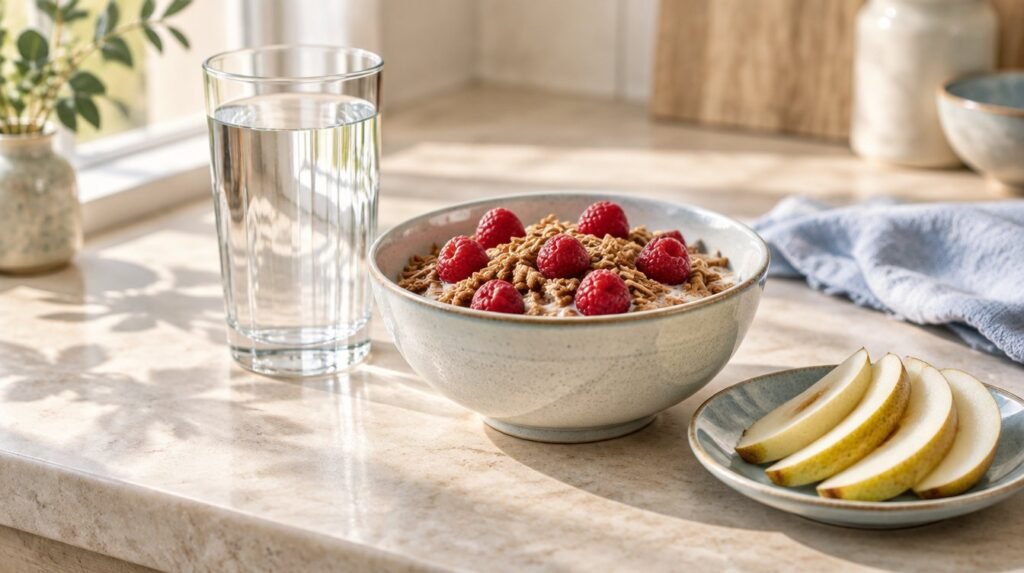
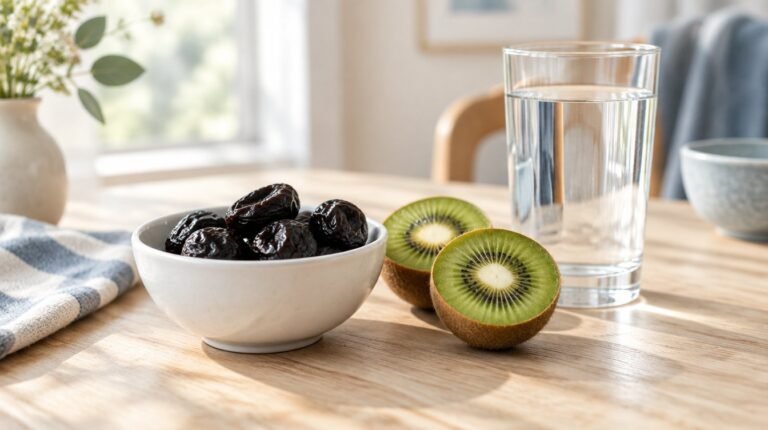
For most people, the basics do the heavy lifting. Cleveland Clinic suggests regular exercise, enough water, fiber and fewer processed foods to keep peristalsis working well. Here is what the research says about each:
- Eat enough fiber. The NIDDK says most adults need 22 to 34 grams of fiber a day, depending on age and sex, added slowly with plenty of fluids. A review of intervention trials found that in people whose transit took 48 hours or more, each extra gram of cereal, fruit or vegetable fiber cut transit time by about 30 minutes. In people who were already under 48 hours, fiber did not change it.
- Move every day. In a 12-week trial of 43 inactive adults with chronic constipation, 30 minutes of brisk walking plus a short home routine shortened total colon transit from about 79 to 58 hours and eased straining and hard stools.
- Drink fluids with your fiber. The NIDDK advises drinking plenty of liquids to help fiber work better.
- Eat regular meals. Meals set off colon activity, so a steady routine can help. Our page on how to digest food faster has more ideas.
- Check your medicines. If a drug you take slows your gut, ask your doctor or pharmacist about options rather than stopping it on your own.
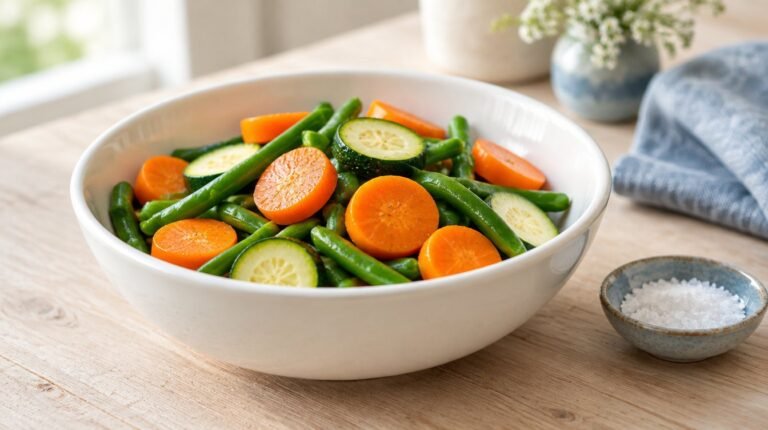
If you are dealing with sluggish bowels now, see our guides to constipation relief and natural stool softeners. If you are trying to calm things down instead, easy to digest vegetables and gentle meals may help.
When to see a doctor
See a doctor if constipation does not improve with self-care or you have a family history of colon or rectal cancer. The NIDDK says to go right away if constipation comes with bleeding from the rectum, blood in the stool, constant belly pain, inability to pass gas, vomiting, fever, lower back pain or weight loss without trying. For possible gastroparesis, it advises seeking a doctor’s help right away for severe belly pain, blood sugar that is too high or too low, red or coffee-ground vomit, or sudden sharp stomach pain. This article is general information, not medical advice.
Related topics
- Foods That Slow Digestion: what slows the stomach and gut.
- How to Digest Food Faster: everyday habits that keep things moving.
- Constipation Relief: practical steps when motility is slow.
- Fiber Supplement: options when food alone falls short.
- Does SIBO Cause Bad Breath?: more on bacterial overgrowth.
Sources
- Your Digestive System and How It Works (NIDDK)
- Peristalsis: Definition, Function and Problems (Cleveland Clinic)
- Definition and Facts for Gastroparesis (NIDDK)
- Symptoms and Causes of Gastroparesis (NIDDK)
- Symptoms and Causes of Constipation (NIDDK)
- Eating, Diet, and Nutrition for Constipation (NIDDK)
- Deloose E, et al. The migrating motor complex: control mechanisms and its role in health and disease (Nature Reviews Gastroenterology and Hepatology, 2012)
- Degen LP, Phillips SF. Variability of gastrointestinal transit in healthy women and men (Gut, 1996)
- Rao SS, et al. Is coffee a colonic stimulant? (European Journal of Gastroenterology and Hepatology, 1998)
- de Vries J, et al. Effects of cereal, fruit and vegetable fibers on human fecal weight and transit time: a comprehensive review of intervention trials (Nutrients, 2016)
- De Schryver AM, et al. Effects of regular physical activity on defecation pattern in middle-aged patients complaining of chronic constipation (Scandinavian Journal of Gastroenterology, 2005)
- Waclawiková B, et al. Gut microbiota-motility interregulation: insights from in vivo, ex vivo and in silico studies (Gut Microbes, 2022)