Suja Gut Health: What You Need to Know
What Suja’s gut health drinks are
Suja Organic is a juice company founded in San Diego in 2012. It makes cold-pressed organic juices and 2-ounce shots, and its About page says it uses high-pressure processing (HPP) rather than heat to keep them safe and shelf-stable in the fridge. When people search for Suja gut health, they usually mean three products: Gut Health Berry Lemon, Gut Health Elderberry Ginger and the Digestion Ginger Pineapple Shot.
The short answer: these are low-sugar juices with added spore-forming Bacillus probiotics and, in the two bottles, inulin fiber. The fiber is a real, if modest, addition. The probiotic strains have a few small trials, mostly run by the company that makes them, and none tested the juices themselves.
Ultimate Gut is published by Ultimate Health Solutions, which sells a yogurt maker, probiotic capsules and an inulin fiber supplement. None of the products reviewed here are ours, and these brands don’t pay us.
What’s in them
All details below come from Suja’s own product pages and Nutrition Facts panels, with labels checked in October 2026. Prices are Suja’s online list prices.
| Product | Size | Calories and sugar | Fiber | Probiotics (as labeled) | Other notable ingredients | List price |
|---|---|---|---|---|---|---|
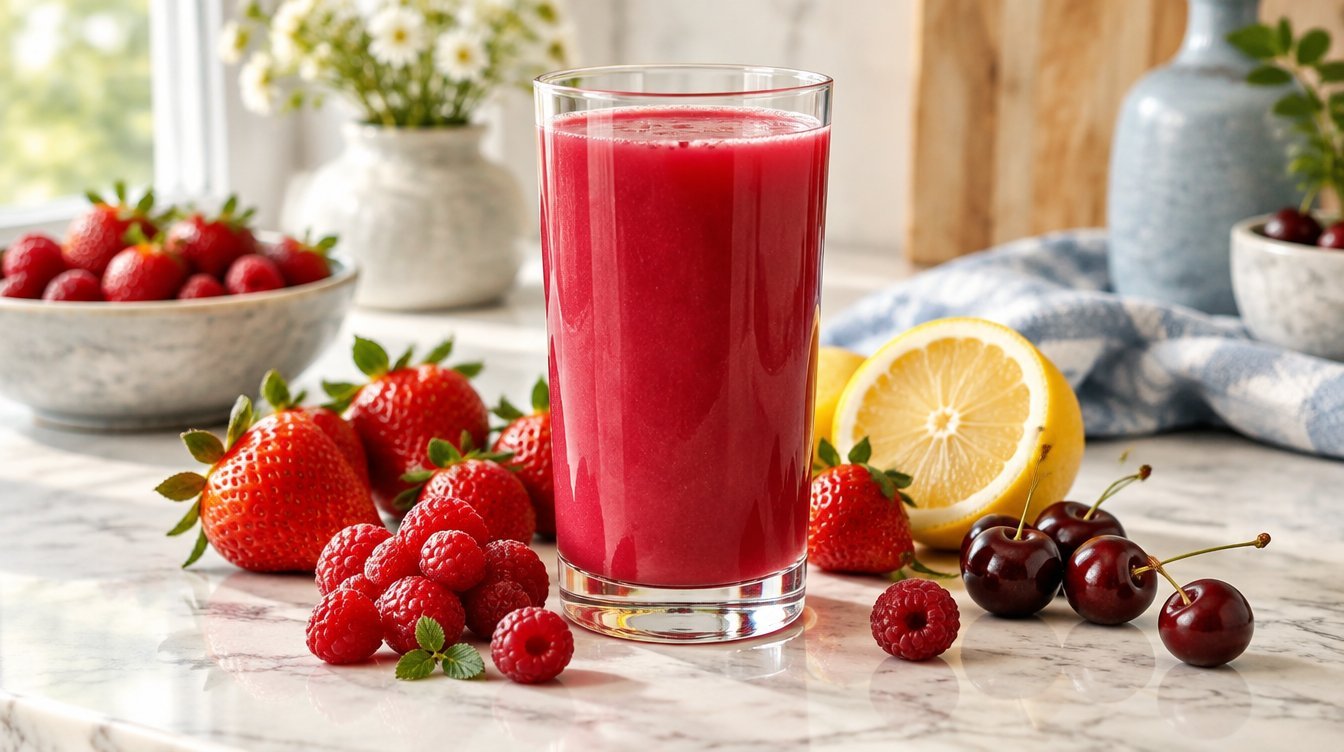
| Gut Health Berry Lemon | 12 fl oz (354 mL) | 56 calories; 5 g sugar, 0 g added | 5 g (Jerusalem artichoke inulin) | Bacillus coagulans SNZ 1969, Bacillus clausii SNZ 1971, Bacillus subtilis SNZ 1972; 2 billion CFU | Strawberry, raspberry, tart cherry, lemon, stevia | $109.99 for 18 (about $6.11 a bottle) |
| Gut Health Elderberry Ginger | 12 fl oz (354 mL) | 45 calories; 4 g sugar, 0 g added | 4 g (Jerusalem artichoke inulin) | Same three strains; 2 billion CFU | Ginger, elderberry and acerola extracts, zinc 11 mg, vitamin D, calcium, stevia | Sold in stores only; no online price |
| Digestion Ginger Pineapple Shot | 2 fl oz (59 mL) | 20 calories; 4 g sugar, 0 g added | Not listed | B. coagulans SNZ 1969; 1 billion CFU | Coconut water, ginger, apple cider vinegar, Panax ginseng extract, cayenne | $79.99 for 20 (about $4.00 a shot) |
Two label quirks are worth knowing. The Berry Lemon page lists “1g prebiotic fiber” and “vitamin D & zinc” as key ingredients, but its Nutrition Facts panel shows 5 grams of fiber and no vitamin D or zinc. The Elderberry Ginger description mentions reishi and annatto, which do not appear in its ingredient list. Check the bottle in front of you, since the printed label is what counts.
Why it matters for gut health
The probiotic strains
The three Bacillus strains in the bottles match a blend sold as SNZ TriBac. In a 2019 trial, 60 adults with stomach discomfort but no diagnosed disease took the blend or a placebo for 30 days. The blend group reported less bloating, burping and pain. The trial was small, short and led by the strain maker, Sanzyme.
For B. coagulans SNZ 1969 alone, the strain in the shot, an 8-week Korean trial in healthy adults with mild, occasional constipation found faster passage of stool through the gut than with placebo. A 2025 trial in 50 adults aged 60 to 65 found changes in immune markers, with authors employed by the strain’s maker. None of these studies used Suja juice, and the doses may differ from a bottle’s 1 to 2 billion CFU.
Results from one strain don’t carry over to another, and the evidence for most uses is still mixed. NCCIH explains that the FDA may regulate a probiotic as a food ingredient, a dietary supplement or a drug, and that only a probiotic sold as a drug must be proven safe and effective in clinical trials before sale.
The inulin fiber
Inulin is a prebiotic fiber that gut bacteria ferment in the large intestine. Five grams is a useful amount for a drink. The trade-off is gas: the NIDDK explains that fibers the small intestine can’t digest are broken down by bacteria in the colon, which produces gas. If you’re sensitive, start with half a bottle. If you follow a low-FODMAP diet for IBS, which limits hard-to-digest carbohydrates, ask your doctor or dietitian whether inulin drinks fit.
Ginger, vinegar and ginseng
The ginger in these drinks has some support for nausea. NCCIH says research shows ginger may help nausea and vomiting in pregnancy, though most studies used supplements rather than juice. There are no good human trials showing a shot of apple cider vinegar improves digestion; see our page on apple cider vinegar benefits for what is known. The shot’s Panax ginseng is listed without an amount.
How to choose and use them
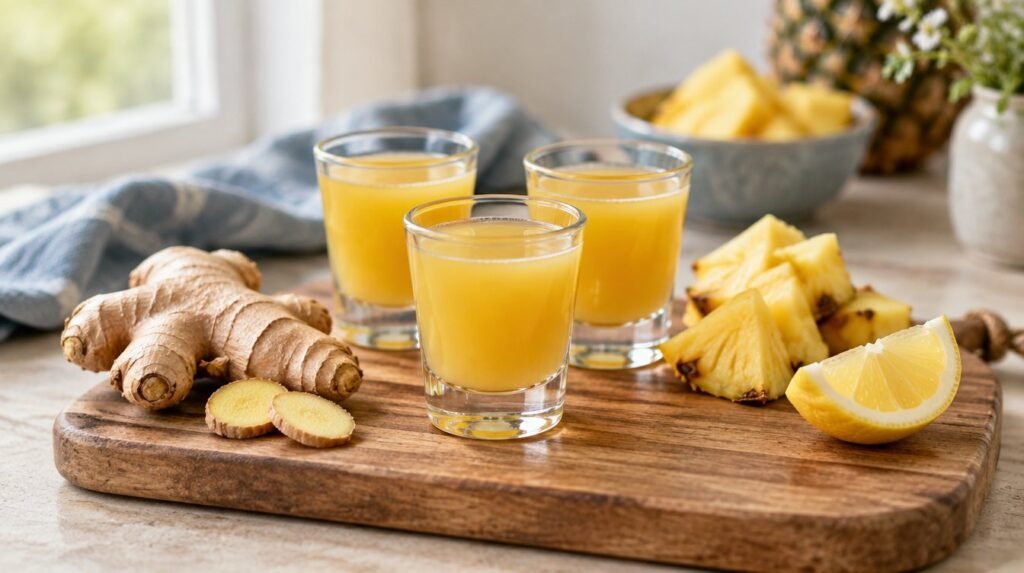
- Pick by what you want: Berry Lemon gives the most fiber; the shot is a small, cheap way to try the ginger and probiotic; Elderberry Ginger adds zinc and vitamin D.
- Count the zinc: one bottle of Elderberry Ginger has 11 mg, 100% of the Daily Value, so check it against any multivitamin you take.
- Keep it cold: Suja says its drinks must stay below 40°F and are best finished within 5 days of opening.
- Start slowly: if inulin gives you gas, have half a bottle a day for the first week.
- Do the math: at about $6 a bottle, a daily habit costs roughly $180 a month.
For live cultures and protein at a lower cost, plain yogurt and kefir are strong food-first choices. Our guides to the best yogurt for probiotics, kefir benefits and other probiotic drinks compare the options.
Who should check with a doctor first
- Weak immune systems or serious illness: the NIH says probiotics might cause infections in people who are seriously ill or have weak immune systems. Ask first if you are immunocompromised, critically ill, pregnant or have a central line.
- Ginseng users: NCCIH says Asian ginseng may interfere with blood clotting and worsen autoimmune disorders, and some experts advise against it in pregnancy and breastfeeding.
- Raw juice questions: the FDA warns that untreated juice can carry harmful bacteria. Suja says its juices are treated with high pressure; check the label if you are pregnant or buying for young children or older adults.
This article is general information, not medical advice. A juice won’t fix ongoing digestive symptoms. The NIDDK says rectal bleeding, black or bloody stools, unexplained weight loss and anemia point to problems other than IBS and need a doctor. Get prompt care for diarrhea that lasts more than 2 days or comes with high fever, severe pain or signs of dehydration.
Related topics
- Probiotic Drinks: how juices, kombucha and kefir compare.
- Best Juice for Gut Health: other juices and what the research says.
- Gut Health Shots: what small functional shots can and can’t do.
- Gut Health Drinks: a wider look at drinks for digestion.
- Kefir Benefits: a food-first source of live cultures.
Sources
- Gut Health Berry Lemon, product page and Nutrition Facts (Suja Organic, checked October 2026)
- Gut Health Elderberry Ginger, product page and Nutrition Facts (Suja Organic, checked October 2026)
- Digestion Ginger Pineapple Shot, product page and Nutrition Facts (Suja Organic, checked October 2026)
- About Us (Suja Organic)
- Soman RJ, Swamy MV. A prospective, randomized, double-blind, placebo-controlled, parallel-group study to evaluate the efficacy and safety of SNZ TriBac, a three-strain Bacillus probiotic blend for undiagnosed gastrointestinal discomfort (International Journal of Colorectal Disease, 2019)
- Kang S, et al. Spore-forming Bacillus coagulans SNZ 1969 improved intestinal motility and constipation perception mediated by microbial alterations in healthy adults with mild intermittent constipation: A randomized controlled trial (Food Research International, 2021)
- Murthy DK, et al. Testing the Immunomodulatory Effects of Probiotic Bacillus coagulans SNZ 1969 in Healthy Adults: A Randomized, Double-Blind, Placebo-Controlled Trial (Cureus, 2025)
- Probiotics: Usefulness and Safety (National Center for Complementary and Integrative Health)
- Probiotics: Fact Sheet for Consumers (NIH Office of Dietary Supplements)
- Symptoms & Causes of Gas in the Digestive Tract (NIDDK)
- Ginger: Usefulness and Safety (National Center for Complementary and Integrative Health)
- Asian Ginseng: Usefulness and Safety (National Center for Complementary and Integrative Health)
- Talking About Juice Safety: What You Need to Know (U.S. Food and Drug Administration)
- Eating, Diet, & Nutrition for Irritable Bowel Syndrome (NIDDK)
- Diagnosis of Irritable Bowel Syndrome (NIDDK)
- Symptoms & Causes of Diarrhea (NIDDK)
This article is for general information and is not medical advice. Talk to your doctor or a registered dietitian before changing your diet, supplements or medication, especially if you have a health condition.