Miso Benefits: What the Evidence Shows
What miso is
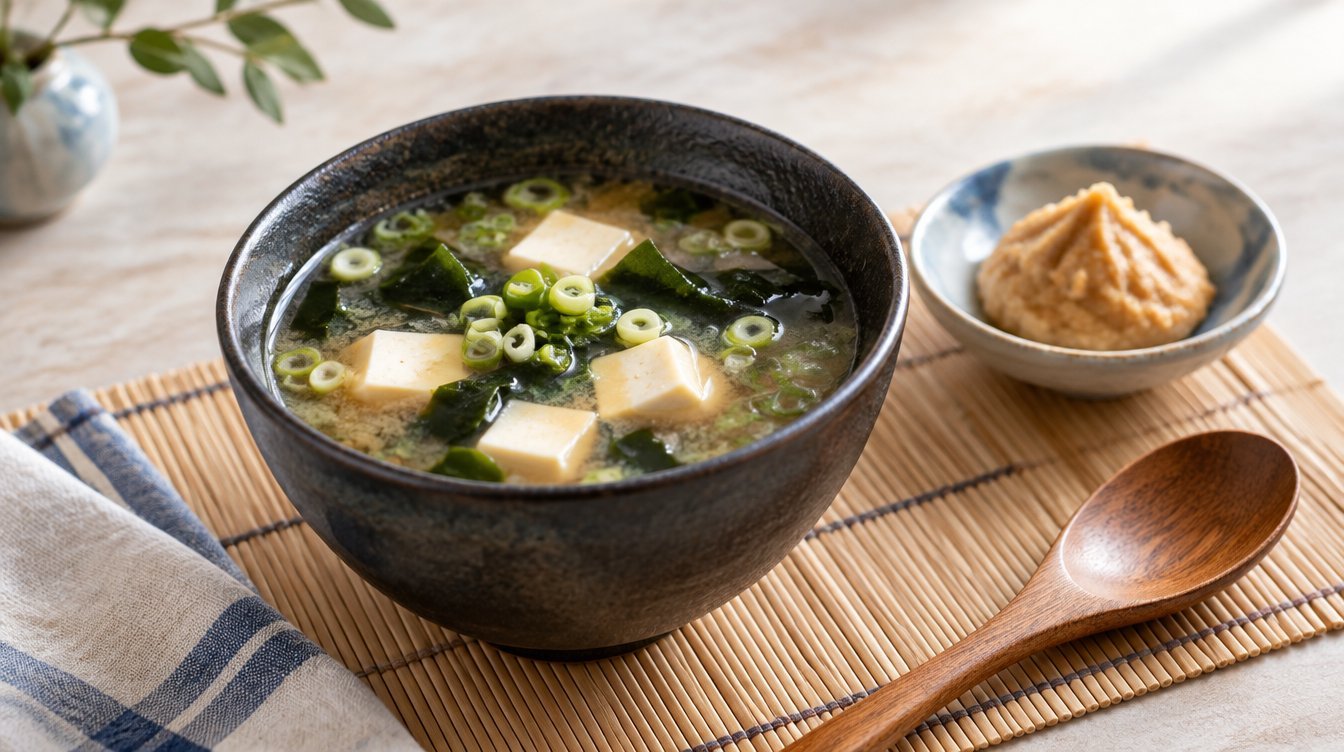
Miso is a salty, savory paste made mainly from soybeans, often with rice or barley. It is made in two fermentation stages. First, a mold, usually Aspergillus oryzae, grows on cooked grain or beans to make koji. Then the koji is mixed with mashed soybeans and salt, and bacteria and yeasts ferment the mash for months, sometimes up to two years (Allwood et al., 2021).
The short version of the evidence: miso is a flavorful fermented food that may add some live microbes to your diet, and studies from Japan link regular miso or fermented soy intake with some good outcomes. Most of that research is observational, and miso is very high in sodium, so the benefits come from small amounts used as seasoning.
Miso nutrition per tablespoon
| Nutrient | 1 tablespoon (17 g) | Share of Daily Value |
|---|---|---|
| Calories | 34 | Not applicable |
| Protein | 2.2 g | 4% |
| Fiber | 0.9 g | 3% |
| Sodium | 634 mg | 28% |
| Copper | 0.07 mg | 8% |
| Manganese | 0.15 mg | 6% |
| Zinc | 0.4 mg | 4% |
| Vitamin K | 5 mcg | 4% |
Values are calculated from the USDA FoodData Central entry for miso and rounded. The takeaway: miso adds flavor, a little protein and small amounts of minerals, but its standout number is sodium, more than a quarter of the daily limit in one tablespoon.
Miso and gut health
Because it is fermented, miso can carry live microbes. A review of published counts found aerobic bacteria in miso ranging from about 100 to 10 million per gram, though most samples were made in labs rather than bought in stores (Rezac et al., 2018). Researchers have isolated salt-tolerant lactic acid bacteria (Tetragenococcus halophilus) and yeasts from miso and studied them in lab dishes, mice and rats (Kumazawa et al., 2018; Sugihara et al., 2024). Those strains have not been tested as miso in people.
A 2021 review noted that very little research has described the microbes in miso in detail (Allwood et al., 2021). Human trials of miso and the gut microbiome are scarce, so claims that miso “heals the gut” go beyond the evidence.
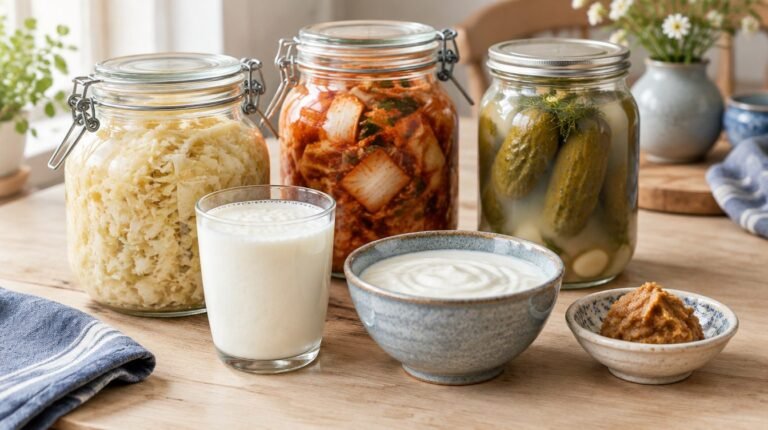
The broader picture for fermented foods is more encouraging. The Dietary Guidelines for Americans, 2025-2030 name miso among fermented foods that support a diverse microbiome. In a Stanford trial of 36 healthy adults, a 10-week diet high in fermented foods raised gut microbial diversity and lowered several inflammation markers (Wastyk et al., 2021). That trial used yogurt, kefir, kimchi, kombucha and similar foods, not miso. See our guide to fermented foods for gut health for more.
What the evidence shows on other benefits
Blood pressure
Given its salt, you might expect miso to raise blood pressure, but the human data are mixed and mostly reassuring. In a small randomized trial, 40 Japanese adults with high-normal blood pressure or stage 1 hypertension ate about 32 grams of miso a day for 8 weeks. Daytime clinic readings did not change, but nighttime blood pressure fell compared with a lower-salt soy food (Kondo et al., 2019). The miso was supplied by its maker.
Two observational studies point the same way. In 527 middle-aged and older adults, how often people ate miso soup was not linked with blood pressure, though frequent eaters had lower heart rates (Ito et al., 2017). In a national survey of 25,738 Japanese adults, larger portions of miso or soy sauce were not linked with blood pressure after adjustment (Okada et al., 2018). None of this means extra salt is harmless.
Longevity
In the Japan Public Health Center study, researchers followed 92,915 adults for almost 15 years. People who ate the most fermented soy (natto and miso) had about a 10 percent lower risk of death from any cause than those who ate the least. Total soy intake showed no such link, and the authors warned that unmeasured differences between people could explain part of the result (Katagiri et al., 2020).
Cancer
In a study that followed 21,852 Japanese women for about 10 years, frequent miso soup and isoflavone intake was linked with a lower risk of breast cancer, especially after menopause (Yamamoto et al., 2003). NCCIH notes that such links in Asian women come from observational studies and that soy supplements have not been shown to reduce breast cancer risk (NCCIH).
Stomach cancer is a fair worry with salty foods. A meta-analysis of 26 cohort studies linked high salt intake with a 25 percent higher risk of stomach cancer, but found no significant link for miso soup (Wu et al., 2021).
The sodium question
The FDA advises adults to keep sodium under 2,300 mg a day, and most Americans already eat about 3,400 mg (FDA). A bowl of miso soup made with one tablespoon of paste adds 634 mg before any other salty ingredients. If you watch your salt for blood pressure, heart or kidney reasons, count miso as part of your daily total, and use less soy sauce or salt in the same dish.
Who should be careful
- People with a soy allergy: miso is a soy food, and soy must be declared on US food labels (NCCIH).
- People taking MAOI antidepressants: Mayo Clinic lists miso among high-tyramine fermented foods to avoid with these drugs (Mayo Clinic).
- People on a sodium-restricted diet: ask your doctor or dietitian how miso fits your limit.
- People avoiding gluten: some miso is made with barley, so check the ingredient list.
How to choose and use miso

- Read the label. Ingredients are usually soybeans, rice or barley, salt and koji. Some brands note that the miso is unpasteurized or contains live cultures.
- Keep it in the fridge after opening, with the lid tight.
- Add it off the boil. Boiling kills most bacteria. For soup, dissolve the paste in a little warm broth and stir it in after the pot comes off the heat.
- Use it as seasoning. A teaspoon or two in dressings, glazes, marinades or mashed vegetables gives deep flavor with less sodium than a full bowl of soup.
- Pair it with fiber. Miso soup with tofu, seaweed, greens and mushrooms, or a miso dressing on beans and grains, adds plant variety.
For more ways to use it, see gut healthy soups and our list of non-dairy probiotic foods.
Related topics
- Probiotic Foods: which fermented foods carry live microbes.
- Sauerkraut Benefits: another salty fermented food and its evidence.
- Is Kimchi Good for Gut Health?: what the research says about kimchi.
- Vegan Gut Health Foods: plant-based options, including fermented soy.
- Kefir Benefits: a dairy fermented food with more human trials.
Sources
- Miso (FDC 172442) (USDA FoodData Central)
- Allwood JG, et al. Fermentation and the microbial community of Japanese koji and miso: a review (Journal of Food Science, 2021)
- Rezac S, et al. Fermented foods as a dietary source of live organisms (Frontiers in Microbiology, 2018)
- Kumazawa T, et al. Isolation of immune-regulatory Tetragenococcus halophilus from miso (PLoS One, 2018)
- Sugihara N, et al. Probiotic yeast from miso ameliorates stress-induced visceral hypersensitivity by modulating the gut microbiota in a rat model of irritable bowel syndrome (Gut and Liver, 2024)
- Dietary Guidelines for Americans, 2025-2030 (US Department of Agriculture and US Department of Health and Human Services, 2026)
- Wastyk HC, et al. Gut-microbiota-targeted diets modulate human immune status (Cell, 2021)
- Kondo H, et al. Long-term intake of miso soup decreases nighttime blood pressure in subjects with high-normal blood pressure or stage I hypertension (Hypertension Research, 2019)
- Ito K, et al. The effects of the habitual consumption of miso soup on the blood pressure and heart rate of Japanese adults: a cross-sectional study of a health examination (Internal Medicine, 2017)
- Okada E, et al. Association between the portion sizes of traditional Japanese seasonings, soy sauce and miso, and blood pressure (Nutrients, 2018)
- Katagiri R, et al. Association of soy and fermented soy product intake with total and cause specific mortality: prospective cohort study (BMJ, 2020)
- Yamamoto S, et al. Soy, isoflavones, and breast cancer risk in Japan (Journal of the National Cancer Institute, 2003)
- Wu B, et al. Dietary salt intake and gastric cancer risk: a systematic review and meta-analysis (Frontiers in Nutrition, 2021)
- Soy: Usefulness and Safety (National Center for Complementary and Integrative Health)
- Sodium in Your Diet (US Food and Drug Administration)
- MAOIs and diet: Is it necessary to restrict tyramine? (Mayo Clinic)