Detox Smoothie: What You Need to Know
What a detox smoothie is
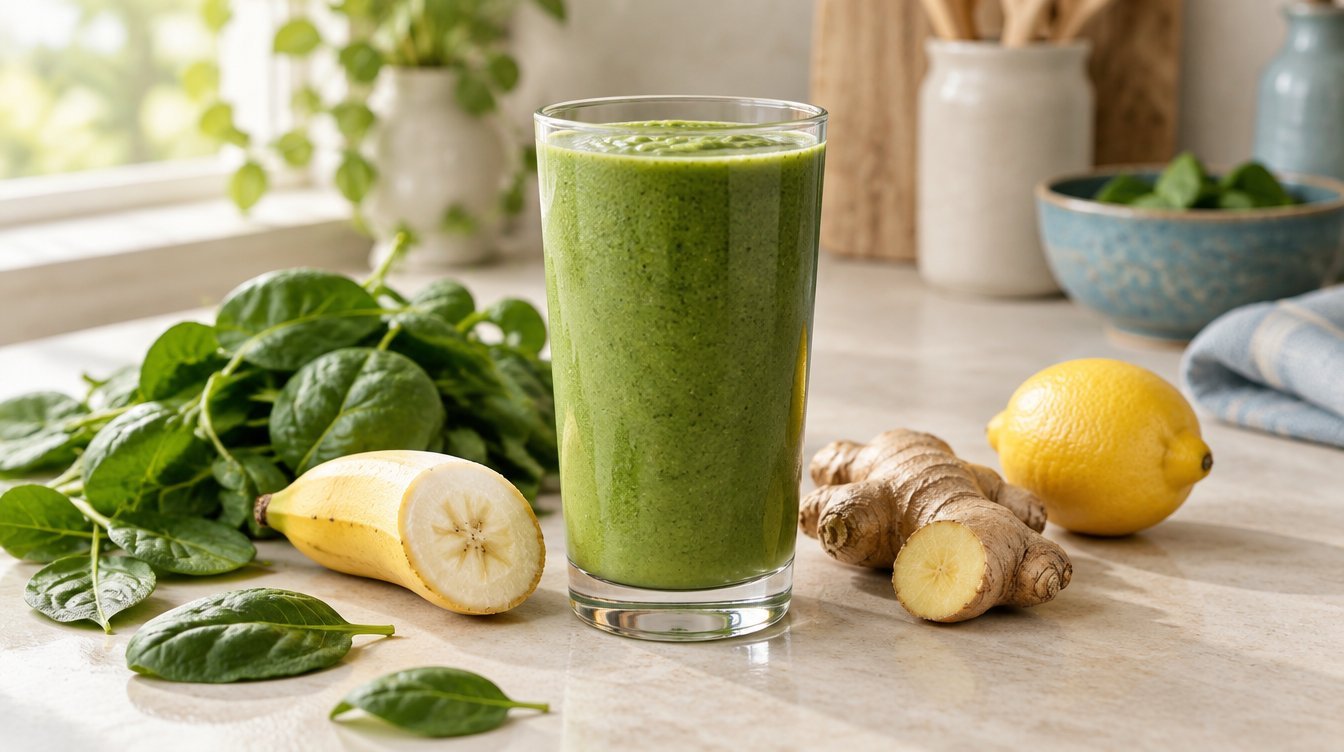
A detox smoothie is a blended drink, usually made with leafy greens, fruit and extras such as ginger, lemon or seeds, that is sold or shared online as a way to flush toxins from your body. Recipes vary a lot. Some are mostly vegetables, others are closer to a fruit milkshake.
The short answer: the “detox” part isn’t backed by evidence, but a well-built smoothie can still be a useful way to get more fiber, fruit and vegetables into your day. Unlike juice, a smoothie keeps the whole food. That one difference matters a lot for your gut.
This article is general information, not medical advice. If you have a health condition or take medication, check with your doctor before making big changes to what you eat.
Does a detox smoothie remove toxins?
There is no good evidence that it does. The National Center for Complementary and Integrative Health (NCCIH) says the few human studies of detox programs are small and low quality, and that a 2015 review found no convincing research that detox diets remove toxins or help with weight management over time. A critical review in the Journal of Human Nutrition and Dietetics found no randomized controlled trials of commercial detox diets in people.
Your body already has a cleanup crew. MedlinePlus explains that the liver helps your body digest food, store energy and remove poisons. The NIDDK says the kidneys filter about 150 quarts of blood a day and send the wastes out in urine. A smoothie can be part of a diet that supports those organs, but it doesn’t do their job.
Why a smoothie can still help your gut
Blending keeps the pulp, skin and fiber that juicing strains out. Gut bacteria ferment fiber into short-chain fatty acids, which a 2018 review describes as having anti-inflammatory effects. Most people need more fiber: the Dietary Guidelines for Americans, 2020-2025 say more than 90 percent of women and 97 percent of men fall short.
Here is what some common smoothie ingredients add, using USDA FoodData Central values:
| Ingredient | Fiber | Total sugars | Vitamin K |
|---|---|---|---|
| 1 medium banana (118 g) | 3.1 g | 14.4 g | 0.6 mcg |
| 1 cup raw spinach (30 g) | 0.7 g | 0.1 g | 145 mcg |
| 1 cup raw kale (21 g) | 0.9 g | 0.2 g | 82 mcg |
| 1 cup raw orange juice (248 g) | 0.5 g | 20.8 g | 0.2 mcg |
Values are calculated from USDA per-100-gram figures. The table makes two points. Greens add very little sugar but a lot of vitamin K, which matters if you take a blood thinner. And using juice as your liquid adds sugar with almost no fiber, so water, milk, kefir or plain yogurt make a better base.
Fermented dairy is worth a spot in the blender. In a Stanford trial published in Cell, 36 healthy adults were assigned to a high-fiber or a high-fermented-food diet. The Stanford Medicine summary reports that the fermented-food group, eating foods such as yogurt, kefir and kimchi, had more diverse gut bacteria and lower levels of 19 inflammatory proteins after 10 weeks. It was a small study, and it didn’t test smoothies.
How to build a gut-friendly smoothie
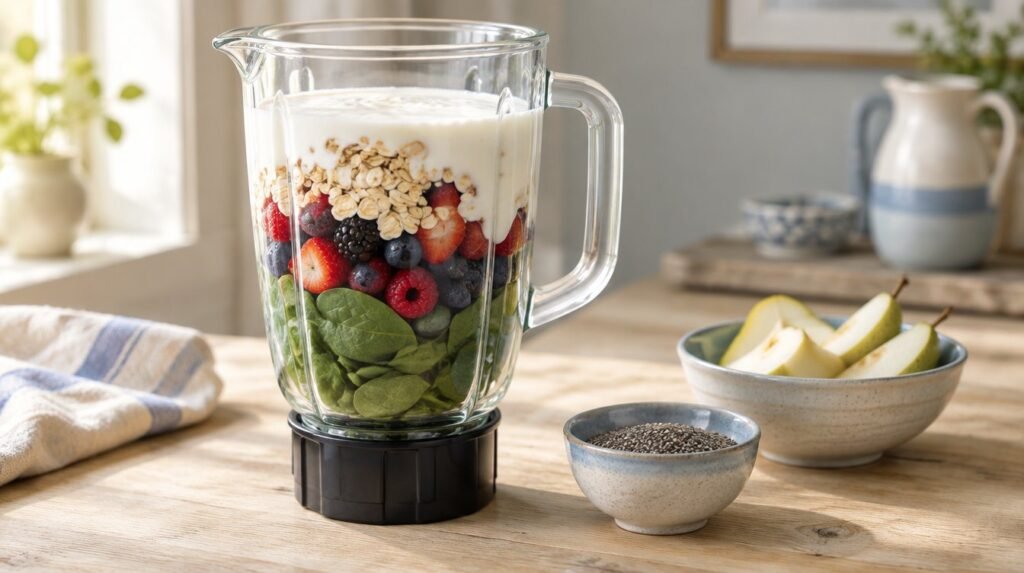
Think in parts rather than following a “detox” recipe. A balanced 16-ounce smoothie might look like this:
| Part | Examples | Why it helps |
|---|---|---|
| Base (1 cup) | Plain kefir, plain yogurt thinned with water, milk or unsweetened soy milk | Protein, and live cultures if fermented |
| Greens (1 handful) | Spinach, kale, romaine | Vitamins and a little fiber, with little sugar |
| Fruit (about 1 cup) | Banana, berries, mango, pear with skin | Sweetness and most of the fiber |
| Fiber boost (1 tablespoon) | Rolled oats, chia seeds, ground flaxseed | More fiber to keep you full |
| Flavor | Fresh ginger, lemon zest, cinnamon | Taste without added sugar |
For recipe ideas, try our gut health smoothie, the kefir smoothie or a yogurt smoothie. If you want a thicker, higher-protein version, see our Greek yogurt smoothie.
One portion goes a long way. The NHS counts a 150 ml smoothie as one of your 5 A Day, but only once a day no matter how much you drink, and notes that blending fruit releases its sugars, which can harm teeth. Drinking your smoothie with a meal rather than sipping it all morning is easier on your teeth.
Cautions before you blend
- Blood thinners. If you take warfarin (Coumadin), the NIH Office of Dietary Supplements says to get about the same amount of vitamin K each day. Adding a daily green smoothie, or stopping one, can change how the drug works, so talk with your doctor first.
- Kidney stones. The NIDDK lists spinach among high-oxalate foods, and NCCIH notes that leafy greens and beets may be a concern for people prone to kidney stones. If you have had stones, ask your doctor which greens suit you.
- Diabetes. Fruit-heavy smoothies can carry a lot of sugar. NCCIH says people with diabetes should check with their care team before major diet changes.
- Raw juice bases. If you use fresh-pressed juice, the FDA warns that untreated juice can carry harmful bacteria, a bigger risk for children, older adults, pregnant women and people with weakened immune systems.
- Grapefruit. Grapefruit, Seville oranges, pomelos and tangelos can interact with statins and several other medicines, according to the FDA.
- Detox powders and add-ins. NCCIH reports that the FDA and FTC have acted against some detox products that contained hidden ingredients or made false disease claims. Whole foods are the safer add-in.
When to see a doctor
A smoothie is food, not treatment. If you are reaching for a detox drink because you feel bloated, tired or unwell most days, that is worth a conversation with your doctor. NCCIH advises talking with a health care provider before trying any detox or cleanse program.
The NHS advises seeing a doctor for bowel changes that are unusual for you, blood in your poop or bleeding from your bottom, belly pain or a lump, bloating, or weight loss you can’t explain, and says to seek urgent care for black or dark red stools or bloody diarrhea. Our guide to signs of an unhealthy gut explains which symptoms to track.
Related topics
- Juice Cleanse: why juice-only plans lose the fiber.
- Gut Health Smoothie: a recipe built around fiber and live cultures.
- Kefir Smoothie: using kefir as your base.
- Gut Cleanse: what cleanses claim and what the evidence supports.
- Gut Health Drinks: other drinks with gut research behind them.
- How to Make Yogurt at Home: make your own smoothie base.
Sources
- ‘Detoxes’ and ‘Cleanses’: What You Need To Know (National Center for Complementary and Integrative Health)
- Klein AV, Kiat H. Detox diets for toxin elimination and weight management: a critical review of the evidence (Journal of Human Nutrition and Dietetics, 2015)
- Salem I, et al. The Gut Microbiome as a Major Regulator of the Gut-Skin Axis (Frontiers in Microbiology, 2018)
- Wastyk HC, et al. Gut-microbiota-targeted diets modulate human immune status (Cell, 2021)
- Fermented-food diet increases microbiome diversity, lowers inflammation (Stanford Medicine, 2021)
- Liver Diseases (MedlinePlus, National Library of Medicine)
- Your Kidneys and How They Work (NIDDK)
- Eating, Diet, and Nutrition for Kidney Stones (NIDDK)
- Vitamin K: Fact Sheet for Consumers (NIH Office of Dietary Supplements)
- Dietary Guidelines for Americans, 2020-2025 (USDA and HHS)
- 5 A Day: what counts? (NHS)
- Symptoms of bowel cancer (NHS)
- What You Need to Know About Juice Safety (U.S. Food and Drug Administration)
- Grapefruit Juice and Some Drugs Don’t Mix (U.S. Food and Drug Administration)
- Bananas, raw, Spinach, raw, Kale, raw and Orange juice, raw (USDA FoodData Central, SR Legacy)
This article is for general information and is not medical advice. Talk to your doctor or a registered dietitian before changing your diet, supplements or medication, especially if you have a health condition.