Coconut Oil for Gut Health: What You Need to Know
What coconut oil is
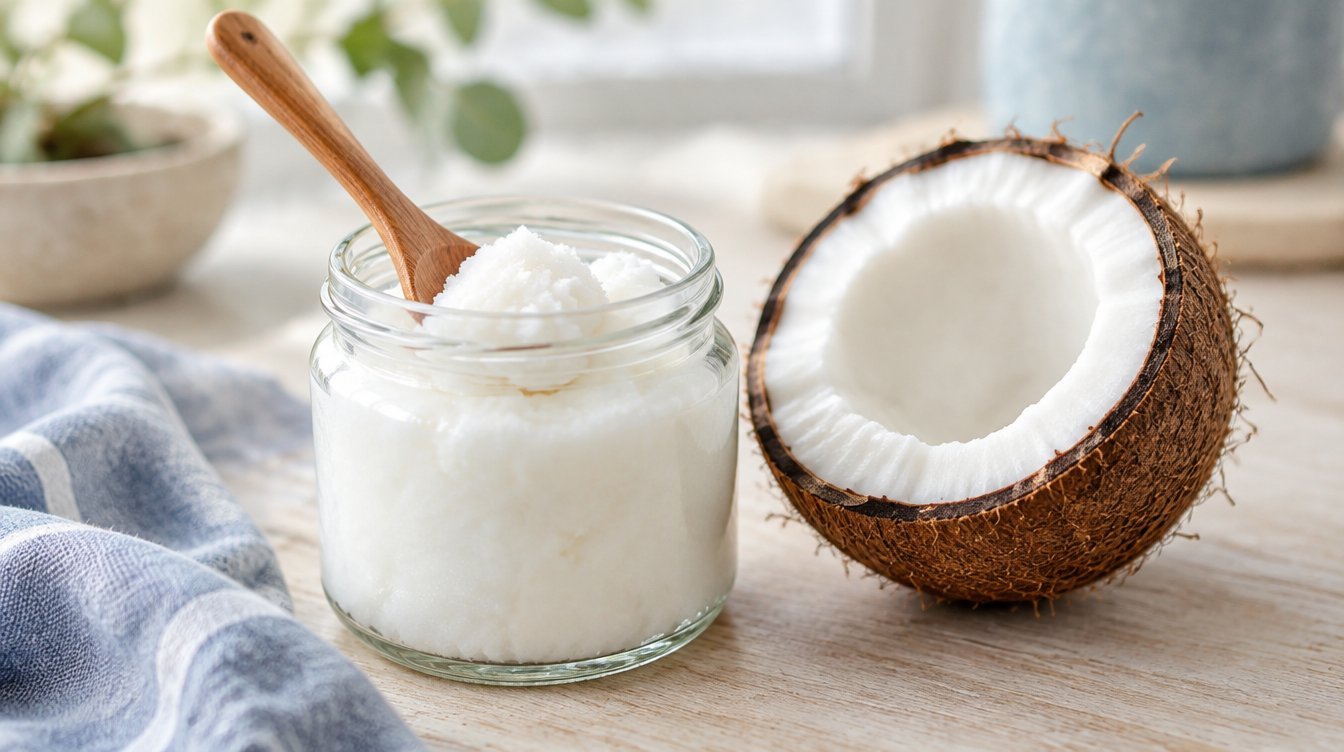
Coconut oil is made by pressing fresh coconut meat or dried coconut meat, called copra. Its saturated fat makes it firm at room temperature, and it melts at about 78°F. Virgin coconut oil is made from fresh meat. Refined coconut oil usually starts with copra that is pressed, heated and filtered, which leaves it flavorless and odorless (Harvard Nutrition Source).
Both kinds are almost pure fat, and most of that fat is saturated. Harvard’s Nutrition Source puts it at 80 to 90% saturated fat (Harvard T.H. Chan School of Public Health). Here is what one tablespoon contains, based on USDA data (USDA FoodData Central):
| Per 1 tablespoon (13.6 g) | Amount |
|---|---|
| Calories | About 121 |
| Total fat | 13.5 g |
| Saturated fat | About 11.2 g |
| Lauric acid (a 12-carbon saturated fat) | About 5.7 g |
| Caprylic and capric acids (8- and 10-carbon fats) | About 1.7 g combined |
| Monounsaturated fat | About 0.9 g |
| Polyunsaturated fat | About 0.2 g |
| Fiber | 0 g |
For comparison, the same spoonful of olive oil has about 1.9 g of saturated fat. Coconut oil has no fiber, so it does not feed gut bacteria the way beans, oats and vegetables do.
Coconut oil is not the same as MCT oil
Much of the gut and weight buzz around coconut oil borrows from research on MCT oil. MCT stands for medium-chain triglycerides, shorter fats that are quickly absorbed and used by the body for energy. Harvard notes that many of the studies behind the hype used a special oil made of 100% MCTs, and that those results “cannot be applied directly” to the coconut oil sold in stores (Harvard Nutrition Source).
The reason is lauric acid, the main fat in coconut oil. Harvard says it “is not an MCT” and is absorbed more slowly, much like other long-chain fats (Harvard Nutrition Source). The true medium-chain fats, caprylic and capric acid, make up only a small part of a spoonful, as the table above shows.
That difference cuts both ways. A 2026 systematic review of 33 studies with about 1,100 people found that stomach and gut problems, mainly diarrhea, belly pain, discomfort and nausea, were the most common side effects of MCT products, especially at higher doses (Scheller et al., Frontiers in Nutrition, 2026). Those findings are for MCT oil, not coconut oil.
What the research shows
Direct research on coconut oil and the human gut is scarce. These are the studies that come closest.
| Study | Who and what | What happened | Main limits |
|---|---|---|---|
| Netto Cândido et al., 2021 | 52 overweight women on a calorie-reduced diet; 25 mL soybean, extra virgin olive or coconut oil daily for 9 weeks | No change in gut bacterial diversity or makeup with coconut oil; gut permeability tests rose after coconut and olive oil, with no rise in a blood marker of bacterial toxins | Small; one group of women; short |
| Gunsalus et al., 2016 | Mice fed diets rich in coconut oil, beef tallow or soybean oil, then exposed to the yeast Candida albicans | Mice on the coconut oil diet carried less Candida in their guts | Mouse study; not tested in people |
| Neelakantan et al., 2020 | Review and meta-analysis of 16 trials comparing coconut oil with other fats | Coconut oil raised LDL (“bad”) cholesterol by about 10 mg/dL compared with non-tropical vegetable oils; no effect on inflammation markers | Heart outcome, not gut; trials varied |
Gut bacteria and the gut lining
The one human trial that measured gut bacteria found that 25 mL of coconut oil a day for 9 weeks did not change the diversity or makeup of the women’s gut bacteria. Tests of gut permeability, sometimes called “leaky gut” tests, went up after both coconut oil and extra virgin olive oil, though a blood marker of bacterial toxins did not change (Netto Cândido et al., Food Research International, 2021). In plain terms, this small study gives no support to claims that coconut oil heals or seals the gut.
Candida and “antimicrobial” claims
Coconut oil and its fatty acids have antifungal activity in lab tests, and in the mouse study a coconut oil diet lowered gut colonization by Candida albicans. Even when coconut oil was added to a diet that also contained beef tallow, colonization was lower (Gunsalus et al., mSphere, 2016). The authors suggested coconut oil could become a dietary approach for at-risk patients, but this has not been shown in human trials. Mice and people differ in diet, gut makeup and dose.
Heart health
This is where the evidence is clearest, and it is not favorable. Across 16 trials, coconut oil raised LDL cholesterol by about 10.5 mg/dL compared with non-tropical vegetable oils (Neelakantan et al., Circulation, 2020). The American Heart Association has concluded that replacing saturated fat with unsaturated fats lowers LDL cholesterol and the risk of heart disease (Sacks et al., Circulation, 2017), and Harvard reports that the AHA advised against using coconut oil (Harvard Nutrition Source).
How to use coconut oil sensibly
Coconut oil is a food, not a gut treatment. If you enjoy it, these habits keep it in proportion:
- Use small amounts now and then: Harvard suggests coconut oil is best used “in small amounts as a periodic alternative” to other oils in cooking and baking (Harvard Nutrition Source).
- Make unsaturated oils your daily default: in trials, coconut oil raised LDL compared with non-tropical vegetable oils (Neelakantan et al., 2020). Our guide to olive oil for gut health covers that option.
- Skip the spoonfuls: there are no human trials showing that eating coconut oil straight clears yeast, heals the gut or acts as a cleanse. Our look at gut cleanses explains why such claims fall short.
- Watch your gut’s reaction: the NHS advises people with IBS not to eat lots of fatty foods (NHS). If rich, oily meals cause cramps or loose stools, cut back. Our diet for a sensitive stomach guide has gentler choices.
- Put the gut effort into fiber and fermented foods: these feed and add helpful microbes. See the best foods for gut health and fermented foods for gut health.
If you like coconut flavor, coconut milk is the base for dairy-free cultured foods. Our guide to coconut yogurt explains how it is made, and non-dairy probiotics covers other options.
When to see a doctor
This article is general information, not medical advice. If you have diarrhea, contact a doctor if it lasts more than 2 days, comes with a high fever, or you have six or more loose stools a day. Get care right away for frequent vomiting, severe belly or rectal pain, black or tarry stools, stools with blood or pus, or signs of dehydration (NIDDK).
Anemia, bleeding from the rectum and unexplained weight loss are also warning signs that need a doctor’s attention (NIDDK). If you suspect a yeast or other gut infection, get tested rather than treating yourself with coconut oil.
Is coconut oil good for your gut?
There is little human evidence either way. In one 9-week trial, 25 mL a day did not change gut bacterial diversity (Netto Cândido et al., 2021).
Does coconut oil kill Candida in the gut?
It lowered Candida in the guts of mice (Gunsalus et al., 2016), but this has not been shown in human trials.
Is coconut oil the same as MCT oil?
No. Its main fat, lauric acid, is not an MCT, so MCT oil studies do not apply directly to coconut oil (Harvard Nutrition Source).
Related topics
- Olive Oil for Gut Health: how the main Mediterranean fat compares.
- Cook for Your Gut Health: everyday cooking habits that support digestion.
- Coconut Yogurt: a dairy-free cultured food made from coconut milk.
- Gut Cleanse: what cleanses can and cannot do.
- Worst Foods for Gut Health: foods and habits worth limiting.
Sources
- Oil, coconut (SR Legacy 171412) (USDA FoodData Central)
- Coconut Oil (The Nutrition Source, Harvard T.H. Chan School of Public Health)
- Diet, lifestyle and medicines for IBS (irritable bowel syndrome) (NHS)
- Symptoms and Causes of Diarrhea (National Institute of Diabetes and Digestive and Kidney Diseases)
- Diagnosis of Irritable Bowel Syndrome (National Institute of Diabetes and Digestive and Kidney Diseases)
- Netto Cândido TL, et al. Effect of the ingestion of vegetable oils associated with energy-restricted normofat diet on intestinal microbiota and permeability in overweight women (Food Research International, 2021)
- Gunsalus KT, et al. Manipulation of Host Diet To Reduce Gastrointestinal Colonization by the Opportunistic Pathogen Candida albicans (mSphere, 2016)
- Neelakantan N, et al. The Effect of Coconut Oil Consumption on Cardiovascular Risk Factors: A Systematic Review and Meta-Analysis of Clinical Trials (Circulation, 2020)
- Sacks FM, et al. Dietary Fats and Cardiovascular Disease: A Presidential Advisory From the American Heart Association (Circulation, 2017)
- Scheller M, et al. Gastrointestinal issues predominate among side effects of medium-chain triglyceride consumption in humans (Frontiers in Nutrition, 2026)
This article is for general information and is not medical advice. Talk to your doctor or a registered dietitian before changing your diet, supplements or medication, especially if you have a health condition.