Yogurt Did Not Set: Causes and Fixes
What “did not set” looks like
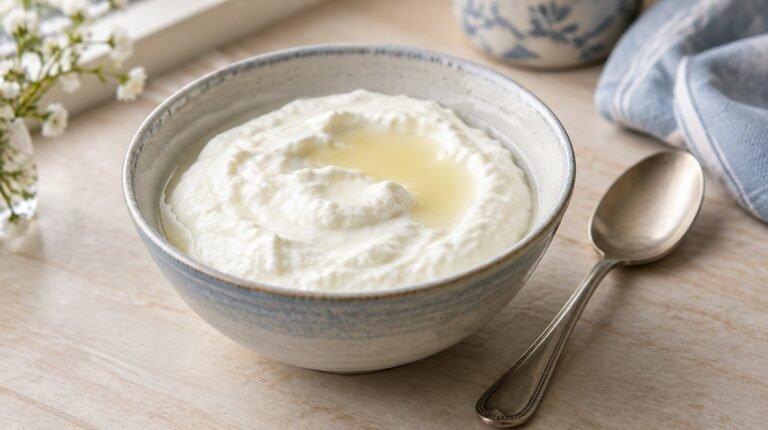
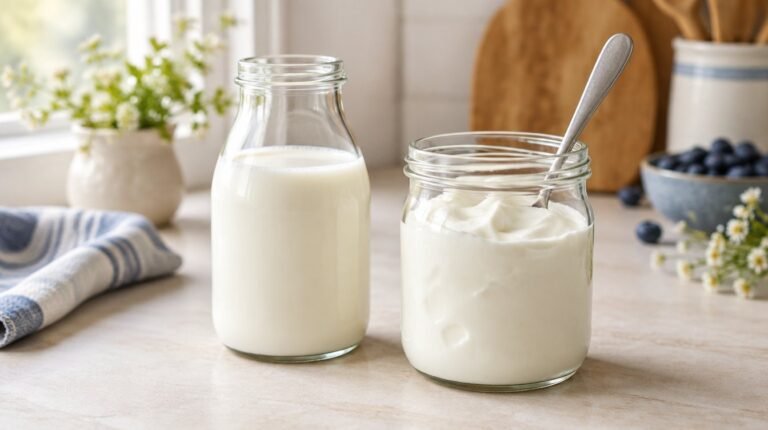
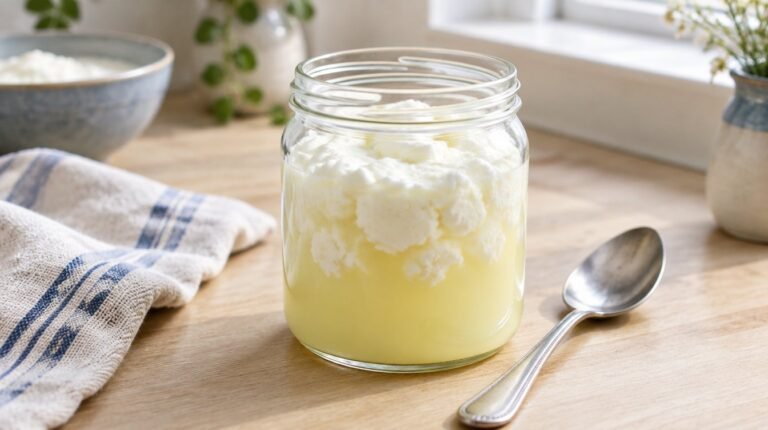
You open the incubator after the usual time and the jar still pours like milk, with little or no sour smell. That differs from yogurt that set soft, which has thickened a little and smells tangy. For that problem, see our guide to runny or thin yogurt.
Milk turns into yogurt because the culture eats lactose (milk sugar) and makes lactic acid. Once the acid brings the milk down to about pH 4.6, the milk proteins clump into a soft gel, according to the University of Alaska Fairbanks Cooperative Extension. Liquid milk at the end means the bacteria never made enough acid.
The most likely cause: the culture never got going
Most failed batches come down to two problems. The first is a dead or weak starter. University of Illinois Extension puts it plainly: starter cultures with dead bacteria will not make yogurt. It advises using store-bought yogurt as starter before its “best by” date, and homemade yogurt within 5 to 7 days of making it.
The second problem is milk that was still too hot when the starter went in. University of Guam Extension lists milk that is too hot at inoculation among the reasons yogurt fails to set after 8 to 10 hours, and says milk must cool to 107 to 110°F first or the heat will kill the starter.
How to fix it
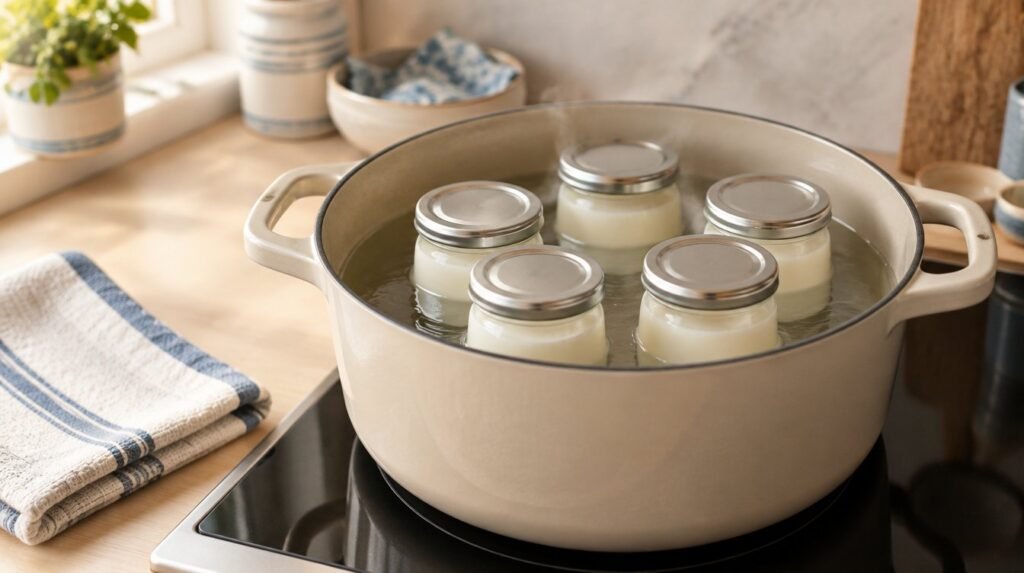
What you can do depends on how long the milk has been warm and whether it has thickened at all.
- Check the temperature. Put a clean thermometer into the water or air around the jars. Illinois incubates at 108 to 115°F, and UAF at 110°F, give or take 5°F. Probiotic cultures differ; see our temperature by strain table.
- Look before you stir. Tilt one jar gently. A loose gel means the culture is working. Do not stir; Illinois says to incubate undisturbed.
- Give a slow batch more time. If the temperature was low and you are within a normal 6 to 10 hour window, bring it to about 110°F. Illinois suggests incubating another 2 hours and testing again.
- Stop if nothing happens. If nothing has thickened after 8 to 10 hours at the right temperature, UAF and Guam both say to discard batches that fail to set properly. UAF notes it can signal a bad culture or unwanted microorganisms.
- Start fresh. Use new milk and a fresh starter. Heat the milk to 180 to 185°F, cool it to 108 to 115°F, and stir the starter into a cup of the warm milk before mixing it back in, as Illinois describes.
Do not rescue a dead batch by adding more starter and leaving it warm another day. Unsoured milk has no acid protection, and it has been sitting where food poisoning bacteria multiply fastest, between 40°F and 140°F, according to FoodSafety.gov.
One exception: some probiotic cultures are grown cooler for about 24 hours, so they are not a failure at hour 8. Our guides to fermentation time by culture and reuteri yogurt that did not thicken cover those timelines.
Other causes to rule out
- Incubator too hot or too cold. Illinois lists the wrong incubation temperature as a cause of yogurt that is not firm, and UAF notes that a temperature that is too hot or too cold can slow the culture. See temperature drift.
- Not enough time. Guam gives 6 to 12 hours at 110°F and says the time depends on the incubator temperature, container size and how active the starter is.
- Equipment not clean. Illinois lists this as a reason yogurt does not firm up.
- Too little starter. In a University of Wisconsin lab study that compared starter amounts from 0.5% to 4% by weight, gels made with less starter were weaker and released more whey (Lee and Lucey, 2004).
- The milk itself. Plant milks and some ultra-pasteurized milks behave differently. See plant milk that would not thicken and ultra-pasteurized milk that would not culture.
How to prevent it next time
- Use a thermometer at every stage. University of Missouri Extension calls an accurate food thermometer essential: heat milk to 180°F, cool to 115°F before adding starter, then hold it at 100 to 110°F for four to eight hours.
- Use a lively starter. Use plain yogurt with live cultures well inside its date, or a fresh packet (see our yogurt starter guide).
- Check early, then every hour or two. See how to verify your yogurt cultured.
When to throw the batch out
Throw the batch out, without tasting it, if any of these apply:
- It shows no thickening after 8 to 10 hours at the right temperature (UAF and Guam).
- It smells of anything but clean, fresh sourness, or shows mold or odd colors (Guam).
- It sat out of the fridge for more than 2 hours after incubation ended. FoodSafety.gov sets that limit, or 1 hour above 90°F.
If the same method worked last time, see second batch failed but first worked.
Related topics
- How to Incubate Yogurt: temperatures and setups that keep a culture growing.
- How Long to Incubate Yogurt: normal timing for standard and long-ferment batches.
- Yogurt Never Thickened After 36 Hours: for long probiotic ferments that stayed liquid.
- Yogurt Is Runny or Thin: when the batch set, but only loosely.
- How to Make Yogurt at Home: the full method, step by step.
Sources
- Making Yogurt at Home (FNH-00062) (University of Alaska Fairbanks Cooperative Extension Service)
- Making Yogurt at Home (University of Illinois Extension, 2024)
- Making Yogurt at Home (FP-01) (University of Guam Cooperative Extension, 2016)
- 4 Steps to Food Safety (FoodSafety.gov, U.S. Department of Health and Human Services)
- Lee WJ, Lucey JA. Structure and physical properties of yogurt gels: effect of inoculation rate and incubation temperature (Journal of Dairy Science, 2004)
- Preserve It Fresh, Preserve It Safe: Making Yogurt at Home (University of Missouri Extension, 2019)