Ultra-Pasteurized Milk Would Not Culture: Causes and Fixes
The symptom
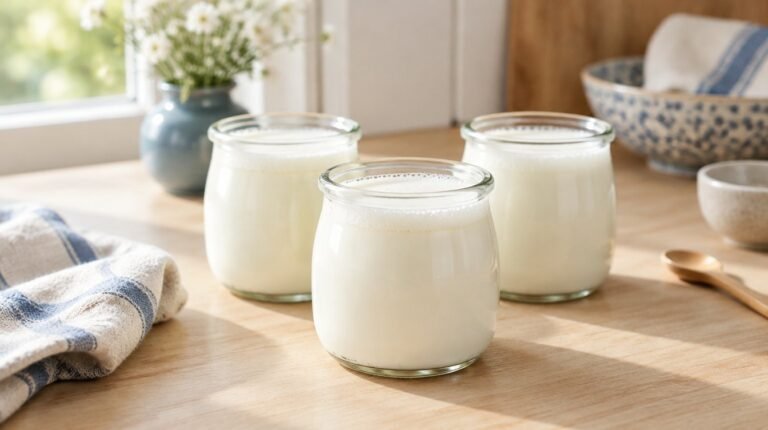
You made yogurt with ultra-pasteurized milk, incubated it for the usual time, and opened the jar to find milk. Maybe it is slightly thicker or a little tangy, maybe it is unchanged. Because the carton says ultra-pasteurized, the milk looks like the obvious suspect.
It usually is not. Ultra-pasteurized means the milk was heated to at least 280°F for at least 2 seconds, so it keeps longer in the fridge. Regular pasteurization uses lower heat, such as 161°F for 15 seconds (21 CFR 131.3). That extra heat does not stop milk from culturing. University of Guam Extension lists ultra-high-temperature (UHT) milk alongside fresh pasteurized milk as a yogurt base (University of Guam Extension).
What ultra-pasteurized milk does change
It sets later and softer. In one study, milk heated to 143°C (289°F) for 6 seconds took longer to start gelling than milk given a conventional yogurt heat treatment of 85°C for 30 minutes. After a day in storage, the UHT yogurt had lower viscosity and gel strength (Krasaekoopt et al., Journal of Food Science, 2004). That study used fortified milk at 16 to 20% solids, so home results will differ, but the direction is clear.
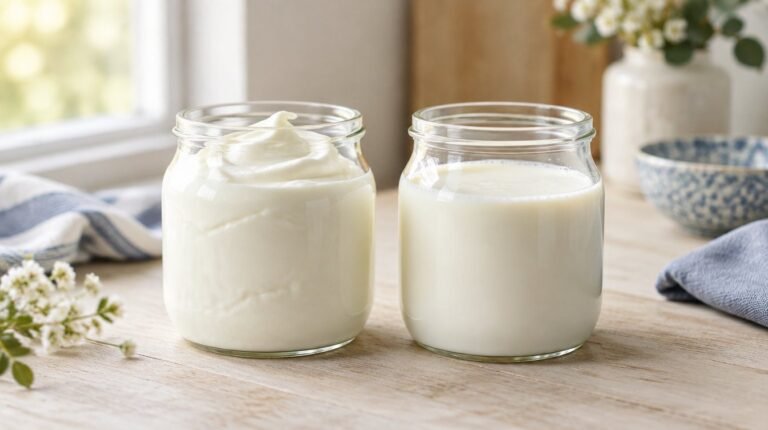
So if your batch is tangy and loosely set, it worked. It just needed more time or a little more body. If it is sweet, smells like plain milk and never thickened, the culture never got going, and the reasons below are far more likely than the milk.
Most likely cause: the starter died or never had a chance
- The milk was too hot. Many people heat ultra-pasteurized milk anyway. If the starter goes in before the milk cools to about 107 to 110°F, the heat can kill it (University of Guam Extension).
- The milk was too cold. The no-heat shortcut skips the stove, but milk straight from the fridge is about 40°F. Illinois Extension lists yogurt that was too cold before incubating as a cause of thin yogurt (University of Illinois Extension).
- The starter was weak or dead. Starters with dead bacteria will not make yogurt. Use store yogurt before its date, and homemade yogurt as a starter within 5 to 7 days (University of Illinois Extension). See our yogurt starter guide.
How to fix it

First decide what you have, then set up the next batch so the culture gets a fair start.
- Smell and taste a spoonful. Tangy and partly thick means it cultured. Put it back at 108 to 112°F for another 2 hours and check again; Illinois Extension recommends exactly this test-and-wait step when yogurt still looks like milk (University of Illinois Extension).
- Sweet, milky and liquid after 8 to 10 hours means it failed. Extension guidance blames failure to coagulate in that window on temperature, a poor starter, or milk that was too hot when the starter went in (University of Guam Extension). Discard it rather than re-inoculating; see the last section.
- For the next batch, add body if you like. Whisk about 1/4 cup of nonfat dry milk into each quart of cold milk. Extension recipes use it for a thicker set (University of Illinois Extension; University of Kentucky Extension).
- Warm the milk to 110°F and check it with a thermometer. With freshly opened commercial milk you can skip the long high-heat step; the yogurt will just be a bit thinner (University of Guam Extension).
- Add the starter at 108 to 112°F. Stir 2 tablespoons of fresh plain yogurt with live cultures into a cup of the warm milk, then mix it back into the quart (University of Illinois Extension). For a powdered culture, follow its directions.
- Incubate covered and undisturbed at 108 to 112°F for 8 to 10 hours. Ultra-pasteurized milk may need the longer end. Check the temperature in a jar of water, not just the dial; our page on temperature drift explains why.
- Refrigerate at 40°F or below. Yogurt firms further as it cools (University of Kentucky Extension).
Secondary causes
- The wrong temperature for the culture. Some probiotic cultures want much lower heat than standard yogurt bacteria. Check our incubation temperature by strain table.
- Equipment that was not clean. Illinois Extension lists unclean equipment as a cause of yogurt that is not firm (University of Illinois Extension).
- Moving the jars. Yogurt should incubate undisturbed (University of Illinois Extension).
- It set, just softly. If the texture is the only complaint, see yogurt is runny or thin.
Prevention
- Use a thermometer twice: when you add the starter and in the incubator.
- Bring cold ultra-pasteurized milk to 110°F before culturing.
- Use fresh starter, and confirm success with these checks.
When to throw a batch out
Yogurt is protected by its acid. Lactic acid drops the pH below 4.6 and helps keep spoilage and harmful bacteria from growing (University of Guam Extension). A batch that never soured has no such protection.
- No tang after a full incubation. It spent hours between 40°F and 140°F, where bacteria grow rapidly (USDA FSIS). Throw it out instead of trying to rescue it.
- Any mold. USDA says to discard moldy yogurt, since moist foods can be contaminated below the surface (USDA FSIS).
- Odd smells or colors, such as a yeasty smell or a pink tint.
Batches that did culture keep in the refrigerator at 40°F or below; eat them within 14 days (University of Illinois Extension).
Related topics
- Can You Use Ultra Pasteurized Milk to Make Yogurt?: the longer answer on UP milk.
- Yogurt Did Not Set: the general version of this problem.
- Yogurt Never Thickened After 36 Hours: for long probiotic ferments.
- Yogurt Temperature: heating, cooling and incubation targets.
- Best Milk for Making Yogurt: how milk types compare.
Sources
- 21 CFR 131.3: Definitions (pasteurized and ultra-pasteurized) (Electronic Code of Federal Regulations)
- Krasaekoopt W, et al. Comparison of Texture of Yogurt Made from Conventionally Treated Milk and UHT Milk Fortified with Low-heat Skim Milk Powder (Journal of Food Science, 2004)
- Making Yogurt at Home (University of Guam Cooperative Extension, 2016)
- Making Yogurt at Home (University of Illinois Extension, 2024)
- Making Yogurt at Home (University of Kentucky Cooperative Extension Service)
- Leftovers and Food Safety (USDA Food Safety and Inspection Service)
- Molds on Food: Are They Dangerous? (USDA Food Safety and Inspection Service)