Best Milk for Making Yogurt: Compared (2026)
Best Milk for Making Yogurt: Our Picks
Yogurt is a protein gel, so the milk with the most protein and a little fat usually makes the thickest, smoothest batch. Here is how the common choices rank for home yogurt. Product facts come from each brand’s own page, and labels were checked in October 2026.
- Best overall: pasteurized whole cow’s milk. Reliable, widely sold, and its fat gives a creamy, stable yogurt.
- Best for thick, high-protein yogurt without straining: ultra-filtered milk, such as fairlife Whole Ultra-Filtered Milk (13 g protein per cup on the label).
- Best for lactose-sensitive households: lactose-free milk, such as LACTAID Lactose-Free Whole Milk.
- Best budget upgrade: 2% or skim milk with nonfat dry milk powder stirred in before heating.
- Best for convenience: ultra-pasteurized milk, which has already been heated hard and keeps longer in the fridge.
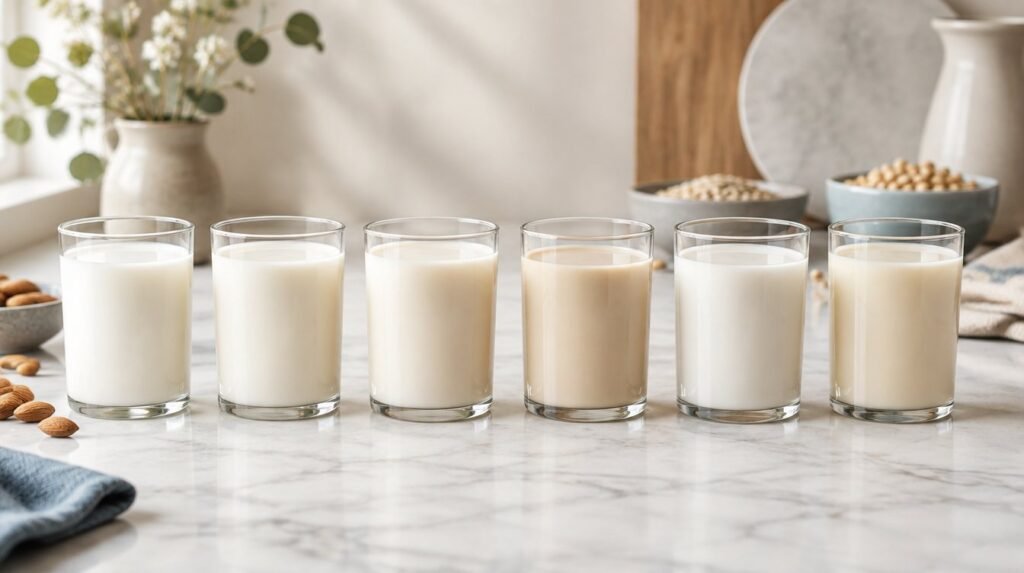
- Best plant-based base: unsweetened soy milk, the only common plant milk with protein close to dairy.
- Skip: raw milk, unless you pasteurize it yourself first.
Ultimate Gut is published by Ultimate Health Solutions, which sells a yogurt maker, probiotic capsules and an inulin fiber supplement. None of the products reviewed here are ours, and these brands don’t pay us.
Milks for yogurt compared
Protein and fat per cup come from USDA FoodData Central for generic milks and from brand labels for named products. Protein is the main thing that sets yogurt; fat mostly changes richness and how much whey separates.
| Milk | Protein per cup | Fat per cup | What to expect | Heat step |
|---|---|---|---|---|
| Whole cow’s milk (USDA) | 7.7 g | 7.9 g | Creamy, medium-thick, little whey | Heat to 185°F |
| 2% milk (USDA) | 8.1 g | 4.8 g | Slightly softer and tangier tasting | Heat to 185°F |
| Skim milk (USDA) | 8.3 g | 0.2 g | Thinner, more whey unless you add dry milk | Heat to 185°F |
| fairlife Whole Ultra-Filtered (label) | 13 g | 8 g | Thick, Greek-like body | Gentle heat |
| LACTAID Whole, lactose-free (label) | 8 g | 8 g | Like whole milk, slightly sweeter | Ultra-pasteurized; gentle heat |
| a2 Milk Whole (label) | 8 g | 9 g | Like regular whole milk | Heat to 185°F |
| Goat milk (USDA) | 8.7 g | 10.1 g | Soft, loose set, more whey | Heat to 185°F |
| Half-and-half (USDA) | 7.6 g | 27.8 g | Very rich, almost like sour cream | Heat to 185°F |
| Unsweetened soy milk (USDA) | 6.9 g | 3.9 g | Sets, often softer; flavor varies | Warm only |
| Unsweetened almond or oat milk (USDA, USDA) | 1.6 to 1.9 g | 3.7 to 6.6 g | Will not set without a thickener | Warm only |
Generic per-cup values are calculated from USDA’s per-100-gram figures using USDA’s cup weights (about 240 grams for the plant milks, which have no USDA cup weight listed).
How each milk stacks up
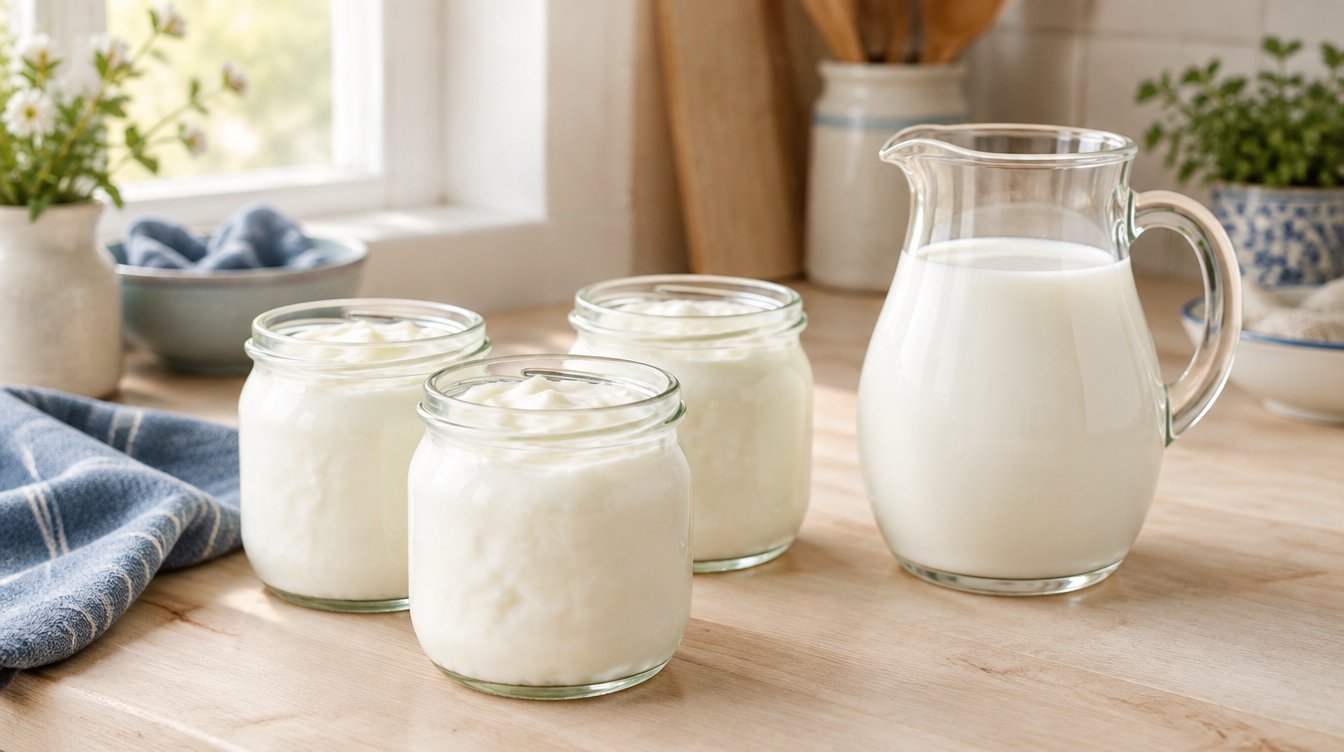
Whole cow’s milk: best overall
Plain pasteurized whole milk is the default for good reason. A 2025 study made yogurt from milk at four fat levels, from 0.1% to 3.5%, and stored it for 21 days. The higher-fat yogurts released less whey and scored higher with tasters, while the 0.1% yogurt lost the most liquid, about 51% syneresis (Çelik and Karakus, Journal of Dairy Research, 2025). Regular milk is also the easiest to find and the one most home recipes are written for, including the University of Alaska Fairbanks Extension guide (UAF Extension).
2% and skim milk: best budget upgrade with dry milk
Lower-fat milks have as much protein as whole milk, or a touch more, but less fat to hold the gel together, so they tend to make thinner yogurt with more whey. The fix is cheap: add nonfat dry milk. The UAF guide uses 1/3 cup of nonfat dry milk per quart of whole or low-fat milk and 2/3 cup per quart of nonfat milk, noting that added milk solids give “a firmer set.” Stir it in before heating; added to hot milk, some proteins clump into strings (UAF Extension). USDA lists nonfat dry milk at 36 g of protein per 100 g, so a little goes a long way.
Ultra-filtered milk: best for thick, high-protein yogurt
Ultra-filtered milk is pushed through a fine filter that holds back protein and lets some water and lactose through. fairlife Whole Ultra-Filtered Milk lists 13 g of protein and 6 g of sugar per cup, compared with 8 g and 12 g in regular milk, and its ingredients are ultra-filtered milk, lactase enzyme and vitamins A and D (fairlife). More protein in the milk means a firmer gel. Dairy researchers use the same idea at industrial scale: concentrating skim milk by ultrafiltration before fermentation produced a Greek-style yogurt with about 10% protein without straining afterward (Paredes Valencia et al., Foods, 2018). The trade-offs are price and a milder, slightly sweet taste, since the label says it is lactose-free.
Ultra-pasteurized milk: best for convenience
Regular pasteurization can be as mild as 161°F for 15 seconds. Ultra-pasteurized milk is heated to at least 280°F for at least 2 seconds, which is why it lasts longer in the fridge (21 CFR 131.3). Because it has already been heated far past 185°F, some home cooks skip the long hold and simply warm it to culturing temperature. In the 2025 study above, yogurt made from pasteurized milk was slightly firmer than yogurt from UHT milk, but the difference was not statistically significant (Çelik and Karakus, 2025). See our full answer on using ultra-pasteurized milk for yogurt.
Lactose-free milk: best for lactose-sensitive households
Lactose-free milk is real milk with lactase enzyme added. LACTAID says the enzyme splits lactose into glucose and galactose, and its whole milk label lists 8 g of protein, 12 g of sugars and “Ultra Pasteurized” (LACTAID). The cultures can still acidify the milk, and food scientists make yogurt from lactose-hydrolyzed milk; one 2026 study described it as a base for naturally sweeter yogurt without added sugar (Fidan et al., Food Science & Nutrition, 2026). Expect a slightly sweeter result. Regular yogurt already has less lactose than milk, so some lactose-sensitive people do fine with either.
A2 milk: fine for yogurt, digestive claims are mixed
a2 Milk comes from cows that produce only the A2 type of beta-casein protein. Its whole milk label lists 8 g of protein and 9 g of fat per cup, with milk and vitamin D3 as the only ingredients, so it behaves like regular whole milk in a yogurt pot (a2 Milk). The brand says it is easier on digestion. The trials are mixed: a 2026 pilot crossover trial in people who felt unwell after milk found no significant differences in symptoms or gut transit between A2 and regular milk (Greenway et al., Nutrition Journal, 2026), and a 2025 trial of 36 milk-sensitive adults found symptoms tracked lactose more than casein type (Mannila et al., Journal of Dairy Science, 2025).
Goat milk: tangy, soft and loose
Goat milk has a little more protein and fat than cow’s milk per cup (USDA), but its yogurt is famously soft. A 2026 study comparing yogurts from cow, goat, sheep and buffalo milk found goat milk yogurt had the weakest water-holding capacity and the most whey separation, while sheep and buffalo milk yogurts were the thickest (Demirhan et al., Food Science & Nutrition, 2026). Adding nonfat dry milk or straining helps. Goat milk is a good choice if you like its flavor, not if you want a firm set.
Half-and-half: richest result
Half-and-half has about the same protein as milk but more than three times the fat of whole milk (USDA). The result is dense and rich, closer to a mild sour cream. Cream and milk are both basic dairy ingredients under the federal yogurt standard (21 CFR 131.200). Our article on making yogurt with half-and-half covers the method.
Soy milk: best plant-based base
Unsweetened soy milk has about 7 g of protein per cup, close to dairy, but only about 1 g of sugar (USDA). Yogurt bacteria make their acid from sugar, so you may need to add a little sugar to give the culture something to ferment. The set is usually softer than dairy yogurt and the flavor depends on the brand. Pick a soy milk with only soybeans and water if you can, because added gums and oils can change the texture.
Almond, oat and coconut milk: hardest to set
Unsweetened almond and oat milks have under 2 g of protein per cup (almond, oat), which is not enough to form a gel on their own. Store-bought plant yogurts usually list thickeners such as starch or pectin, or added protein. If you want to try, plan on a thickener and a dedicated plant-based starter. Our guide to coconut yogurt walks through one approach.
Raw milk: skip it, or pasteurize it first
The CDC warns that raw milk and products made from it can carry Campylobacter, E. coli, Listeria, Salmonella and other germs, and that pasteurized milk offers the same nutritional benefits without those risks (CDC). Of 46 raw milk outbreaks reported to the CDC from 1973 to 1992, 87% happened in states where selling raw milk was legal (Headrick et al., American Journal of Public Health, 1998). Fermenting does not make raw milk safe by itself. If you have raw milk, UAF says to heat it to 165°F first (UAF Extension). More in our piece on raw milk yogurt.
How to make yogurt with the milk you choose
The basic method works for any dairy milk above. It follows the UAF Extension guide (UAF Extension); our step-by-step how to make yogurt at home has more detail.
- Add dry milk now if you are using it. Whisk 1/3 cup of nonfat dry milk per quart into cold milk (2/3 cup for skim).
- Heat to 185°F. Hold at 185 to 200°F for 10 minutes for a softer set or up to 20 minutes for a firmer one. With ultra-pasteurized or ultra-filtered milk, many people skip the long hold.
- Cool to 112 to 115°F. A sink of cold water speeds this up.
- Add 1/4 cup of plain yogurt with live cultures per quart, or the amount on a freeze-dried starter packet.
- Incubate at about 110°F for 4 to 7 hours, without stirring or bumping the jars.
- Chill at 40°F or below. UAF says homemade yogurt keeps about 10 to 21 days.
How We Compared
We did not make or taste test batches. We compared what is published: USDA nutrient data, brand labels (checked October 2026), federal definitions and peer-reviewed dairy research. We ranked milks on these points, in this order:
- Protein and milk solids, because casein is what forms the yogurt gel.
- Fat, which affects creaminess and how much whey separates.
- Heat treatment, using the federal definitions of pasteurized and ultra-pasteurized.
- Sugar available to the culture, since the bacteria need it to make acid.
- Safety, with raw milk ranked last.
- Availability and ease, favoring milks sold in most supermarkets.
What labels can tell you: protein, fat, sugar, ingredients and often whether the milk is ultra-pasteurized. What they can’t: how your particular starter will behave, the exact heat treatment of milk labeled only “pasteurized,” or how firm the finished yogurt will be. Small changes in temperature and time matter as much as the carton you pick. For a wider texture chart, see our milk type vs yogurt texture matrix.
Related topics
- Yogurt: The Complete Guide: what yogurt is, nutrition and research.
- Protein Content of Yogurt by Milk and Straining Method: the numbers behind thicker yogurt.
- How to Incubate Yogurt: holding the right temperature.
- Yogurt Starter: choosing a culture for your milk.
- Best Milk for Gut Health: if you are choosing milk to drink.
Sources
- Making Yogurt at Home (FNH-00062) (University of Alaska Fairbanks Cooperative Extension Service)
- 21 CFR 131.3 Definitions (Electronic Code of Federal Regulations)
- 21 CFR 131.200 Yogurt (Electronic Code of Federal Regulations)
- Raw Milk (Centers for Disease Control and Prevention)
- fairlife Whole Ultra-Filtered Milk (fairlife, label checked October 2026)
- LACTAID Lactose-Free Whole Milk (LACTAID, label checked October 2026)
- a2 Milk Whole Milk (a2 Milk Company, label checked October 2026)
- Milk, whole, 3.25% milkfat, Milk, reduced fat, 2%, Milk, nonfat, Milk, dry, nonfat, Milk, goat, Cream, half and half, Soymilk, unsweetened, Almond milk, unsweetened and Oat milk, unsweetened (USDA FoodData Central)
- Çelik ÖF, Karakus B. Effect of fat content, heat treatment, and vitamin D addition on physicochemical characteristics of yoghurt (Journal of Dairy Research, 2025)
- Demirhan ŞŞ, et al. Comparison of physicochemical, microbiological, and sensory properties of yogurt made from cow, goat, sheep, and buffalo milk with and without probiotic cultures (Food Science & Nutrition, 2026)
- Paredes Valencia A, et al. Effect of ultrafiltration of milk prior to fermentation on mass balance and process efficiency in Greek-style yogurt manufacture (Foods, 2018)
- Fidan M, et al. Techno-functional properties and antioxidant activities of lactose-hydrolyzed stirred yoghurts fortified with hawthorn fruit (Food Science & Nutrition, 2026)
- Greenway FL, et al. Comparative effects of conventional cow’s milk versus milk free of A1-type beta-casein on gastrointestinal physiology and symptoms of digestive discomfort (Nutrition Journal, 2026)
- Mannila E, et al. Tolerance of protein-hydrolyzed lactose-free A1 milk and A2 milk in lactose-tolerant and lactose-intolerant volunteers (Journal of Dairy Science, 2025)
- Headrick ML, et al. The epidemiology of raw milk-associated foodborne disease outbreaks reported in the United States, 1973 through 1992 (American Journal of Public Health, 1998)