Yogurt Foamed During Culturing: Causes and Fixes
What foam during culturing looks like
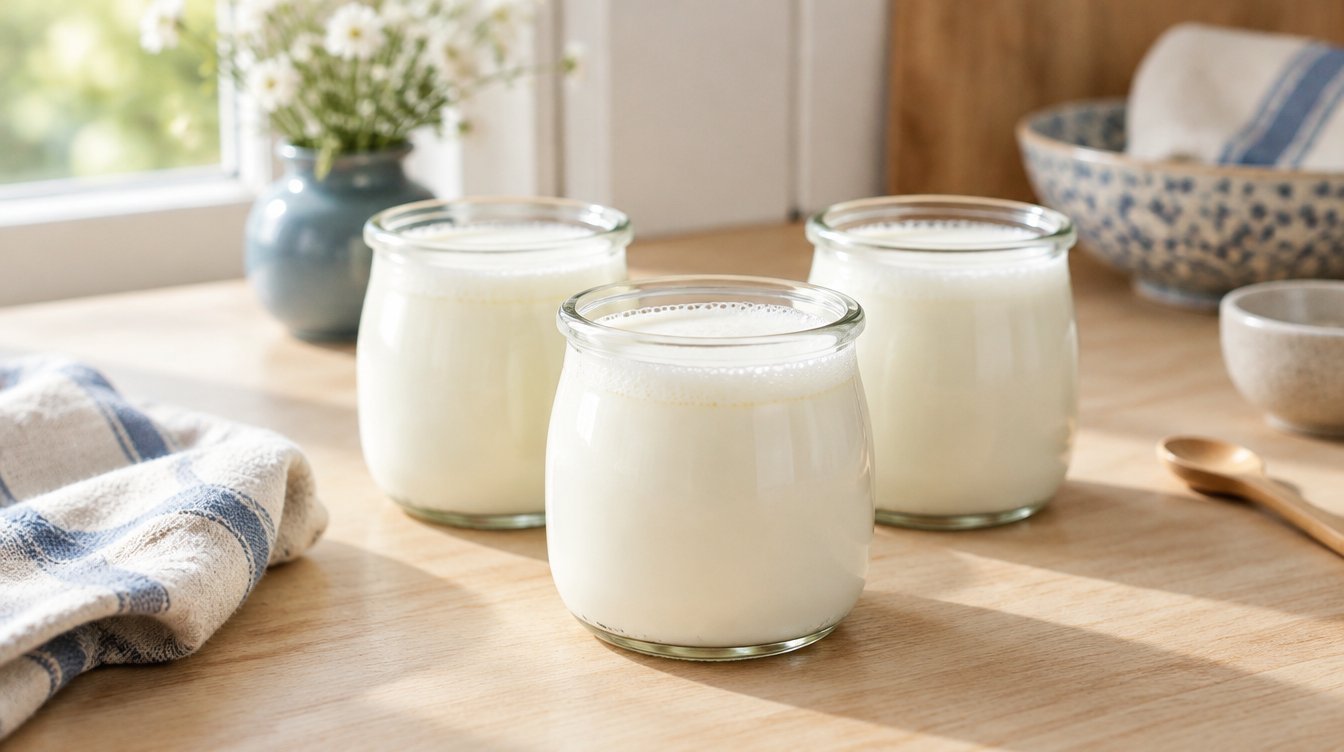
You check your jars partway through and see a layer of froth or tiny bubbles on top. It can be a thin, pale cap that sits on otherwise normal yogurt, or bubbles and small holes running all through the set curd.
The two look similar but usually have different causes. A foam cap on top that was there from the start is almost always trapped air, which is harmless. Bubbles throughout the yogurt, a domed lid or a beery smell point to gas made by microbes, and that needs a closer look.
The most likely cause: air whisked into warm milk
Milk foams easily. A review in Critical Reviews in Food Science and Nutrition calls milk proteins excellent foaming agents and notes that heat treatment, temperature and the way milk is agitated all change how much foam forms and how long it lasts.
The usual culprits are whisking the starter in vigorously, using a stick blender, pouring from a height, or shaking a jar to mix. The bubbles rise while the milk is still liquid, and as the yogurt sets they get locked in place as a spongy cap. The yogurt underneath is fine.
How to fix a foamy batch
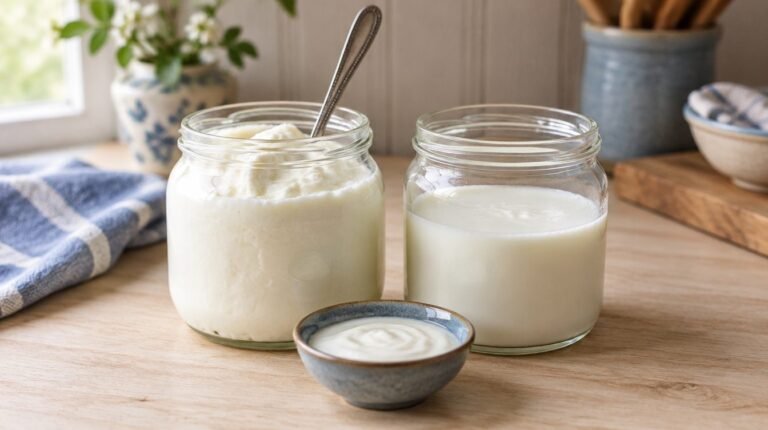
- Finish incubation as planned, then check the batch. Plain trapped air leaves the yogurt below smooth, set and tangy, with a clean sour smell.
- Chill the jars for at least 4 hours so the yogurt firms up.
- Skim off the foam with a spoon, or stir it in. It is the same yogurt with air in it.
- If you see bubbles all the way through, a raised lid or an off smell, stop and go to the throw-out section below before eating any.
Other causes worth checking
Your culture makes gas
Not every yogurt culture is the same. Some lactic acid bacteria are heterofermentative, meaning they turn sugar into lactic acid, ethanol, acetate and carbon dioxide, according to a 2025 review in Foods. Lactobacillus reuteri is one of them; it is described as a heterofermentative lactic acid bacterium. Long ferments of 24 hours or more with these cultures can leave fine bubbles in the curd. Our L. reuteri guide covers how these batches usually look.
If you used a classic culture and see heavy bubbling throughout, suspect contamination before blaming the culture.
Yeast got in
Yeasts can make yogurt gassy. In one study of contaminated yogurts from an industrial lab, all were full of yeast, but only the fruit yogurts with added sugars had swollen with gas. Another study traced swollen packs of yogurt to a galactose-fermenting yeast. Adding fruit, jam, honey or syrup before incubation gives yeasts extra fuel, which is one reason University of Kentucky Extension advises adding flavorings just before serving.
The milk or equipment was not clean enough
University of Guam Extension links off tastes to a contaminated starter or unclean jars, and University of Illinois Extension lists unclean equipment among the reasons yogurt does not firm up. Missouri Extension notes that heating milk to 180°F kills competing bacteria, so skipping that step gives other microbes a head start.
How to prevent foam next time

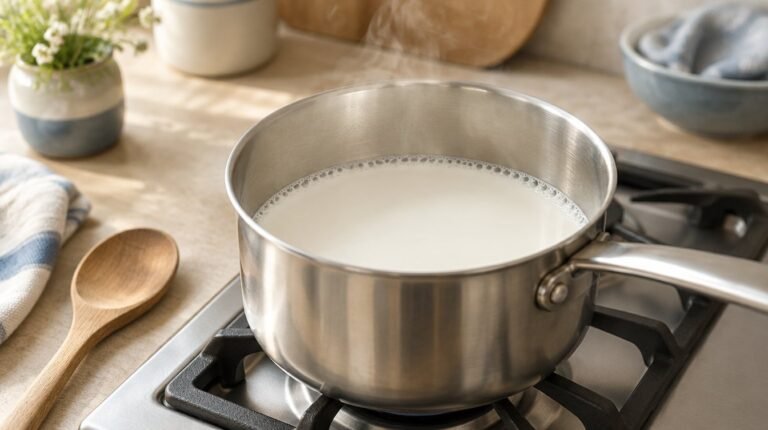
- Heat the milk to 180°F, then cool it to 108 to 115°F for classic cultures, as Illinois Extension and University of Missouri Extension describe. Check our yogurt temperature guide for other cultures.
- Skim off any skin or foam that forms while the milk cools. Missouri Extension recommends removing that film to avoid a poor texture.
- Mix the starter into about ½ cup of the warm milk first, as Guam Extension suggests, then stir it gently into the rest with a spoon. Skip the blender.
- Let the milk rest for 2 to 3 minutes so bubbles rise, skim them, then pour slowly down the side of each jar.
- Use jars and utensils washed in hot soapy water and rinsed well.
- Add fruit, honey or other sweeteners after the yogurt is cultured and chilled.
- Keep a steady incubation temperature and chill promptly once the batch is done. See how to incubate yogurt.
When to throw a batch out
A foam cap on a batch that smells clean and sour is safe to skim or stir. Signs of microbial gas or growth are different. Guam Extension advises discarding any yogurt with visible signs of microbial growth or odors other than the fresh acidity of yogurt.
- Domed lids or bubbles throughout together with a yeasty, beery, alcoholic or rotten smell: discard. See yogurt smells yeasty.
- Mold of any kind: discard the whole jar. USDA says soft foods like yogurt can be contaminated below the surface.
- Pink, orange or slimy patches: discard. See yogurt has a pink or orange tint.
- Jars left warm after incubation for more than 2 hours (1 hour above 90°F): USDA advises throwing perishable food out.
Do not taste a suspicious batch to check it. Start fresh with new milk, a fresh starter and clean jars. If your batch rose high enough to spill, batch overflowed covers that problem.
Related topics
- Yogurt Smells Yeasty: what a yeast problem looks and smells like.
- Batch Overflowed: when jars bubble over during culturing.
- Lactobacillus reuteri: a gas-producing culture often used in long ferments.
- How to Incubate Yogurt: steady heat from start to finish.
- How to Verify Your Yogurt Actually Cultured: checks for a healthy batch.
Sources
- Ho TM, et al. Functionality of bovine milk proteins and other factors in foaming properties of milk: a review (Critical Reviews in Food Science and Nutrition, 2022)
- Al-Kharousi ZS. Highlighting lactic acid bacteria in beverages: diversity, fermentation, challenges, and future perspectives (Foods, 2025)
- Kristjansdottir T, et al. A metabolic reconstruction of Lactobacillus reuteri JCM 1112 and analysis of its potential as a cell factory (Microbial Cell Factories, 2019)
- Wrent P, et al. Assessment of the factors contributing to the growth or spoilage of Meyerozyma guilliermondii in organic yogurt (Microorganisms, 2015)
- Caggia C, et al. Identification of Pichia anomala isolated from yoghurt by RFLP of the ITS region (International Journal of Food Microbiology, 2001)
- Making Yogurt at Home (University of Illinois Extension)
- Preserve It Fresh, Preserve It Safe: 2019, No. 1 (University of Missouri Extension)
- Making Yogurt at Home (FP-01) (University of Guam Cooperative Extension, 2016)
- Making Yogurt at Home (IP-36) (University of Kentucky Cooperative Extension Service)
- Molds on Food: Are They Dangerous? (USDA Food Safety and Inspection Service)
- Leftovers and Food Safety (USDA Food Safety and Inspection Service)