Yogurt Separated into Curds and Whey: Causes and Fixes
What separated yogurt looks like
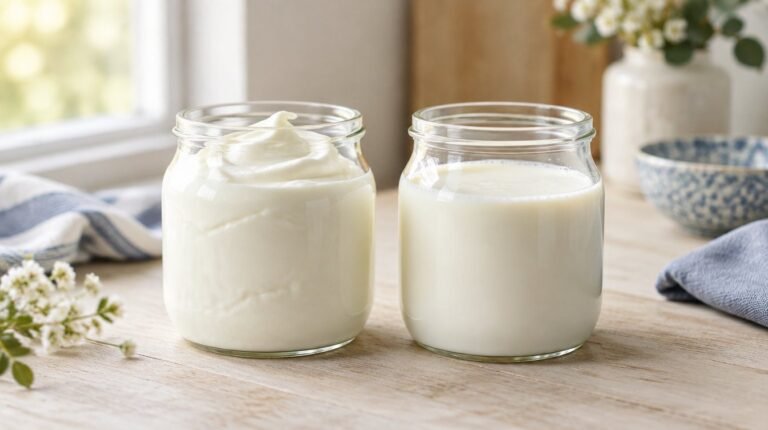
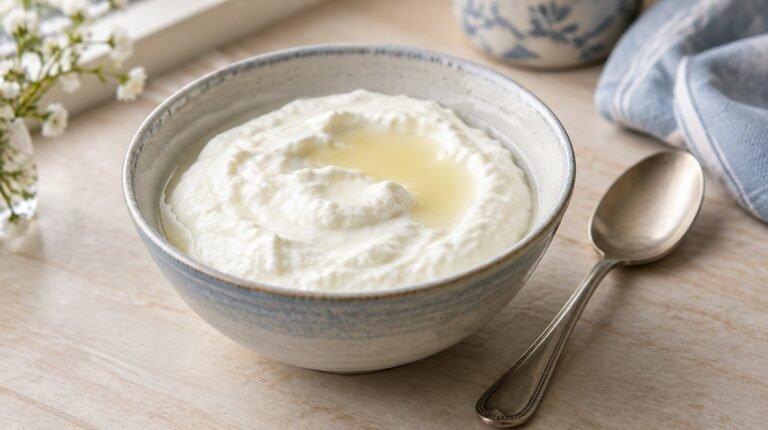
A thin layer of yellowish liquid on top of set yogurt is normal. That liquid is whey, and the University of Alaska Fairbanks Cooperative Extension calls the process syneresis, adding that “some syneresis is natural.” You can pour it off or stir it back in. Our guide to whey from yogurt covers that everyday case.
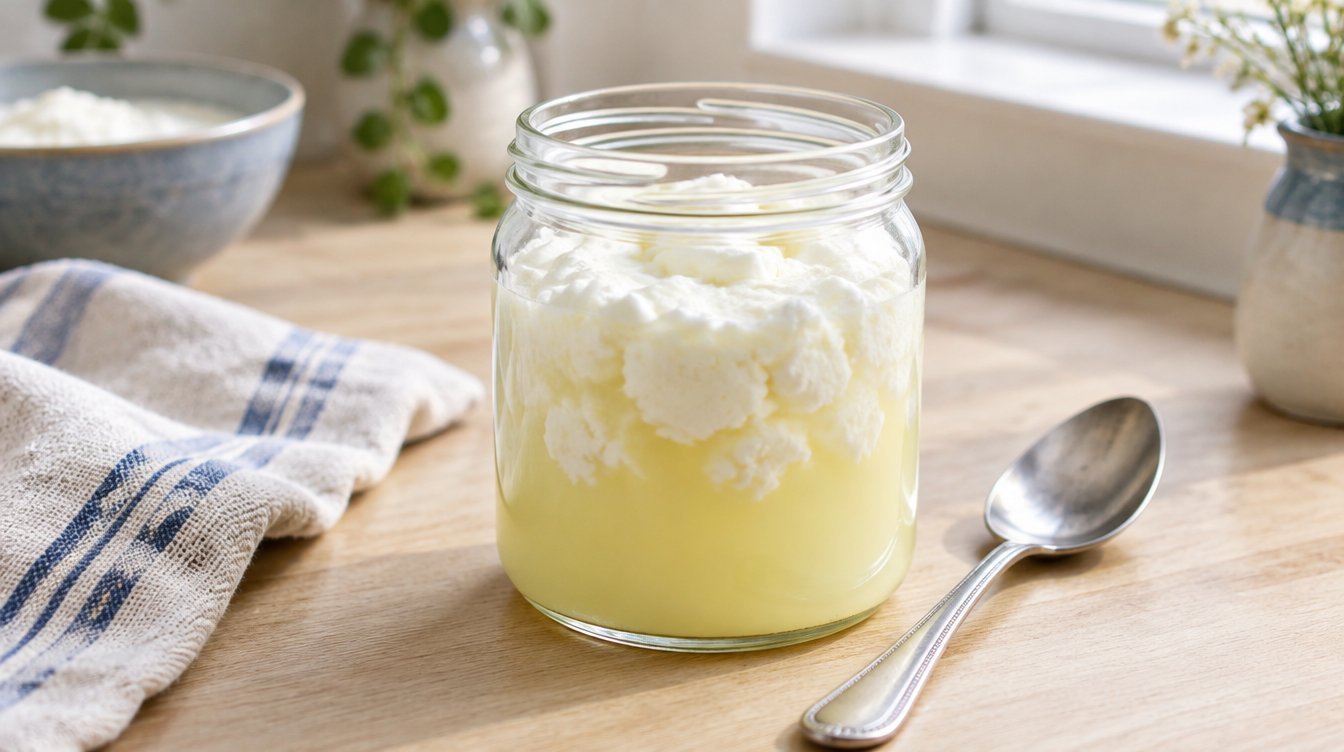
A batch that has separated into curds and whey has gone further. The gel has shrunk into lumpy or grainy curds sitting in a pool of whey, often pulled away from the sides of the jar. This usually means the culture overshot, not that it failed.
The most likely cause: too long or too hot
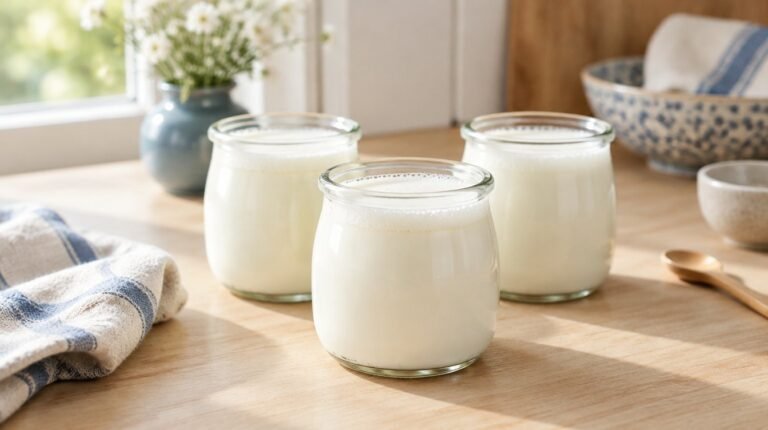
Over-incubation is the cause the extension services name first. University of Illinois Extension lists “yogurt incubated for too long” at the top of its causes of separation, and UAF and University of Guam Extension both name long incubation as a cause of excessive whey separation.
Heat is the other half. In a University of Wisconsin lab study, yogurt gels made at about 46°C (115°F) had more whey separation and a more open, porous structure than gels made at 40°C (104°F). The authors linked the whey loss to casein particles rearranging inside the gel (Lee and Lucey, 2004). A follow-up from the same lab found that warming a gel after it had formed raised whey separation, while cooling it lowered it (Peng et al., 2010).
Both studies used controlled lab cultures and conditions, so treat the numbers as a direction rather than a recipe. The practical message matches what the University of Kentucky Extension says: “wheying off” comes from incubation temperatures that are too high or uneven, slow cooling, or rough handling of the gel.
How to fix a separated batch
If the batch smells clean and sour and shows no odd colors or fuzz, it is usually still good to eat. It just needs a new job.
- Stop the ferment. Move the jars to the fridge at 40°F or below. Illinois says refrigeration stops the bacteria from making more acid.
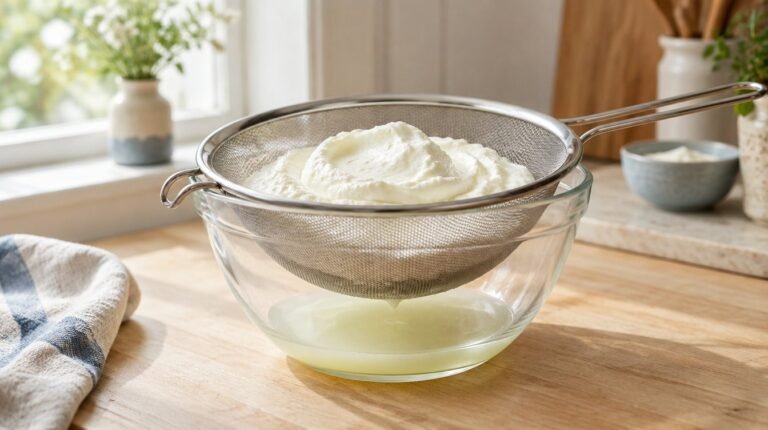
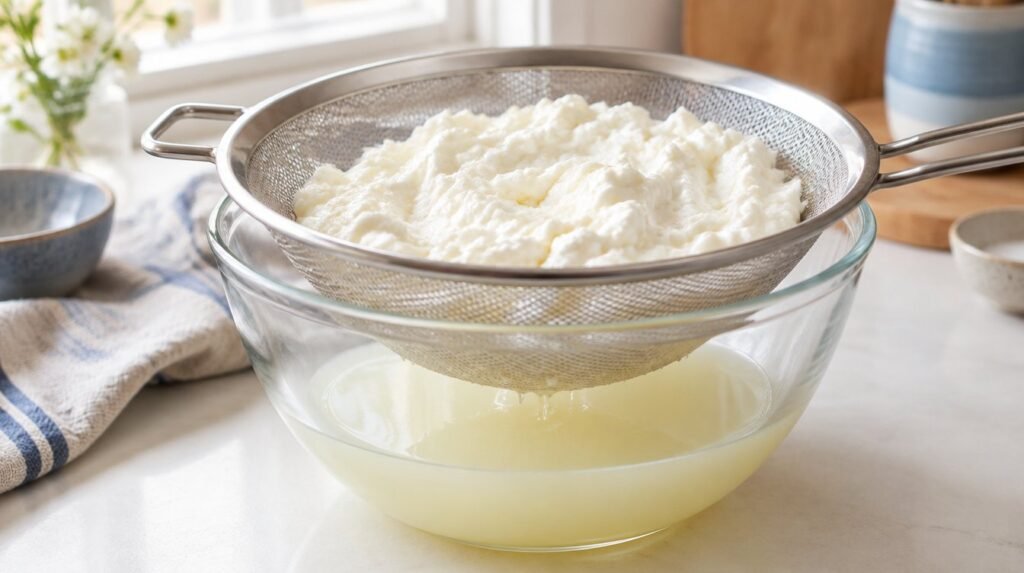
- Strain it into thick yogurt. Spoon the curds into a fine strainer or a double layer of cheesecloth over a bowl, cover, and drain in the fridge. Illinois gives 2 to 4 hours for Greek-style yogurt and 8 to 24 hours for yogurt cheese. See how to make Greek yogurt.
- Or whisk it smooth. If you want pourable yogurt, whisk the whey back in. Kentucky notes that whipping set yogurt with a wire whisk gives a very smooth, free-flowing yogurt.
- Keep the whey. Our recipes using whey has ideas for it.
- Adjust the next batch. Check it an hour or two earlier, or lower the incubator a few degrees.
Other causes to check
- Jars bumped during setting. Guam lists yogurt that was agitated while setting as a cause of excessive whey separation.
- Slow cooling afterward. Illinois lists yogurt not refrigerated soon after incubation, and Kentucky lists delayed cooling.
- Milk not heated enough. Illinois names this as a cause of separation. UAF has you hold milk at 185 to 200°F for 10 to 20 minutes, longer for thicker yogurt. A 2023 review of syneresis research points to heat treatments such as 85°C (185°F) for 30 minutes or 95°C (203°F) for 5 minutes as ways to reduce it (Arab et al., 2023).
- Low milk solids. Kentucky recommends adding nonfat dry milk at about 5% to prevent whey separating from the curd; its recipe uses 1 1/2 cups for a half gallon of milk. The 2023 review also lists milk powders among the additions that lower syneresis.
- Too little starter. In the Wisconsin study, whey separation rose as the amount of starter went down.
- Separation that appears days later. That is a storage issue; see yogurt separated after refrigeration.
How to prevent it next time
- Heat the milk to 180 to 185°F, as Illinois directs, and hold it there a while longer if your batches run thin and weepy.
- Incubate at a steady temperature. Illinois gives 108 to 115°F; separation-prone batches often do better toward the low end. Our yogurt temperature guide explains the range.
- Start checking at the early end of your usual time, and refrigerate as soon as the yogurt holds its shape.
- Leave the jars still until they set and go into the fridge.
- For a firmer set, stir nonfat dry milk into the cold milk before heating. Illinois suggests 1/4 cup per quart of skim milk.
When to throw it out
Separation by itself is not a safety problem. Other signs are. Guam advises discarding any yogurt with visible signs of microbial growth, or with any odor other than the clean acidity of fresh yogurt. Throw the batch out, without tasting it, if:
- You see pink, orange or other colored spots, or fuzzy mold. See yogurt with a pink or orange tint.
- It smells yeasty, cheesy, beery or rotten, or it fizzes. See yogurt smells yeasty.
- It sat out of the fridge for more than 2 hours after incubation, or 1 hour above 90°F, the limits FoodSafety.gov sets for perishable food.
Related topics
- Yogurt Tastes Too Sour: the same over-fermenting often shows up as sharp flavor.
- Yogurt Is Runny or Thin: for batches that set too loosely.
- How Long to Incubate Yogurt: timing that avoids overshooting.
- Homemade Greek Yogurt: what to do with strained curds.
- Milk Type vs Yogurt Texture: how milk choice affects firmness.
Sources
- Making Yogurt at Home (FNH-00062) (University of Alaska Fairbanks Cooperative Extension Service)
- Making Yogurt at Home (University of Illinois Extension, 2024)
- Making Yogurt at Home (FP-01) (University of Guam Cooperative Extension, 2016)
- Lee WJ, Lucey JA. Structure and physical properties of yogurt gels: effect of inoculation rate and incubation temperature (Journal of Dairy Science, 2004)
- Peng Y, et al. Physical properties of acid milk gels prepared at 37 degrees C up to gelation but at different incubation temperatures for the remainder of fermentation (Journal of Dairy Science, 2010)
- Making Yogurt at Home (IP-36) (University of Kentucky Cooperative Extension Service)
- Arab M, et al. A comprehensive review on yogurt syneresis: effect of processing conditions and added additives (Journal of Food Science and Technology, 2023)
- 4 Steps to Food Safety (FoodSafety.gov, U.S. Department of Health and Human Services)