Yogurt Separated After Refrigeration: Causes and Fixes
What you are seeing
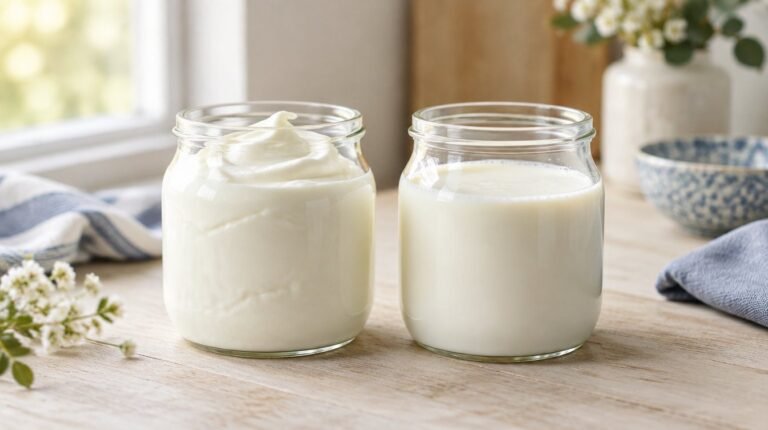
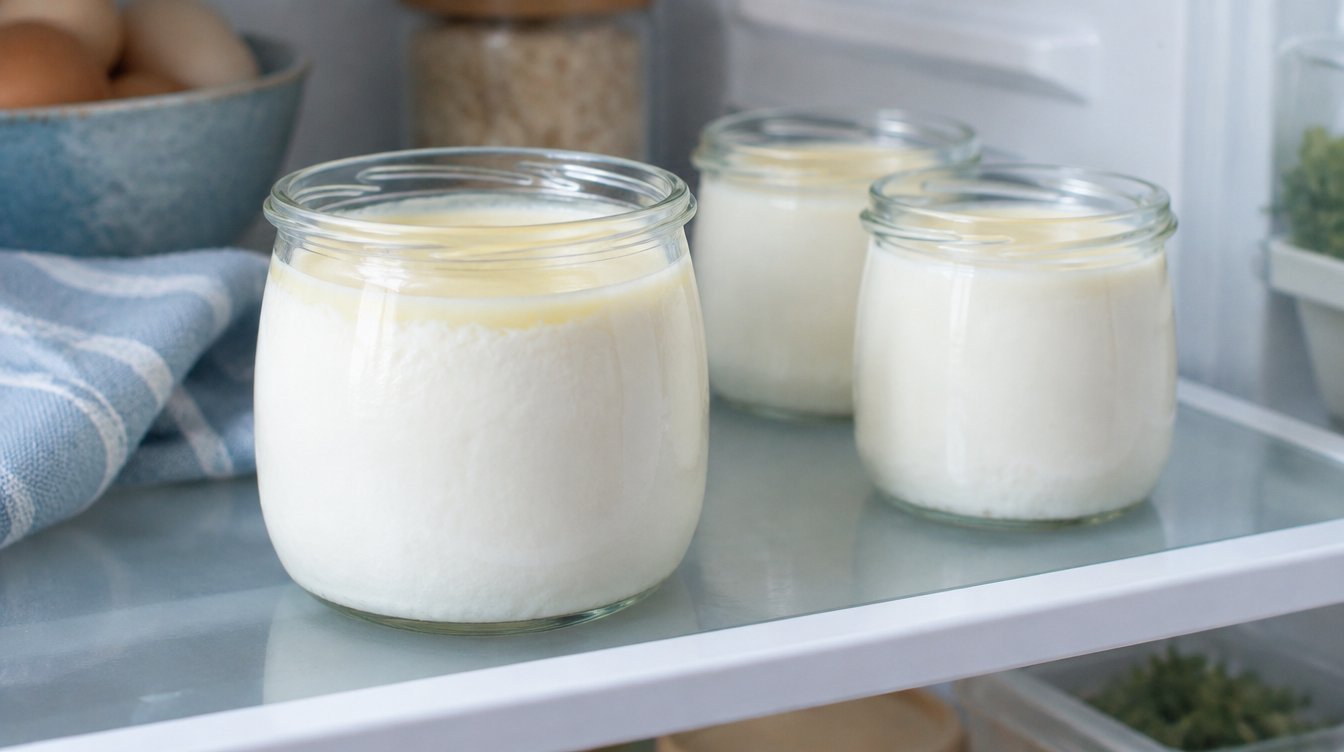
Your yogurt was smooth and set when it went into the fridge. A day or two later there is a layer of thin, yellow-green liquid on top, or a pool of it around the edges and in every spot you scooped from. That liquid is whey, the watery part of milk, and the process is called syneresis or wheying-off.
University of Alaska Fairbanks Extension notes that some whey separation is natural. A 2002 review by dairy scientist John Lucey describes wheying-off as a common yogurt defect whose exact causes are still not fully understood. A little whey is not a safety problem. A lot of whey every batch usually points to how the yogurt was made.
The most likely cause: the yogurt fermented too long
The extension guides agree on the main driver. UAF Extension warns that incubating for several hours after the yogurt has set produces more acid, a tarter taste and more whey, and advises refrigerating as soon as a firm set forms. Washington State University Extension lists incubation that runs too long and forms too much acid as a cause of whey separation, and University of Illinois Extension lists over-incubation, not refrigerating soon after incubation, and incubating too hot or too cold.
Lab research points the same way. In a 2009 University of Wisconsin study, longer fermentation times led to more whey separation, likely because more calcium phosphate dissolved from the milk proteins and let them rearrange. A 2004 study from the same lab found more whey separation in gels made at about 46°C (115°F) than at 40°C (104°F), and when less starter was used.
How to fix the batch you have

- Stir it back in. Use a clean spoon and fold the whey into the yogurt. Illinois Extension gives the same advice for drinkable yogurt that separates: stir to recombine.
- Or pour it off. Tip the container over the sink and let the whey run out for a slightly thicker, tangier yogurt.
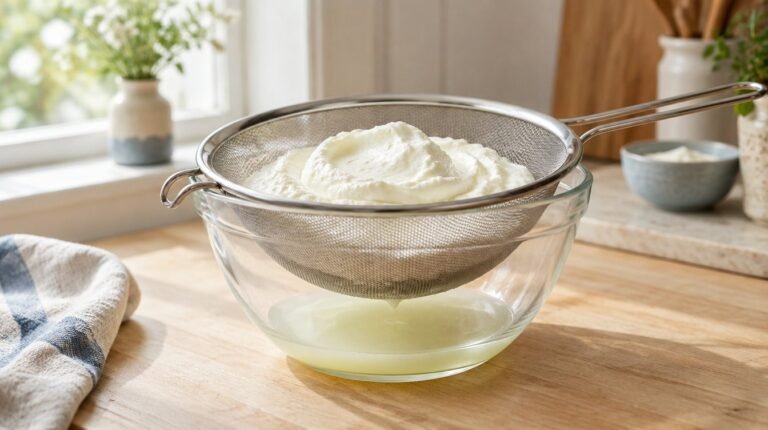
- Or strain it. Turn a weepy batch into Greek-style yogurt by draining it in a lined strainer, covered, in the refrigerator for 2 to 4 hours (Illinois Extension).
- Keep it cold. Return it to the fridge at 40°F or below right after you serve it.
The whey is edible. Whey from yogurt explains what it is and ways to use it.
How to prevent separation next time
- Heat the milk well. Bring it to 180°F to 185°F (Illinois Extension) and hold it there for 10 to 20 minutes (UAF Extension). WSU Extension lists milk not heated to 180°F, or not held for 20 minutes, as a cause of whey separation.
- Add milk solids if your milk is low in fat. The Illinois recipe, made with 1 quart of milk, stirs ¼ cup of nonfat milk powder into the cold milk for a thicker yogurt. A 2023 review of yogurt syneresis found milk powder and other milk proteins help reduce whey separation.
- Use enough starter. Cool the milk to 108°F to 115°F and stir in 2 tablespoons of plain yogurt per quart, as the Illinois recipe does.
- Watch the clock. Incubate at 108°F to 115°F for 6 to 10 hours and start checking at 6 hours. The 2023 review notes that incubating around 40°C (104°F) helped reduce syneresis in studies, so if whey keeps appearing, try the low end of your range. See how long to incubate yogurt.
- Leave it alone while it sets. UAF Extension says agitating yogurt while it is setting causes excess whey. Do not move, tip or open the jars.
- Chill it right away. Move the jars to the refrigerator as soon as the yogurt is set and let them rest undisturbed for several hours before the first scoop.
Other causes to check
Scooping from a big container
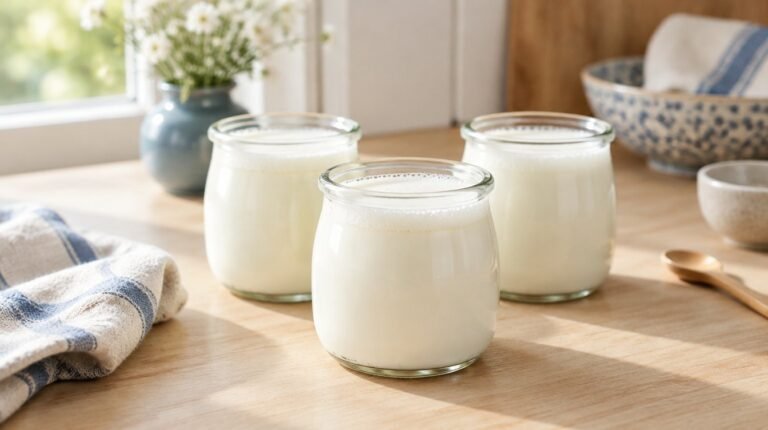
Each spoonful breaks the gel and leaves a hollow, and whey collects there. This is normal and does not mean the yogurt is spoiling. Portioning a batch into small jars means you open each one only once or twice.
Long probiotic ferments
Cultures fermented for 24 to 36 hours, such as Lactobacillus reuteri, often turn out more sour and weep more whey than an 8-hour yogurt, which fits the finding that longer fermentation increases whey separation. Fermentation time by culture explains typical times.
Temperature swings during incubation
A maker that runs hot or cycles widely can push yogurt past a good set. Yogurt maker temperature drift explains how to check yours with a thermometer.
Separation before it reached the fridge
If the yogurt came out of the maker as curds floating in whey, that is a different problem. See yogurt separated into curds and whey.
When to throw it out
Whey on its own is not spoilage. Throw the yogurt out if you see any of these:
- Mold. USDA advises discarding moldy yogurt, since high-moisture foods can be contaminated below the surface.
- An off smell or visible growth. UAF Extension says to discard yogurt with any odor other than a fresh, acidic smell. A pink or orange tint is another reason to toss it.
- Age. Illinois Extension says to eat homemade yogurt within 14 days, stored at 40°F or below. UAF gives about 10 to 21 days, so the shorter limit is the safer one.
Related topics
- Recipes Using Whey from Yogurt: ways to use the liquid you pour off.
- How Long Does Homemade Yogurt Last?: storage times and signs of spoilage.
- Yogurt Tastes Too Sour: Causes and Fixes: the same over-fermenting often causes both.
- Yogurt Temperature: the heating and incubation temperatures that matter.
- What Temperature Does Yogurt Need to Be Stored At?: fridge settings for homemade yogurt.
Sources
- Making Yogurt at Home (University of Illinois Extension)
- Making Yogurt at Home, FNH-00062 (University of Alaska Fairbanks Cooperative Extension Service)
- Yogurt Made Simple, FS173E (Washington State University Extension, 2015)
- Molds on Food: Are They Dangerous? (USDA Food Safety and Inspection Service)
- Lucey JA. Formation and physical properties of milk protein gels (Journal of Dairy Science, 2002)
- Peng Y, et al. Impact of preacidification of milk and fermentation time on the properties of yogurt (Journal of Dairy Science, 2009)
- Lee WJ, Lucey JA. Structure and physical properties of yogurt gels: effect of inoculation rate and incubation temperature (Journal of Dairy Science, 2004)
- Arab M, et al. A comprehensive review on yogurt syneresis: effect of processing conditions and added additives (Journal of Food Science and Technology, 2023)