Are Pickled Onions Good for Gut Health? What the Evidence Says
The verdict: a fine condiment, rarely a probiotic
Most pickled onions are made with vinegar, not fermentation, so they carry no live cultures. They keep the onion’s fructans, a fiber that feeds gut bacteria, and add acid, salt and often sugar. Onions fermented in salt brine and kept refrigerated are a true fermented food and may contain live microbes. Neither kind has been tested for gut health in human trials, so treat them as a tasty extra, not a gut remedy.
What the research shows
Most pickled onions are not fermented
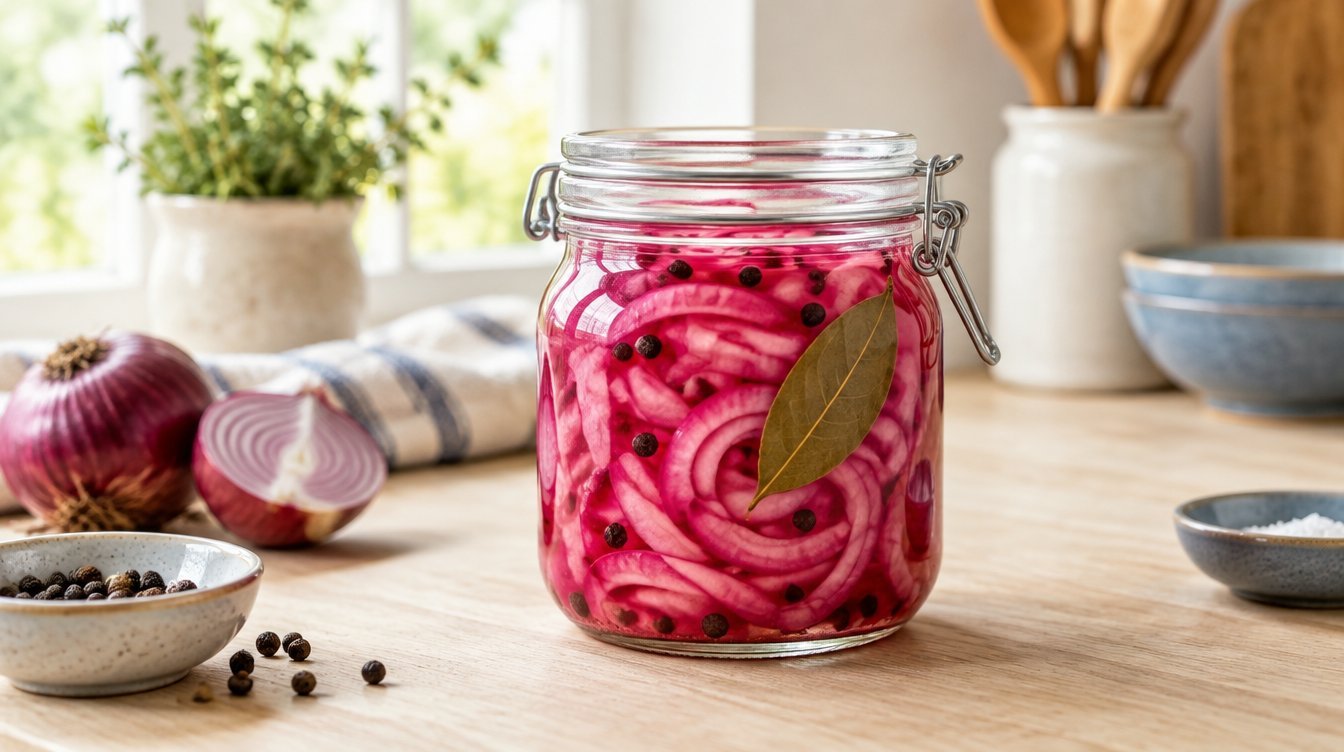
The National Center for Home Food Preservation draws a clear line. Fermented pickles such as regular dills and sauerkraut ferment in brine for about three weeks, while “fresh-pack or quick-process pickles are not fermented”; they are covered with vinegar and seasonings instead (NCHFP). The center’s tested pickled pearl onion recipe is a good example: onions go into hot 5% white vinegar with sugar and spices and are processed in a boiling-water canner for 10 to 20 minutes, depending on altitude (NCHFP).
That describes most supermarket jars and the quick pink onions people make at home. The sour taste comes from added vinegar, not from bacteria, and heat processing in a canner is designed to destroy microbes in the jar. Our articles on whether pickles are fermented and whether pickles have probiotics cover the same split for cucumbers.
Fermented onions are a different food
An expert panel from the International Scientific Association for Probiotics and Prebiotics defines fermented foods as foods “made through desired microbial growth and enzymatic conversions of food components,” (Marco et al., 2021). Probiotics are a narrower group: live microbes that, in adequate amounts, have been shown to confer a health benefit (Hill et al., 2014). Onions fermented in salt brine fit the first label. In fermented foods, salt favors the growth of desirable bacteria while holding back others (NCHFP).
The strongest human evidence for fermented foods in general comes from a Stanford study of 36 healthy adults. Over 17 weeks, the group assigned to eat more fermented foods saw their gut microbial diversity rise steadily and several inflammatory markers fall (Wastyk et al., 2021). That study did not single out onions, and 18 people per group is small, but it suggests that live fermented foods are worth eating regularly. More options are in our fermented foods guide.
The onion’s fructans come along
Onions are among the richest vegetable sources of fructans (Muir et al., 2007). Fructans feed helpful bacteria but also count as FODMAPs, and NIDDK lists onions among the vegetables people with IBS may limit (NIDDK). We found no published FODMAP testing of pickled onions, so if raw onions bother you, assume pickled ones might too. Our guide to onions and digestion has the full picture.
Salt and sugar vary a lot
Raw onion has almost no sodium, about 4 mg per 100 g (USDA). Brined pickles are another story: USDA lists dill cucumber pickles at 809 mg of sodium per 100 g (USDA), a large share of the under-2,300 mg a day that the FDA cites for adults (FDA). Vinegar pickles can be lower in salt but higher in sugar. The NCHFP pearl onion recipe uses just 2 teaspoons of salt but 2 cups of sugar for 8 cups of onions (NCHFP).
Heavily salted pickles and stomach cancer
A 2012 meta-analysis of 60 observational studies linked eating pickled vegetables with about 50% higher odds of stomach cancer. The link was strongest in studies from Korea and China, where traditional pickles are very salty and eaten daily, and it was not statistically significant in studies from other countries (Ren et al., 2012). These studies show association, not cause, and they are not about a spoonful of quick-pickled onions on a taco.
Caveats to keep in mind
- No direct trials. We found no human study of pickled or fermented onions and gut health.
- Live microbes are not the same as proven probiotics. A fermented onion may contain bacteria, but nobody has shown which strains or how many.
- Labels can be vague. “Pickled” tells you little about whether a product was fermented or heat-treated.
- Onions can worsen heartburn in people who already have it, at least raw ones in a small 1990 study (Allen et al., 1990).
How to choose and use pickled onions
- For live cultures, look for “fermented” or “live cultures” on the label and a jar sold in the refrigerated case. Shelf-stable jars on the regular shelf have been heat-processed.
- Check sodium and sugar per serving. The FDA treats 20% of the daily value or more as high.
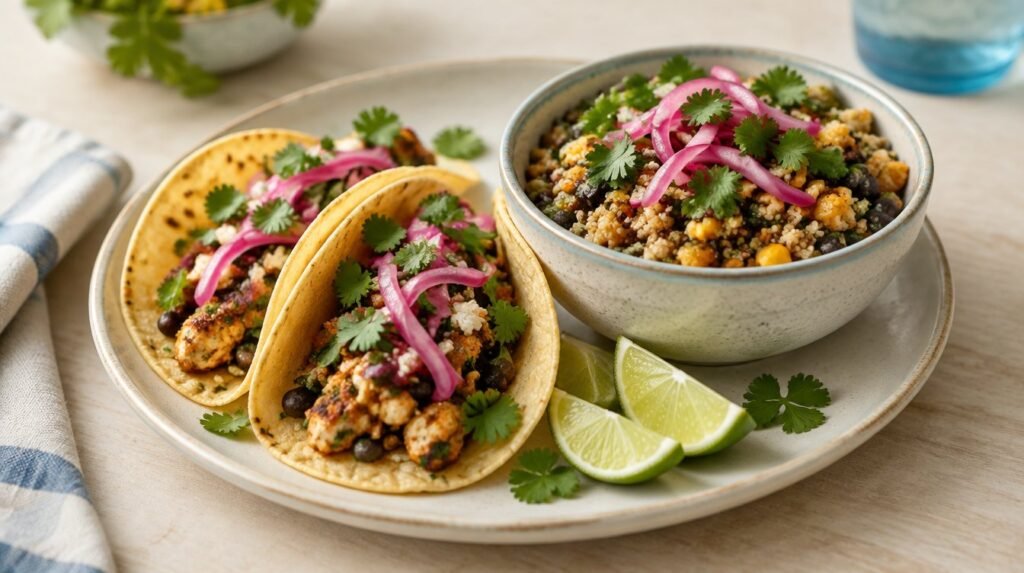
- Use them as a garnish. A tablespoon or two on salads, tacos or grain bowls adds flavor without much salt or fructan.
- Making quick pickles at home? Use a tested recipe with 5% vinegar, and refrigerate anything not processed in a canner.
- Fermenting onions yourself? Follow tested salt ratios and check acidity; our guide to pH targets for home fermentation explains why.
- Want more live cultures? Pair them with foods that reliably have them, such as yogurt, kefir or raw sauerkraut.
When to see a doctor
This is general information, not medical advice. See a clinician if you have a lasting change in bowel habits, and promptly for weight loss, diarrhea at night, rectal bleeding, unexplained vomiting, or pain not relieved by passing gas or stool (Mayo Clinic). Frequent heartburn, or needing heartburn medicine more than twice a week, is also worth a visit. Chest pain with shortness of breath or jaw or arm pain needs emergency care (Mayo Clinic).
Frequently asked questions
Do pickled onions have probiotics?
Vinegar-pickled onions do not have live cultures. Onions fermented in salt brine and kept cold may contain live bacteria, but they have not been tested as probiotics (Marco et al., 2021).
Are pickled red onions good for you?
In small amounts they are a low-calorie way to add flavor and some fiber. Check the sugar and salt, which vary by recipe.
Is the vinegar in pickled onions good for your gut?
Vinegar is not a proven probiotic, and we found no trials of pickled onions and gut health. Our vinegar article covers what has been studied.
Can pickled onions cause bloating?
They can in people sensitive to fructans, because onions are among the richest sources (Muir et al., 2007).
How do I know if store-bought pickled onions are fermented?
Look for “fermented” or “live cultures” on the label and a refrigerated jar. Shelf-stable vinegar pickles are not fermented.
Related topics
- Are Onions Good for Digestion?: fructans, gas and heartburn.
- Are Pickles Fermented?: how to tell the two kinds apart.
- Do Pickles Have Probiotics?: the cucumber version of this question.
- Apple Cider Vinegar Benefits: what vinegar research shows.
- Fermented Foods for Gut Health: reliable sources of live cultures.
Sources
- General Information on Fermenting (National Center for Home Food Preservation, University of Georgia)
- Pickled Pearl Onions (National Center for Home Food Preservation, University of Georgia)
- Marco ML, et al. The International Scientific Association for Probiotics and Prebiotics (ISAPP) consensus statement on fermented foods (Nature Reviews Gastroenterology & Hepatology, 2021)
- Hill C, et al. The International Scientific Association for Probiotics and Prebiotics consensus statement on the scope and appropriate use of the term probiotic (Nature Reviews Gastroenterology & Hepatology, 2014)
- Wastyk HC, et al. Gut-microbiota-targeted diets modulate human immune status (Cell, 2021)
- Muir JG, et al. Fructan and free fructose content of common Australian vegetables and fruit (Journal of Agricultural and Food Chemistry, 2007)
- Eating, Diet, & Nutrition for Irritable Bowel Syndrome (NIDDK)
- Onions, raw (FDC ID 170000) (USDA FoodData Central)
- Pickles, cucumber, dill or kosher dill (FDC ID 168558) (USDA FoodData Central)
- Sodium in Your Diet (U.S. Food and Drug Administration)
- Ren JS, et al. Pickled food and risk of gastric cancer: a systematic review and meta-analysis of English and Chinese literature (Cancer Epidemiology, Biomarkers & Prevention, 2012)
- Allen ML, et al. The effect of raw onions on acid reflux and reflux symptoms (American Journal of Gastroenterology, 1990)
- Irritable bowel syndrome: Symptoms and causes (Mayo Clinic)
- GERD: Symptoms and causes (Mayo Clinic)
This article is for general information and is not medical advice. Talk to your doctor or a registered dietitian before changing your diet, supplements or medication, especially if you have a health condition.