pH and Acidity Targets for Safe Home Fermentation
What this table shows
Acid is what makes most home ferments safe to keep. As lactic acid bacteria or a kombucha culture work, the pH falls, and below a certain point the bacteria that cause botulism cannot grow. This reference lists the pH and acidity benchmarks published for the ferments people make most often at home, along with the conditions that get each one there.
The key number is 4.6. Foods with a pH of 4.6 or lower count as acid foods, which contain enough acid to block botulinum bacteria; milk, meat and fresh vegetables other than most tomatoes are low-acid foods that start above it (National Center for Home Food Preservation). Fermentation is the process that carries cabbage, cucumbers and milk across that line.
pH and acidity targets by ferment
| Ferment | Target or benchmark | Typical conditions | Source |
|---|---|---|---|
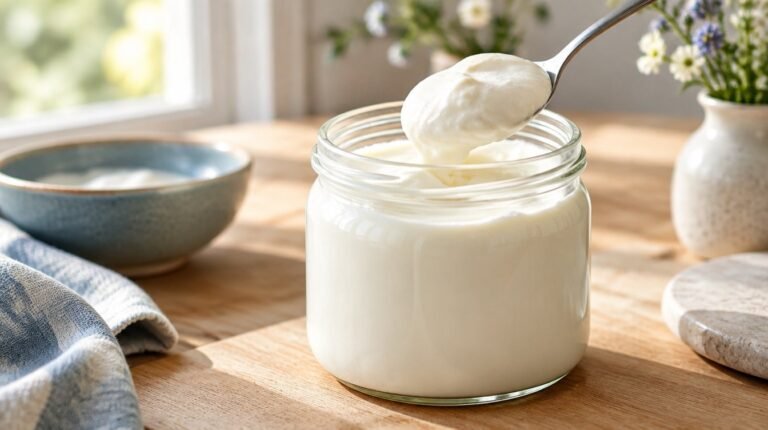
| Yogurt | pH 4.6 or lower within 24 hours after filling (federal standard for commercial yogurt) | 108 to 115°F for 6 to 10 hours, then refrigerate at 40°F or below | 21 CFR 131.200; Illinois Extension |
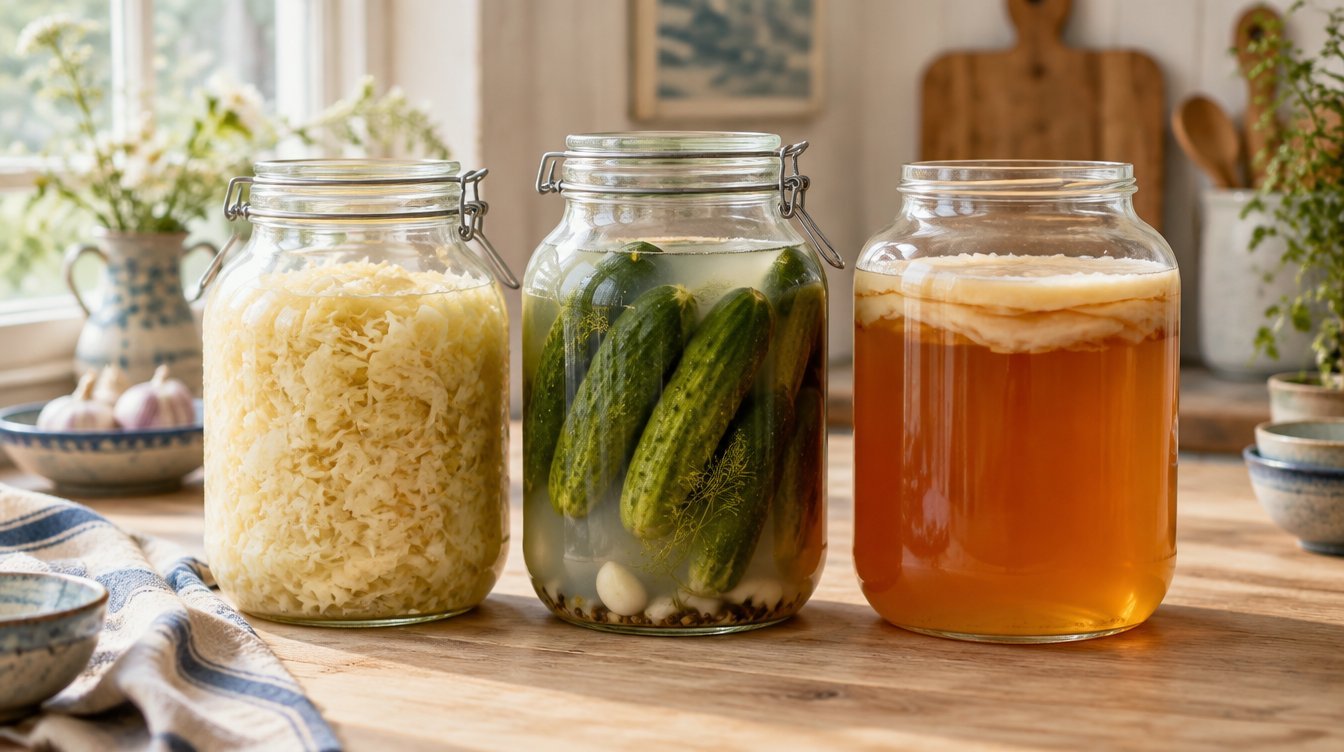
| Sauerkraut | Acid food (pH 4.6 or lower) when fully fermented | 70 to 75°F for about 3 to 4 weeks; 5 to 6 weeks at 60 to 65°F; may not ferment below 60°F; may soften above 75°F | NCHFP sauerkraut; NCHFP |
| Fermented dill pickles | Acid food (pH 4.6 or lower) when fully fermented | 70 to 75°F for 3 to 4 weeks; spoilage more likely when warmer | Penn State Extension; NCHFP |
| Kimchi | Optimum pH about 4.2 | Room temperature for 1 to 2 days or more, then the refrigerator | Oregon State Extension; OSU Extension |
| Kombucha | Starter liquid at pH 4.0 or lower before brewing; discard starter above 4.0 | 68 to 77°F for 7 to 10 days, then refrigerate | NCHFP kombucha |
| Quick (vinegar) pickles | Vinegar of 5% acidity (5 to 6%); never homemade vinegar of unknown strength | Follow a tested recipe without changing vinegar, salt or water | NCHFP; Ohio State Extension |
How to read the table
Two kinds of numbers appear above. pH measures the intensity of acidity, and lower means more acidic (21 CFR 114.90). The 5% figure for vinegar is different: it is the strength of the acid itself, which is why tested pickle recipes call for vinegar of a known strength (Ohio State Extension).
The 4.6 line also appears in federal rules. FDA defines acidified foods, such as vinegar pickles, as low-acid foods with acid added to reach a finished equilibrium pH of 4.6 or below (21 CFR 114.3). True ferments make their own acid instead of having it poured in, but the same line is the one to clear, and NCHFP lists pickles and sauerkraut among acid foods (NCHFP).
Not every number is a safety cutoff. The kimchi figure of about 4.2 is described as the optimum pH that its organic acids produce, so it is a sign of a ripe batch (Oregon State Extension). The kombucha figure applies to the starter liquid: it provides the initial acidity a new brew needs for safety (NCHFP kombucha FAQ). More acid is not always better either; University of Georgia Extension warns against letting kombucha become too acidic and against glazed earthenware vessels, which can leach heavy metals into acidic brews (UGA Extension).
For yogurt, the federal pH limit was written for commercial products, but it is a useful benchmark at home. Our guide on how to verify your yogurt actually cultured shows how to use it alongside set and taste.
Measuring pH at home
FDA’s methods describe indicator paper as giving an approximate pH and accept color-based tests in place of a meter only when the pH is 4.0 or lower (21 CFR 114.90). Above 4.0, the finished pH of commercial acidified foods must be read with a pH meter (21 CFR 114.80). That makes strips fine for a kombucha starter, which needs to read 4.0 or below, and less reliable near the 4.6 line.
- Calibrate a meter with a pH 4.0 buffer before each session.
- Bring samples to between 68 and 86°F (20 to 30°C); 77°F (25°C) is the optimum.
- For solid ferments, blend the vegetables and brine together into a paste, as the federal method does, so the reading reflects both.
- Rinse the probe between samples. Most meters are accurate to about 0.1 pH unit.
These steps come from the potentiometric method in 21 CFR 114.90.
Acid is not the only safeguard
Salt, temperature and keeping food under the brine matter as much as the final pH. Ohio State Extension advises against reduced-sodium ingredients in fermented pickles because the higher sodium prevents bacterial growth (Ohio State Extension). NCHFP links soft pickles to weak brine, fermenting above 75°F and cucumbers that were not kept under the liquid (NCHFP). Follow a tested recipe and change none of these.
When to throw a ferment out
- Soft, slimy vegetables: Oregon State Extension calls a soft, slimy ferment a sign of spoilage (OSU Extension), and NCHFP says not to eat soft pickles when spoilage is evident (NCHFP).
- Fuzzy mold on kombucha: dry, fuzzy patches, white or colored, on the SCOBY or the liquid mean the brew is spoiled; discard both (UGA Extension).
- Mold on yogurt: USDA advises discarding yogurt with mold, since moisture lets it spread below the surface (USDA FSIS).
- A kombucha starter above pH 4.0: do not brew with it; start with fresh starter liquid (NCHFP).
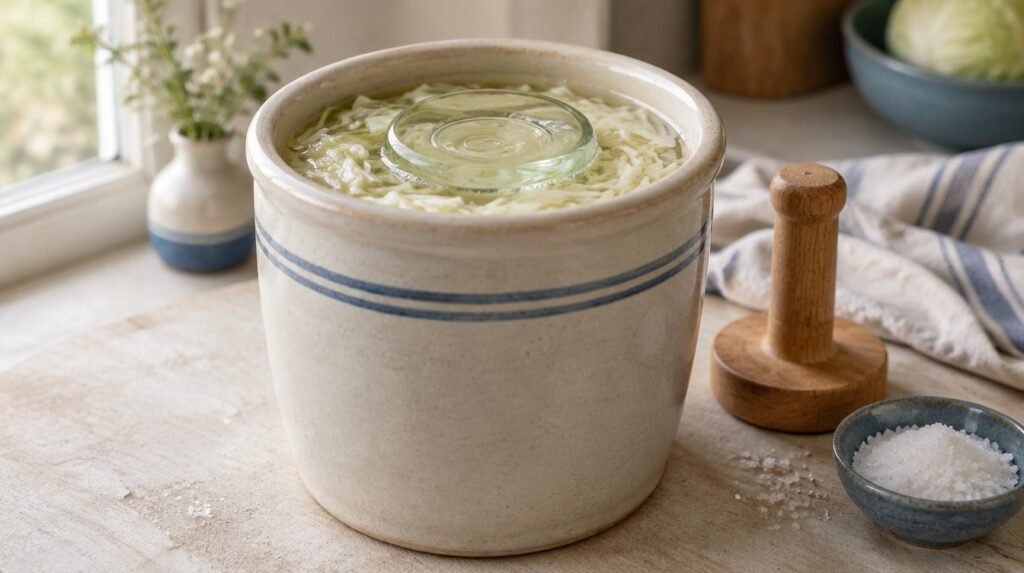
A film of scum on a vegetable brine is different. NCHFP says wild yeasts and bacteria in it feed on the acid and lower its concentration, so remove it as often as needed (NCHFP).
Methodology and sources note
We did not measure any of these values. They are published benchmarks from FDA regulations, the National Center for Home Food Preservation and university extension services, linked in each row. Several are conditions for a tested recipe, not universal rules, and the yogurt pH limit was written for commercial products. Where a source gives no pH number, as for fully fermented sauerkraut and pickles, the table says “acid food” rather than inventing one.
Related topics
- How to Verify Your Yogurt Actually Cultured: using pH, set and taste together.
- Are Pickles Fermented?: the difference between brined and vinegar pickles.
- Raw Sauerkraut: what a live, unheated kraut offers.
- What Is Kimchi?: ingredients and how it ferments.
- Is Kombucha Good for Gut Health?: what the research shows.
- Storage, Shelf Life and Re-culturing: keeping ferments after they are done.
Sources
- Ensuring Safe Canned Foods (National Center for Home Food Preservation, University of Georgia)
- 21 CFR 131.200 Yogurt (Electronic Code of Federal Regulations, U.S. FDA)
- 21 CFR 114.3 Definitions (acidified foods) (Electronic Code of Federal Regulations, U.S. FDA)
- 21 CFR 114.80 Processes and controls (Electronic Code of Federal Regulations, U.S. FDA)
- 21 CFR 114.90 Methodology (Electronic Code of Federal Regulations, U.S. FDA)
- Making Yogurt at Home (University of Illinois Extension)
- Sauerkraut (National Center for Home Food Preservation)
- Fermenting Dill Pickles (Penn State Extension)
- Causes and Possible Solutions for Problems with Fermented Pickles (National Center for Home Food Preservation)
- Kombucha Tea (National Center for Home Food Preservation)
- Kombucha FAQ, consumer version (National Center for Home Food Preservation, University of Georgia Cooperative Extension, 2026)
- What’s the Word on Homemade Kombucha? (University of Georgia Cooperative Extension, 2026)
- Kimchi Basics (Oregon State University Extension Service, 2020)
- Is my kimchi safe to eat? (Oregon State University Extension Service)
- Food Preservation: Quick-Process Pickles (Ohio State University Extension)
- Molds on Food: Are They Dangerous? (USDA Food Safety and Inspection Service)