Gut Health for Women: What You Need to Know
What gut health means for women
Gut health for women covers the same basics as for anyone: regular, comfortable digestion, a varied community of gut microbes, and a diet that feeds them. What differs is the setting. Hormone shifts across the menstrual cycle, pregnancy and menopause can change how the gut behaves, and several common digestive conditions show up more often in women.
Researchers are still sorting out how much of this runs through the gut microbiome itself. A review of human and animal studies found sex differences in gut bacteria, but the results were inconsistent from study to study (Kim YS, et al., 2020). This article is general information, not medical advice.
How hormones and life stages affect digestion
Hormones and gut microbes talk to each other
Some gut bacteria make an enzyme called beta-glucuronidase, which reactivates estrogen so it can return to the bloodstream. Scientists sometimes call this group of microbes the estrobolome. A review in Maturitas describes how lower microbial diversity may reduce this process and lower circulating estrogen, though how much this matters for everyday health is not yet clear (Baker JM, et al., 2017).
The menstrual cycle
Digestive changes around a period are common. In a survey of 156 healthy women at a gynecology clinic in Canada, 73% reported at least one digestive symptom in the five days before or during their period. Abdominal pain and diarrhea were the most frequent, and women with mood symptoms were more likely to report several digestive symptoms (Bernstein MT, et al., 2014). It was a single survey, but it matches what many women notice.
Pregnancy
Constipation is more common in women, especially during pregnancy and after giving birth (NIDDK). Heartburn and indigestion are common too. The NHS explains that hormone changes can relax the muscle between the stomach and the gullet, and the growing baby presses on the stomach. It suggests smaller, more frequent meals, sitting up straight while eating, and leaving about three hours between eating and bedtime (NHS).
Menopause
In a large U.S. study of Hispanic and Latino adults, researchers sequenced stool from 2,300 people, including 295 premenopausal and 1,027 postmenopausal women. Postmenopausal women tended toward lower gut microbiome diversity, and their gut bacteria looked somewhat more like men’s (Peters BA, et al., 2022). The study shows an association at one point in time, not cause and effect, and the authors called for research in other groups.
Digestive conditions that are more common in women
Knowing these patterns can help you describe symptoms clearly to a doctor.
| Condition | What to know | Source |
|---|---|---|
| Irritable bowel syndrome (IBS) | Women are up to two times more likely than men to develop IBS. It is also more common before age 50. | NIDDK |
| Constipation | More common in women, especially in pregnancy and after childbirth. About 16 in 100 U.S. adults have symptoms. | NIDDK |
| Gallstones | More common in women. Extra estrogen from pregnancy, hormone therapy or birth control pills may raise the chance of gallstones. | NIDDK |
| Endometriosis | Can sometimes affect the bowel and cause pain when you poo. | NHS |
How to support your gut
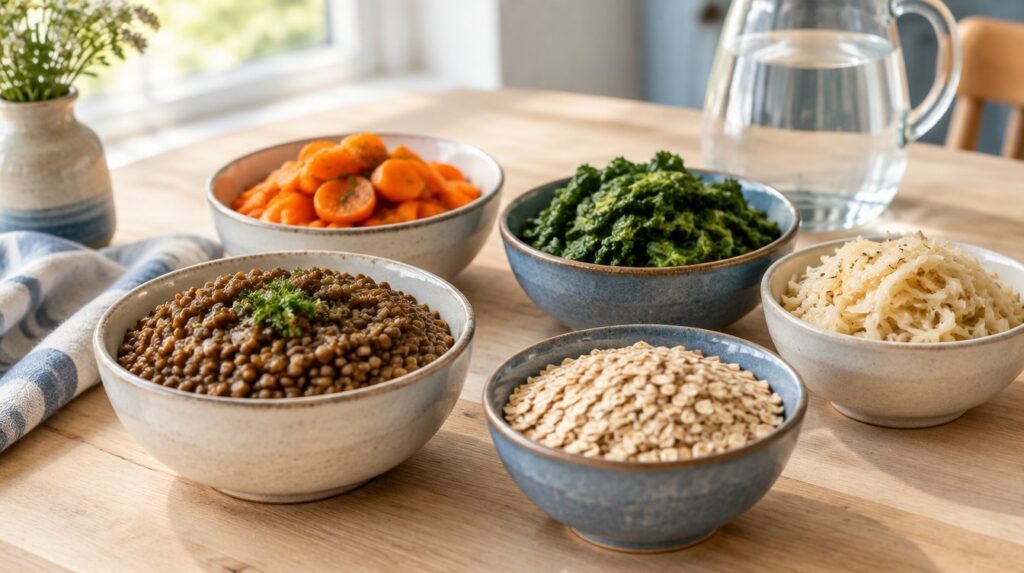
There is no special gut diet for women. The habits with the best support are the same ones that help everyone, adjusted for a few women-specific details.
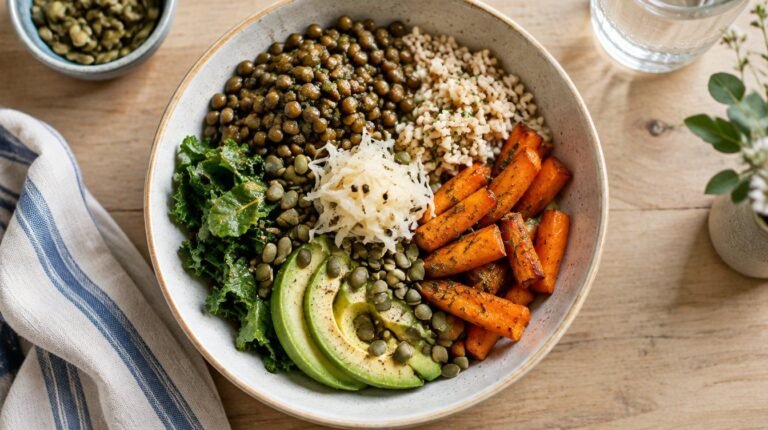
- Eat enough fiber: Mayo Clinic cites a target of 25 grams a day for women 50 and younger and 21 grams for women over 50. Add it slowly over a few weeks and drink plenty of water to avoid gas and bloating (Mayo Clinic). Beans, oats, whole grains, fruit and vegetables are good sources. Our gut health diet plan shows how to build meals around them.
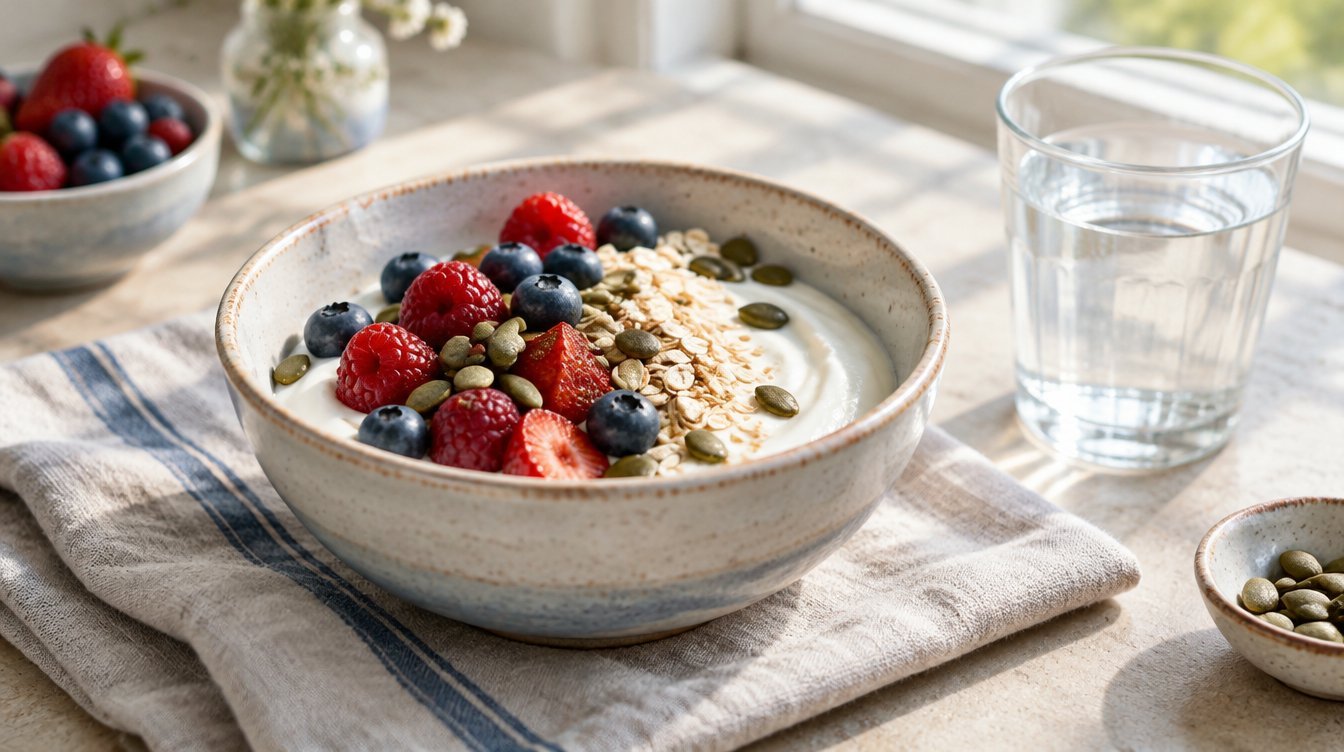
- Include fermented foods: plain yogurt with live cultures, kefir and sauerkraut add microbes to your diet. See fermented foods for gut health for options.
- Watch iron and the gut: women 19 to 50 need 18 mg of iron a day and pregnant women need 27 mg. High-dose iron supplements, especially on an empty stomach, can cause constipation, nausea and stomach upset (NIH ODS). Ask your doctor about the form and timing if this happens.
- Choose probiotics by strain, not by label slogan: benefits, if any, depend on the specific strains in a product (NIH ODS). People with serious health conditions or weakened immune systems face a greater risk of side effects, so check with a provider first (NCCIH). Our guide to probiotics for women goes through the research.
- Keep alcohol low: the Surgeon General’s advisory says higher alcohol intake increases breast cancer risk in women, and alcohol is linked with several cancers of the digestive tract (HHS).
- Get screened: the U.S. Preventive Services Task Force recommends colorectal cancer screening for adults ages 45 to 75 (CDC).
- Track your symptoms: a simple log of meals, cycle days and digestive symptoms can show patterns worth raising with your doctor.
If constipation is your main issue, our constipation relief guide has practical steps, and 10 signs of an unhealthy gut explains which changes are worth noticing.
When to see a doctor
Many digestive symptoms are passing and harmless, but some need a prompt checkup. See a doctor right away if you have:
- Black, tarlike stools or bloody vomit (NIDDK)
- Severe and constant pain in your abdomen, or frequent vomiting (NIDDK)
- Difficulty or pain when swallowing, or weight loss without trying (NIDDK)
- Yellowing of your eyes or skin (NIDDK)
Book a regular appointment if you feel bloated, full quickly or have pelvic or tummy pain frequently, roughly 12 or more times a month. The NHS lists these among possible ovarian cancer symptoms. They usually have other causes, but they should be checked (NHS). See a doctor too if painful periods come with pain when you poo, or if symptoms affect your daily life (NHS). In pregnancy, tell your midwife or doctor about trouble swallowing, weight loss or ongoing stomach pain (NHS).
Related topics
- Best Probiotic for Women: which strains have research for women’s needs.
- How to Improve Gut Health: everyday habits with the best evidence.
- Constipation Relief: food, fluid and movement steps that help.
- Gut Health Diet Plan: a week of meals built around fiber.
- Signs of a Healthy Gut: what normal digestion looks like.
Sources
- Kim YS, et al. Sex Differences in Gut Microbiota (World Journal of Men’s Health, 2020)
- Baker JM, et al. Estrogen-gut microbiome axis: Physiological and clinical implications (Maturitas, 2017)
- Peters BA, et al. Menopause Is Associated with an Altered Gut Microbiome and Estrobolome, with Implications for Adverse Cardiometabolic Risk in the Hispanic Community Health Study/Study of Latinos (mSystems, 2022)
- Bernstein MT, et al. Gastrointestinal symptoms before and during menses in healthy women (BMC Women’s Health, 2014)
- Definition & Facts for Irritable Bowel Syndrome (NIDDK)
- Definition & Facts for Constipation (NIDDK)
- Definition & Facts for Gallstones (NIDDK)
- Symptoms & Causes of Indigestion (NIDDK)
- Indigestion and heartburn in pregnancy (NHS)
- Endometriosis (NHS)
- Ovarian cancer: symptoms (NHS)
- Dietary fiber: Essential for a healthy diet (Mayo Clinic)
- Iron: Fact Sheet for Consumers (NIH Office of Dietary Supplements)
- Probiotics: Fact Sheet for Consumers (NIH Office of Dietary Supplements)
- Probiotics: Usefulness and Safety (NCCIH)
- Screening for Colorectal Cancer (CDC)
- Surgeon General’s Advisory on Alcohol and Cancer Risk (U.S. Department of Health and Human Services)
This article is for general information and is not medical advice. Talk to your doctor or a registered dietitian before changing your diet, supplements or medication, especially if you have a health condition.