Gut Health and Skin: What You Need to Know
What people mean by the gut-skin connection
“Gut health and skin” refers to the idea that what happens in your digestive tract can show up on your face, arms and scalp. Researchers call it the gut-skin axis. A 2018 review in Frontiers in Microbiology describes how gut bacteria talk to the immune system, and how that immune signaling may affect skin cell growth and inflammation in conditions such as acne, psoriasis and eczema (atopic dermatitis).
The short version: the link is real enough to study, but most of the evidence is early. There is no gut fix that clears skin on a schedule, and anyone who promises one is selling something. What the research does support is a handful of sensible habits and a clear list of skin changes that deserve a doctor’s eye.
This article is general information, not medical advice. It does not replace a visit with a dermatologist or your own doctor.
Why your gut may matter for your skin
The gut lining is where your immune system meets trillions of microbes and everything you eat. The Salem review explains that friendly gut bacteria help prime the immune system and keep its inflammatory and calming signals in balance. When that balance slips, the effects may not stay in the gut.
The review outlines three ideas researchers are testing:
- Immune signaling: gut microbes help train immune cells, and an overactive immune response is part of acne, eczema and psoriasis.
- Microbial byproducts: bacteria that ferment fiber make short-chain fatty acids, which appear to help regulate inflammation.
- A leaky barrier: when the gut lining is irritated, more bacterial fragments may reach the bloodstream and keep the immune system on alert.
These are mechanisms, mostly worked out in lab and animal studies. They explain why the topic is worth studying. They do not prove that changing your gut will change your skin.
What the research shows for common skin problems
The evidence differs a lot from one condition to the next. Here is a quick summary, followed by the details.
| Skin issue | What studies have found | Strength of evidence |
|---|---|---|
| Acne | Oral probiotics improved lesion counts after 12 weeks in a 2025 meta-analysis; a low-glycemic diet helped in one small trial | Early to moderate; small trials |
| Eczema | Probiotics probably make little or no difference to symptoms, per a Cochrane review | Moderate; mostly negative |
| Rosacea | Higher rates of small intestinal bacterial overgrowth (SIBO) in one Italian study | Early; one group of researchers |
| Celiac rash | Dermatitis herpetiformis is a known skin form of celiac disease (NIDDK) | Well established |
Acne
A 2025 systematic review and meta-analysis in Clinical and Experimental Dermatology looked at 9 randomized trials with 623 people with acne and pooled the results of 7. After 4 weeks, differences between probiotic and control groups were slight. After 12 weeks, the probiotic groups had fewer total lesions and lower severity scores, and no major side effects were reported. The trials used different strains and doses, so the results do not point to one product.
Diet may matter too. In a 12-week randomized trial of 43 young men, a low-glycemic-load diet cut lesion counts more than a diet high in refined carbohydrates. The low-glycemic group also lost weight, and the authors said they could not separate the two effects. The American Academy of Dermatology says small studies point the same way, while other studies have found no link. For more, see our guide to gut health and acne.
Eczema
Eczema is where probiotics have been tested most, and the results are disappointing. A 2018 Cochrane review of 39 randomized trials with 2,599 participants found that probiotics probably make little or no difference to the symptoms people rate themselves. It concluded that using probiotics to treat eczema “is currently not evidence-based.” Our article on eczema and gut health covers the prevention research in babies, which is a separate question.
Rosacea
In a 2008 study of 113 people with rosacea, 52 tested positive for SIBO on a breath test, compared with 3 of 60 healthy controls. When the overgrowth was treated with an antibiotic, most of the treated patients’ skin cleared or improved greatly. It was one center’s work and the skin ratings were not blinded, so it is a lead, not a settled answer.
Celiac disease and an itchy rash
This is the clearest gut-skin link. The National Institute of Diabetes and Digestive and Kidney Diseases (NIDDK) describes dermatitis herpetiformis as an itchy, blistering rash on the elbows, knees, buttocks, back or scalp. It affects about 10 to 20 percent of adults with untreated celiac disease, and some people have the rash with no gut symptoms at all.
Everyday habits that support your gut and skin
None of these steps is a skin treatment. They are reasonable choices for gut health in general, and some have early evidence for skin as well.
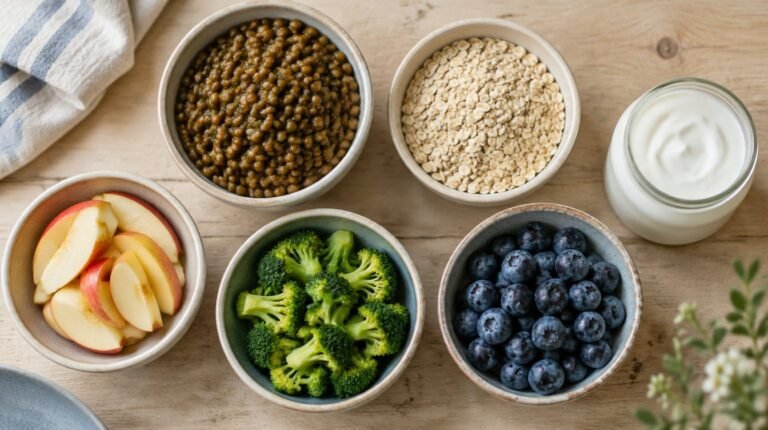
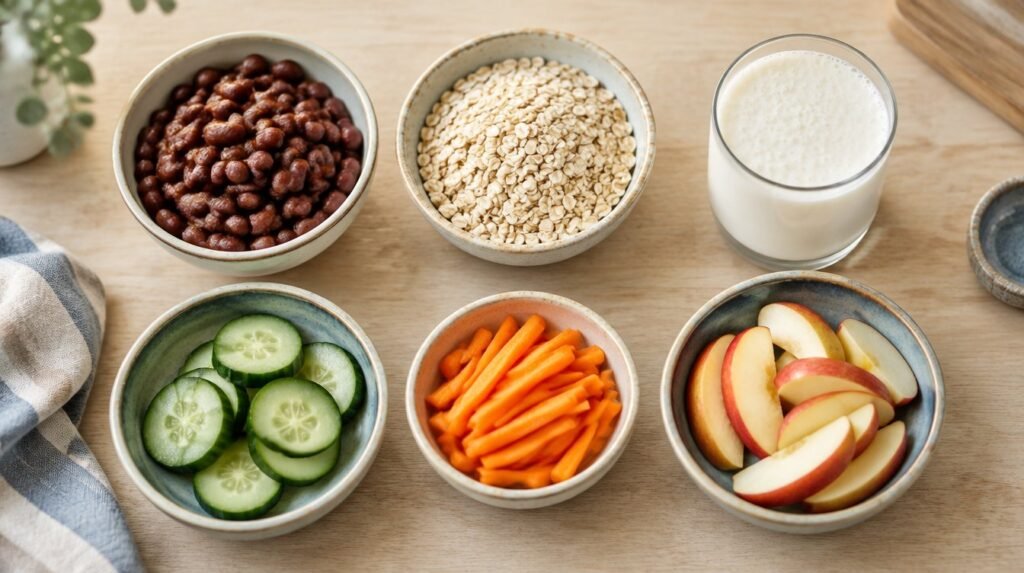
- Eat more plants and fiber. Beans, oats, vegetables, fruit and whole grains feed the bacteria that make short-chain fatty acids. Our list of the best foods for gut health is a good place to start.
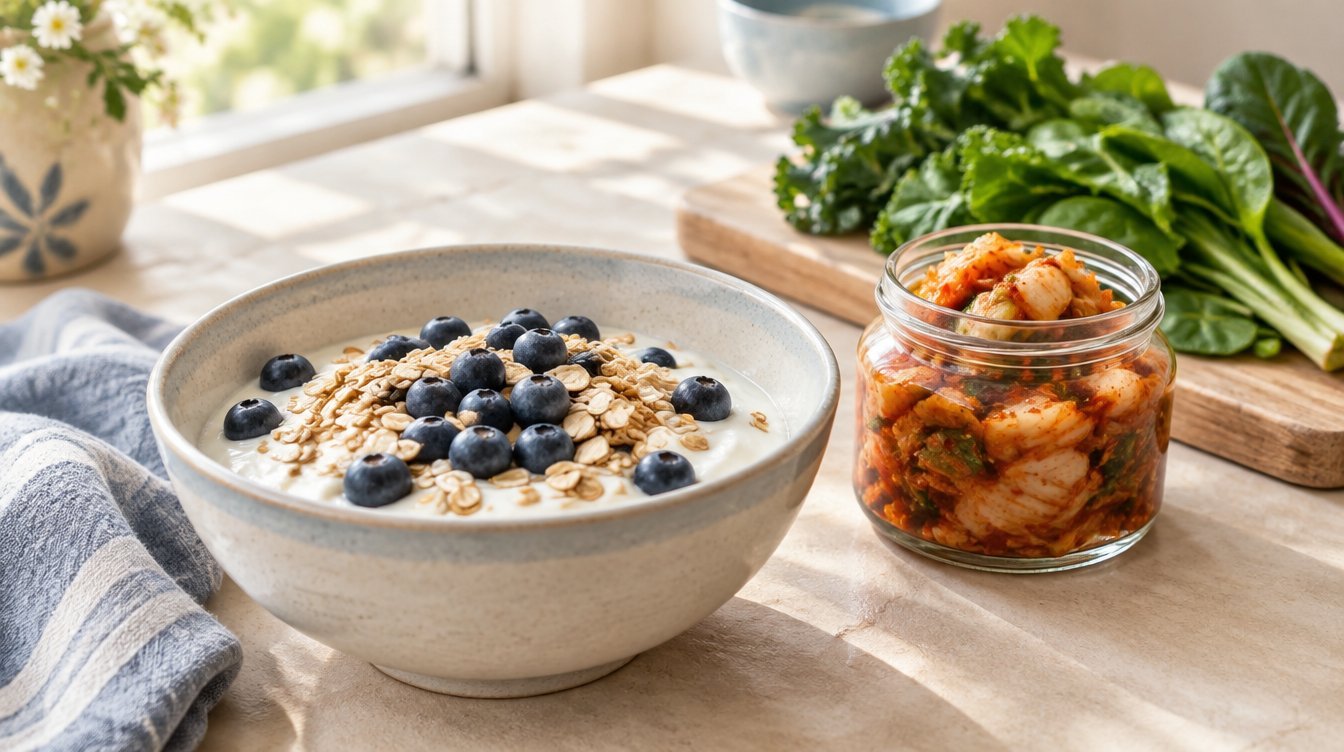
- Add fermented foods. In a 17-week Stanford study with 18 people per diet group, a diet high in fermented foods such as yogurt, kefir and kimchi raised gut microbe diversity and lowered several inflammation markers. The study did not measure skin. See fermented foods for gut health for ideas.
- Go easy on refined carbs and sugary drinks. This follows the low-glycemic trial and the AAD guidance, both of which say more research is needed.
- Watch how you react to milk. The AAD notes that some studies tie cow’s milk, including skim, to more breakouts, but says no studies have found that yogurt or cheese lead to more breakouts.
- Do not cut out whole food groups on a hunch. The NHS advises against changing your diet for eczema unless a doctor tells you to.
- Get tested before going gluten-free. If you suspect celiac disease, NIDDK says doctors don’t recommend starting a gluten-free diet before testing, because it can change the results.
If you want to see how these habits might play out over a few months, our practical guide to your skin before and after a gut health diet sets realistic expectations.
Probiotic supplements for skin: what to know first
Probiotic pills for skin are everywhere, but the National Center for Complementary and Integrative Health (NCCIH) says the existing evidence for acne “isn’t strong enough to justify any recommendations.” Many probiotics are sold as dietary supplements, which don’t need FDA approval before they are marketed.
NCCIH also notes that the risk of harmful effects is greater in people with severe illnesses or weakened immune systems. If that describes you, or you are pregnant, talk with your doctor before starting one. If you do try a supplement for acne, the trials above ran for about 12 weeks, so a few days tells you little. Our guide to probiotics for acne compares the strains studied.
When to see a doctor
Gut habits are no substitute for diagnosis. Book an appointment if you notice any of the following:
- Acne that isn’t getting better with self-care, or spots that are deep, painful or scarring, or that affect your mood (NHS).
- Eczema that is blistered, crusty, leaking fluid or full of pus, feels hot or painful, spreads quickly, or comes with a fever. The NHS calls these signs for an urgent appointment.
- Rosacea with eye symptoms such as pain, blurred vision, light sensitivity or a gritty feeling, which the NHS says need urgent care.
- An itchy, blistering rash on the elbows, knees, buttocks or scalp, especially with digestive symptoms, which may point to celiac disease (NIDDK).
- Ongoing gut symptoms alongside skin changes, such as diarrhea, weight loss or bloating that does not go away. Our list of signs of an unhealthy gut explains what to track.
Related topics
- Gut Health and Acne: a closer look at the acne research.
- Eczema and Gut Health: what is known about eczema in babies and adults.
- Bacterial Acne: how skin bacteria fit into breakouts.
- Best Probiotic for Acne: strains with the most human research.
- Fermented Foods for Gut Health: easy ways to eat more of them.
- Your Skin Before and After a Gut Health Diet: what change to expect and when.
Sources
- Salem I, et al. The Gut Microbiome as a Major Regulator of the Gut-Skin Axis (Frontiers in Microbiology, 2018)
- Lin HW, et al. Efficacy of oral probiotics in patients with acne: a systematic review and meta-analysis of randomized trials (Clinical and Experimental Dermatology, 2025)
- Smith RN, et al. A low-glycemic-load diet improves symptoms in acne vulgaris patients: a randomized controlled trial (American Journal of Clinical Nutrition, 2007)
- Makrgeorgou A, et al. Probiotics for treating eczema (Cochrane Database of Systematic Reviews, 2018)
- Parodi A, et al. Small intestinal bacterial overgrowth in rosacea: clinical effectiveness of its eradication (Clinical Gastroenterology and Hepatology, 2008)
- Wastyk HC, et al. Gut-microbiota-targeted diets modulate human immune status (Cell, 2021)
- Symptoms and Causes of Celiac Disease (NIDDK)
- Diagnosis of Celiac Disease (NIDDK)
- Probiotics: Usefulness and Safety (NCCIH)
- Can the right diet get rid of acne? (American Academy of Dermatology)
- Acne (NHS)
- Atopic eczema (NHS)
- Rosacea (NHS)
This article is for general information and is not medical advice. Talk to your doctor or a registered dietitian before changing your diet, supplements or medication, especially if you have a health condition.