Is Beer Good for Gut Health? What the Evidence Says
The verdict: beer is not a gut-health drink, even if parts of it are interesting
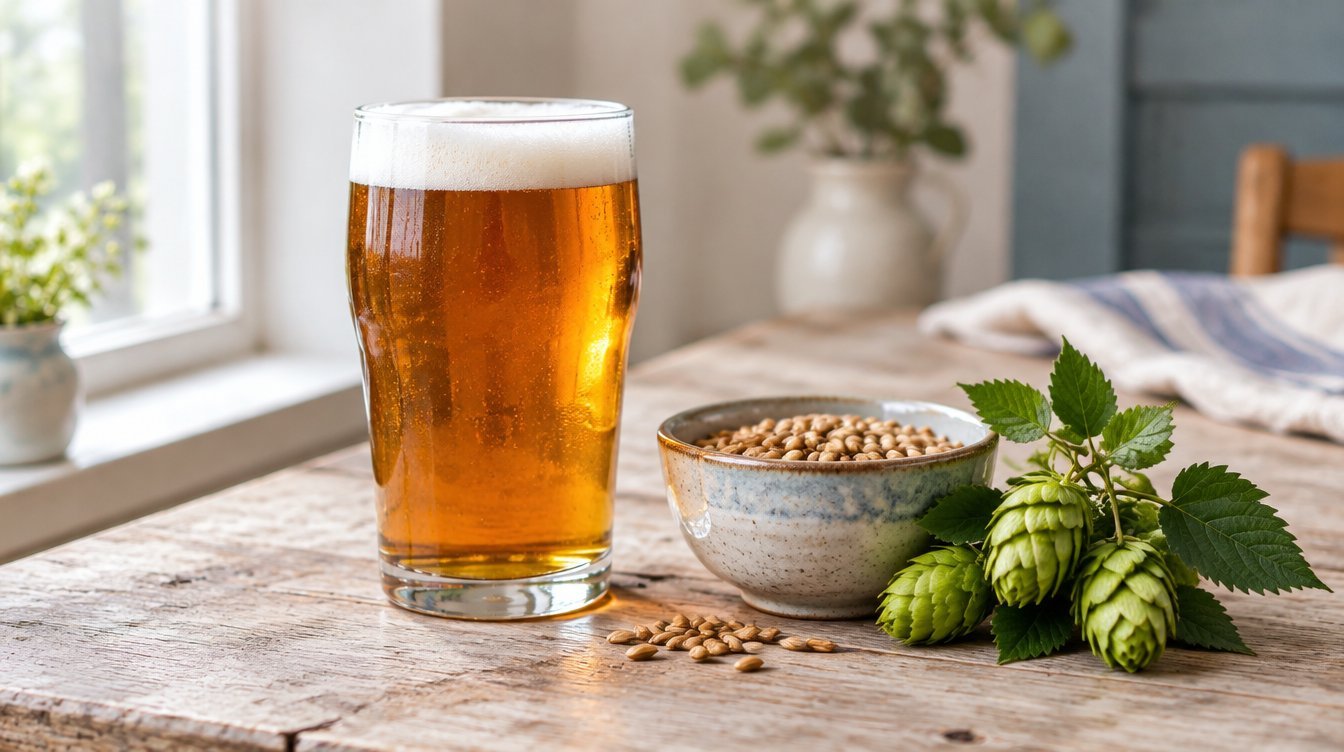
Beer is not good for gut health in any way that justifies drinking it. A few small trials found that a daily beer, with or without alcohol, nudged gut bacteria in directions researchers consider favorable, and the likely reason is beer’s plant compounds, not the alcohol.
Alcohol itself is linked with gut inflammation and a leakier gut lining at higher intakes, and with cancer risk even at low intakes. If you want what beer’s polyphenols might offer, a non-alcoholic beer or plant foods are the lower-risk route. This article is general information, not medical advice.
What the research shows
The human evidence is thin: a handful of small, short studies, mostly in healthy men. None measured digestive symptoms or long-term health.
Small trials found shifts in gut bacteria
In a randomized, double-blind trial in Portugal, 22 healthy men drank 330 mL (about 11 oz) a day of either regular beer (5.2% alcohol) or non-alcoholic beer for four weeks. Both groups showed higher gut microbiota diversity, and the authors credited beer’s polyphenols, since the effect appeared with or without alcohol (Marques C, et al., 2022).
A 30-day study in Mexico gave adult volunteers 355 mL (12 oz) a day of non-alcoholic or regular beer. Both shifted gut bacteria, but fasting blood sugar fell slightly with the non-alcoholic beer and rose with the regular beer. The researchers said alcohol seemed to interfere with the benefit and that more work was needed (Hernández-Quiroz F, et al., 2020).
An observational study in Spain compared 34 regular beer drinkers with 44 people who rarely drank. Overall gut diversity did not differ, though the beer drinkers had more butyric acid in their stool. A comparison like this cannot show that beer caused the difference (González-Zancada N, et al., 2020).
Alcohol is the main problem
Reviews published by the National Institute on Alcohol Abuse and Alcoholism describe how chronic alcohol intake can change the makeup of gut bacteria, make the intestinal lining more permeable and drive inflammation in the gut and liver (Bishehsari F, et al., 2017). That work centers on chronic, heavy drinking, and the 2015 review notes that human data are limited (Engen PA, et al., 2015).
Low intakes are not risk-free either. The U.S. Surgeon General’s 2024 advisory describes a causal link between alcohol and at least seven types of cancer, including colorectal, esophageal, liver and breast cancer in women (HHS). The CDC says that even less than one drink a day can raise the risk of certain cancers (CDC).
Beer has almost no fiber and few live microbes
USDA data for regular beer list 0 grams of dietary fiber in a 12-ounce can, with about 153 calories and 13.9 grams of alcohol (USDA FoodData Central). A review in Nutrients notes traces of soluble fibers such as beta-glucans, plus polyphenols, but says research in this area is limited (Zugravu CA, et al., 2023).
Beer is fermented, but it is not a probiotic food the way yogurt or kefir can be. The same review notes that microbes rarely survive pasteurization (Zugravu CA, et al., 2023).
Non-alcoholic and probiotic beers
Non-alcoholic beer removes the alcohol but not the sugar. In a German trial, 44 healthy young men drank 660 mL a day of a non-alcoholic beer or water for four weeks. Mixed and wheat beers raised triglycerides and either glucose or insulin, while pilsner and water did not (Kreimeyer H, et al., 2025).
A Singapore trial tested a sour beer fermented with Lacticaseibacillus paracasei Lpc-37 in 21 healthy men for two weeks. HDL cholesterol rose, but inflammation and immune markers did not change (Ou SJL, et al., 2024).
Caveats to keep in mind
- Small, short studies: the trials lasted a month or less, most enrolled a few dozen people, and most participants were healthy men.
- Diversity is a lab marker: no study showed fewer digestive symptoms or better long-term health.
- One daily beer, not more: the trials used about one standard drink a day. A U.S. standard drink is 12 oz of regular beer at about 5% alcohol, and stronger beers count as more (NIAAA).
- Your gut may react: the NHS advises people with IBS not to drink lots of alcohol or fizzy drinks (NHS), and Mayo Clinic lists alcohol among drinks that can aggravate acid reflux (Mayo Clinic).
- Gluten: beer, lager and ale may contain gluten, which matters for people with celiac disease (NIDDK).
How to think about beer if you drink
If you do not drink, there is no gut-health reason to start. The CDC says newer studies show no benefit from moderate drinking over not drinking, and that people who are pregnant or under 21 should not drink (CDC).
If you do drink, these habits keep the risk lower:
- Stay within the CDC limits of two drinks a day for men and one for women, or less (CDC).
- Check the alcohol percentage on the can. A 10% craft beer in a 12-ounce can is about two standard drinks (NIAAA).
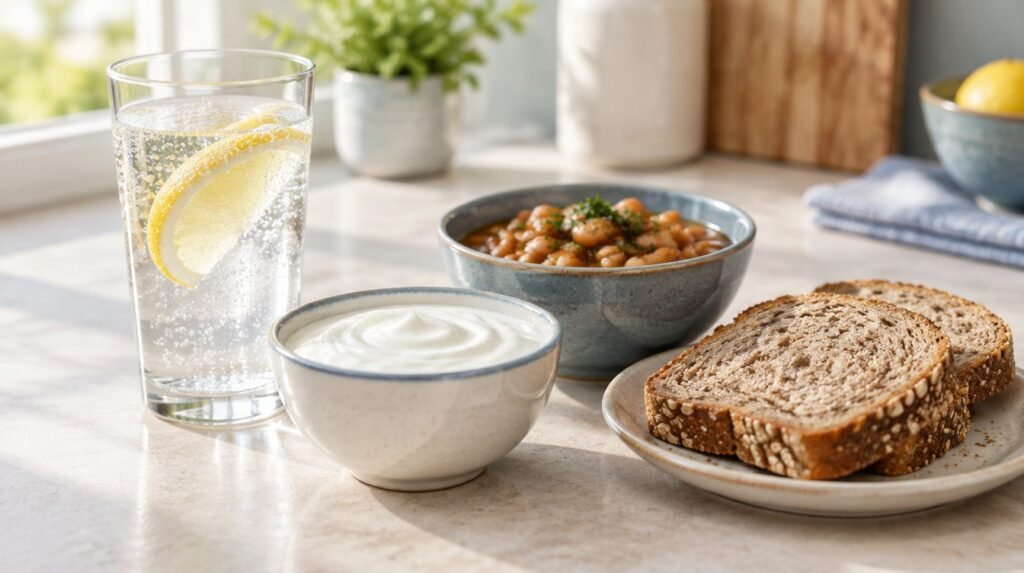
- Get your gut support from foods with real fiber and live cultures, such as fermented foods like yogurt and kefir, beans, whole grains and other gut-friendly foods.
- After a heavy night, see our guide on restoring gut health after alcohol.
When to see a doctor
See a doctor right away if you have black, tarlike stools, bloody vomit, frequent vomiting, severe and constant belly pain, yellowing of the skin or eyes, or weight loss without trying (NIDDK). Talk to a doctor too if drinking brings on heartburn or bloating, or if you find it hard to cut back. NIAAA’s Rethinking Drinking site has free tools for checking your drinking.
Common questions
Does beer have probiotics?
Most beer does not, because pasteurization kills nearly all microbes. A few unpasteurized or specially brewed probiotic beers exist, but research on them is very limited (Zugravu CA, et al.).
Is non-alcoholic beer good for your gut?
Small trials suggest it may shift gut bacteria in a similar way to regular beer without the alcohol. Sweeter non-alcoholic beers can still add sugar and calories.
Does beer cause bloating?
It can. Carbonation and alcohol bother some people, and the NHS advises people with IBS not to drink lots of alcohol or fizzy drinks (NHS).
How much beer is safe for gut health?
No amount has been shown to improve gut health. If you drink, keep within one drink a day for women and two for men, and less is better.
Related topics
- How to Restore Gut Health After Alcohol: what to eat and drink after a night out.
- Fermented Drinks: kefir, kombucha and other cultured drinks.
- Is Kombucha Good for Gut Health?: another fermented drink, weighed against the research.
- Kefir Benefits: a cultured drink with more evidence behind it.
- GERD Diet: how to eat when reflux is a problem.
Sources
- Marques C, et al. Impact of Beer and Nonalcoholic Beer Consumption on the Gut Microbiota: A Randomized, Double-Blind, Controlled Trial (Journal of Agricultural and Food Chemistry, 2022)
- Hernández-Quiroz F, et al. Influence of moderate beer consumption on human gut microbiota and its impact on fasting glucose and β-cell function (Alcohol, 2020)
- González-Zancada N, et al. Association of Moderate Beer Consumption with the Gut Microbiota and SCFA of Healthy Adults (Molecules, 2020)
- Ou SJL, et al. Effects of Moderate Consumption of a Probiotic-Fermented Sour Beer on the Inflammatory, Immunity, Lipid Profile, and Gut Microbiome of Healthy Men (Food Science & Nutrition, 2024)
- Kreimeyer H, et al. Non-Alcoholic Beer Influences Glucose and Lipid Metabolism and Changes Body Composition in Healthy, Young, Male Adults (Nutrients, 2025)
- Zugravu CA, et al. Beer and Microbiota: Pathways for a Positive and Healthy Interaction (Nutrients, 2023)
- Bishehsari F, et al. Alcohol and Gut-Derived Inflammation (Alcohol Research: Current Reviews, 2017)
- Engen PA, et al. The Gastrointestinal Microbiome: Alcohol Effects on the Composition of Intestinal Microbiota (Alcohol Research: Current Reviews, 2015)
- Surgeon General’s Advisory on Alcohol and Cancer Risk (U.S. Department of Health and Human Services)
- About Moderate Alcohol Use (Centers for Disease Control and Prevention)
- What Is a Standard Drink? (National Institute on Alcohol Abuse and Alcoholism)
- Rethinking Drinking (National Institute on Alcohol Abuse and Alcoholism)
- Alcoholic beverage, beer, regular, all (USDA FoodData Central)
- Eating, Diet, & Nutrition for Celiac Disease (NIDDK)
- Symptoms & Causes of Indigestion (NIDDK)
- Irritable bowel syndrome (IBS): diet, lifestyle and medicines (NHS)
- GERD: Symptoms and causes (Mayo Clinic)
This article is for general information and is not medical advice. Talk to your doctor or a registered dietitian before changing your diet, supplements or medication, especially if you have a health condition.