Are Pickles Fermented? What the Evidence Says
The verdict: some pickles are fermented, but many are not
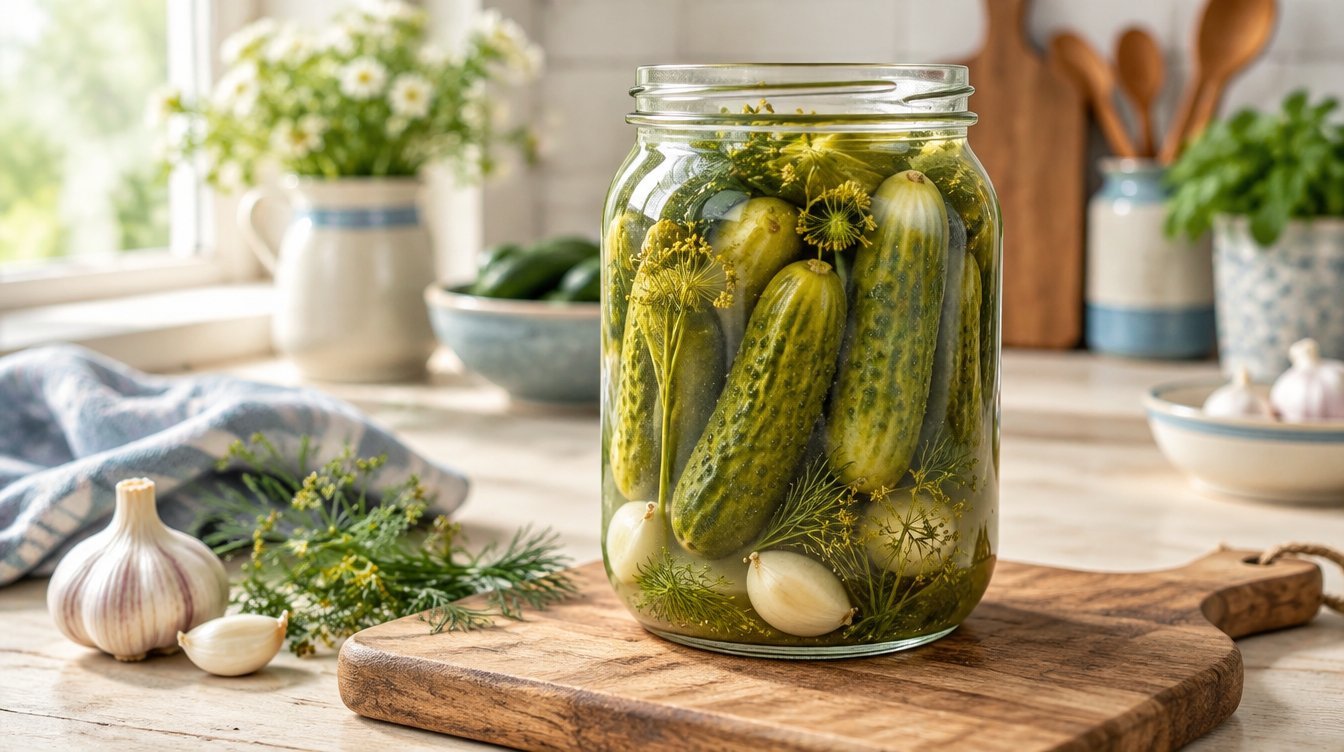
Pickles can be fermented, but many are not. A fermented pickle sours slowly in salt brine as bacteria turn the cucumber’s sugars into lactic acid. A quick or fresh-pack pickle gets its sour taste from vinegar and is usually heated. Even fermented pickles lose their live bacteria if they are pasteurized after fermentation.
So the answer to “are pickles fermented” depends on the jar. The label, the ingredient list and where the jar sits in the store tell you most of what you need to know.
What the research shows
There are two basic ways to make a pickle
University of Nebraska-Lincoln Extension describes two main types of pickles. Fermented or brined pickles are cucumbers held in a 2 to 3 percent saltwater solution for several weeks while bacteria on the vegetables produce lactic acid. Fresh-pack or quick pickles skip fermentation and use vinegar to lower the pH, and are usually made and processed within a day.
Ohio State University Extension makes the same distinction: quick-process pickles use acetic acid from vinegar rather than lactic acid from fermentation. Penn State Extension adds that fermentation acid has a more complex flavor than vinegar, which is why fermented pickles taste tangy and slightly funky rather than sharp.
How store-bought pickles are made
An EPA industry document on food processing lists three methods used to make commercial cucumber pickles: brine stock, fresh pack and refrigerated.
- Brine stock: cucumbers ferment in salt brine, then are washed to remove excess salt before they are finished and packed. Pasteurization is optional.
- Fresh pack: cucumbers are packed with salt, spices and vinegar, then heated until the center reaches about 165°F (74°C).
- Refrigerated: cucumbers are not heat-processed before or after packing and rely on preservatives and cold storage.
This means a shelf-stable dill pickle may have started as a fermented cucumber and still be fermented in the technical sense. USDA researchers note that commercial bulk fermentation of cucumbers relies on natural microbes and brines of about 1 M sodium chloride. What happens after fermentation, such as desalting, adding vinegar and heating, decides whether anything is still alive in the jar.
Fermented does not always mean live
An expert panel from the International Scientific Association for Probiotics and Prebiotics set out a consensus definition of fermented foods in 2021. Its classification puts non-heated fermented vegetables among foods that contain live microbes, heat-treated or pasteurized fermented vegetables among fermented foods without live microbes, and vegetables pickled in brine or vinegar without fermentation among foods that are not fermented at all.
| Pickle type | Fermented? | Live microbes likely? |
|---|---|---|
| Fermented, refrigerated, unpasteurized | Yes | Yes |
| Fermented, then pasteurized (shelf-stable) | Yes | No |
| Fresh-pack vinegar pickle, heated | No | No |
| Refrigerator vinegar pickle, not heated | No | Not from fermentation |
Pickles as a source of live bacteria
Research on pickles as probiotic carriers is still early. In a USDA lab study, one acid-tolerant probiotic strain (a Lactobacillus casei) survived up to 63 days at 4°C in a simulated refrigerated pickle at about 100 million CFU per mL. That was a lab model meant to guide product development, not a test of pickles on store shelves or in people.
For gut health more broadly, the strongest human data come from varied fermented foods rather than pickles alone. In a 17-week Stanford trial of 36 healthy adults, a diet high in fermented foods increased gut microbiome diversity and lowered several inflammatory markers. Fermented vegetables were part of that diet, but pickles were not studied on their own.
Caveats to keep in mind
- Salt adds up. USDA FoodData Central lists 809 mg of sodium per 100 grams of dill pickles, so one small 35-gram spear has about 280 mg and one large 4-inch pickle (135 grams) has about 1,090 mg. The FDA notes that adults are advised to keep sodium under 2,300 mg a day.
- “Fermented” and “probiotic” are not the same. A fermented pickle may contain live bacteria, but no one has shown which strains or how many, and the ISAPP panel draws a clear line between fermented foods and probiotics, which require specific strains with shown benefits.
- Home recipes are not flexible. Penn State Extension warns not to omit or reduce the salt or vinegar in tested recipes, because those amounts set up safe conditions. Ohio State says reduced-sodium salt should not be used in fermented pickles.
- Spoiled is not the same as sour. Discard fermenting pickles that turn soft, slimy or smell bad, as the National Center for Home Food Preservation advises.
How to choose or make fermented pickles
At the store
- Look in the refrigerated case. Live fermented pickles need cold storage, so they are rarely on the center aisles.
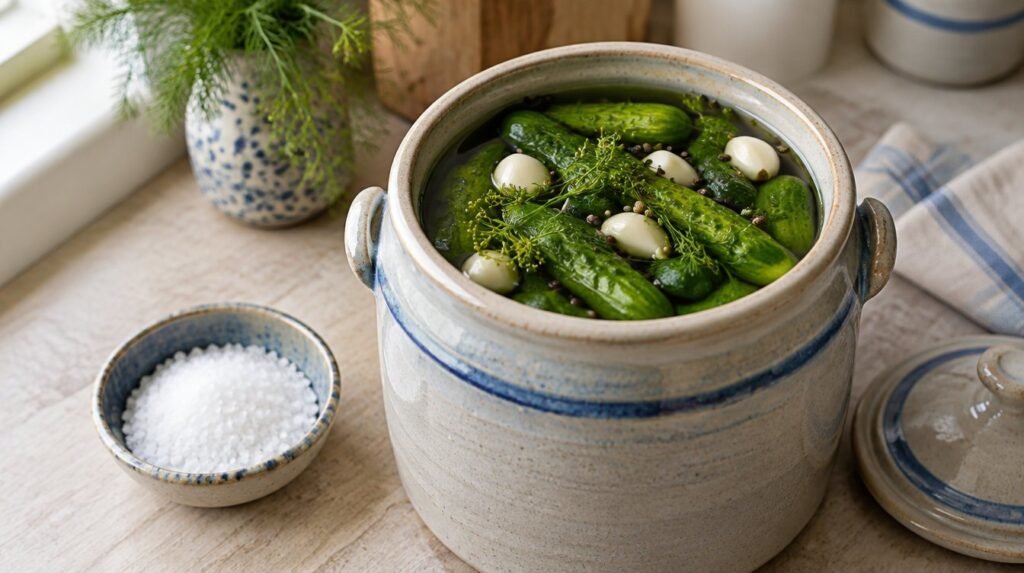
- Read the ingredient list. Cucumbers, water, salt, garlic and spices with no vinegar is a strong sign of a true lacto-fermented pickle.
- Check the wording. Phrases like “naturally fermented,” “unpasteurized” or “live cultures” help. “Pasteurized” means any live bacteria are gone.
- Expect cloudy brine. Cloudiness and a little sediment are normal in fermented pickles.
At home
The National Center for Home Food Preservation dill pickle recipe calls for fermenting at 70 to 75°F for about 3 to 4 weeks, or 5 to 6 weeks at 55 to 65°F. Avoid temperatures above 80°F, which make pickles too soft. Fully fermented pickles keep in the refrigerator for about 4 to 6 months if kept free of scum and mold.
Use the tested recipe exactly, check the crock several times a week and skim off any surface scum. If you already ferment vegetables, the same habits apply to sauerkraut and other brined vegetables.
Are dill pickles fermented?
Some are. Refrigerated dill pickles made with only salt brine are usually fermented, while most shelf-stable dills are vinegar-based or pasteurized after fermentation (EPA).
Do pickles have probiotics?
Only unpasteurized fermented pickles are likely to contain live bacteria, and their strains and counts are rarely known. Vinegar and pasteurized pickles are not a source of live cultures.
Are refrigerator pickles fermented?
Not usually. Most refrigerator pickles are quick pickles made with vinegar and kept cold, though some refrigerated brands are fermented in salt brine.
How long does it take to ferment pickles at home?
About 3 to 4 weeks at 70 to 75°F, or 5 to 6 weeks at 55 to 65°F (NCHFP).
Is pickle juice fermented?
Only if it came from a fermented, unpasteurized jar. Brine from a vinegar pickle is seasoned vinegar and salt, not a fermented drink.
Related topics
- Do Pickles Have Probiotics?: what live cultures pickles can and cannot provide.
- Best Fermented Pickles: how to compare jars by label.
- Fermented Foods for Gut Health: where pickles fit among other ferments.
- Does Canned Sauerkraut Have Probiotics?: the same pasteurization question for sauerkraut.
- Probiotic Foods: other foods that may contain live microbes.
Sources
- Types of Pickles (University of Nebraska-Lincoln Extension)
- Food Preservation: Quick-Process Pickles (Ohio State University Extension)
- Fermenting Dill Pickles (Penn State Extension)
- Dill Pickles (National Center for Home Food Preservation, University of Georgia)
- AP-42 Section 9.8.3: Pickles, Sauces, and Salad Dressings (U.S. Environmental Protection Agency, 1995)
- Marco ML, et al. The International Scientific Association for Probiotics and Prebiotics (ISAPP) consensus statement on fermented foods (Nature Reviews Gastroenterology & Hepatology, 2021)
- McMurtrie EK, et al. Effect of brine acidification on fermentation microbiota, chemistry, and texture quality of cucumbers fermented in calcium or sodium chloride brines (Journal of Food Science, 2019)
- Fan S, et al. Survival and growth of probiotic lactic acid bacteria in refrigerated pickle products (Journal of Food Science, 2017)
- Wastyk HC, et al. Gut-microbiota-targeted diets modulate human immune status (Cell, 2021)
- Pickles, cucumber, dill or kosher dill (SR Legacy) (USDA FoodData Central)
- Sodium in Your Diet (U.S. Food and Drug Administration)