What to Eat when Stomach is Upset? A Clear Answer
What to eat when your stomach is upset
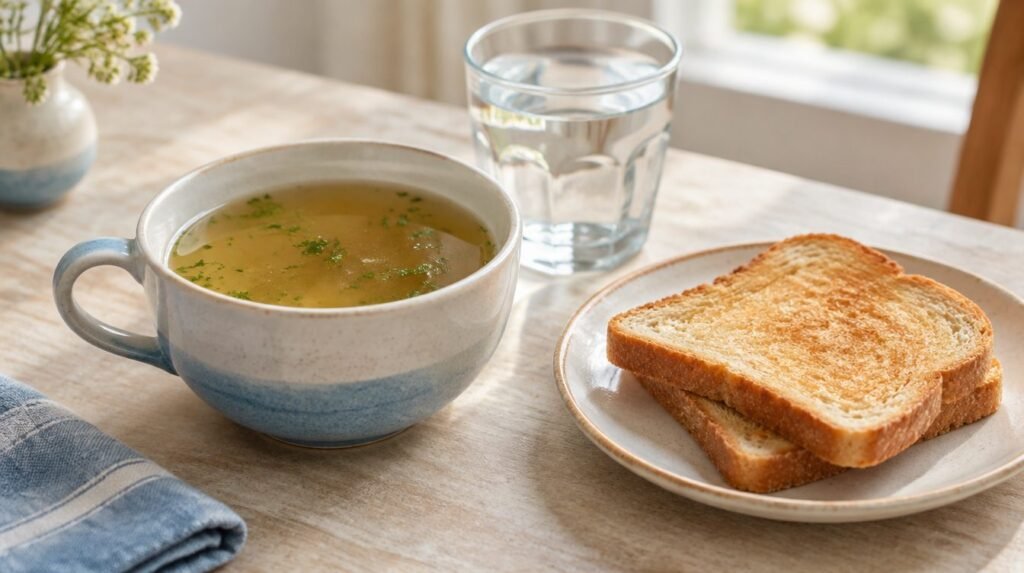
When your stomach is upset, start with small sips of fluid, then try small portions of bland, easy-to-digest foods such as crackers, toast, rice, bananas, oats, noodles or soup. For a day or two, skip greasy and very sugary foods, alcohol and caffeine, then return to your usual diet as your appetite comes back.
How to eat with an upset stomach, step by step
Fluids come first
Vomiting and diarrhea drain water and salts. After vomiting, a Cleveland Clinic physician suggests waiting a few hours, then taking ice chips or small sips of water about every 15 minutes. Adults can also try clear broth or noncaffeinated sports drinks (Mayo Clinic), though sports drinks may not replace important minerals; over-the-counter oral rehydration solutions are most helpful for mild dehydration (CDC). The National Institute of Diabetes and Digestive and Kidney Diseases (NIDDK) advises them for older adults, people with weakened immunity, and anyone with severe diarrhea or signs of dehydration.
For children, NIDDK advises an oral rehydration solution used as directed; babies should keep getting breast milk or formula, and parents should ask a doctor before giving a baby a solution. The American Academy of Pediatrics (AAP) notes that children with mild diarrhea often don’t need one, and that juices, soft drinks and sports drinks have the wrong amounts of sugar and salt. For a dehydrated child, CDC guidance starts with 1 teaspoon (5 mL) at a time, increasing as tolerated.
Then add bland foods
Once liquids stay down, try small portions. Mayo Clinic suggests waiting about six hours after vomiting before eating solids, starting with gelatin, crackers and toast. MedlinePlus suggests 6 to 8 small meals a day of foods such as toast, baked chicken or fish, potatoes, noodles and rice. As you improve, add scrambled eggs, skinless poultry and cooked vegetables (Cleveland Clinic). If nausea returns, pause.
What to skip for a day or two
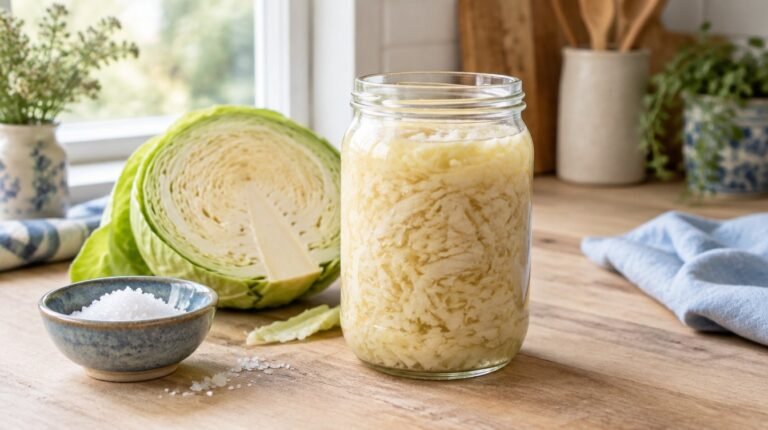
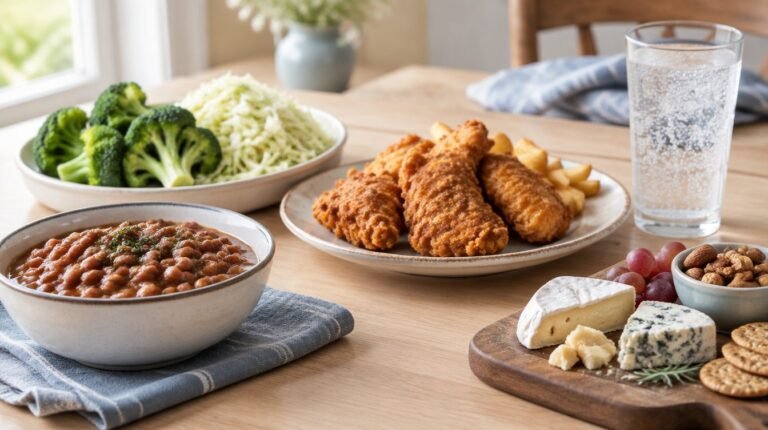
With acute diarrhea, NIDDK advises avoiding alcohol, caffeine, sugary drinks and foods, sugar-free gum and candy made with sugar alcohols, fried and fatty foods, and milk products that contain lactose; some people digest lactose poorly for a month or more afterward. Mayo Clinic adds nicotine and highly seasoned foods. The bland diet MedlinePlus describes also leaves out raw vegetables, bran, nuts, seeds and fermented foods such as sauerkraut. More in what to eat when your stomach is upset with diarrhea.
If it’s indigestion rather than a stomach bug
NIDDK lists fizzy drinks, caffeine, fatty or greasy foods, fruits and juices, and grain and wheat products as foods that may lead to indigestion. MedlinePlus advises small, frequent meals and not eating within 2 hours of bedtime.
Is the BRAT diet still recommended?
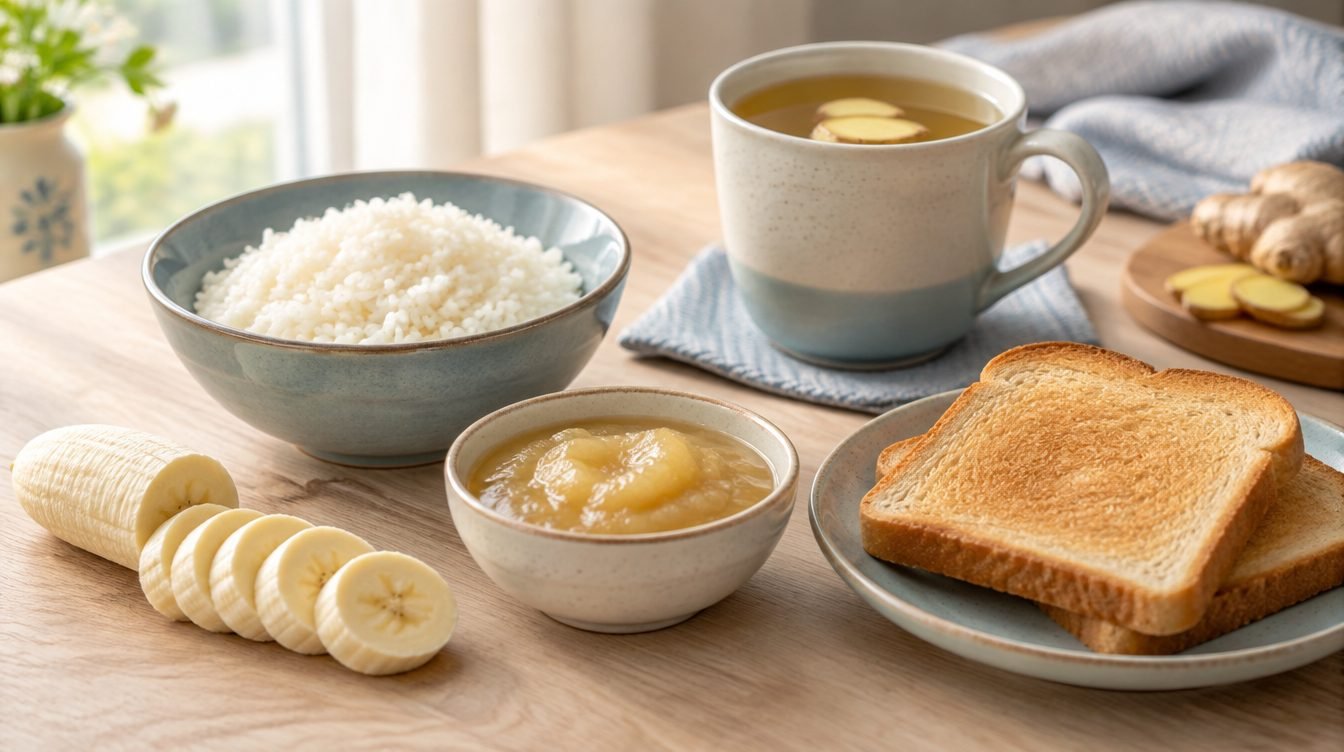
Not on its own. A Cleveland Clinic physician calls BRAT foods (bananas, rice, applesauce, toast) fine for a day or two at your sickest, but they lack protein, calcium, vitamin B12 and fiber. CDC guidance for children calls the BRAT diet “unnecessarily restrictive” and favors a quick return to an age-appropriate diet with complex carbohydrates, lean meats, yogurt, fruits and vegetables. The AAP says it is no longer considered useful. NIDDK says most experts don’t recommend fasting or a restricted diet, and that once your appetite returns you can usually eat your normal diet, even with diarrhea.
Where yogurt and ginger fit
Yogurt appears on CDC and AAP food lists for children recovering from diarrhea, and MedlinePlus allows low-fat yogurt for adults, though very severe diarrhea may mean stopping dairy for a few days. Yogurt is lower in lactose than other milk products, and some people with lactose intolerance find it easier to tolerate. Don’t count on its cultures to speed recovery: a 2020 Cochrane review of 82 trials, mostly in children, found probiotics probably make little or no difference to whether diarrhea lasts 48 hours or longer. NIDDK says some probiotics may shorten diarrhea, but research is ongoing. More in is yogurt good for an upset stomach.
Ginger may help nausea and vomiting in pregnancy, but its benefit after surgery or chemotherapy is uncertain, and most studies used supplements, not food (National Center for Complementary and Integrative Health). It can cause heartburn or diarrhea; in pregnancy, ask a provider before taking ginger supplements.
Why fluids matter most, and when to see a doctor
Most people with norovirus get better within 1 to 3 days; meanwhile the main risk is dehydration, especially for young children, older adults and people with other illnesses (CDC). Warning signs include extreme thirst, dry mouth, less urine, dark urine and light-headedness or fainting, and in young children no wet diapers for 3 hours or no tears when crying (NIDDK).
When to see a doctor. Get care right away for any of these:
- Signs of dehydration.
- Vomit that contains blood, looks like coffee grounds or is green, or vomiting with chest pain, an unusually severe headache, or a high fever and stiff neck (Mayo Clinic).
- Black or tarry stools, or stools with blood or pus.
- A high fever, above 102°F (39°C).
- Severe belly or rectal pain, or frequent vomiting.
- Six or more loose stools in a day.
- A change in mental state, such as unusual irritability or lack of energy (NIDDK).
- Stomach-bug symptoms in a baby, a child born prematurely or with other health conditions, an older adult, a pregnant woman or an adult with weakened immunity (NIDDK).
See a doctor if:
- Diarrhea lasts more than 2 days in adults or a day in children.
- Vomiting lasts more than two days in adults, 24 hours in children under 2 or 12 hours in babies (NIDDK; Mayo Clinic).
Ask a doctor before giving children over-the-counter diarrhea medicines, and avoid them with bloody diarrhea or fever. This article is general information, not medical advice.
Related terms
- Bland diet: soft, not spicy, low-fiber foods (MedlinePlus).
- Oral rehydration solution: a drink made to replace water and salts lost in diarrhea; the AAP advises against homemade versions.
- Viral gastroenteritis: the “stomach flu,” caused by viruses such as norovirus.
- Gas and bloating: beans, cruciferous vegetables, dairy and sugar alcohols may cause gas (NIDDK); see what to eat when your stomach hurts from gas.
More on settling an upset stomach
- What to Eat When Your Stomach Hurts? A Clear Answer: choices when pain is the main symptom.
- Upset Stomach Remedies: What You Need to Know: home measures and their limits.
- Diet for Sensitive Stomach: A Practical Guide: everyday eating for a sensitive gut.
- How to Digest Food Faster: A Step-by-Step Guide: habits for meals that sit lighter.
- Worst Foods for Gut Health: A Practical Guide: what to limit once you’re well.
Sources
- National Institute of Diabetes and Digestive and Kidney Diseases (NIDDK). Eating, Diet, & Nutrition for Diarrhea, last reviewed September 2024.
- NIDDK. Symptoms & Causes of Diarrhea, last reviewed September 2024.
- NIDDK. Eating, Diet, & Nutrition for Viral Gastroenteritis (“Stomach Flu”), last reviewed May 2018.
- NIDDK. Treatment of Viral Gastroenteritis (“Stomach Flu”), last reviewed May 2018.
- NIDDK. Symptoms & Causes of Viral Gastroenteritis (“Stomach Flu”), last reviewed May 2018.
- NIDDK. Eating, Diet, & Nutrition for Indigestion, last reviewed March 2025.
- NIDDK. Eating, Diet, & Nutrition for Lactose Intolerance.
- NIDDK. Eating, Diet, & Nutrition for Gas in the Digestive Tract, last reviewed June 2021.
- Centers for Disease Control and Prevention (CDC). About Norovirus, April 24, 2024.
- Centers for Disease Control and Prevention. Managing Acute Gastroenteritis Among Children: Oral Rehydration, Maintenance, and Nutritional Therapy. MMWR Recommendations and Reports 2003;52(RR-16), November 21, 2003.
- Mayo Clinic. Viral gastroenteritis (stomach flu): Diagnosis and treatment, April 30, 2025.
- Mayo Clinic. Nausea and vomiting: Causes and when to see a doctor, July 10, 2026.
- MedlinePlus (National Library of Medicine). When you have nausea and vomiting, reviewed July 15, 2024.
- MedlinePlus (National Library of Medicine). When you have diarrhea, reviewed October 1, 2025.
- MedlinePlus (National Library of Medicine). Bland diet, reviewed April 30, 2026.
- American Academy of Pediatrics, HealthyChildren.org. Diarrhea in Children: What Parents Need to Know, updated May 25, 2021.
- Cleveland Clinic Health Essentials. Why You Shouldn’t Follow a Strict BRAT Diet When You’re Sick (with Sarah Pickering Beers, MD), March 27, 2025.
- Cleveland Clinic Health Essentials. Here’s What To Eat or Drink After Throwing Up (with Matthew Goldman, MD), January 22, 2026.
- Collinson S, Deans A, Padua-Zamora A, et al. Probiotics for treating acute infectious diarrhoea. Cochrane Database of Systematic Reviews 2020;(12):CD003048 (Liverpool School of Tropical Medicine repository record).
- National Center for Complementary and Integrative Health (NCCIH). Ginger: Usefulness and Safety, last updated February 2025.