Yogurt Recipes You Can Make at Home
Cooking with plain and Greek yogurt
Yogurt recipes cover far more than breakfast. Plain yogurt can stand in for sour cream, mayonnaise or buttermilk, thin into dressings, tenderize chicken and keep baked goods moist. Greek yogurt is strained, so it is thicker and higher in protein: USDA lists 10.2 g of protein per 100 g for nonfat plain Greek yogurt versus 5.3 g for low-fat plain yogurt.
If you eat yogurt partly for its cultures, how you use it matters. Yogurt bacteria can be killed at temperatures above 130°F (University of Alaska Fairbanks Extension), so baked, simmered and grilled dishes lose them, while dips, bowls, smoothies and frozen treats keep them. Look for yogurt without the “does not contain live and active cultures” statement that federal rules require on heat-treated yogurt (21 CFR 131.200).
Research on fermented foods is still early. In a 10-week Stanford trial of 36 healthy adults, a diet high in fermented foods such as yogurt, kefir and kimchi was linked with greater gut microbial diversity and lower levels of 19 inflammatory proteins (Stanford Medicine). It was small and did not test yogurt alone. For when heat is fine, see can you cook Greek yogurt.
Breakfast
- Greek Yogurt Breakfast: quick morning ideas built on Greek yogurt.
- Greek Yogurt Bowl: a base formula plus sweet and savory toppings.
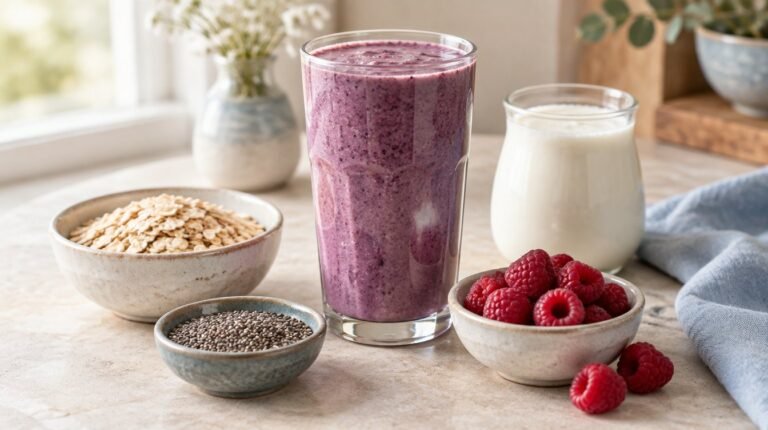
- Greek Yogurt Smoothie: a simple ratio and six blends.
- Greek Yogurt and Protein Powder: how to mix the two smoothly.
Dips, sauces and dressings
- Greek Yogurt Dip Recipes: creamy dips for vegetables, chips and pita.
- Greek Yogurt Sauce: a base sauce and how to keep it from curdling.
- Greek Yogurt Dressing: creamy dressings without mayo.
- Savory Greek Yogurt Recipes: savory ways to use Greek yogurt beyond dips.
Mains
- Greek Yogurt Marinated Chicken: why yogurt tenderizes and how long to marinate.
- Dinner Recipes with Greek Yogurt: dinner ideas that put a tub of Greek yogurt to work.
Baking
- Baking with Greek Yogurt: how Greek yogurt changes moisture and texture in baked goods.
- Baking with Plain Yogurt: using regular plain yogurt when you bake.
- Greek Yogurt Banana Bread: a full recipe with gram amounts.
- Cottage Cheese Greek Yogurt Cheesecake: baked and no-bake versions.
Frozen treats and desserts
- Frozen Yogurt Bark Recipes: spread, top and freeze; no machine needed.
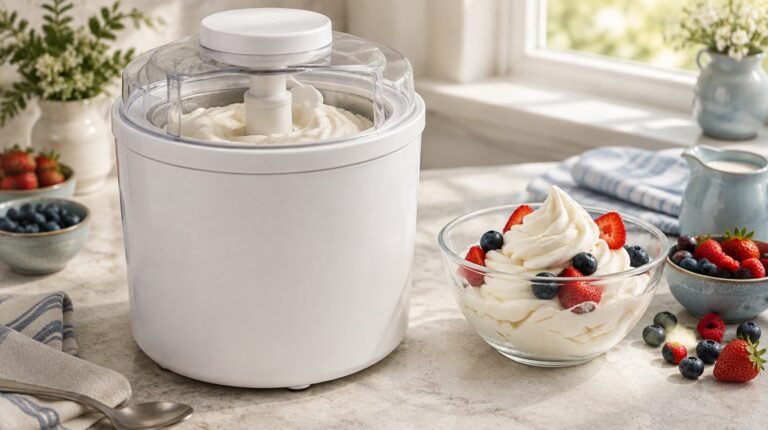
- Greek Yogurt Ice Cream: a base recipe with or without a machine.
- How to Make Frozen Yogurt: the core method, step by step.
- Frozen Yogurt Ninja Creami: freezing, programs and re-spins.
- Greek Yogurt Dessert: low-sugar sweet bowls and treats.
- Greek Yogurt and Pudding Mix: a two-ingredient pudding.
- Greek Yogurt Snacks: sweet and savory snacks to pack.
Recipe collections by goal or brand
- Plain Yogurt Recipes: ideas for regular, unstrained yogurt.
- Greek Yogurt Recipes: our broad Greek yogurt collection.
- High Protein Greek Yogurt Recipes: recipes built around protein.
- Greek Yogurt Recipes for Weight Loss: filling, lower-calorie options.
- Keto Greek Yogurt Recipes: low-carb ideas.
- Fage Recipes: and Chobani Recipes, if you buy those brands.
Three quick no-cook ideas
- Herb dip: stir 1 cup plain Greek yogurt with 1 small grated garlic clove, 1 tablespoon lemon juice, chopped dill and a pinch of salt.
- Breakfast parfait: layer 3/4 cup plain yogurt with berries and a spoonful of oats or nuts; add honey to taste.
- Cucumber salad: toss sliced cucumber and red onion with 1/2 cup yogurt, a little vinegar, salt and pepper.
All three are uncooked, so the yogurt’s live cultures, if it has them, stay in the dish.
Homemade yogurt
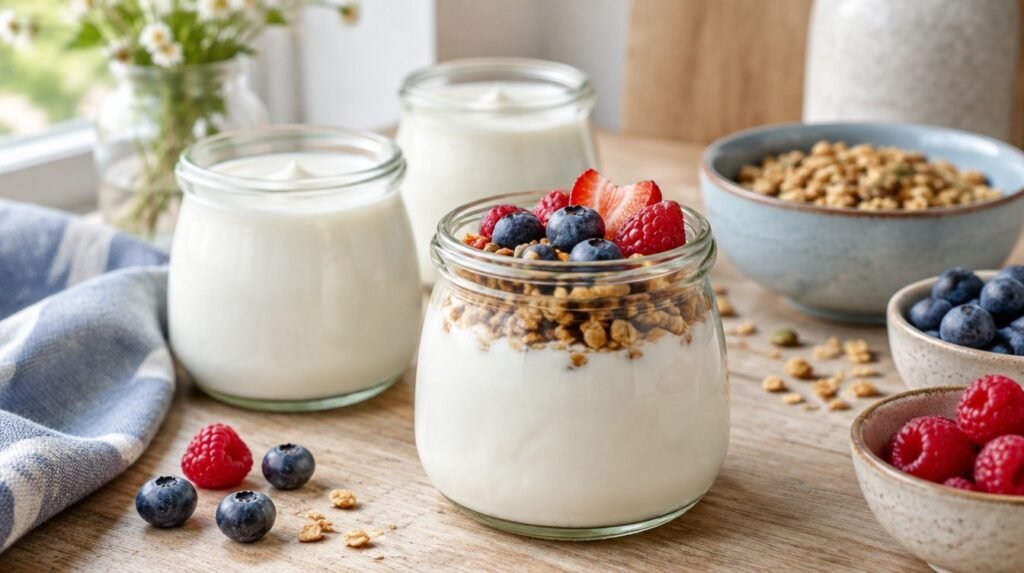
Making your own yogurt lets you choose the milk, the starter and how thick you strain it.
- How to Make Yogurt at Home: the full step-by-step method.
- How to Make Greek Yogurt: straining for a thick, high-protein base.
- Instant Pot Yogurt: using the yogurt setting.
- How to Make Yogurt without a Yogurt Maker: incubating with equipment you already have.
- How Long Does Homemade Yogurt Last: storage times and spoilage signs.
Storing yogurt dishes safely
- Keep the refrigerator at 40°F (4°C) or below, and don’t leave yogurt dishes out more than 2 hours, or 1 hour above 90°F (FoodSafety.gov).
- Plain homemade yogurt keeps up to 14 days at 40°F or below (University of Illinois Extension).
- Once you mix in other ingredients, use the shorter clock. FoodSafety.gov gives 3 to 4 days for prepared salads and most leftovers (Cold Food Storage Chart), a sensible limit for dips, sauces and marinades too.
- Use a clean spoon each time, and throw out anything with mold or an off smell.
Related topics
- What Is Greek Yogurt?: how straining changes texture and protein.
- Best Yogurt for Gut Health: what to look for on the label.
- Plain Yogurt: the basics of the unstrained kind.
- Homemade Yogurt: why people make their own.
Sources
- Yogurt, Greek, plain, nonfat (FDC 170894) (USDA FoodData Central, SR Legacy)
- Yogurt, plain, low fat (FDC 170886) (USDA FoodData Central, SR Legacy)
- Making Yogurt at Home (FNH-00062) (University of Alaska Fairbanks Cooperative Extension Service)
- 21 CFR 131.200 Yogurt (Electronic Code of Federal Regulations)
- Fermented-food diet increases microbiome diversity, decreases inflammatory proteins, study finds (Stanford Medicine, 2021)
- 4 Steps to Food Safety (FoodSafety.gov, U.S. Department of Health and Human Services)
- Cold Food Storage Chart (FoodSafety.gov)
- Making Yogurt at Home (University of Illinois Extension, 2024)