Baking with Greek Yogurt: What You Need to Know
Baking with Greek yogurt: how it differs from regular yogurt
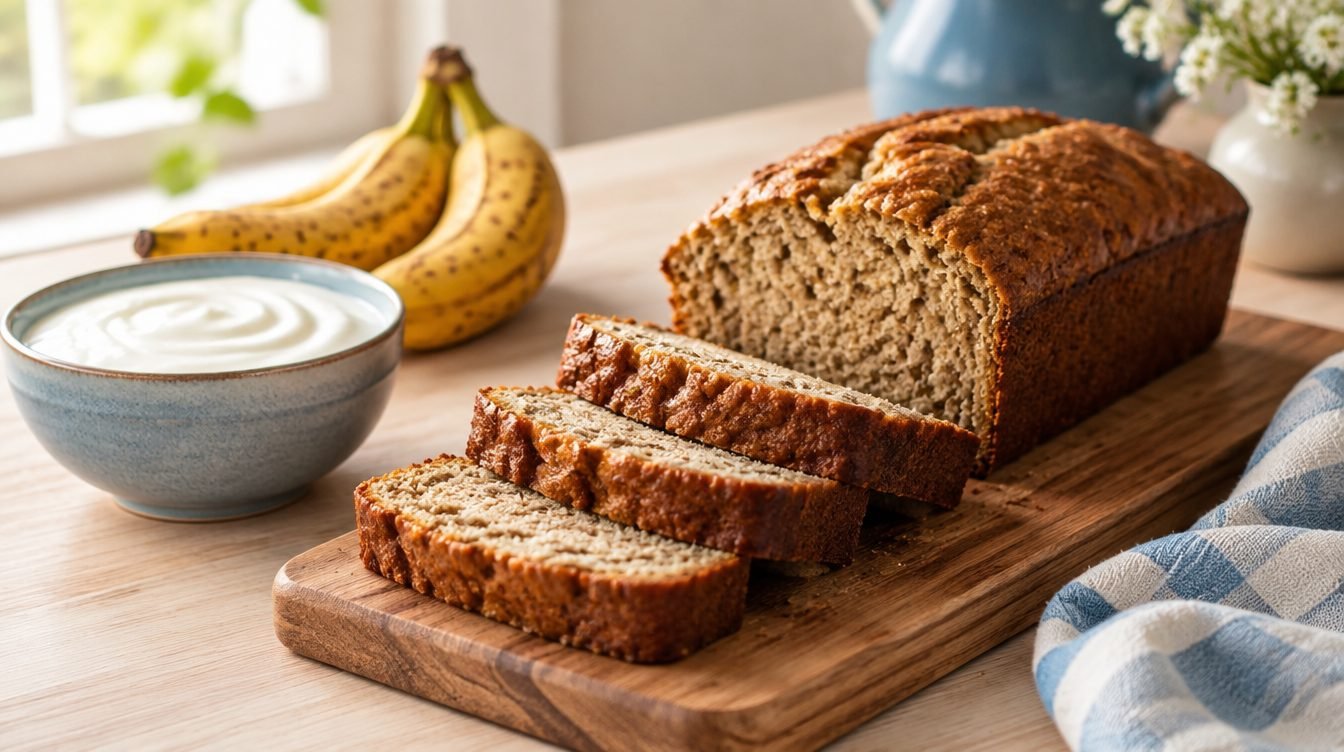
Baking with Greek yogurt works best when you use it as a thick, high-protein ingredient rather than a straight stand-in for regular yogurt. It can replace sour cream cup for cup and part of the butter or oil, adds tang and moisture to quick breads, muffins and pancakes, and loses its live cultures in the oven.
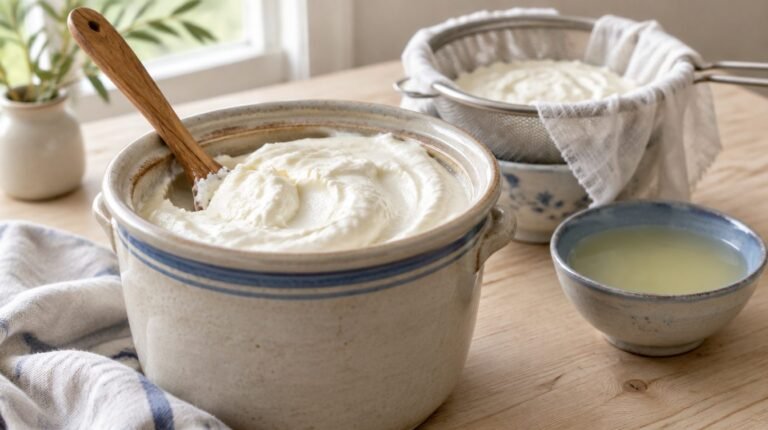
Greek yogurt is yogurt strained to separate out the liquid whey, which makes it thicker and concentrates the protein while lowering calcium, sodium and sugars (Oregon State University Extension). Dairies may also filter it or add milk proteins (University of Wisconsin–Madison; see How Is Greek Yogurt Made? Explained).
Greek yogurt beside the ingredients it replaces
| Per 100 g (USDA) | Water | Protein | Fat | Calories |
|---|---|---|---|---|
| Plain yogurt, whole milk | 87.9 g | 3.5 g | 3.3 g | 61 |
| Greek yogurt, plain, whole milk | 81.3 g | 9.0 g | 5.0 g | 97 |
| Plain yogurt, skim milk | 85.2 g | 5.7 g | 0.2 g | 56 |
| Greek yogurt, plain, nonfat | 85.1 g | 10.2 g | 0.4 g | 59 |
| Sour cream, cultured | 73.1 g | 2.4 g | 19.4 g | 198 |
| Butter, unsalted | 16.2 g | 0.9 g | 81.1 g | 717 |
| Canola oil | 0 g | 0 g | 100 g | 884 |
Whole-milk Greek yogurt holds less water than plain whole-milk yogurt and about 2.6 times the protein. USDA’s nonfat pair is nearly equal in water, but nonfat Greek still has almost twice the protein. Either way it is thicker than the yogurt or buttermilk many recipes expect, with a fraction of the fat in sour cream or butter.
It is also acidic: yogurt must reach pH 4.6 or lower (21 CFR 131.200), and the whey drained from Greek yogurt measured about pH 4.4 to 4.6 in one analysis (Karastamatis et al., 2022). That acid reacts with baking soda as regular yogurt’s does; the basics of acidity, moisture and tenderness are in Baking with Plain Yogurt: What You Need to Know.
What baking means for Greek yogurt’s gut-health value
The live cultures don’t survive. Yogurt cultures are killed above 130°F (54°C) (University of Alaska Fairbanks Cooperative Extension), and a quick bread is done at 190°F (88°C) or more in the center (Oregon State University Extension). In a lab study, small 30 g bread rolls baked 8 minutes at 175°C (347°F) heated to about 212°F (100°C) inside, and a probiotic Lactobacillus strain fell by roughly 99.99%, to about 10,000 per gram (Zhang et al., Wageningen University). A yogurt labeled with live and active cultures needs at least 10 million per gram at manufacture (21 CFR 131.200), and muffins bake far longer than those rolls.
The International Scientific Association for Probiotics and Prebiotics (ISAPP) still counts leavened breads as fermented foods, even though baking kills their microbes (ISAPP, 2021). But benefits tied to live cultures don’t carry over: a probiotic’s benefit must come at least partly from live microbes, and the European Food Safety Authority’s approved lactose-digestion claim covers live yogurt cultures, whose lactase does the work (ISAPP).
What the oven leaves is protein, calcium and relatively little lactose. Plain nonfat Greek yogurt has 2.54 g of lactose per 100 g (USDA), so the 1 1/2 cups in the Blueberry Oat Greek Yogurt Muffins on Greek Yogurt Recipes You Can Make at Home add about half a gram of lactose per muffin, by our arithmetic. Many people with lactose intolerance can handle about 12 g, roughly the lactose in a cup of milk (NIDDK).
If live cultures are why you eat yogurt, keep some out of the oven: spoon cold Greek yogurt onto a cooled slice. For what the evidence shows, see Is Greek Yogurt Good for You? What the Evidence Says.
How to bake with Greek yogurt: swaps and tips
Swap ratios from extension sources
| Instead of | Use | Source |
|---|---|---|
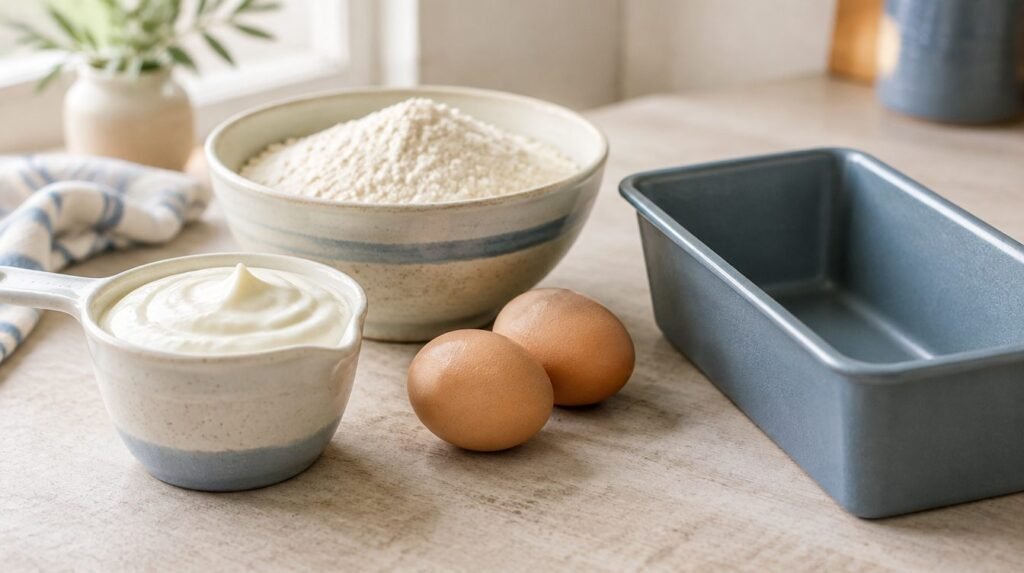
| 1 cup sour cream | 1 cup plain yogurt; plain nonfat Greek yogurt is a listed sour cream swap | Colorado State, Utah State and University of Maryland Extension |
| 1 cup butter | 1/2 cup butter plus 1/4 cup Greek yogurt | Illinois Extension blog |
| 1 cup oil | 3/4 cup Greek yogurt | Illinois Extension blog |
| 1 cup regular plain yogurt or buttermilk | About 2/3 cup whole-milk Greek yogurt plus 1/3 cup water | Our estimate from the USDA water values above; Colorado State lists yogurt and buttermilk as 1:1 swaps |
The butter swap removes one stick (113 g), about 810 calories and 92 g of fat (USDA), and adds back roughly 60 calories of whole-milk Greek yogurt, by our arithmetic. The oil swap replaces all the fat, a bigger step than the general advice from University of Maine Cooperative Extension that fat can often be cut by up to a third, best in quick breads, so replacing a third is a sensible first try. In one small undergraduate study, cookies with 25 to 75% of their butter replaced by Greek yogurt grew moister and firmer, spread less and were liked less as the share rose; 25% worked best (Zahazunizam, 2026).
When to thin it
Thin Greek yogurt when a recipe calls for regular yogurt or buttermilk. By our arithmetic from USDA values, 1 part water to 2 parts whole-milk Greek yogurt restores roughly the 88% water of regular whole-milk yogurt. Nonfat Greek is already close in water to plain nonfat yogurt, so add liquid a spoonful at a time until the batter looks right. If you strained the yogurt yourself, stir back some whey: Ultimate Health Solutions, the company that publishes this site, recommends using leftover whey like buttermilk in baking. In place of sour cream, use Greek yogurt as is; it already holds more water.
Leavening, heat and safety
- Leavening: more yogurt means more acid. Colorado State’s chart replaces 1 teaspoon of baking powder with 1/4 teaspoon of baking soda plus 1/2 cup of yogurt (with 1/2 cup less other liquid), and NDSU Extension’s blueberry and oatmeal muffins pair 1 1/2 cups of Greek yogurt with 1 teaspoon each of baking soda and baking powder.
- Heat: advice differs. Maine and Ohio State Extension note that yogurt is not heat stable, and Maine advises against using it for sour cream in cooked recipes, though extension baking recipes use Greek yogurt routinely. For toppings, fillings and sauces, Missouri Extension notes that lower-fat yogurts curdle more easily and suggests higher-fat yogurt or cornstarch.
- Safety: don’t taste raw batter, because raw flour and raw eggs can carry harmful bacteria (FDA). Bake quick breads until a pick comes out clean or the center reads at least 190°F (88°C) (Oregon State University Extension).
Which bakes suit Greek yogurt
Quick breads, muffins and pancakes are the easiest fit: NDSU’s peanut butter bread uses 1/2 cup of plain nonfat Greek yogurt per loaf, NDSU’s muffins 1 1/2 cups, and Illinois Extension’s protein-packed pancakes about 3/4 cup with 1/2 cup of flour. Cookies are less forgiving, as the study above suggests. For unbaked fillings, spreads and frostings, yogurt cheese drained 8 to 24 hours (Illinois Extension) can stand in for cream cheese (Washington State University Extension), and since it is never baked, it keeps its cultures.
More on Greek yogurt
- Baking with Plain Yogurt: What You Need to Know: acidity, moisture and swaps for regular yogurt.
- Greek Yogurt Recipes You Can Make at Home: includes the blueberry oat muffins.
- How to Make Greek Yogurt: A Step-by-Step Guide: strain your own and keep the whey.
- Greek Yogurt Protein: What You Need to Know: how much protein each type adds.
- Homemade Greek Yogurt: What You Need to Know: yield, cost and whey uses.
Sources
- Yogurt Basics (Food Hero Monthly) (Oregon State University Extension Service, 2016)
- Wilbanks D. Yogurt Monograph Series: Concentrating Yogurt (Center for Dairy Research, University of Wisconsin–Madison, Dairy Pipeline, Winter 2024)
- Yogurt, plain, whole milk (FDC ID 171284) (USDA FoodData Central)
- Yogurt, Greek, plain, whole milk (FDC ID 171304) (USDA FoodData Central)
- Yogurt, plain, skim milk (FDC ID 170887) (USDA FoodData Central)
- Yogurt, Greek, plain, nonfat (FDC ID 170894) (USDA FoodData Central)
- Cream, sour, cultured (FDC ID 171257) (USDA FoodData Central)
- Butter, without salt (FDC ID 173430) (USDA FoodData Central)
- Oil, canola (FDC ID 172336) (USDA FoodData Central)
- 21 CFR 131.200 Yogurt (Electronic Code of Federal Regulations, National Archives)
- Karastamatis S, Zoidou E, Moatsou G, Moschopoulou E. Effect of modified manufacturing conditions on the composition of Greek strained yogurt and the quantity and composition of generated acid whey (Foods, 2022)
- Cascio J, Dinstel RR. Making Yogurt at Home (FNH-00062) (University of Alaska Fairbanks Cooperative Extension Service)
- Banana Oatmeal Bread (Food Hero, Oregon State University Extension Service)
- Zhang L, Taal M, Boom RM, Chen XD, Schutyser MAI. Viability of Lactobacillus plantarum P8 in bread during baking and storage (20th International Drying Symposium, 2016; Wageningen University & Research repository)
- Marco ML, et al. The International Scientific Association for Probiotics and Prebiotics (ISAPP) consensus statement on fermented foods (Nature Reviews Gastroenterology & Hepatology, 2021)
- Eating, Diet, & Nutrition for Lactose Intolerance (National Institute of Diabetes and Digestive and Kidney Diseases)
- Kendall P. Ingredient Substitutions (Fact Sheet 9.329) (Colorado State University Extension, revised 2013)
- Laurtizen G. List of Ingredient Substitutions for Cooking and Baking (Utah State University Extension)
- Jackey B, Bush C. Recipe Swaps: Common Substitutions for Making Recipes Healthier (FS-1174) (University of Maryland Extension, 2021, updated 2024)
- Furgiuele L. The Kitchen is a Laboratory and Food is the Experiment (University of Illinois Extension, Live Well. Eat Well. blog, August 21, 2014)
- Altering Recipes for Better Health (Bulletin #4167) (University of Maine Cooperative Extension)
- Zahazunizam SAM. The physicochemical, nutritional and sensory properties of cookies made with Greek yogurt as a fat replacer (bachelor’s thesis, Universiti Sains Malaysia, 2026)
- Garden-Robinson J, Gehl A. Coffee Time: Exploring a Favorite Beverage (FN1894) (NDSU Extension)
- Brinkman P. Modifying a Recipe to Be Healthier (HYG-5543) (Ohio State University Extension, 2015)
- Mills-Gray S. Can-Do Recipes: Yogurt (N689) (University of Missouri Extension)
- Handling Flour Safely: What You Need to Know (U.S. Food and Drug Administration)
- Peanut Butter Bread (NDSU Extension)
- Weston L. Recipe Rescue: Pancakes (University of Illinois Extension, Illinois Nutrition Edition, July 17, 2014)
- Making Yogurt at Home (University of Illinois Extension)
- Smith DK. Yogurt Made Simple (Washington State University Extension, distributed by the UC Master Food Preserver Program)
- The Ultimate Yogurt Guide (eBook), Ultimate Health Solutions, publisher of this site