Greek Yogurt and Pudding Mix: What You Need to Know
What Greek yogurt and pudding mix is
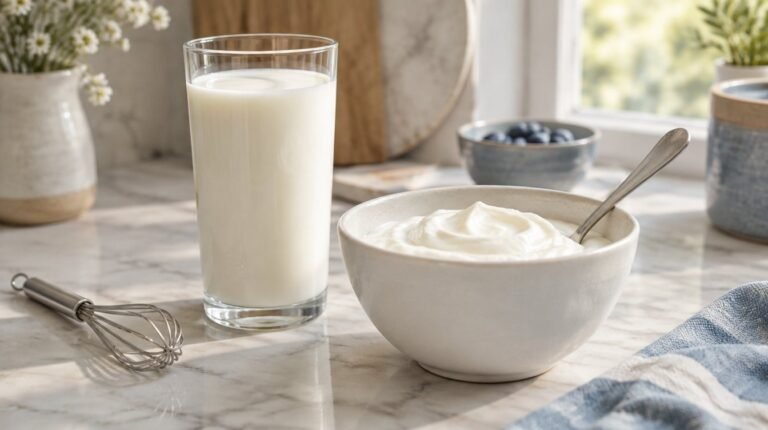
Greek yogurt and pudding mix is a no-cook dessert made by stirring dry instant pudding mix straight into plain Greek yogurt. In a minute or two you get a thick, sweet, pudding-like bowl with far more protein than regular pudding. The mix supplies flavor, sweetness and extra body; the yogurt supplies protein, tang and, if the label says so, live cultures.
It works with any instant flavor, sugar-free or regular. Cook-and-serve pudding mix does not work here, because its starch only thickens when heated.
How the combination works
Instant pudding mix is built to set without heat. A Kraft patent for sugar-free, fat-free instant pudding explains that these mixes use starch in pregelatinized form, meaning it was cooked and dried at the factory so it swells in cold liquid. Phosphate salts such as tetrasodium pyrophosphate react with the protein and calcium in milk to form a gel; in one example, the mix set in about five minutes in 2 cups of cold skim milk (U.S. Patent 5,597,603).
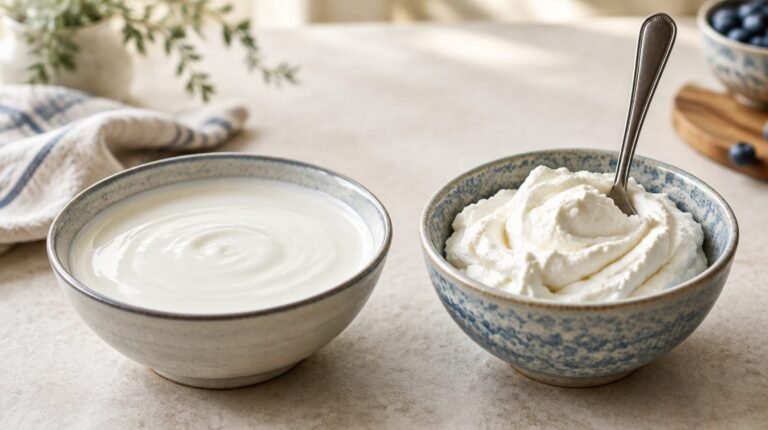
Greek yogurt brings plenty of milk protein and calcium but much less free liquid than milk, since it has been strained. The starch soaks up what water there is, so the blend turns very thick, close to a mousse or cheesecake filling. A splash of milk loosens it to a spoonable pudding.
Base recipe (4 servings)
- 16 ounces (454 g, about 2 cups) plain Greek yogurt, nonfat or whole milk
- 1 small (about 1-ounce, 4-serving) box sugar-free instant pudding mix, any flavor
- 1/4 cup (61 g) milk, plus more as needed
- Put the yogurt in a bowl and sprinkle the dry mix over it.
- Whisk for 1 to 2 minutes until no dry streaks remain.
- Stir in the milk a tablespoon at a time until it is as loose as you like.
- Chill for 10 to 15 minutes so the starch fully hydrates, then divide into 4 portions.
Treat this as a starting ratio, not a fixed rule. It lines up with a University of Kentucky recipe that uses 1 tablespoon of instant cheesecake pudding mix per 1/2 cup of Greek yogurt, with a splash of milk if you want it creamier (University of Kentucky). For a lighter dip, K-State Research and Extension uses about 4 tablespoons of vanilla instant mix for 3 cups of sour cream and yogurt (K-State). If the full box is too sweet or too stiff for you, start with half.
Estimated nutrition per serving
These are estimates calculated from USDA FoodData Central values for nonfat and whole-milk plain Greek yogurt, low-calorie instant pudding dry mix (USDA lists a 4-serving package as 32 g) and 2% milk. Your brand of mix and yogurt will differ, so check the labels.
| Per serving | Calories | Protein | Fat | Carbs | Sugars | Sodium |
|---|---|---|---|---|---|---|
| With nonfat Greek yogurt | about 103 | about 12 g | about 1 g | about 12 g | about 4.5 g | about 350 mg |
| With whole-milk Greek yogurt | about 146 | about 11 g | about 6 g | about 12 g | about 5.5 g | about 350 mg |
| Ready-to-eat chocolate pudding, 4-oz cup (USDA) | 153 | 2.3 g | 5.0 g | 24.8 g | 18.6 g | 164 mg |
Two numbers stand out. Protein is roughly five times that of a pudding cup. Sodium is about twice as high, because USDA lists 3,750 mg of sodium per 100 g of the dry low-calorie mix, which works out to about 300 mg per serving from the mix alone.
Variations
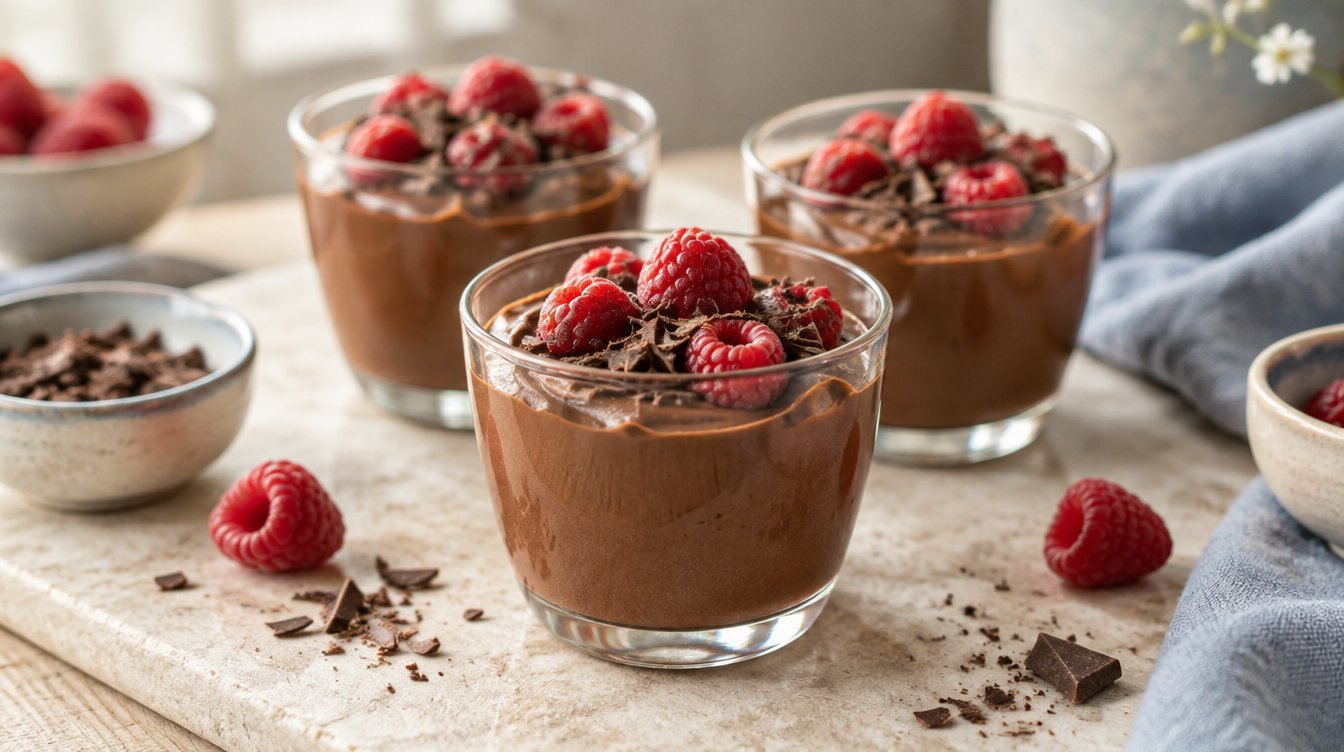
- Chocolate: use sugar-free chocolate instant mix. USDA lists that package at 40 g, slightly larger, and its dry mix has more protein and fiber per gram than the vanilla-type mix (USDA). Top with raspberries.
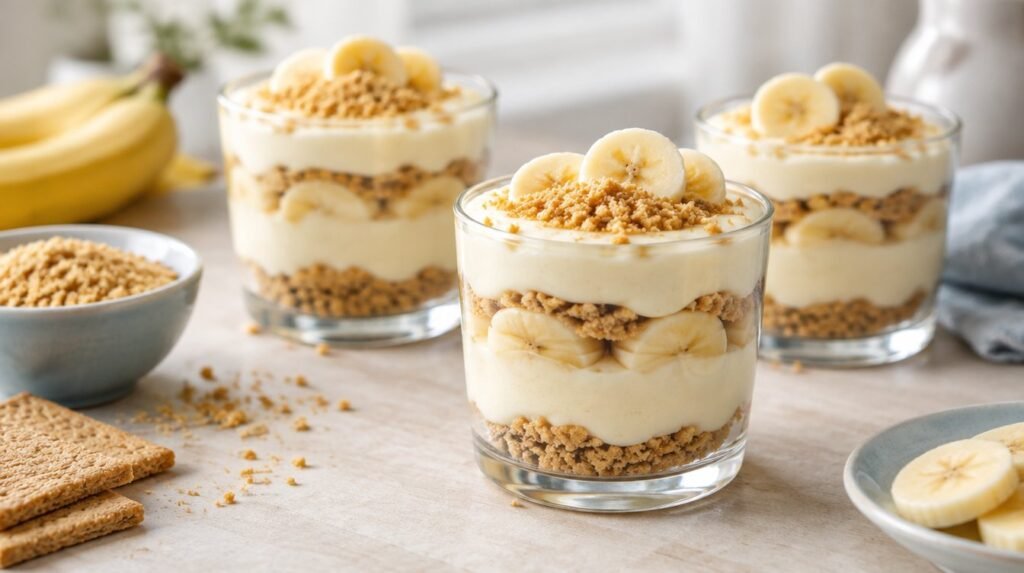
- Banana cream: use banana cream or vanilla mix, fold in one sliced banana and add a few crushed vanilla wafers just before eating.
- Cheesecake: use cheesecake mix and top with berries, as the Kentucky recipe suggests. Lemon zest and a tablespoon of graham cracker crumbs push it closer to cheesecake.
- Protein: whisk in one scoop of vanilla or chocolate protein powder plus 2 to 4 extra tablespoons of milk, since the powder thickens it further. See Greek yogurt and protein powder for more on combining them.
- Fruit dip: thin the base with extra milk and serve with apple slices or strawberries.
For more ideas in the same spirit, see Greek yogurt dessert and Greek yogurt snacks.
About sugar-free pudding sweeteners
Sugar-free instant mixes replace sugar with high-intensity sweeteners. The Kraft patent names aspartame as its preferred sweetener, alone or with others such as acesulfame-K or sucralose (U.S. Patent 5,597,603). Check the ingredient list on your box for the exact ones.
The FDA has food additive listings for six high-intensity sweeteners, including aspartame, acesulfame potassium and sucralose, and says sweeteners it has authorized are safe for the general population under their approved conditions of use. People with phenylketonuria (PKU) should avoid or restrict aspartame, which is why labels carry a phenylalanine statement (FDA).
“Sugar-free” does not mean carb-free. The dry low-calorie mix in USDA’s database is about 85 percent carbohydrate, very little of it sugar, so each serving of the base still gets around 7 grams of carbs from the mix (USDA).
Storage
- Refrigerate it covered at 40°F (4°C) or below, and don’t leave it out more than 2 hours, or 1 hour above 90°F (FoodSafety.gov).
- Eat it within about 2 days. A Clemson-based storage chart from Ohio State University Extension gives opened pudding about 2 days in the refrigerator, compared with 7 to 14 days for yogurt (OSU Extension). Once mixed, go by the shorter time.
- Expect some weeping. A little liquid may collect on top after a day; stir it back in.
- Freezing: the same chart notes pudding can separate when frozen. For a frozen version, the Ninja Creami frozen yogurt method is a better fit.
Do the live cultures survive?
Nothing in this recipe is heated, so any live cultures in the yogurt go into the bowl. Yogurt bacteria are killed by heat above about 130°F (University of Alaska Fairbanks Extension), which is why cooked desserts lose them and this one does not.
Start with yogurt that has live cultures. Federal rules require yogurt heat-treated after culturing to say “does not contain live and active cultures” (21 CFR 131.200). We did not find published research on how pudding mix affects culture counts over time, so eat it fresh.
Straining plain yogurt into Greek yogurt
If you only have regular plain yogurt, or you make your own, you can strain it into Greek-style yogurt first. University of Illinois Extension lines a bowl or strainer with a double layer of cheesecloth, spoons in the yogurt, covers it and drains it in the refrigerator for 2 to 4 hours for Greek-style thickness (Illinois Extension). A fine-mesh yogurt strainer does the same job without cheesecloth. Thicker yogurt makes a firmer pudding, so add milk to adjust. Full steps are in how to make Greek yogurt.
Related topics
- Greek Yogurt Dessert: more low-sugar dessert ideas.
- Greek Yogurt and Protein Powder: more ways to combine them.
- Greek Yogurt Snacks: quick sweet and savory options.
- How to Make Greek Yogurt: make and strain your own base.
Sources
- Cha AS, Dell WJ. Sugar-free, fat-free instant pudding mix. U.S. Patent 5,597,603 (Kraft Foods Inc., 1997)
- One-Minute Cheesecake Yogurt (University of Kentucky)
- Tropical Fruit Dip (Kids a Cookin’) (K-State Research and Extension, 2012)
- Yogurt, Greek, plain, nonfat (FDC 170894) (USDA FoodData Central, SR Legacy)
- Yogurt, Greek, plain, whole milk (FDC 171304) (USDA FoodData Central, SR Legacy)
- Puddings, all flavors except chocolate, low calorie, instant, dry mix (FDC 168146) (USDA FoodData Central, SR Legacy)
- Puddings, chocolate flavor, low calorie, instant, dry mix (FDC 168143) (USDA FoodData Central, SR Legacy)
- Milk, reduced fat, fluid, 2% milkfat, with added vitamin A and vitamin D (FDC 171267) (USDA FoodData Central, SR Legacy)
- Puddings, chocolate, ready-to-eat (FDC 168778) (USDA FoodData Central, SR Legacy)
- Aspartame and Other Sweeteners in Food (U.S. Food and Drug Administration)
- 4 Steps to Food Safety (FoodSafety.gov, U.S. Department of Health and Human Services)
- Guide to Safely Store Foods (Ohio State University Extension, Fayette County; sources Clemson University Cooperative Extension)
- Making Yogurt at Home (FNH-00062) (University of Alaska Fairbanks Cooperative Extension Service)
- 21 CFR 131.200 Yogurt (Electronic Code of Federal Regulations)
- Making Yogurt at Home (University of Illinois Extension, 2024)