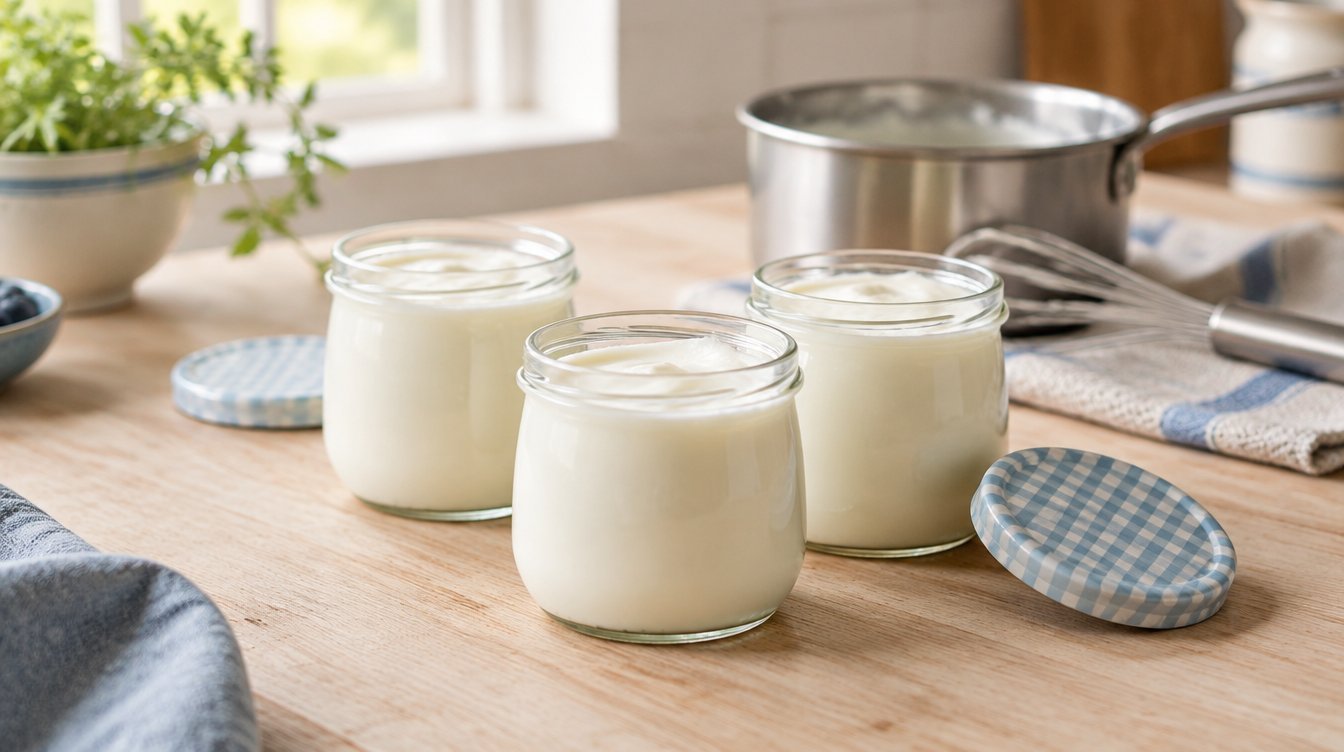
Lactobacillus salivarius: How to Culture It at Home (98-104°F / 24h)
What Lactobacillus salivarius is
Lactobacillus salivarius is a lactic acid bacterium that lives naturally in the human mouth and digestive tract, which is where its name (“of saliva”) comes from. A 2024 review describes it as a common resident of the oral and gut tract and one of the more studied probiotic species (Yang et al., 2024). It turns the sugar in milk into lactic acid, so it can sour and thicken milk, but it is not one of the two bacteria that make classic yogurt.
If you have seen the name Ligilactobacillus salivarius, that is the same species. In 2020, taxonomists split the huge old Lactobacillus genus into 25 genera, and this species moved to Ligilactobacillus (Zheng et al., 2020). Most supplement labels still print the older name, so this article uses both.
Because it is adapted to body temperature, L. salivarius is cultured cooler and longer than ordinary yogurt. Standard home yogurt incubates at 108 to 115°F for 6 to 10 hours (University of Illinois Extension). A lactobacillus salivarius yogurt is made at 98 to 104°F (37 to 40°C) for about 24 hours, closer to the conditions it meets inside the body.
Taxonomy at a glance
| Domain | Phylum | Genus | Species | Strain |
|---|---|---|---|---|
| Bacteria | Bacillota (formerly Firmicutes) | Ligilactobacillus (formerly Lactobacillus) | L. salivarius | Varies by product, for example UCC118, CECT 5713 or WB21 |
The classification above follows the List of Prokaryotic names with Standing in Nomenclature (LPSN), which lists the species as validly published and places it in risk group 1, the lowest-risk category. The phylum name Bacillota replaced Firmicutes when 42 phylum names were formally published in 2021 (Oren and Garrity, 2021).
The strain column matters most. Strains of the same species can behave very differently, both in the body and in a jar of milk. A study on one strain tells you little about another, so check the strain code on your label (the letters and numbers after the species name) before you read too much into any study.
What the research shows
Human studies of L. salivarius used capsules, tablets or oil drops, not homemade yogurt, and each tested one specific strain. The results are mixed, and most trials are small.
Breast infection during nursing (strain CECT 5713)
In a Spanish trial, 352 women with infectious mastitis were randomly assigned to one of two lactobacillus strains isolated from breast milk or to the antibiotics their doctors prescribed. The 127 women who took L. salivarius CECT 5713 daily for three weeks had lower bacterial counts in their milk and fewer recurrences than the antibiotic group (Arroyo et al., 2010). This is one trial, run by the group that isolated the strains. Mastitis needs medical care, and nothing here suggests a homemade yogurt can stand in for it.
Bad breath (strain WB21)
A 14-day, double-blind crossover trial gave people with bad breath tablets with 2 billion CFU of L. salivarius WB21 per day or a placebo. Odor scores rated by smell improved during both periods, with no difference between them. Levels of sulfur gases and gum pocket depth did fall more during the probiotic period (Suzuki et al., 2014).
Gut leakiness during hard exercise (strain UCC118)
In a crossover study of only seven healthy adults, four weeks of UCC118 reduced one of three sugar markers of gut permeability after strenuous running, with no change in the other two or in two inflammation markers (Axelrod et al., 2019). The authors called it proof of principle, which is a polite way of saying it needs repeating in more people.
Blood sugar in pregnancy (strain UCC118)
In a double-blind trial of 149 women with gestational diabetes or impaired glucose tolerance, a daily UCC118 capsule did not change fasting glucose, the need for medication or birth weight compared with placebo (Lindsay et al., 2015). This is a useful reminder that a well-run trial can find nothing.
Taken together, L. salivarius has been studied for several uses with some positive and some null results. No trial has tested whether yogurt fermented at home with it does anything for health, and home ferments give no way to know how many live bacteria a serving holds.
Can L. salivarius make yogurt on its own?
Sometimes, but slowly. In lab work with strain CCFM 1266, adding fructooligosaccharides (a fiber closely related to inulin) and mannan oligosaccharides helped the bacteria multiply in milk to more than 10 million CFU per milliliter, yet the strain did little for texture. It also grew well alongside commercial yogurt starters (Yan et al., 2024). A second strain, JCF5, improved yogurt thickness and elasticity only when used together with commercial starter cultures (Lv et al., 2025).
So expect a softer, more drinkable set than store yogurt, and know that some strains barely thicken milk alone. If you want a firm spoonable result, the research supports pairing it with a small amount of regular yogurt culture, which makes a mixed yogurt rather than a single-strain one. You can read more about the classic partner bacteria in our guide to Streptococcus thermophilus.
Before you start: a short safety note
Probiotics are generally considered safe for healthy people, but the risk of harmful effects is greater in people with severe illnesses or weakened immune systems, and serious infections have been reported in premature infants given probiotics (NCCIH). If you are immunocompromised, seriously ill, pregnant, or caring for a premature baby, ask your health care provider first (NIH Office of Dietary Supplements). Most probiotic capsules are sold as dietary supplements, and their makers, not the FDA, are responsible for checking safety before they go on sale (FDA). This article is general information, not medical advice.
Home protocol: L. salivarius yogurt at 98-104°F for 24 hours
This makes 1 quart. Active time is about 30 minutes, plus 24 hours of incubation and at least 6 hours of chilling.
Equipment
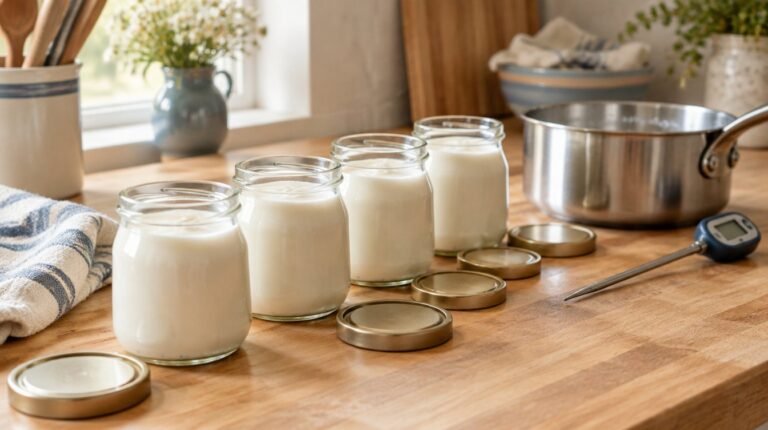
- An incubator that holds 98 to 104°F for a full day: a yogurt maker with an adjustable temperature, a multicooker with a low yogurt setting, or a proofing box. See How to Incubate Yogurt for options.
- A probe thermometer: check your incubator with a jar of water before the first batch, since some units run warmer or cooler than their display.
- Clean glass jars with lids, a saucepan and a whisk.
Ingredients
- 1 quart (946 mL) milk: whole milk gives the thickest result. Ultra-pasteurized milk also works; see using ultra-pasteurized milk.
- L. salivarius starter: a capsule or powder that lists L. salivarius (ideally with a strain code) on the label. Start with the amount the label suggests per serving; see how much starter to use for scaling.
- 1 teaspoon inulin or FOS powder (optional): extra food for the culture.
- 1/4 cup nonfat dry milk (optional): thickens the result, especially with low-fat milk.
- 1 tablespoon plain yogurt with live cultures (optional helper): for a firmer set.
Steps
- Whisk the dry milk into the cold milk, if using. Heat slowly to 180 to 185°F (82 to 85°C), stirring so it does not scorch. Heating to 180°F kills competing bacteria and changes the milk proteins so the yogurt sets better (University of Missouri Extension).
- Cool the milk to 100°F (38°C). A sink of cold water speeds this up. Do not add the culture above 104°F.
- In a small bowl, whisk the starter powder and inulin into half a cup of the warm milk until smooth, then stir it back into the rest. Add the helper yogurt now if you are using one.
- Pour into jars, filling them close to the top, and put the lids on.
- Incubate at 98 to 104°F, aiming for 100°F, for 24 hours. Do not stir or jostle the jars. Check one jar at 12 hours; if it is already set and tangy, you can stop early.
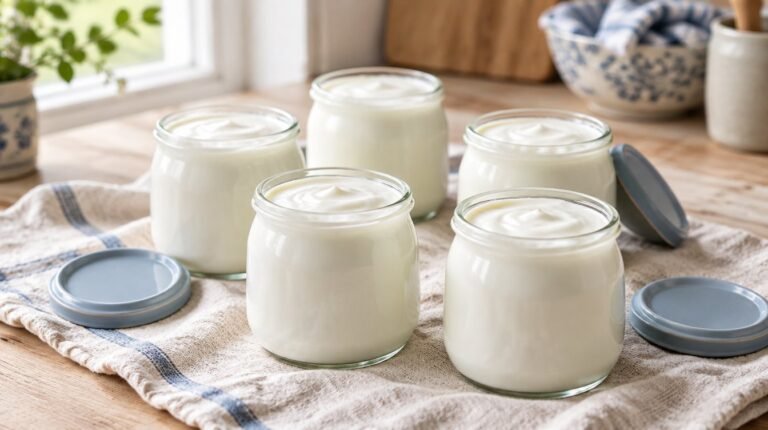
- Move the jars straight to the refrigerator at 40°F or below and chill for at least 6 hours before eating. The yogurt firms up as it cools.
- Eat within 14 days (University of Illinois Extension). Our guide to how long homemade yogurt lasts covers storage in more detail.
For more on why low, long ferments behave differently from standard ones, see Yogurt Temperature and How Long to Incubate Yogurt. Our L. reuteri guide uses a similar body-temperature method.
How to tell it worked
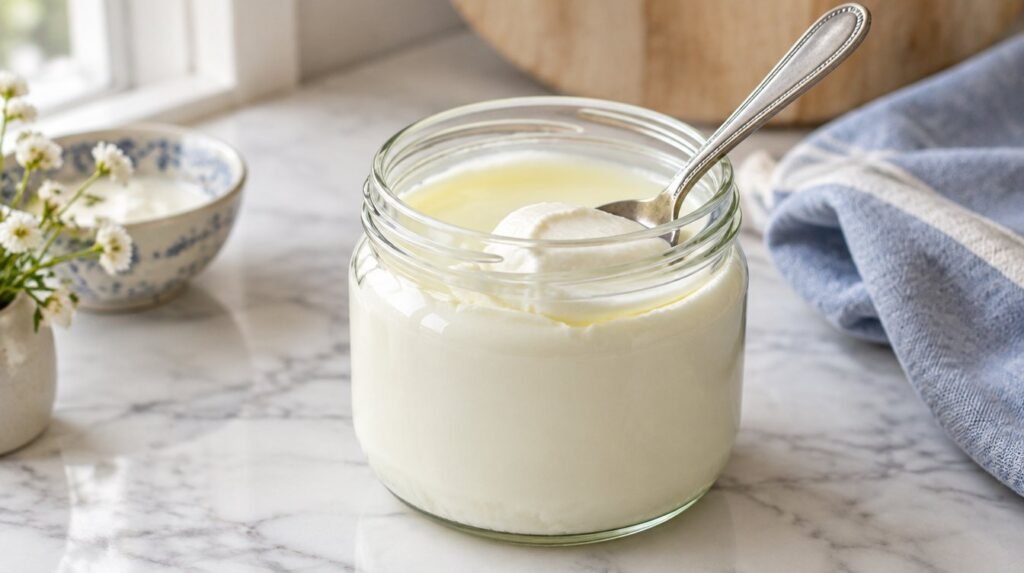
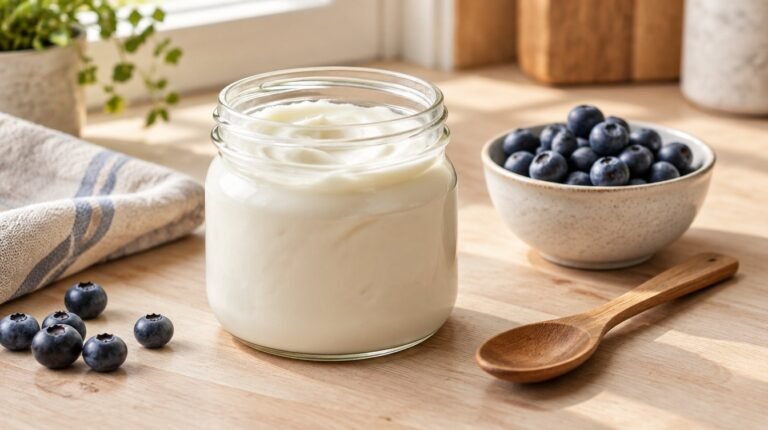
- Set: the milk has turned into a soft gel or a thick, pourable yogurt. Tilt the jar; it should move as one mass, not slosh like milk.
- Smell and taste: clean, tangy and sour, like plain yogurt or buttermilk. A 24-hour ferment is noticeably more sour than store yogurt.
- Acidity (optional): pH strips give a more objective check. In a lab study of five probiotic strains grown in milk at 37°C, pH fell from 6.7 to between 3.9 and 4.4 within 24 hours (Østlie et al., 2003). A reading in the low 4s means plenty of acid formed.
- Whey: a thin layer of clear yellow liquid on top is normal after a long ferment. Stir it back in or pour it off.
What you cannot check at home is which bacteria grew or how many are alive. Counting a specific probiotic species takes selective lab media (Shah, 2000). A good set and smell tell you lactic acid bacteria grew, not that your strain is the one that did.
Failure modes and fixes
| Problem | Likely cause | Fix |
|---|---|---|
| Still liquid after 24 hours, smells like milk | Dead or weak culture, or milk was too hot when the culture went in | Use a fresh starter, add it at 100°F, and check your incubator with a thermometer |
| Thin and drinkable, but tangy | Normal for many L. salivarius strains | Add dry milk next time, or use the helper yogurt for a firmer set |
| Lots of whey, curdy texture | Fermented too long or too warm | Stop at 16 to 18 hours next time, or lower the temperature toward 98°F |
| Very sour, slightly fizzy or yeasty | Contamination from jars, utensils or a reused batch | Discard, wash everything in hot soapy water, and start with fresh starter |
| Fuzzy spots, pink, orange or black color, rotten smell | Mold or spoilage organisms | Throw out the whole batch; do not scoop around it |
The USDA advises discarding yogurt with any mold, because foods with high moisture can be contaminated below the surface, and bacteria may be growing along with the mold (USDA FSIS). For curdled or weepy batches that still smell clean, see Whey from Yogurt.
Can you use a batch to start the next one?
You can try saving 2 tablespoons of a good batch to start the next quart, but expect it to weaken. Long ferments at body temperature favor whatever tough bacteria from the kitchen get in, and single strains from capsules are not selected to keep going over many generations. If texture or tang fades after two or three rounds, go back to a fresh capsule. Our article on why an heirloom starter weakens over time explains the pattern.
Is Lactobacillus salivarius the same as Ligilactobacillus salivarius?
Yes. The species was moved to the new genus Ligilactobacillus in 2020, but many labels still use the old name (Zheng et al., 2020).
Why ferment L. salivarius at 98-104°F instead of 110°F?
It is adapted to body temperature in the mouth and gut, so a cooler, longer ferment suits it better than the hot, short ferment used for classic yogurt cultures.
Will homemade L. salivarius yogurt have the same effects as the studies?
No one knows. Trials used specific strains in capsules or tablets at measured doses, and a home ferment gives no way to know how many live bacteria a serving holds.
Related topics
- Lactobacillus reuteri: another body-temperature probiotic culture with a long ferment.
- Lactobacillus acidophilus: a close cousin cultured a little warmer and faster.
- Streptococcus thermophilus: the classic helper culture for a firmer set.
- Yogurt Starter: how starters differ and how to pick one.
- How Long to Incubate Yogurt: what time does to tang and texture.
- Best Yogurt for Probiotics: if you would rather buy than make.
Sources
- Yang Y, et al. Understanding Ligilactobacillus salivarius from probiotic properties to omics technology: a review (Foods, 2024)
- Zheng J, et al. A taxonomic note on the genus Lactobacillus: description of 23 novel genera, emended description of the genus Lactobacillus Beijerinck 1901, and union of Lactobacillaceae and Leuconostocaceae (International Journal of Systematic and Evolutionary Microbiology, 2020)
- Oren A, Garrity GM. Valid publication of the names of forty-two phyla of prokaryotes (International Journal of Systematic and Evolutionary Microbiology, 2021)
- Species: Ligilactobacillus salivarius (LPSN, Leibniz Institute DSMZ)
- Arroyo R, et al. Treatment of infectious mastitis during lactation: antibiotics versus oral administration of lactobacilli isolated from breast milk (Clinical Infectious Diseases, 2010)
- Suzuki N, et al. Lactobacillus salivarius WB21-containing tablets for the treatment of oral malodor: a double-blind, randomized, placebo-controlled crossover trial (Oral Surgery, Oral Medicine, Oral Pathology and Oral Radiology, 2014)
- Axelrod CL, et al. UCC118 supplementation reduces exercise-induced gastrointestinal permeability and remodels the gut microbiome in healthy humans (Physiological Reports, 2019)
- Lindsay KL, et al. Impact of probiotics in women with gestational diabetes mellitus on metabolic health: a randomized controlled trial (American Journal of Obstetrics and Gynecology, 2015)
- Yan S, et al. Metabolomic analysis reveals Ligilactobacillus salivarius CCFM 1266 fermentation improves dairy product quality (Food Research International, 2024)
- Lv Y, et al. Evaluation of the in vitro probiotic properties of Ligilactobacillus salivarius JCF5 and its impact on Jersey yogurt quality (Journal of the Science of Food and Agriculture, 2025)
- Østlie HM, et al. Growth and metabolism of selected strains of probiotic bacteria in milk (International Journal of Food Microbiology, 2003)
- Shah NP. Probiotic bacteria: selective enumeration and survival in dairy foods (Journal of Dairy Science, 2000)
- Probiotics: Usefulness and Safety (National Center for Complementary and Integrative Health)
- Probiotics: Fact Sheet for Consumers (NIH Office of Dietary Supplements)
- Dietary Supplements (U.S. Food and Drug Administration)
- Making Yogurt at Home (University of Illinois Extension)
- Preserve It Fresh, Preserve It Safe: 2019, No. 1 (University of Missouri Extension)
- Molds on Food: Are They Dangerous? (USDA Food Safety and Inspection Service)