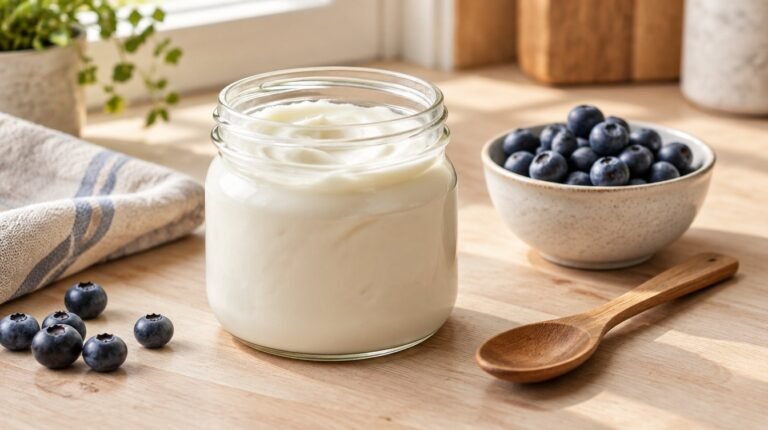
Bifidobacterium bifidum: How to Culture It at Home (100-105°F / 24h)
What Bifidobacterium bifidum is
Bifidobacterium bifidum is one of the oldest named gut bacteria. It was first described in 1900 as “Bacillus bifidus,” and its species name comes from a Latin word meaning cleft, split or divided (LPSN). Today it is a common ingredient in probiotic capsules and in some commercial fermented milks.
What sets it apart from other bifidobacteria is its diet. A review of its enzymes describes B. bifidum as unusual in being found in the gut from infancy through adulthood, and as well adapted to breaking down sugar chains the body makes itself, such as human milk oligosaccharides and the mucin that coats the gut lining (Katoh et al., 2020). It does much of this work outside its own cell, and the same review describes it sharing the pieces with neighboring bacteria.
That background explains why a jar of cow’s milk is not its natural home. Bifidobacteria are sensitive to oxygen, and in one dairy study B. bifidum survived storage clearly better when air was pushed out of the milk (Ebel et al., 2011). So making bifidobacterium bifidum yogurt at home calls for a body-temperature ferment of 100 to 105°F (38 to 41°C) for about 24 hours, with care to keep air out. Standard home yogurt, by comparison, incubates at 108 to 115°F for 6 to 10 hours (University of Illinois Extension).
Taxonomy at a glance
| Domain | Phylum | Genus | Species | Strain |
|---|---|---|---|---|
| Bacteria | Actinomycetota (formerly Actinobacteria) | Bifidobacterium | B. bifidum | Varies by product, for example R0071, MIMBb75, YIT 10347 or G9-1 |
This follows the List of Prokaryotic names with Standing in Nomenclature (LPSN), which lists B. bifidum as a validly published name in risk group 1, the lowest-risk category, with ATCC 29521 as its type strain. The phylum name Actinomycetota was validly published in 2021, and LPSN lists Actinobacteria as an older synonym (LPSN).
One label detail trips people up. The well-known strain BB-12 was considered a B. bifidum strain when it was first isolated, but it is now classified as Bifidobacterium animalis subsp. lactis (Jungersen et al., 2014). If you see “B. bifidum BB-12,” you are looking at the strain covered in our B. animalis subsp. lactis guide, which behaves quite differently in milk.
What the research shows
Human research on B. bifidum mostly tests a single named strain, usually in capsules or a factory-made drink, and often with funding or authors from the company behind it. No trial tested homemade yogurt, so none of these results transfer directly to your kitchen.
Stomach discomfort in healthy adults (strain YIT 10347)
This is the closest study to a yogurt. In a 4-week double-blind trial, 100 healthy Japanese adults drank 100 mL a day of milk fermented with YIT 10347 or a placebo fermented milk. The B. bifidum group had higher relief rates for after-meal discomfort, overall stomach and gut symptoms, gas and diarrhea, but no difference in mood, quality of life or a saliva stress marker (Gomi et al., 2018). Most authors worked for Yakult, which developed the strain, and the symptoms were self-reported.
IBS symptoms (strain MIMBb75)
In a 4-week double-blind trial of 122 people with irritable bowel syndrome, 47% of those taking MIMBb75 capsules reported adequate relief, compared with 11% on placebo (Guglielmetti et al., 2011). A larger 8-week trial of 443 people then used heat-killed cells of the same strain: 34% met the main goal of less pain plus adequate relief, against 19% on placebo (Andresen et al., 2020).
The second result matters for home fermenters. The bacteria in that trial were not alive, so whatever helped did not depend on them growing in the gut, and a homemade ferment cannot match either the strain or the dose. These trials show the strain has been studied for IBS symptoms; they do not make any yogurt a treatment. Persistent bowel symptoms need a doctor’s assessment.
Colds in stressed students (strain R0071)
In a 6-week double-blind trial, 581 university students facing exams took one of three probiotics or a placebo. Those on B. bifidum R0071 reported a greater share of healthy days, and fewer of them reported at least one day of cold or flu symptoms; the other two strains did not beat placebo (Langkamp-Henken et al., 2015). Symptoms were self-reported, one author worked for a probiotic company, Lallemand Health Solutions, and it is a single study.
Why B. bifidum is tricky in milk, and what helps

Three findings from dairy research shape the home protocol below. First, air: in fermented milks made with B. bifidum and regular yogurt bacteria, milk flushed with nitrogen gas gave significantly better B. bifidum survival over 28 days at 4°C (39°F), without changing how the yogurt bacteria fermented (Ebel et al., 2011). You cannot gas milk at home, but heating it, stirring gently and filling jars to the brim all work in the same direction.
Second, fiber: in a yogurt made with B. bifidum plus the two standard yogurt bacteria, incubated at 40°C (104°F) until it reached pH 4.6, adding 0.2 to 0.6% inulin raised B. bifidum survival over 16 days in the fridge. The yogurt without inulin had to be dropped from the study after 8 days because mold grew on its surface (Kamel et al., 2021). For a quart of milk, 0.4% works out to about 4 grams of inulin.
Third, time in the fridge: in a lab study that included a B. bifidum strain, bifidobacteria tolerated cold storage significantly less well than an L. acidophilus strain (Hughes and Hoover, 1995). If live bacteria are the point, eat the batch sooner rather than later.
A helper culture can also make the job easier. When three bifidobacteria, one of them a B. bifidum strain, were added to a regular yogurt starter in a 2026 lab study, they boosted Streptococcus thermophilus growth, shortened fermentation and reduced the souring that continues in the fridge (Zhao et al., 2026). A pinch of a mild S. thermophilus starter is an option if you want a firmer set.
Before you start: a short safety note
The risk of harmful effects from probiotics is greater in people with severe illnesses or weakened immune systems, and severe infections have been reported in premature infants given probiotics (NCCIH). If you are immunocompromised, seriously ill, pregnant, have a central line, or want to give a ferment to a baby, talk with your health care provider first; the NIH Office of Dietary Supplements also advises asking a provider before trying probiotics. Probiotic capsules are usually sold as dietary supplements, and their makers, not the FDA, are responsible for checking safety and labeling before sale (FDA). This article is general information, not medical advice.
Home protocol: B. bifidum yogurt at 100-105°F for 24 hours
This makes 1 quart. Plan on about 30 minutes of hands-on time, up to 24 hours of incubation and at least 6 hours of chilling.
Equipment
- An incubator that holds 100 to 105°F for a full day: an adjustable yogurt maker, a multicooker with a low setting or a proofing box. How to Incubate Yogurt compares the options.
- A probe thermometer, to check the real temperature with a jar of water before you commit a starter.
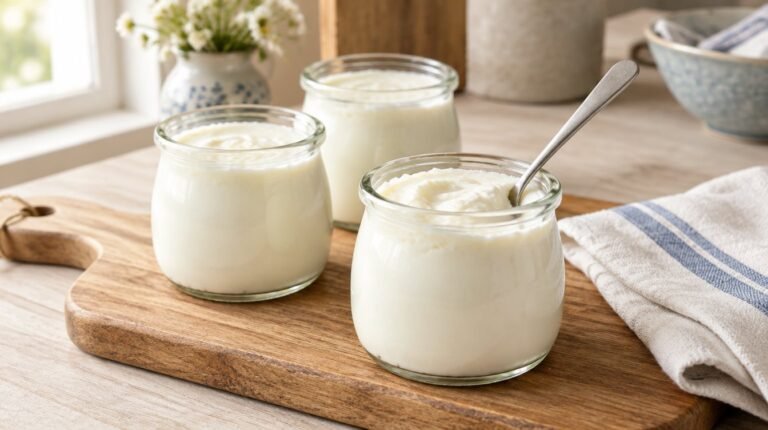
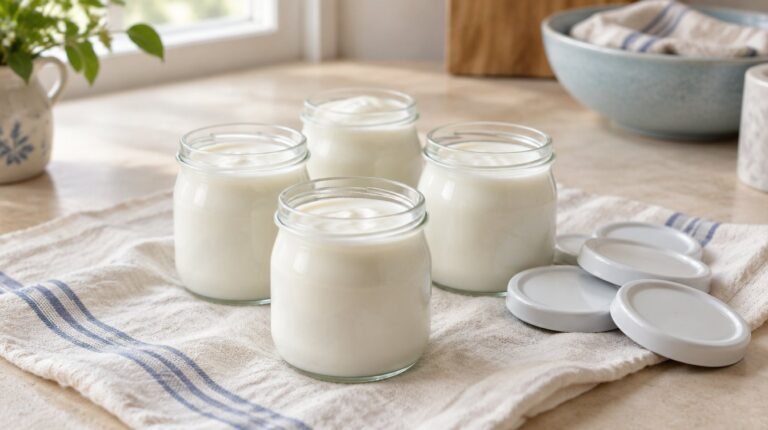
- Small glass jars with tight lids. Several small jars filled to the rim trap less air than one big jar.
- A kitchen scale for the inulin, if you have one.
Ingredients
- 1 quart (946 mL) whole milk: fat and solids help the texture of a weak-setting culture.
- 1/4 cup nonfat dry milk: adds protein and thickens the result.
- About 4 g inulin powder: roughly 0.4% of the milk, the middle of the range in the study above.
- B. bifidum starter: a capsule or powder that lists B. bifidum, ideally with a strain code. Start with one label serving; How Much Yogurt Starter explains scaling.
- Optional helper: a small pinch of a mild S. thermophilus starter for a firmer set.
Steps
- Whisk the dry milk into cold milk, then heat slowly to 180 to 185°F (82 to 85°C), stirring gently. Heating to 180°F kills competing bacteria and changes the whey proteins so the yogurt sets better (University of Missouri Extension). It also drives off some dissolved air.
- Cool, covered, to 102°F (39°C). Do not add the culture above 105°F.
- In a small bowl, stir the starter, inulin and any helper into a few spoonfuls of the warm milk until smooth. Fold it into the rest with a spoon, not a whisk, to avoid beating in air.
- Pour into jars filled right to the rim and close the lids tightly.
- Incubate at 100 to 105°F without moving the jars. Check one jar at 16 hours; if it has set and smells tangy, you can stop. Otherwise go to 24 hours.
- Move the jars straight to the fridge at 40°F or below and chill at least 6 hours.
- Eat within 14 days for safety (University of Illinois Extension), and preferably in the first week if you care about live bifidobacteria.
The same low-and-slow approach is used for other gut bacteria in our B. breve guide, and Yogurt Temperature explains what each temperature range does.
How to tell it worked
- Texture: expect a soft, spoonable set or a thick drinkable yogurt. Without a helper culture, a firm gel is unusual.
- Smell and taste: clean and mildly tangy, a little like buttermilk.
- Acidity (optional): pH strips should show a drop from about 6.7 in fresh milk to around 4.6 or lower, the end point used in the inulin study above (Kamel et al., 2021).
- No change at all after 24 hours means the culture did not grow.
A home cook cannot confirm that B. bifidum itself grew. Counting probiotic bacteria in a dairy food takes selective lab media (Shah, 2000). If you used a helper culture, assume it did much of the thickening and souring.
Failure modes and fixes
| Problem | Likely cause | Fix |
|---|---|---|
| Still liquid, smells like plain milk | Dead or weak starter, or milk was too hot when it went in | Use a fresh starter, add it at 102°F, and check the incubator with a thermometer |
| Slightly thick, barely sour | Slow growth, common with bifidobacteria in plain milk | Keep the dry milk and inulin, fill jars to the rim, or add a mild helper |
| Very sour, separated and grainy | Too long or too hot | Stop at 16 to 20 hours and hold nearer 100°F |
| Yeasty, cheesy or fizzy smell | Contamination | Discard, wash jars and tools in hot soapy water, start again |
| Fuzzy spots, or pink, orange or dark patches | Mold or spoilage | Throw out the whole batch |
The USDA advises discarding yogurt with mold, because moist foods can be contaminated below the surface and bacteria can grow alongside the mold (USDA FSIS). A batch that only weeps clear whey but smells clean is usually fine; see Whey from Yogurt.
Can you reuse a batch as starter?
Not reliably. B. bifidum dislikes air and acid, so each reused batch is likely to carry fewer of them, while any helper culture takes over. If you try, use 2 tablespoons from a fresh, clean batch within a few days, and go back to a new capsule as soon as the set or tang fades. Heirloom Starter Weakened Over Time describes the same drift.
Is B. bifidum the same as BB-12?
No. BB-12 was once grouped with B. bifidum but is now classified as Bifidobacterium animalis subsp. lactis (Jungersen et al., 2014).
Why ferment B. bifidum for 24 hours?
Bifidobacteria usually grow and sour milk slowly at body temperature, so a long, gentle ferment gives them time to work without the heat that suits regular yogurt bacteria.
Does inulin help B. bifidum yogurt?
In one lab study, adding 0.2 to 0.6% inulin improved B. bifidum survival in yogurt over 16 days of refrigeration (Kamel et al., 2021).
Related topics
- Bifidobacterium longum: a close cousin with its own home protocol.
- Bifidobacterium animalis subsp. lactis: the BB-12 species and the easiest bifidobacterium in milk.
- Bifidobacterium breve: another fussy, oxygen-sensitive culture.
- Streptococcus thermophilus: a mild helper for a firmer set.
- Yogurt Starter: how to choose and store starters.
- How Long to Incubate Yogurt: how time changes tang and texture.
Sources
- Species: Bifidobacterium bifidum (LPSN, Leibniz Institute DSMZ)
- Phylum: Actinomycetota (LPSN, Leibniz Institute DSMZ)
- Katoh T, et al. Enzymatic adaptation of Bifidobacterium bifidum to host glycans, viewed from glycoside hydrolyases and carbohydrate-binding modules (Microorganisms, 2020)
- Jungersen M, et al. The science behind the probiotic strain Bifidobacterium animalis subsp. lactis BB-12 (Microorganisms, 2014)
- Gomi A, et al. Bifidobacterium bifidum YIT 10347 fermented milk exerts beneficial effects on gastrointestinal discomfort and symptoms in healthy adults: a double-blind, randomized, placebo-controlled study (Journal of Dairy Science, 2018)
- Guglielmetti S, et al. Randomised clinical trial: Bifidobacterium bifidum MIMBb75 significantly alleviates irritable bowel syndrome and improves quality of life (Alimentary Pharmacology & Therapeutics, 2011)
- Andresen V, et al. Heat-inactivated Bifidobacterium bifidum MIMBb75 (SYN-HI-001) in the treatment of irritable bowel syndrome: a multicentre, randomised, double-blind, placebo-controlled clinical trial (Lancet Gastroenterology & Hepatology, 2020)
- Langkamp-Henken B, et al. Bifidobacterium bifidum R0071 results in a greater proportion of healthy days and a lower percentage of academically stressed students reporting a day of cold/flu (British Journal of Nutrition, 2015)
- Ebel B, et al. Use of gases to improve survival of Bifidobacterium bifidum by modifying redox potential in fermented milk (Journal of Dairy Science, 2011)
- Kamel DG, et al. Addition of inulin to probiotic yogurt: viability of probiotic bacteria (Bifidobacterium bifidum) and sensory characteristics (Food Science & Nutrition, 2021)
- Hughes DB, Hoover DG. Viability and enzymatic activity of bifidobacteria in milk (Journal of Dairy Science, 1995)
- Zhao Z, et al. Metabolic modulation of yogurt fermentation kinetics and acidification by Bifidobacterium-starter culture interactions (Frontiers in Microbiology, 2026)
- Shah NP. Probiotic bacteria: selective enumeration and survival in dairy foods (Journal of Dairy Science, 2000)
- Probiotics: Usefulness and Safety (National Center for Complementary and Integrative Health)
- Probiotics: Fact Sheet for Consumers (NIH Office of Dietary Supplements)
- Dietary Supplements (U.S. Food and Drug Administration)
- Making Yogurt at Home (University of Illinois Extension)
- Preserve It Fresh, Preserve It Safe: 2019, No. 1 (University of Missouri Extension)
- Molds on Food: Are They Dangerous? (USDA Food Safety and Inspection Service)