Lactobacillus paracasei: How to Culture It at Home (98-104°F / 24h)
What Lactobacillus paracasei is
Lactobacillus paracasei is a lactic acid bacterium used in cheese, fermented milk drinks and probiotic capsules. In 2020 a genome-based overhaul split the old Lactobacillus genus into 25 genera (Zheng et al., 2020), and this species is now officially Lacticaseibacillus paracasei (LPSN). Most labels still say Lactobacillus paracasei, and the short form L. paracasei works for both.
It belongs to the casei group, three closely related species (L. casei, L. paracasei and L. rhamnosus) that are hard to tell apart even with lab methods (Hill et al., 2018). The same review notes that these bacteria are used commercially to ferment dairy foods, that strains have been isolated from plants, cheeses and the human gut, and that dairy strains show signs of adapting to life in milk.
The naming history is messy. In 1996 researchers proposed dropping the name L. paracasei, and it was only confirmed as a separate species in 2008. When researchers rechecked 201 casei-group strains from culture collections, 46 did not match their previous species label (Hill et al., 2018). So a product sold as “L. casei” may contain a strain that is now classed as L. paracasei. Our L. casei guide covers its sister species.
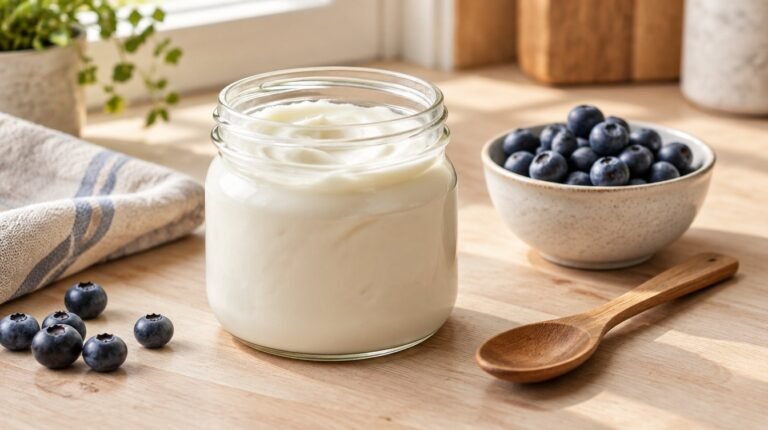
For lactobacillus paracasei yogurt at home, the protocol below uses 98 to 104°F (37 to 40°C) for about 24 hours. That is cooler and much longer than standard yogurt, which incubates at 108 to 115°F for 6 to 10 hours (University of Illinois Extension).
Taxonomy at a glance
| Domain | Phylum | Genus | Species | Strain |
|---|---|---|---|---|
| Bacteria | Bacillota (formerly Firmicutes) | Lacticaseibacillus (formerly Lactobacillus) | L. paracasei (subspecies paracasei and tolerans) | Varies by product, for example Shirota (LcS), 8700:2 or 431 |
LPSN lists Lacticaseibacillus paracasei as the correct, validly published name, with Lactobacillus paracasei as its earlier synonym and two subspecies. The phylum Bacillota was validly published in 2021, and LPSN lists Firmicutes among its older synonyms (LPSN).
The strain code is what ties a product to research. Strain Shirota, for example, has been studied for decades, but its results say nothing about an unnamed L. paracasei in a different capsule.
What the research shows
Most human studies of L. paracasei test one strain, in a factory-made drink or capsule, and many are funded by the company that sells it. None tested homemade yogurt.
Hard stools (strain Shirota, in fermented milk)
In a 28-day open-label trial, 50 US adults who often had hard or lumpy stools either drank 80 mL a day of a fermented milk with strain Shirota or had no drink. Fewer people in the drink group still had hard or lumpy stools in at least a quarter of bowel movements, and their constipation-related quality of life scores improved (Cook et al., 2025). There was no placebo drink, so participants knew what they were getting, and the study was funded by Yakult U.S.A.
A stricter test gave a weaker result. In an 8-week double-blind trial of 64 healthy adults with hard stools, stool softness measured by a texture machine did not differ significantly from placebo overall, and the authors, who work for Yakult, wrote that they were unable to find evidence for the softening effect under their study conditions (Tsujibe et al., 2024). Taken together, the evidence for this one strain is mixed.
Colds (strain 8700:2, with L. plantarum HEAL9)
In a 12-week double-blind trial, 898 adults who caught colds often took a capsule of 8700:2 plus L. plantarum HEAL9, or a placebo. Cold severity, the main outcome, was not reduced. Among people who caught at least one cold, the probiotic group averaged 1.24 colds versus 1.36 on placebo (Ahrén et al., 2021). The difference is small, and two strains were given together, so it cannot be credited to L. paracasei alone. See our L. plantarum guide for that partner strain.
None of this means L. paracasei treats constipation, colds or any other condition. Bowel symptoms that last or worry you are a reason to see a doctor, not to change your yogurt.
How L. paracasei behaves in milk
Casei-group bacteria are slow starters in milk. In a study of L. casei, a close relative, the bacterium produced acid slowly on its own early in fermentation, while pairing it with Streptococcus thermophilus made the milk sour much faster. There was a catch: in plain co-culture, L. casei counts stayed low, because the faster S. thermophilus competed for nutrients (Ma et al., 2015).
That trade-off is the main decision for a home cook. A helper culture such as S. thermophilus gives a firmer, quicker set, but may crowd out the bacterium you want. A pure L. paracasei ferment keeps the focus on that strain but needs a long, warm incubation and usually sets softer.
Given enough time, probiotic lactobacilli can sour milk well. In a lab study at 37°C (98.6°F) in UHT milk with a little added tryptone or fructose, five probiotic strains, including L. rhamnosus GG from the same genus as L. paracasei, lowered pH from 6.7 to between 3.9 and 4.4 within 24 hours. The authors stressed that fermentation time changed the flavor compounds each strain produced (Østlie et al., 2003). Our L. rhamnosus GG guide covers that strain.
Before you start: a short safety note
The risk of harmful effects from probiotics is greater in people with severe illnesses or weakened immune systems, and severe infections have been reported in premature infants given probiotics (NCCIH). If you are immunocompromised, seriously ill, pregnant, have a central line, or want to feed a ferment to a baby, talk with your health care provider first; the NIH Office of Dietary Supplements also advises asking a provider before trying probiotics. Probiotic capsules are usually sold as dietary supplements, and their makers, not the FDA, are responsible for checking safety and labeling before sale (FDA). This article is general information, not medical advice.
Home protocol: L. paracasei yogurt at 98-104°F for 24 hours
This makes 1 quart. Allow about 30 minutes of hands-on time, up to 24 hours of incubation and at least 6 hours of chilling.
Equipment
- An incubator that holds 98 to 104°F for a full day: an adjustable yogurt maker, a multicooker with a low setting, or a proofing box. See How to Incubate Yogurt.
- A probe thermometer, to check the incubator with a jar of warm water before you use a starter.
- Clean glass jars with lids, washed in hot soapy water and rinsed.
Ingredients
- 1 quart (946 mL) whole or 2% milk: whole milk gives a thicker result.
- 1/4 cup nonfat dry milk: adds protein for a better set during a slow ferment.
- L. paracasei starter: a capsule or powder that lists L. paracasei (or Lacticaseibacillus paracasei), ideally with a strain code. Start with one label serving; How Much Yogurt Starter explains how to scale up.
- Optional helper: a small pinch of an S. thermophilus starter for a firmer set, accepting the trade-off described above.
Steps
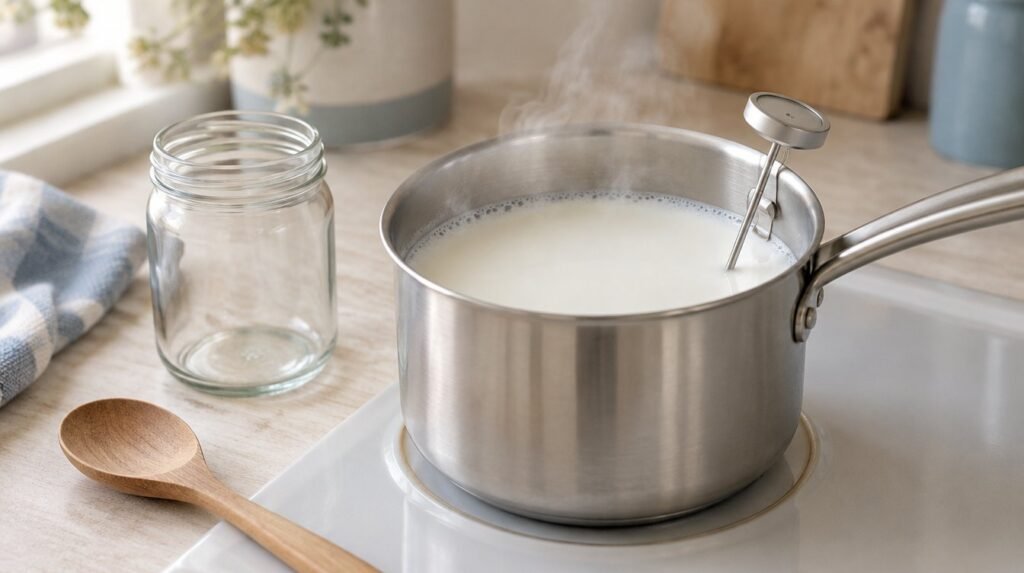
- Whisk the dry milk into cold milk and heat slowly to 180 to 185°F (82 to 85°C), stirring. Heating to 180°F kills competing bacteria and changes the whey proteins so the yogurt sets better (University of Missouri Extension).
- Cool, covered, to 100°F (38°C). Do not add the culture above 104°F.
- Mix the starter (and any helper) into a few spoonfuls of the warm milk until smooth, then stir it into the rest.
- Pour into jars, close the lids and place them in the incubator.
- Hold at 98 to 104°F without moving the jars. Check one jar at 12 hours and again at 18. Stop when the milk has set to a soft gel and tastes clearly tangy, or at 24 hours.
- Refrigerate at 40°F or below right away and chill at least 6 hours; the texture firms as it cools.
- Eat within 14 days (University of Illinois Extension).
How Long to Incubate Yogurt explains how the extra hours change sourness and texture, and our L. reuteri guide uses a similar body-temperature method.
How to tell it worked
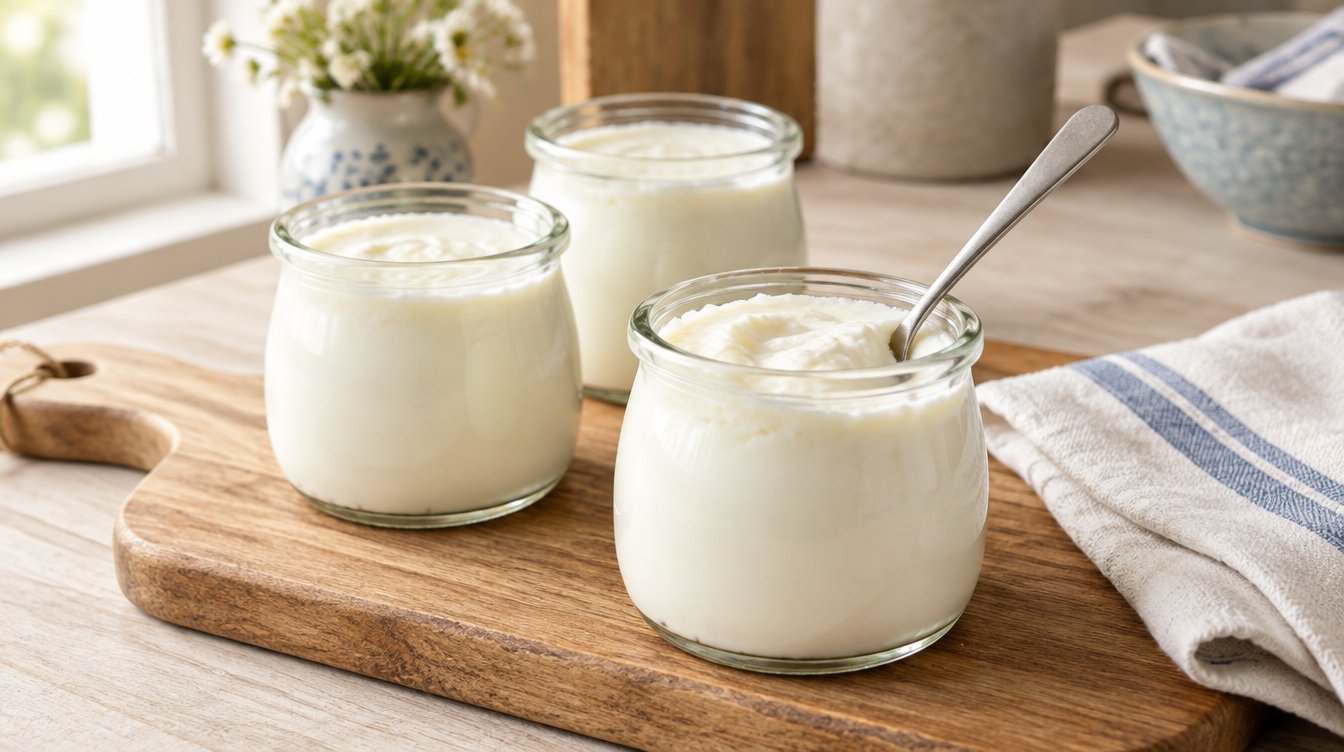
- Texture: a soft set that holds a spoon mark, or a thick, pourable yogurt. A pure culture is often looser than store yogurt.
- Smell and taste: clean, tangy and a little milder than regular yogurt.
- Acidity (optional): pH strips should show a drop from about 6.7 into the low 4s, the range probiotic lactobacilli reached in milk in the study above (Østlie et al., 2003).
- Still milky and sweet after 24 hours means the culture did not grow.
You cannot tell at home whether L. paracasei or a helper did the work, or how many live cells are left. That needs selective lab counting methods (Shah, 2000).
Failure modes and fixes
| Problem | Likely cause | Fix |
|---|---|---|
| No set after 24 hours | Dead starter, milk too hot when the culture went in, or incubator running cool | Use a fresh starter, add it at 100°F, and check the incubator with water first |
| Thin and only slightly sour | Slow acid production, normal for this group | Add the dry milk, give it the full 24 hours, or add a small helper |
| Very sour, curds and lots of whey | Too long or too warm | Stop earlier, at 16 to 18 hours, and hold nearer 98°F |
| Yeasty, cheesy or fizzy smell | Contamination | Discard, wash everything in hot soapy water, start again |
| Fuzzy spots, or pink, orange or dark patches | Mold or spoilage | Throw out the whole batch |
The USDA advises discarding yogurt with mold, because moist foods can be contaminated below the surface (USDA FSIS). Clear whey on a clean-smelling batch is normal; see Whey from Yogurt.
Can you reuse a batch as starter?
You can try, with limits. Use 2 to 3 tablespoons from a fresh, clean batch within a few days to start the next quart. If you used a helper culture, expect it to take a bigger share each round, since it grows faster in milk. Go back to a fresh capsule when sets get weaker or the flavor changes; Heirloom Starter Weakened Over Time explains why cultures drift.
Is L. paracasei the same as L. casei?
No. They are separate but closely related species that are hard to tell apart, and some strains have been relabeled between them over the years (Hill et al., 2018).
Why is it now called Lacticaseibacillus paracasei?
A 2020 genome study split the old Lactobacillus genus into 25 genera, and L. paracasei moved to Lacticaseibacillus (Zheng et al., 2020).
Should I add regular yogurt starter?
Only if you want a firmer, faster set. A helper such as S. thermophilus sours milk faster but can limit how much L. paracasei grows.
Related topics
- Lactobacillus casei: the sister species, often confused with this one.
- Lactobacillus rhamnosus GG: the third member of the casei group.
- Lactobacillus plantarum: the partner strain in the colds trial.
- Streptococcus thermophilus: the usual helper culture.
- Yogurt Starter: how to choose and handle starters.
- Probiotic Drinks: store-bought fermented milk drinks.
Sources
- Species: Lacticaseibacillus paracasei (LPSN, Leibniz Institute DSMZ)
- Phylum: Bacillota (LPSN, Leibniz Institute DSMZ)
- Zheng J, et al. A taxonomic note on the genus Lactobacillus: description of 23 novel genera, emended description of the genus Lactobacillus Beijerinck 1901, and union of Lactobacillaceae and Leuconostocaceae (International Journal of Systematic and Evolutionary Microbiology, 2020)
- Hill D, et al. The Lactobacillus casei group: history and health related applications (Frontiers in Microbiology, 2018)
- Cook CM, et al. Effect of daily consumption of a fermented milk containing Lacticaseibacillus paracasei strain Shirota (LcS) on stool consistency in United States adults with hard or lumpy stools: a randomized controlled trial (Journal of Nutrition, 2025)
- Tsujibe S, et al. Evaluating the effect of Lacticaseibacillus paracasei strain Shirota on the physical consistency of stool in healthy participants with hard or lumpy stools: a double-blind, randomized, placebo-controlled study (Nutrients, 2024)
- Ahrén IL, et al. Fewer community-acquired colds with daily consumption of Lactiplantibacillus plantarum HEAL9 and Lacticaseibacillus paracasei 8700:2. A randomized, placebo-controlled clinical trial (Journal of Nutrition, 2021)
- Ma C, et al. Cracking Streptococcus thermophilus to stimulate the growth of the probiotic Lactobacillus casei in co-culture (International Journal of Food Microbiology, 2015)
- Østlie HM, et al. Growth and metabolism of selected strains of probiotic bacteria in milk (International Journal of Food Microbiology, 2003)
- Shah NP. Probiotic bacteria: selective enumeration and survival in dairy foods (Journal of Dairy Science, 2000)
- Probiotics: Usefulness and Safety (National Center for Complementary and Integrative Health)
- Probiotics: Fact Sheet for Consumers (NIH Office of Dietary Supplements)
- Dietary Supplements (U.S. Food and Drug Administration)
- Making Yogurt at Home (University of Illinois Extension)
- Preserve It Fresh, Preserve It Safe: 2019, No. 1 (University of Missouri Extension)
- Molds on Food: Are They Dangerous? (USDA Food Safety and Inspection Service)