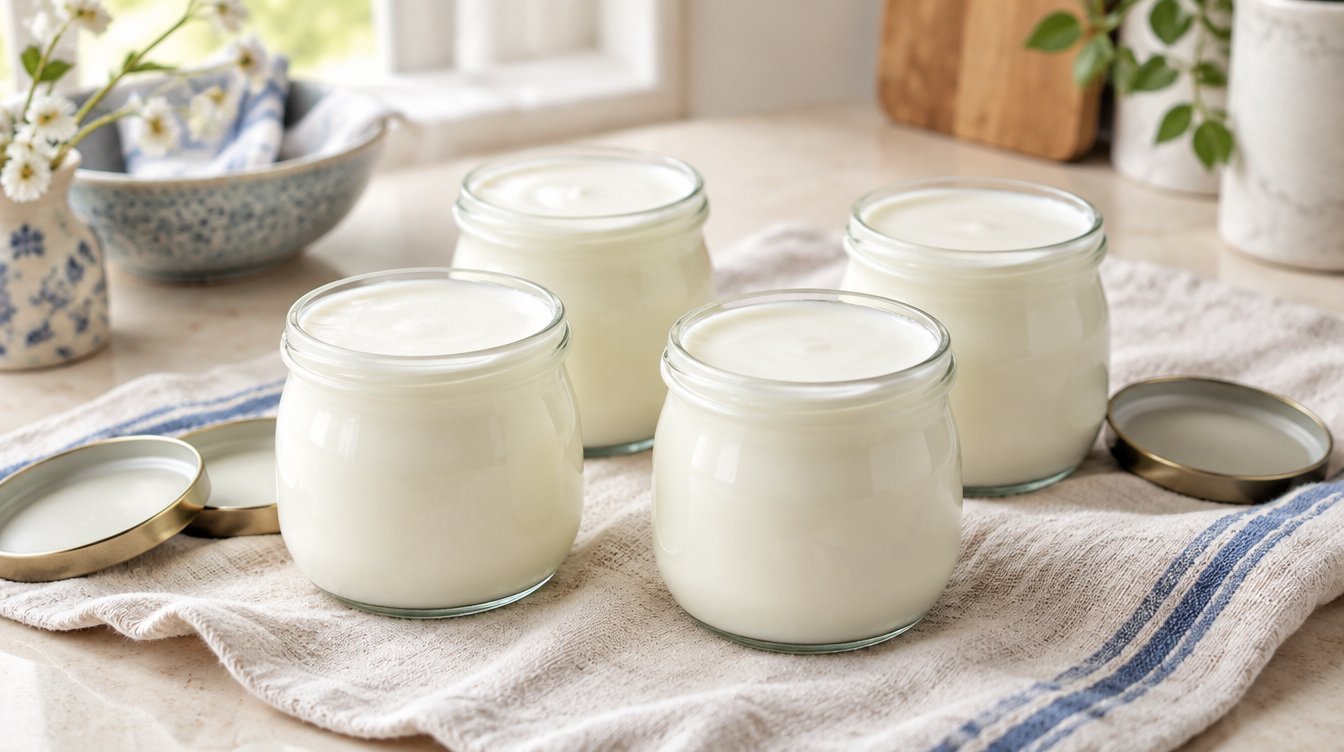
Bifidobacterium breve: How to Culture It at Home (100-105°F / 24h)
What Bifidobacterium breve is
Bifidobacterium breve is a gut bacterium best known as one of the early settlers of a baby’s intestine. A genome study of 13 strains describes it as a frequent member of both infant and adult gut communities, and notes it has also been isolated from human milk and the vagina (Bottacini et al., 2014). Like other bifidobacteria, it can break down a wide range of sugars that people cannot digest themselves (Ruiz et al., 2011).
It is a harder guest in a milk jar than the bacteria in ordinary yogurt. A review of how bifidobacteria handle stress lists oxygen and acid among the main challenges they face in foods (Ruiz et al., 2011), and many strains grow slowly in plain milk. That is why making bifidobacterium breve yogurt at home calls for a body-temperature ferment of 100 to 105°F (38 to 41°C) for about 24 hours, with extra care to keep air out.
For comparison, standard home yogurt incubates at 108 to 115°F for 6 to 10 hours (University of Illinois Extension). Treat a B. breve batch as a slow, gentle culture rather than a quick yogurt.
Taxonomy at a glance
| Domain | Phylum | Genus | Species | Strain |
|---|---|---|---|---|
| Bacteria | Actinomycetota (formerly Actinobacteria) | Bifidobacterium | B. breve | Varies by product, for example B-3, A1 (MCC1274) or M-16V |
This classification follows the List of Prokaryotic names with Standing in Nomenclature (LPSN), which lists B. breve (first named in 1963) as validly published and in risk group 1, the lowest-risk category. The phylum name Actinomycetota was formally published in 2021, replacing the informal name Actinobacteria (Oren and Garrity, 2021).
Unlike the lactobacilli, bifidobacteria are not close relatives of yogurt bacteria at all; they sit in a different phylum. The strain code on a label is what links a product to a specific study, so look for it before comparing a capsule to any research.
What the research shows
Most human research on B. breve used capsules of one strain, often run or funded by the company that sells it. None used homemade yogurt.
Body fat in adults with overweight (strain B-3)
In a 12-week double-blind trial, 80 adults with a BMI between 25 and 30 took B-3 capsules (20 billion CFU per day) or a placebo. Body fat mass and percent body fat were lower in the B-3 group at weeks 8 and 12, with no difference in blood test results between groups (Minami et al., 2018). The authors work for the strain’s maker, the trial was modest in size, and it does not show that a probiotic causes weight loss.
Memory in older adults (strain A1, also called MCC1274)
In a 16-week double-blind trial of 80 older adults with suspected mild cognitive impairment, the A1 group scored higher than placebo on a standard memory and thinking test (Xiao et al., 2020). A larger 24-week trial that enrolled 130 people found improvement on only some subscales, and its authors said the tests may not have been sensitive enough (Asaoka et al., 2022). These are early, mixed results, not evidence that the strain prevents dementia.
Premature babies
B. breve strains have been given to premature infants in hospital studies, but this is not a home matter. Severe or fatal infections have been reported in premature infants given probiotics, and the FDA has warned health care providers about this risk (NCCIH). Never give homemade probiotic ferments to a premature baby.
Why B. breve struggles in milk, and what helps
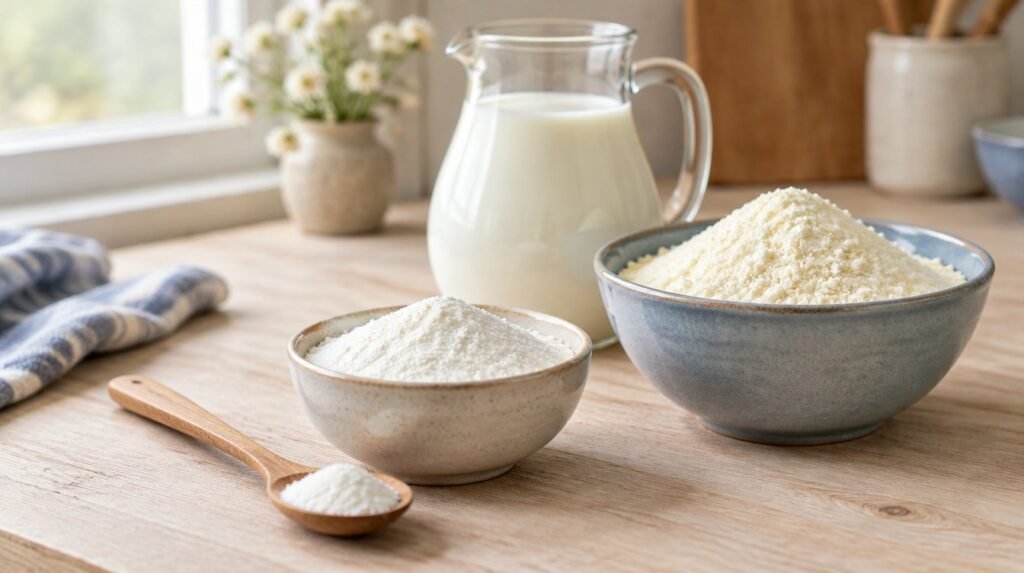
B. breve can grow in whole cow’s milk: in one lab study, strain NCFB 2258 multiplied over 36 hours of anaerobic incubation at 37°C (98.6°F) (Abu-Taraboush et al., 1998). But growth is often weak without help. A 2025 study of strain JKL2022 found that adding 0.1% yeast extract to skim milk clearly boosted growth and fermentation (Jang et al., 2025).
The same study found the strain survived well in whole milk and cream cheese during 15 days of refrigeration, but poorly in regular yogurt, which the authors put down to its sensitivity to acid. Adding glucose, inulin or galactooligosaccharides improved its survival in yogurt (Jang et al., 2025). A dairy science review lists oxygen-tight containers and added nutrients such as peptides and amino acids among the ways to keep probiotic bacteria alive in dairy foods (Shah, 2000).
One more lesson matters if you want a firmer set from a helper culture. In yogurt made with Lactobacillus bulgaricus, that bacterium keeps producing acid in the fridge, which cut B. breve survival; a mutant bulgaricus that made less acid kept B. breve counts high for 21 days (Ongol et al., 2007). So if you add a helper, a milder one is the better match. Our L. bulgaricus guide explains why that bacterium makes yogurt so sharp.
Before you start: a short safety note
The risk of harmful effects from probiotics is greater in people with severe illnesses or weakened immune systems (NCCIH). If you are immunocompromised, seriously ill, pregnant, or feeding an infant, ask your health care provider before trying probiotic ferments (NIH Office of Dietary Supplements). Probiotic capsules are usually sold as dietary supplements, and their makers, not the FDA, are responsible for checking safety before sale (FDA). This article is general information, not medical advice.
Home protocol: B. breve yogurt at 100-105°F for 24 hours
This makes 1 quart. Plan on about 30 minutes of hands-on time, 24 hours of incubation and at least 6 hours in the fridge.
Equipment
- An incubator that holds 100 to 105°F for 24 hours: an adjustable yogurt maker, a multicooker on a low setting or a proofing box. See How to Incubate Yogurt.
- A probe thermometer, to confirm your incubator’s real temperature with a jar of water first.
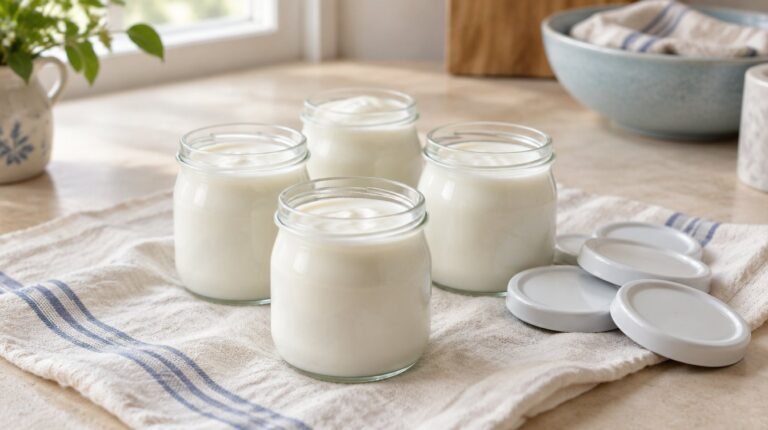
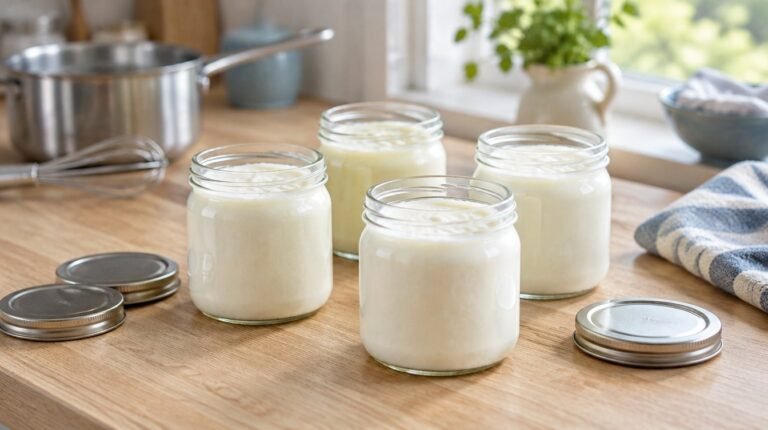
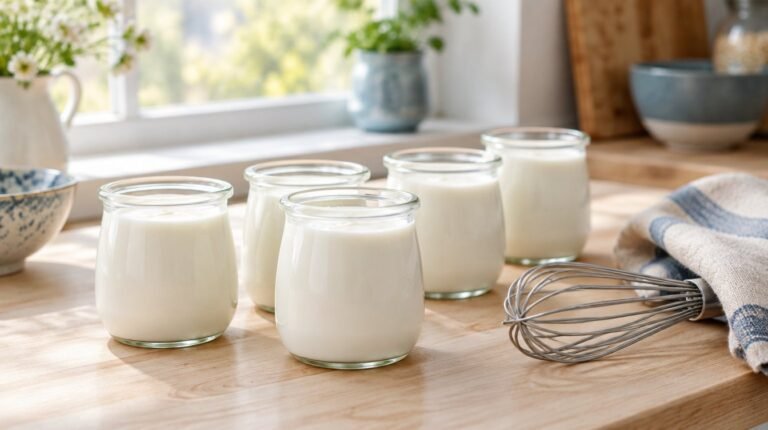
- Small glass jars with tight lids. Several small jars filled to the brim leave less air than one large, half-full jar.
Ingredients
- 1 quart (946 mL) whole milk: the extra fat and solids give a better texture with weak-setting cultures.
- 1/4 cup nonfat dry milk: adds milk solids and thickens the result.
- 1 teaspoon inulin powder: fiber that bifidobacteria can use.
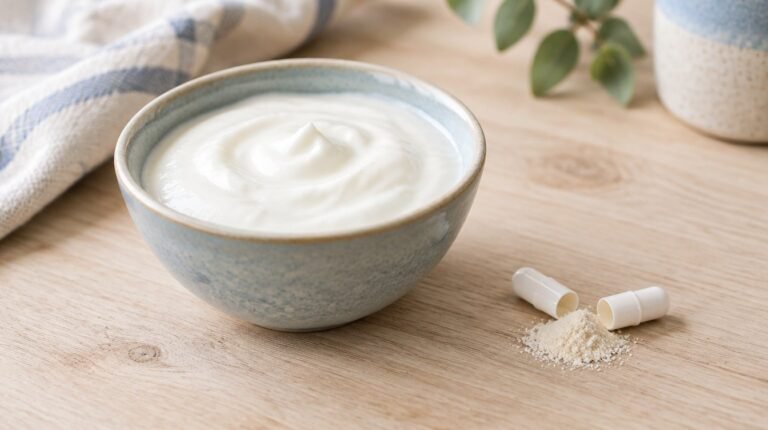
- B. breve starter: a capsule or powder that lists B. breve, ideally with a strain code. Use the label’s serving amount as a starting point; see how much starter to use.
- Optional helper: a small pinch of a mild starter based on Streptococcus thermophilus, for a firmer set.
Steps
- Whisk the dry milk into the cold milk. Heat slowly to 180 to 185°F (82 to 85°C), stirring gently. Heating to 180°F kills competing bacteria and helps the proteins set (University of Missouri Extension). It also drives out some dissolved air, which suits bifidobacteria.
- Cool to 102°F (39°C) without stirring hard. Do not add the culture above 105°F.
- Stir the starter and inulin into a few spoonfuls of the warm milk until smooth, then fold it gently into the rest. Avoid whisking air into the milk.
- Pour into small jars filled right to the rim, and close the lids tightly.
- Incubate at 100 to 105°F for 24 hours without moving the jars. Check one jar at 16 hours; if it has set and smells tangy, you can stop there.
- Chill right away at 40°F or below for at least 6 hours. Do not leave finished jars on the counter, since extra acid harms B. breve.
- For safety, eat within 14 days (University of Illinois Extension). In one lab study, bifidobacteria, B. breve among them, tolerated cold storage less well than an L. acidophilus strain (Hughes and Hoover, 1995), so earlier is better if live bacteria are the point.
The same body-temperature approach is explained for other cultures in our L. reuteri guide, and Yogurt Temperature covers what each temperature band does.
How to tell it worked
- Texture: expect a soft set or a thick drinkable yogurt rather than a firm gel. Single-strain bifidobacterium ferments are often looser than ordinary yogurt.
- Smell and taste: clean and tangy, like mild plain yogurt or buttermilk.
- Acidity (optional): with pH strips, a drop from fresh milk’s 6.7 into the low 4s shows real fermentation. In a lab study of probiotic strains in milk at 37°C, pH reached 3.9 to 4.4 after 24 hours (Østlie et al., 2003).
- No change at all after 24 hours means the culture did not grow.
A home cook cannot confirm that B. breve itself grew, or count it. That takes selective lab media and plating (Shah, 2000). If you add a helper culture, assume the helper did much of the souring and thickening.
Failure modes and fixes
| Problem | Likely cause | Fix |
|---|---|---|
| Still liquid, smells like plain milk | Starter was dead or too weak, or milk was too hot | Use a fresh starter, add it at 102°F, and confirm incubator temperature |
| Slightly thick but barely sour | Slow growth, common with B. breve in plain milk | Keep the dry milk and inulin, fill jars to the rim, or add a mild helper culture |
| Sharp, vinegary and separated | Fermented too long or too hot | Stop at 16 to 20 hours, and keep the temperature nearer 100°F |
| Fizzy, yeasty or cheesy smell | Contamination | Discard, wash jars and tools in hot soapy water, start over |
| Fuzzy spots, pink, orange or dark patches | Mold or spoilage | Throw out the whole batch |
The USDA says to discard yogurt with mold, because moist foods can be contaminated below the surface and bacteria may grow along with the mold (USDA FSIS). If a batch only weeps whey but smells clean, see Whey from Yogurt.
Can you reuse a batch as starter?
It is better not to rely on it. B. breve is sensitive to acid and air, so each reused batch is likely to carry fewer of them while hardier bacteria take over. If you try it, use 2 tablespoons from a fresh, clean batch within a few days, and go back to a new capsule as soon as the set or tang weakens. The pattern is the same one described in Heirloom Starter Weakened Over Time.
Why does B. breve need jars filled to the top?
Bifidobacteria prefer little or no oxygen, and a dairy science review lists oxygen-tight containers among the ways to keep probiotic bacteria alive (Shah, 2000).
Can I ferment B. breve with regular yogurt starter?
You can, but L. bulgaricus keeps making acid in the fridge, which cut B. breve survival in lab yogurts; a milder helper based on S. thermophilus is the gentler choice.
Is B. breve yogurt safe for babies?
Do not give homemade probiotic ferments to infants without a pediatrician’s advice, and never to premature babies, who have had severe infections after receiving probiotics.
Related topics
- Bifidobacterium animalis subsp. lactis: the bifidobacterium that copes best with milk.
- Lactobacillus salivarius: another 24-hour, body-temperature culture.
- Streptococcus thermophilus: a mild helper culture for a firmer set.
- Yogurt Starter: how to choose and handle starters.
- How Long to Incubate Yogurt: how time changes tang and texture.
- Best Yogurt for Probiotics: store-bought options with bifidobacteria.
Sources
- Bottacini F, et al. Comparative genomics of the Bifidobacterium breve taxon (BMC Genomics, 2014)
- Species: Bifidobacterium breve (LPSN, Leibniz Institute DSMZ)
- Oren A, Garrity GM. Valid publication of the names of forty-two phyla of prokaryotes (International Journal of Systematic and Evolutionary Microbiology, 2021)
- Minami J, et al. Effects of Bifidobacterium breve B-3 on body fat reductions in pre-obese adults: a randomized, double-blind, placebo-controlled trial (Bioscience of Microbiota, Food and Health, 2018)
- Xiao J, et al. Probiotic Bifidobacterium breve in improving cognitive functions of older adults with suspected mild cognitive impairment: a randomized, double-blind, placebo-controlled trial (Journal of Alzheimer’s Disease, 2020)
- Asaoka D, et al. Effect of probiotic Bifidobacterium breve in improving cognitive function and preventing brain atrophy in older patients with suspected mild cognitive impairment: results of a 24-week randomized, double-blind, placebo-controlled trial (Journal of Alzheimer’s Disease, 2022)
- Abu-Taraboush HM, et al. Growth, viability, and proteolytic activity of bifidobacteria in whole camel milk (Journal of Dairy Science, 1998)
- Jang Y, et al. Application of conjugated linoleic acid-producing strain, Bifidobacterium breve JKL2022, in the development of probiotic dairy products (Food Science of Animal Resources, 2025)
- Shah NP. Probiotic bacteria: selective enumeration and survival in dairy foods (Journal of Dairy Science, 2000)
- Ongol MP, et al. Yoghurt fermented by Lactobacillus delbrueckii subsp. bulgaricus H+-ATPase-defective mutants exhibits enhanced viability of Bifidobacterium breve during storage (International Journal of Food Microbiology, 2007)
- Hughes DB, Hoover DG. Viability and enzymatic activity of bifidobacteria in milk (Journal of Dairy Science, 1995)
- Østlie HM, et al. Growth and metabolism of selected strains of probiotic bacteria in milk (International Journal of Food Microbiology, 2003)
- Ruiz L, et al. How do bifidobacteria counteract environmental challenges? Mechanisms involved and physiological consequences (Genes & Nutrition, 2011)
- Probiotics: Usefulness and Safety (National Center for Complementary and Integrative Health)
- Probiotics: Fact Sheet for Consumers (NIH Office of Dietary Supplements)
- Dietary Supplements (U.S. Food and Drug Administration)
- Making Yogurt at Home (University of Illinois Extension)
- Preserve It Fresh, Preserve It Safe: 2019, No. 1 (University of Missouri Extension)
- Molds on Food: Are They Dangerous? (USDA Food Safety and Inspection Service)