Yogurt Has a Pink or Orange Tint: Causes and Fixes
What a pink or orange tint usually means
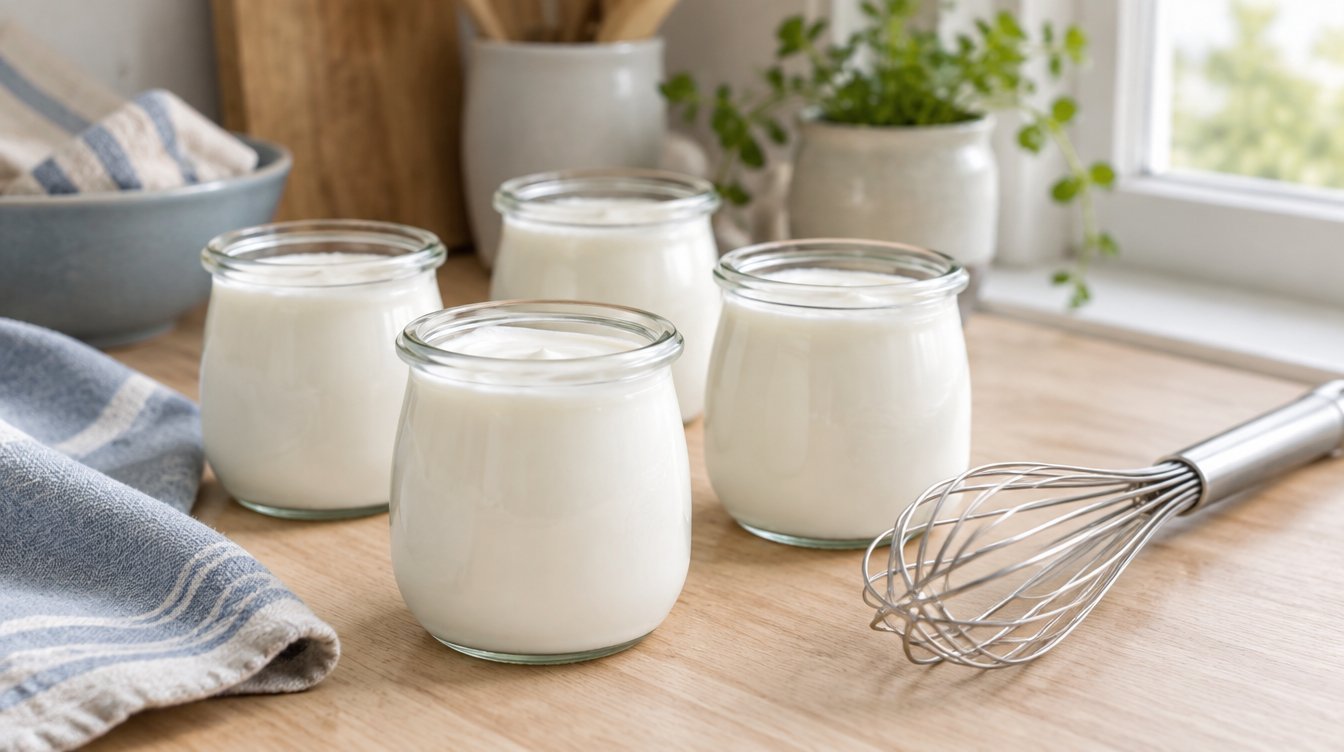
If your homemade yogurt has a pink or orange tint, with salmon, red or orange spots, streaks or slime, treat the batch as spoiled. Plain yogurt should be white to cream colored. Pink and orange patches almost always come from yeasts, bacteria or molds that got into the milk, not from the cultures.
The common exception is color you added, such as berries or jam, which tints the whole batch evenly. Otherwise, throw the yogurt out and find how the contaminant got in.
The most likely cause: pigmented yeast or bacteria
Pink and red discoloration is a known spoilage defect in commercial dairy foods. In a 2023 study, Italian researchers examined intensely red slime found on freshly opened spreadable cheese and yogurt and identified the cause as Rhodotorula mucilaginosa, a yeast that makes carotenoid pigments (Di Renzo and colleagues, 2023). The authors note this yeast can be harmful, especially to people with weakened immune systems.
In a review of 128 published Rhodotorula infections, 87% occurred in people with immune suppression or cancer (Tuon and Costa, 2008). Healthy people rarely get sick from it.
A second pink-maker is Serratia marcescens, a bacterium that produces a red pigment called prodigiosin. Spanish researchers traced red spots on a raw-milk blue cheese to it, most likely carried in with the milk (Rodríguez and colleagues, 2023). In a hospital case report it turned stored breast milk pink after contaminating pump equipment, and the authors note it thrives in moist places (Stanley and Parikh, 2025), much like damp lid gaskets and jar threads.
Some molds show pink or orange too; the color comes from their spores. USDA advises discarding moldy yogurt because moist foods can be contaminated below the surface (USDA FSIS).
The fix, step by step
- Discard the whole batch, including jars that look clean. Do not scrape off the colored part or save any as starter (USDA FSIS).
- Clean and sanitize. Wash jars, lids and utensils in hot, soapy water, rinse, then sanitize or run the dishwasher (University of Missouri Extension). Remove silicone rings and scrub the grooves under them.
- Use fresh starter. Use store-bought yogurt before its best-by date, or homemade yogurt no more than 5 to 7 days old (University of Illinois Extension).
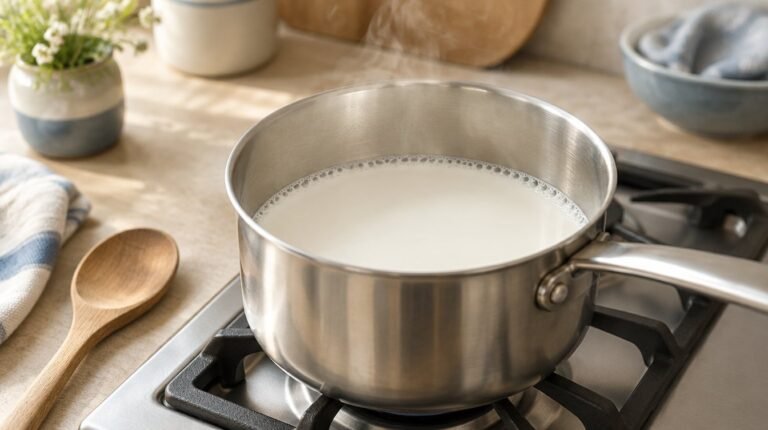
- Heat the milk to 180 to 185°F, then cool it to 108 to 115°F before stirring in the starter (University of Illinois Extension). Heating to 180°F kills competing bacteria (University of Missouri Extension).
- Incubate covered at 108 to 115°F for 6 to 10 hours for standard yogurt cultures (University of Illinois Extension). Long probiotic ferments use lower temperatures and longer times; check the temperature for your strain.
- Chill it promptly. Move the yogurt to a refrigerator at 40°F or below as soon as it has set, and eat it within 14 days (University of Illinois Extension).
Harmless reasons yogurt can look colored

The useful test is the pattern. A harmless color is even all the way through and matches something you added. Spoilage shows up as spots, streaks, rings, slime or fuzz, often with a new smell.
- Fruit and jam: berries and cherries turn yogurt evenly pink, as in strawberry yogurt.
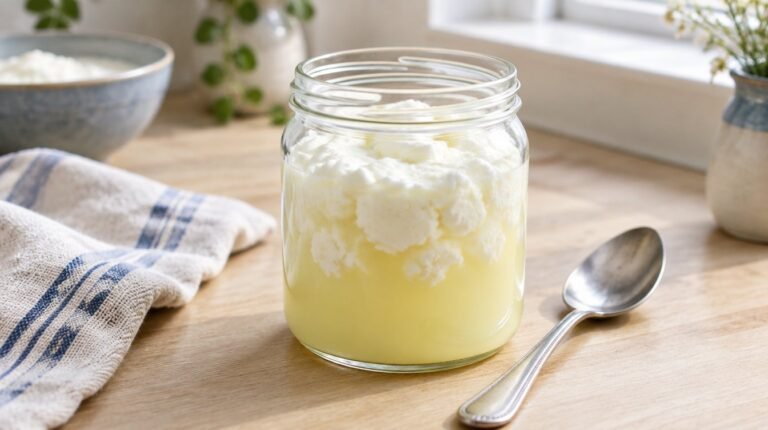
- A yellow cream layer: in a French study of 50 tanker loads, milk from grazing cows was more yellow and richer in beta-carotene than winter milk (Agabriel and colleagues, 2007). In non-homogenized milk the cream can rise into a pale yellow layer. That is milk fat, not mold.
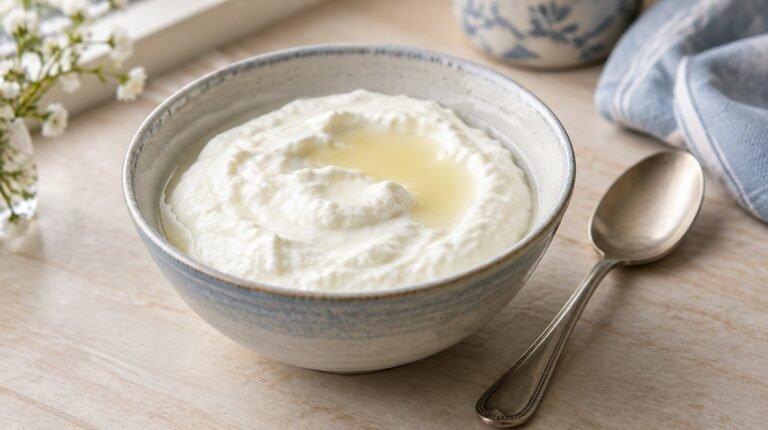
- Whey: thin liquid on top is normal whey.
If you cannot tell which kind of color you are looking at, treat it as spoilage.
Secondary causes worth checking
- Carried-over starter from a batch that was already contaminated.
- Underheated or raw milk. Missouri Extension calls pasteurized milk essential to both fermentation and food safety (University of Missouri Extension). See raw milk yogurt if that is your method.
- Unclean equipment or an uncovered container, both listed as causes of off-flavors (University of Illinois Extension).
- A slow ferment. Acid protects yogurt, so a batch that sours slowly gives stray microbes more time. See pH and acidity targets.
How to keep it from happening again
- Use a clean spoon every time, and never put a used spoon back in the jar.
- Keep the refrigerator at 40°F or below (FoodSafety.gov).
- Let lids and gaskets dry fully before storing them.
- Store yogurt in glass jars that can go through a hot dishwasher cycle.
When to throw a batch out
Discard it, without tasting, if you see any of these:
- Pink, orange, red, black, blue or green spots, streaks or fuzz anywhere in the jar (USDA FSIS).
- Slimy patches on the surface.
- A yeasty, alcoholic, fizzy or rotten smell. See yogurt smells yeasty for that problem.
- Yogurt that never set and sat warm: bacteria grow rapidly between 40°F and 140°F, and perishable food left out more than 2 hours should be discarded (USDA FSIS).
- Yogurt older than about 14 days (University of Illinois Extension; see how long homemade yogurt lasts).
Can I scrape off the pink part and eat the rest?
No. USDA advises discarding yogurt with mold because moist foods can be contaminated below the surface (USDA FSIS).
Is pink yogurt dangerous?
The pink yeasts and bacteria behind it mostly threaten people with weakened immune systems, but you cannot tell at home what grew, so throw it out.
Related topics
- Yogurt Smells Yeasty: Causes and Fixes: another sign of stray microbes in a batch.
- Storage, Shelf Life and Re-culturing: how to keep a clean starter going.
- How to Make Yogurt at Home: the full method, start to finish.
- Yogurt Did Not Set: Causes and Fixes: when the milk stays liquid.
Sources
- Di Renzo T, et al. Shotgun proteomics for the identification of yeasts responsible for pink/red discoloration in commercial dairy products (Food Res Int, 2023)
- Tuon FF, Costa SF. Rhodotorula infection. A systematic review of 128 cases from literature (Rev Iberoam Micol, 2008)
- Rodríguez J, et al. Prodigiosin-producing Serratia marcescens as the causal agent of a red colour defect in a blue cheese (Foods, 2023)
- Stanley B, Parikh P. Neon pink breast milk stain in the NICU (Cureus, 2025)
- Agabriel C, et al. Tanker milk variability according to farm feeding practices: vitamins A and E, carotenoids, color, and terpenoids (J Dairy Sci, 2007)
- Molds on Food: Are They Dangerous? (USDA Food Safety and Inspection Service)
- Leftovers and Food Safety (USDA Food Safety and Inspection Service)
- Making Yogurt at Home (University of Illinois Extension, 2024)
- Preserve It Fresh, Preserve It Safe: Making Yogurt at Home (HES126) (University of Missouri Extension)
- Cold Food Storage Chart (FoodSafety.gov)