Yogurt Smells Yeasty: Causes and Fixes
The symptom
You open a jar and smell bread dough, beer or a faint whiff of alcohol instead of clean, tart yogurt. Sometimes the yogurt tastes slightly fizzy, has small bubbles, or the lid has started to dome.
Normal yogurt aroma comes mostly from lactic acid plus a handful of compounds such as acetaldehyde, diacetyl and acetoin, made by the yogurt bacteria (Cheng, Critical Reviews in Food Science and Nutrition, 2010). A bready or boozy smell points somewhere else: yeast.
Most likely cause: wild yeast got in
Yeasts are common spoilers of yogurt and other fresh dairy foods. They tolerate acid and cold, so they can grow in finished yogurt in the refrigerator. In heat-treated products, they usually arrive after heating, through contamination. As they grow they produce ethanol, carbon dioxide and other volatile compounds, and yeasty, fermented off-flavors have been detected once yeast counts reach about 100,000 to 1 million per gram (Garnier et al., Microorganisms, 2017).
One older study found that oxygen seeping through plastic cartons let yeasts grow in refrigerated yogurt, and that a lactose-fermenting yeast, Kluyveromyces marxianus, grew in yogurt even without oxygen (McKay, International Journal of Food Microbiology, 1992). In other words, a cold fridge slows yeast down but does not stop it.
Where the yeast comes from
- A starter carried from batch to batch. Each time you save a spoonful, any yeast comes along. Kentucky Extension advises using fresh starter rather than keeping the same culture going (University of Kentucky Extension), and Illinois Extension says to use a homemade starter within 5 to 7 days (University of Illinois Extension).
- Starter left open or handled often. Missouri Extension advises keeping starter cultures sealed until you use them (University of Missouri Extension).
- Equipment that was not clean. Unclean equipment and a contaminated starter are both listed causes of off-flavors in homemade yogurt (University of Illinois Extension; University of Guam Extension).
- Fruit, jam or honey stirred in for storage. Kentucky Extension recommends adding flavorings just before serving, because yeasts and molds can cause flavor changes even in the refrigerator (University of Kentucky Extension).
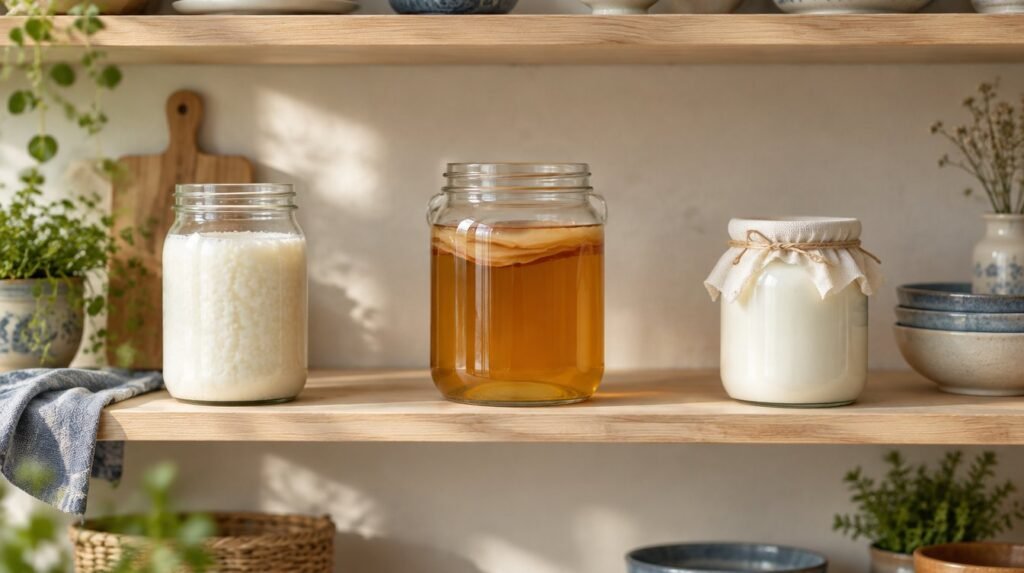
- Other ferments nearby. Kefir grains carry yeasts as well as bacteria (González-Orozco et al., Journal of Dairy Science, 2022). Kombucha is made by yeasts and acetic acid bacteria (Tran et al., 2020), and sourdough starters hold wild yeast (Lau et al., Microorganisms, 2021). Shared spoons, cloths and counters can move yeast between jars.
- Long storage. During prolonged storage, yogurt can be spoiled by molds, yeasts and slow-growing bacteria (University of Guam Extension).
How to clean up and start again
There is no way to fix a yeasty batch at home, and the saved starter from it carries the same problem. Treat the batch as spoiled and work through these steps:
- Discard the batch and any starter saved from it.
- Clean and sanitize everything. Wash jars, lids, spoons and the incubator insert in hot, soapy water, rinse in hot water, then use a sanitizing solution or the dishwasher (University of Missouri Extension).
- Get fresh starter. Use a new container of plain yogurt with live cultures, well before its date, or a new culture packet or capsule. Our guide to sourcing live cultures compares the options.
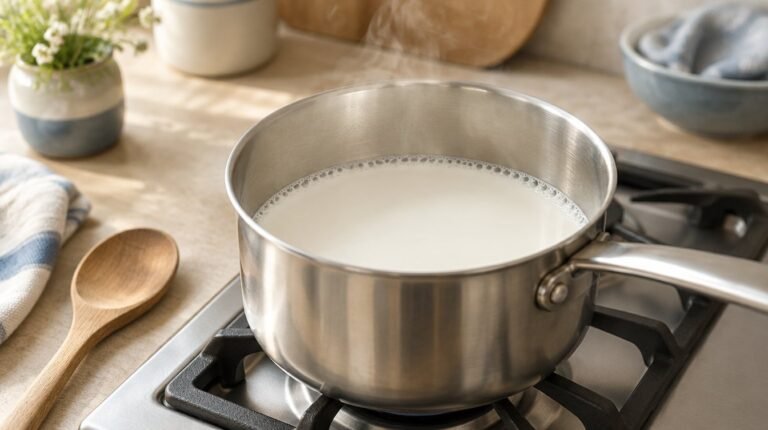
- Heat the milk to 180°F, which kills competing bacteria, then cool it to about 115°F before adding starter (University of Missouri Extension).
- Incubate covered at 108 to 112°F for 8 to 10 hours. Illinois Extension lists an uncovered container as a cause of off-flavors (University of Illinois Extension).
- Refrigerate promptly at 40°F or below with tight lids, add fruit or sweeteners only to the portion you are about to eat, and finish homemade yogurt within 14 days (University of Illinois Extension).
Other smells that get mistaken for yeast
- Sharp and very sour. That points to excess acid, not yeast (University of Kentucky Extension). See yogurt tastes too sour.
- A culture that contains yeast on purpose. Some probiotic products use yeasts such as Saccharomyces boulardii (NCCIH). If your capsule lists a yeast, read our page on S. boulardii yogurt before blaming contamination.
- Stale or cooked notes. Old milk and scorched milk also cause off-flavors (University of Illinois Extension; University of Guam Extension).
- Foam during culturing. If the batch bubbled up while warm, see yogurt foamed during culturing.
Prevention
- Refresh your starter regularly instead of re-culturing the same line indefinitely; heirloom starters need extra care.
- Keep kefir, kombucha and sourdough jars away from yogurt jars, with their own spoons.
- Use clean, dry spoons every time you scoop from a jar.
- Store yogurt plain and tightly lidded; flavor it at the table.
When to throw a batch out
A yeasty smell means the yogurt is spoiling, so do not eat it. Throw out any batch that:
- Smells yeasty, beery or alcoholic, or tastes fizzy.
- Has a domed lid or gas bubbles through the curd.
- Shows any mold. USDA advises discarding moldy yogurt, since contamination can reach below the surface of moist foods (USDA FSIS).
- Has pink or orange patches.
When in doubt, throw it out. A fresh batch costs much less than the risk of guessing.
Related topics
- How Long Does Homemade Yogurt Last?: storage times and spoilage signs.
- Storage, Shelf Life and Re-culturing: how long to keep reusing a starter.
- Yogurt Starter: choosing and handling starters.
- Yogurt Did Not Set: when a fresh starter fails for other reasons.
Sources
- Cheng H. Volatile flavor compounds in yogurt: a review (Critical Reviews in Food Science and Nutrition, 2010)
- Garnier L, et al. Diversity and Control of Spoilage Fungi in Dairy Products: An Update (Microorganisms, 2017)
- McKay AM. Growth of fermentative and non-fermentative yeasts in natural yoghurt, stored in polystyrene cartons (International Journal of Food Microbiology, 1992)
- González-Orozco BD, et al. Invited review: Milk kefir microbiota, direct and indirect antimicrobial effects (Journal of Dairy Science, 2022)
- Tran T, et al. Microbiological and technological parameters impacting the chemical composition and sensory quality of kombucha (Comprehensive Reviews in Food Science and Food Safety, 2020)
- Lau SW, et al. Sourdough Microbiome Comparison and Benefits (Microorganisms, 2021)
- Making Yogurt at Home (University of Kentucky Cooperative Extension Service)
- Making Yogurt at Home (University of Illinois Extension, 2024)
- Making Yogurt at Home (University of Guam Cooperative Extension, 2016)
- Preserve It Fresh, Preserve It Safe: Making Yogurt at Home (University of Missouri Extension, 2019)
- Probiotics: What You Need To Know (National Center for Complementary and Integrative Health)
- Molds on Food: Are They Dangerous? (USDA Food Safety and Inspection Service)