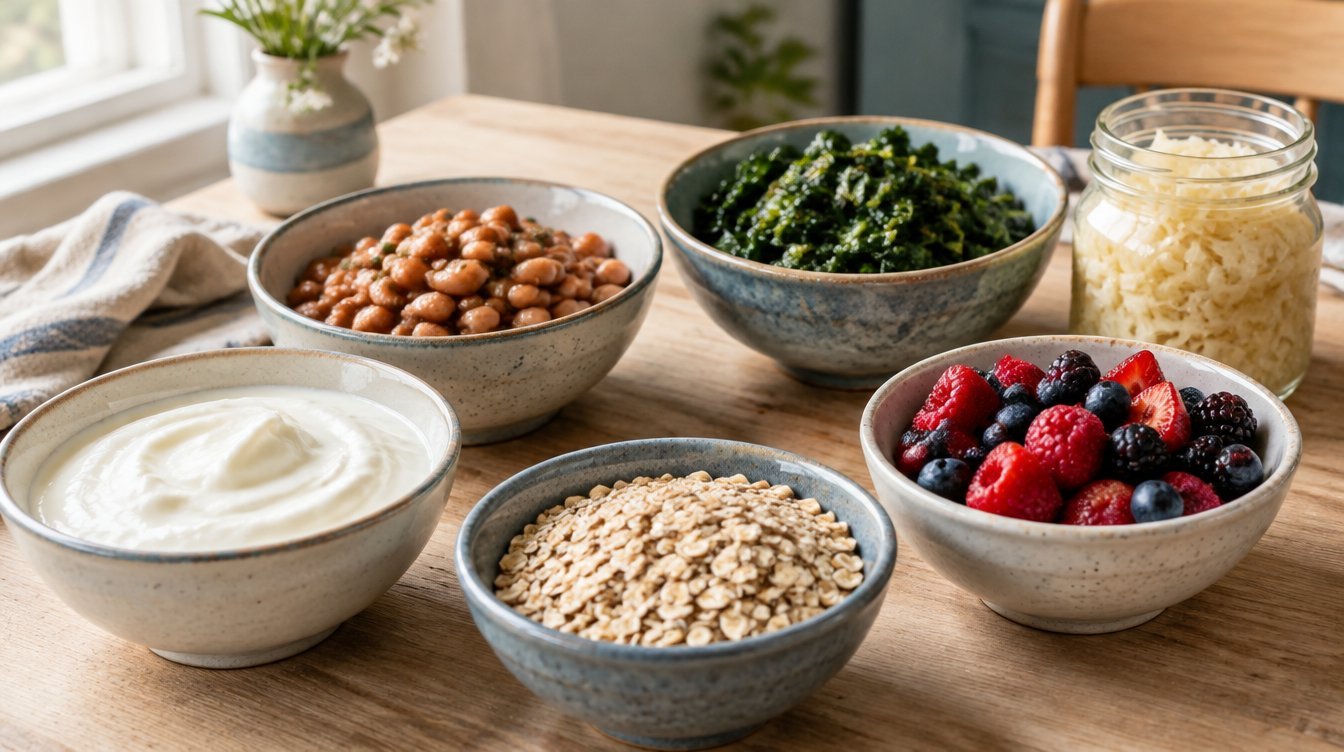
Gut Health: The Complete Guide
What gut health means
Gut health is how well your digestive tract does its everyday jobs: breaking down food, absorbing nutrients, moving waste along on a regular schedule, and hosting a large, varied community of microbes without discomfort. There is no single test or number for it. In practice, a healthy gut usually means comfortable digestion, regular bowel movements and no warning signs such as bleeding or unexplained weight loss.
The phrase has become a marketing label, stuck on everything from sodas to stool kits. This guide sets the products aside and covers what the gut does, what the research supports, what is still guesswork, and the everyday habits with the best evidence behind them. It draws on sources such as the National Institute of Diabetes and Digestive and Kidney Diseases (NIDDK), the National Center for Complementary and Integrative Health and peer-reviewed studies, and it is general information, not medical advice.
How your digestive system works
Your gastrointestinal (GI) tract is one long, hollow tube. According to the NIDDK, it runs from the mouth through the esophagus, stomach, small intestine and large intestine to the anus. The liver, pancreas and gallbladder sit alongside it and add digestive juices.
Food moves through the tract by peristalsis, waves of muscle contraction that push it forward. Along the way it is broken into parts small enough to absorb, and the nutrients are carried to where the body needs them. Most absorption happens in the small intestine. The large intestine then absorbs water and turns liquid waste into stool (NIDDK).
The gut microbiome: who lives there
Your large intestine is home to trillions of bacteria, along with smaller numbers of fungi and viruses. Together they are called the gut microbiota, or microbiome. A widely cited 2016 estimate put the number of bacteria in an average adult at about 38 trillion, roughly the same as the number of human cells, and their total weight at about 0.2 kg, less than half a pound (Sender and colleagues, 2016). That replaced the old, often repeated claim that bacteria outnumber our cells ten to one.
These microbes are not passengers. The NIDDK notes that bacteria in the GI tract help with digestion, and that bacteria in the large intestine break down leftover nutrients and make vitamin K.
No two people carry the same mix. The Human Microbiome Project, a large NIH-funded effort, found that even healthy people differ remarkably in which microbes they carry, and that diet, environment, genes and early-life exposure all seem to play a part (Human Microbiome Project Consortium, 2012). Interestingly, the same study found that the jobs the microbes perform, measured by their metabolic pathways, were much more stable from person to person than the species list. That is one reason there is no single “ideal” microbiome to aim for.
Why gut microbes matter beyond digestion
Fiber in, short-chain fatty acids out
Human enzymes cannot digest most dietary fiber. Gut bacteria can. When they ferment fiber in the colon, they produce short-chain fatty acids (SCFAs) such as acetate, propionate and butyrate. A 2016 review in Cell describes SCFAs as a major class of bacterial products that act as fuel for cells and as signals to the body, and that “may contribute to health and disease” (Koh and colleagues, 2016). Much of that evidence comes from lab and animal work, so the details in people are still being worked out.
The gut-brain connection
The gut and brain talk to each other through nerves (including the vagus nerve), hormones, the immune system and microbial products. A 2019 review in Physiological Reviews describes how stress can affect this “microbiota-gut-brain axis” at every stage of life, and how gut microbes have been linked to conditions from anxiety to Parkinson’s disease (Cryan and colleagues, 2019). The same review is clear that animal models drive much of the field and that human studies are still under way. In other words, the link is real, but claims that a particular food or pill will lift your mood through your gut run well ahead of the evidence.
Immunity
A large share of the immune system sits along the gut lining, and diet appears able to shift immune signals through the microbiome. In a 17-week Stanford trial in 36 healthy adults, a diet high in fermented foods steadily increased microbiome diversity and lowered a range of inflammatory markers (Wastyk and colleagues, 2021). It was a small study, and its main planned measure did not change, but it is one of the better human experiments on everyday foods and the gut.
What the evidence says
Gut health research moves fast, and headlines often outrun the data. This table sorts common claims by how strong the human evidence is today.
| Claim | Evidence strength | Source |
|---|---|---|
| Eating more fiber is linked with lower risk of heart disease, type 2 diabetes and colorectal cancer | Moderate to strong: large meta-analysis of cohort studies plus trials on risk factors | Reynolds et al., 2019 |
| Gut bacteria help digest food and make vitamin K | Strong: established physiology | NIDDK |
| A high fermented-food diet increases microbiome diversity | Early: one small randomized trial (36 adults) | Wastyk et al., 2021 |
| Eating many different plants is linked with a different gut microbiome | Early: observational, self-reported data | McDonald et al., 2018 |
| Some probiotics lower the risk of diarrhea while taking antibiotics | Moderate: Cochrane review of 33 trials in children | Guo et al., 2019 |
| Probiotic supplements improve gut health in healthy people | Weak or unclear: which strains, doses and people benefit is not known | NCCIH |
| Some food additives and sweeteners alter gut microbes | Early: small short human trials | Chassaing et al., 2022; Suez et al., 2022 |
| Exercise changes gut microbes | Early: one small 6-week trial (32 adults) | Allen et al., 2018 |
| Gut microbes shape mood and brain health | Early in humans: mostly animal studies so far | Cryan et al., 2019 |
What shapes your gut health
Fiber
Fiber is the habit with the most weight behind it. A 2019 Lancet analysis pooled 185 prospective studies and 58 clinical trials. People eating the most fiber had a 15% to 30% lower risk of death from all causes and from heart disease, and lower rates of stroke, type 2 diabetes and colorectal cancer, than those eating the least. The biggest risk reductions were seen at 25 to 29 grams a day (Reynolds and colleagues, 2019). The cohort data show links, not proof, but the trials in the same analysis found lower body weight, blood pressure and cholesterol with more fiber.
Most Americans fall short. The Dietary Guidelines for Americans, 2020-2025 state that more than 90% of women and 97% of men do not meet recommended fiber intakes.
Plant variety
The American Gut Project, a citizen-science study with samples from more than 10,000 people, found that people who said they ate more than 30 types of plants a week had different gut bacteria from those who ate 10 or fewer, including more microbes thought to produce SCFAs (McDonald and colleagues, 2018). This was observational and based on a single survey question, so it cannot show cause and effect. Still, it is a useful nudge: herbs, spices, nuts, seeds, beans and whole grains all count as different plants.
Fermented foods
Yogurt, kefir, sauerkraut, kimchi and similar foods are made by microbes. In the Stanford trial, adults who ate a diet high in fermented foods for 10 weeks saw their microbiome diversity rise and 19 inflammatory proteins in their blood fall, with bigger servings linked to stronger effects. The high-fiber group saw neither change over the same short period (Stanford Medicine; Wastyk and colleagues, 2021). See our guide to fermented foods for gut health for which products still contain live cultures.
Additives and sweeteners
Two small human trials suggest some common additives are not inert. In a controlled feeding study, 7 healthy adults who ate the emulsifier carboxymethylcellulose (15 g a day for 11 days) had more after-meal abdominal discomfort and a less diverse microbiome than 9 adults on the same diet without it (Chassaing and colleagues, 2022). In another trial of 120 adults, two weeks of saccharin, sucralose, aspartame or stevia changed gut and oral microbes, and saccharin and sucralose worsened blood sugar responses (Suez and colleagues, 2022). Both studies were short, and the effects varied from person to person.
Antibiotics
Antibiotics are often lifesaving, and you should take them as prescribed. They also disturb gut bacteria, which is why diarrhea is a common side effect (Guo and colleagues, 2019). Our article on restoring gut health after antibiotics covers what may help afterward.
Movement
In a University of Illinois trial, 32 previously inactive adults did six weeks of supervised endurance exercise. Their gut microbes changed, and lean participants had more SCFAs in their stool. Most of the changes faded after six weeks back on the couch (Allen and colleagues, 2018). The lesson is consistency rather than any single workout.
Everyday habits that support your gut
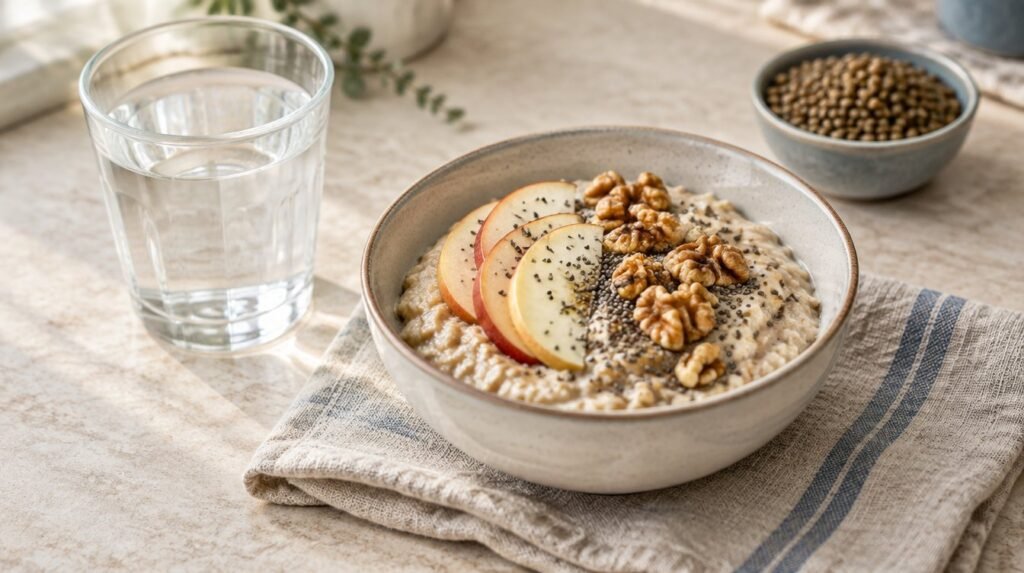
None of these are quick fixes. They are the habits with the best evidence, and they work together.
- Work toward your fiber target. The National Academy of Medicine recommends 25 grams a day for women 50 and younger, 21 grams for women over 50, 38 grams for men 50 and younger and 30 grams for men over 50 (Mayo Clinic).
- Add fiber slowly. Mayo Clinic advises increasing fiber over a few weeks and drinking plenty of water, since fiber works best when it absorbs water. Going from 10 to 30 grams overnight is a common route to gas and bloating.
- Mix soluble and insoluble fiber. Oats, beans, apples, citrus, carrots, barley and psyllium supply soluble fiber; whole-wheat flour, wheat bran, nuts, beans and vegetables such as cauliflower and green beans supply insoluble fiber (Mayo Clinic).
- Drink enough. The NHS suggests a glass of water with every meal as an easy way to keep fluids up.
- Go easy on greasy and very spicy food if it bothers you. The NHS suggests cutting back on fried foods and keeping a food diary to spot your own triggers.
- Include fermented foods you enjoy. Plain yogurt or kefir with live cultures is the easiest start. Our list of the best foods for gut health has more ideas.
- Count plants, not only servings. Swapping one kind of bean, grain or nut for another during the week adds variety without adding cost.
- Move most days. Regular activity seems to matter more than intensity.
If you want a structured week of meals, our gut health diet plan turns these points into a menu.
Probiotics and prebiotics
A probiotic is a live microorganism that, given in adequate amounts, provides a health benefit; that definition comes from an expert panel of the International Scientific Association for Probiotics and Prebiotics (Hill and colleagues, 2014). A prebiotic is “a substrate that is selectively utilized by host microorganisms conferring a health benefit,” in other words food for helpful microbes, such as certain fibers (Gibson and colleagues, 2017).
The evidence for probiotic supplements is mixed. The NCCIH says much remains to be learned about whether they help, which ones work and how much to take. One of the better-supported uses is preventing diarrhea during antibiotic treatment: a Cochrane review of 33 trials in 6,352 children found it in 8% of children given probiotics versus 19% of controls, rated as moderate-certainty evidence (Guo and colleagues, 2019). Results are strain-specific, so a benefit from one product does not carry over to another.
Probiotics have a long record of apparently safe use in healthy people, but NCCIH notes that the risk of harm is greater in people with severe illness or weakened immune systems, and that some products have contained microbes not listed on the label. Most probiotics are sold as dietary supplements, and the FDA does not have authority to approve supplements before they are marketed. If you have a health condition or a weakened immune system, talk to a doctor first, as the NHS also advises. The NHS suggests taking a probiotic daily for at least four weeks to see if it helps you. Our comparison of the best probiotic options looks at specific strains.
Making fermented foods at home
Homemade yogurt is one of the simplest ways to eat fermented food daily, and you control the milk, the culture and the sugar. The University of Illinois Extension method uses 1 quart of milk and 2 tablespoons of plain yogurt with live cultures as a starter:
- Heat the milk to 180 to 185°F, stirring now and then so it does not scorch.
- Cool it to 108 to 115°F. Check with a food thermometer.
- Add the starter. Whisk the yogurt into about 1 cup of the warm milk, then stir it back into the rest.
- Incubate at 108 to 115°F for 6 to 10 hours, undisturbed, until it sets.
- Chill at 40°F or below and eat within 14 days.
Longer, cooler ferments are possible with some probiotic cultures, but they need steady temperature control. Our step-by-step guide to making yogurt at home covers equipment, timing and troubleshooting.
Signs, tests and cleanses
Because “gut health” has no single definition, it is easy to over-read ordinary changes. Occasional gas, a bloated evening or a few days of irregular bowel movements are common. Patterns that persist, or come with the warning signs below, are what matter. Our guide to the signs of an unhealthy gut goes through the common ones.
Direct-to-consumer stool tests and “cleanse” products are popular, but neither is a shortcut. Microbiome profiles vary widely between healthy people, as the Human Microbiome Project found, which makes a single sample hard to interpret. We look at specific kits, and what they can and cannot tell you, in our gut health test guide.
When to see a doctor
Diet changes are for comfort and long-term health, not for working out what is wrong. See a doctor right away if digestive symptoms come with any of these warning signs, drawn from NIDDK guidance on constipation and NIDDK guidance on indigestion:
- Bleeding from the rectum, blood in your stool, or black, tarlike stools
- Vomiting that keeps happening, or vomit with blood in it
- Severe or constant pain in your abdomen, or inability to pass gas
- Difficulty or pain when swallowing
- Losing weight without trying, or loss of appetite
- Fever, or yellowing of your eyes or skin
- Long-lasting bloating or swelling in your abdomen
- Pain in your chest, jaw, neck or arm, or shortness of breath
Also check in with your doctor if a change in bowel habits lasts more than a few weeks, or if symptoms keep coming back. This article is general information and not a substitute for medical advice.
What is gut health in simple terms?
It is how well your digestive tract breaks down food, absorbs nutrients, moves waste along and supports a varied community of microbes without discomfort (NIDDK).
How much fiber do I need for good gut health?
Adult targets are 21 to 38 grams a day depending on age and sex, and most Americans eat less. Increase slowly and drink plenty of water (Mayo Clinic).
Do I need a probiotic supplement?
Most healthy people do not. Evidence is strongest for specific uses, such as lowering the risk of diarrhea during antibiotics, and benefits depend on the strain (NCCIH).
Are fermented foods good for your gut?
In one small Stanford trial, a diet high in fermented foods increased microbiome diversity and lowered inflammatory markers over 17 weeks (Wastyk et al., 2021).
How long does it take to improve gut health?
In the Stanford fermented-food trial, changes built up over 10 weeks, and in an exercise trial they faded once people stopped, so steady habits matter more than quick fixes (Allen et al., 2018).
Related topics
- How to Improve Gut Health: a practical plan for changing habits step by step.
- Best Foods for Gut Health: the foods with the most research behind them.
- Probiotic Foods: which fermented foods still contain live cultures.
- Worst Foods for Gut Health: what to cut back on and why.
- Books on Gut Health: further reading for the curious.
- Homemade Yogurt: the easiest fermented food to make in your own kitchen.
Sources
- Your Digestive System & How It Works (NIDDK)
- Symptoms & Causes of Constipation (NIDDK)
- Symptoms & Causes of Indigestion (NIDDK)
- Probiotics: What You Need To Know (National Center for Complementary and Integrative Health)
- Questions and Answers on Dietary Supplements (U.S. Food and Drug Administration)
- Good foods to help your digestion (NHS)
- Dietary fiber: Essential for a healthy diet (Mayo Clinic)
- Dietary Guidelines for Americans, 2020-2025 (U.S. Department of Agriculture and U.S. Department of Health and Human Services)
- Making Yogurt at Home (University of Illinois Extension)
- Sender R, et al. Revised Estimates for the Number of Human and Bacteria Cells in the Body (PLoS Biol, 2016)
- Human Microbiome Project Consortium. Structure, function and diversity of the healthy human microbiome (Nature, 2012)
- Koh A, et al. From Dietary Fiber to Host Physiology: Short-Chain Fatty Acids as Key Bacterial Metabolites (Cell, 2016)
- Cryan JF, et al. The Microbiota-Gut-Brain Axis (Physiol Rev, 2019)
- Reynolds A, et al. Carbohydrate quality and human health: a series of systematic reviews and meta-analyses (Lancet, 2019)
- Fermented-food diet increases microbiome diversity, decreases inflammatory proteins, study finds (Stanford Medicine, 2021)
- Wastyk HC, et al. Gut-microbiota-targeted diets modulate human immune status (Cell, 2021)
- McDonald D, et al. American Gut: an Open Platform for Citizen Science Microbiome Research (mSystems, 2018)
- Chassaing B, et al. Randomized Controlled-Feeding Study of Dietary Emulsifier Carboxymethylcellulose Reveals Detrimental Impacts on the Gut Microbiota and Metabolome (Gastroenterology, 2022)
- Suez J, et al. Personalized microbiome-driven effects of non-nutritive sweeteners on human glucose tolerance (Cell, 2022)
- Allen JM, et al. Exercise Alters Gut Microbiota Composition and Function in Lean and Obese Humans (Med Sci Sports Exerc, 2018)
- Guo Q, et al. Probiotics for the prevention of pediatric antibiotic-associated diarrhea (Cochrane Database Syst Rev, 2019)
- Hill C, et al. The International Scientific Association for Probiotics and Prebiotics consensus statement on the scope and appropriate use of the term probiotic (Nat Rev Gastroenterol Hepatol, 2014)
- Gibson GR, et al. The ISAPP consensus statement on the definition and scope of prebiotics (Nat Rev Gastroenterol Hepatol, 2017)
This article is for general information and is not medical advice. Talk to your doctor or a registered dietitian before changing your diet, supplements or medication, especially if you have a health condition.